Dojo Politics: How to Navigate Them Without Losing Your Training
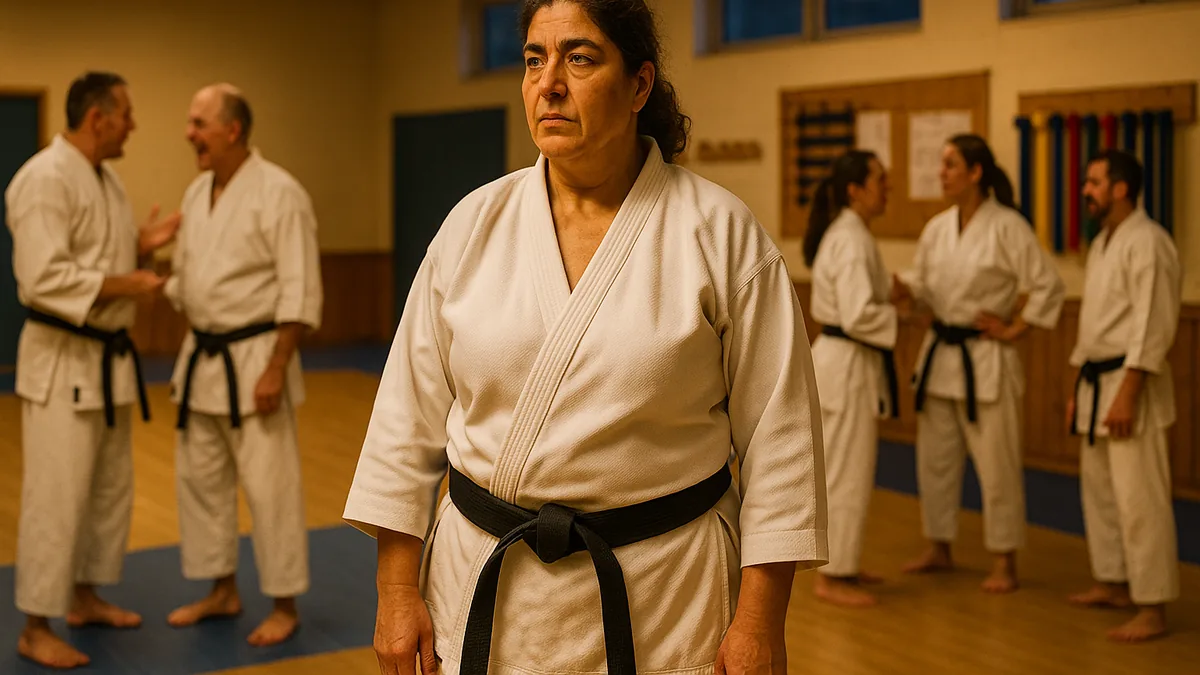
I’ve trained in enough dojos to know that politics are never really about karate. They’re about ego, territory, and the complicated things that happen when you put driven people in a small space with a clear hierarchy. I’ve seen genuinely talented practitioners quit because of it. I’ve also seen people who had no business lasting past their first year stick around for decades because they figured out how to move through the social landscape without getting dragged into it.
This isn’t about being naive enough to pretend dojo politics don’t exist. They do, everywhere, in every club I’ve ever trained at. What I’m sharing here is what I’ve learned about protecting your training when they flare up.
The Politics Are Real. So Is the Cost of Getting Involved.
The first dojo I trained at seriously had a situation that took about two years to fully detonate. Two senior students had a falling out over something that started in a grading - one felt the other had been unfairly promoted. What followed was two camps forming, juniors being quietly pressured to pick sides, and an instructor who either didn’t notice or chose not to intervene until it was too late. Three good students left. The standard of training dropped noticeably for about a year because the energy in the room was poisoned.
I was a junior at the time and I made the mistake most juniors make: I got curious. I asked questions. I listened to complaints. I let myself get used as a sounding board by people who were actually recruiting, not venting.
What I didn’t understand then was that the moment you start absorbing someone else’s grievance, you’ve taken a position. You don’t have to say anything. You just have to listen long enough and you’re in it.
The correction that actually works - and I’ve told this to students since - is to get physically busier. When the politics heat up, train harder. Show up to more sessions. Spend more time on the floor and less time in the car park after class. It sounds simple but it works because it changes what you’re available for.
What Professionalism Actually Looks Like on the Dojo Floor
Professionalism in a dojo isn’t the same as professionalism in an office. You can’t just keep your head down and do your work in isolation - training is inherently relational. You’re in close physical contact with people, you’re depending on partners, and your progress is being assessed by someone with authority over you. That creates friction points that don’t exist in most workplaces.
I’ve noticed that the practitioners who navigate this best share one habit: they treat everyone on the floor with the same level of respect regardless of what’s happening off it. Not fake warmth. Just consistent, reliable courtesy. They bow in properly, they take ukemi seriously, they don’t slack off when paired with someone they have an issue with.
That consistency does two things. It keeps your own training clean - you’re not carrying resentment into your technique. And it makes you unreadable to people who are looking for allies. If you treat everyone the same, no one can claim you’re on their side.
The harder version of this is maintaining respect for your instructor when you have genuine doubts about their judgment. I’ve been in that position. My instructor at one club made a call I thought was wrong - a grading result that didn’t sit right with several of us. The temptation was to say something, to commiserate with training partners, to let it become a shared grievance. What I did instead was bring my questions directly to the instructor privately, once, clearly, and then let it go. That conversation was uncomfortable. But it was cleaner than the alternative.
Gossip Is a Training Problem, Not Just a Social One
Here’s a position I’ll defend: gossip in a dojo isn’t just bad manners, it’s a technical problem. It eats the mental bandwidth you need for training.
Karate demands a particular quality of attention. When you’re working kata, you’re not just running through movements - you’re trying to inhabit them, to feel the application, to notice where your weight is loading incorrectly. That requires a quiet mind. When you’ve spent the last twenty minutes in the changing room absorbing someone’s complaint about the club’s tournament selection policy, you walk onto the floor already cluttered.
I used to think I could compartmentalise. I was wrong. The mental benefits of karate training that people talk about - the clarity, the stress relief - those only come when you’re actually present. Gossip keeps you in a social processing mode that’s the opposite of presence.
The practical rule I’ve settled on: don’t say anything about a training partner, instructor, or club decision that you wouldn’t say directly to the person involved. That’s not a moral position, it’s a pragmatic one. It keeps you out of loops that have nothing to do with your training.
When the Politics Are Actually About You
Sometimes you’re not a bystander. Sometimes the friction is directed at you - a senior who’s cold toward you, a grading result you can’t make sense of, a sense that you’re being overlooked or assessed unfairly.
This is where it gets genuinely difficult, and I won’t pretend otherwise.
I’ve seen students in this position make two common mistakes. The first is internalising it - assuming the problem is their karate, training harder in the wrong ways, trying to earn approval through volume rather than quality. The second is externalising it completely - deciding the system is corrupt, becoming cynical, and coasting because they’ve decided effort won’t be rewarded anyway.
What actually works is harder to do. You focus on what you can control, which is the quality of your training, and you stay honest with yourself about whether the feedback you’re getting - even the feedback that stings - has any technical merit. Sometimes it does. I’ve had assessments that felt political but contained real observations I needed to hear.
If after genuine reflection you think the environment is actively working against your development, that’s worth taking seriously. There’s a difference between navigating difficult dynamics and staying somewhere that’s genuinely damaging your progress. I’d point you toward when to quit your karate club as a more detailed look at how to read those signs without making a reactive decision you’ll regret.
Personal Growth Is the Only Metric That Survives Politics
The thing I keep coming back to is this: in ten years, you won’t remember most of what the politics were about. What you’ll have is your technique, your understanding, your physical knowledge of what the art has taught you. That’s the only thing that’s actually yours.
I’ve trained alongside people who spent enormous energy on club hierarchy - who was in favour, who was being groomed for instructor roles, whose lineage was more legitimate. Most of that energy was wasted. The practitioners I respect most now are the ones who kept their focus narrow and their training honest.
This matters especially if you’re juggling training with the rest of life. If you’re fitting sessions around a full-time job - and most of us are - you have even less time to waste on noise. Training karate alongside a full-time job already demands a level of prioritisation that leaves little room for the politics to take hold if you’re disciplined about it.
Community Perspective
This is one of those topics where I’ve heard genuinely different views depending on where people trained and for how long.
Some senior practitioners I respect take the position that navigating dojo politics is itself part of the training - that learning to function under social pressure, to maintain composure when you’re being treated unfairly, is an extension of the mental discipline karate is supposed to develop. I have some sympathy for that view. There’s something real in it.
Others - and I lean closer to this camp - think that framing gives too much cover to environments that are genuinely dysfunctional. Not every difficult dojo is a crucible that builds character. Some are just poorly run, with instructors who play favourites and senior students who’ve confused rank with authority. Staying in that environment and calling it mental training is sometimes just rationalising a bad situation.
The honest answer is that it depends on what the politics are actually about and whether the core instruction is still sound. A dojo with some interpersonal friction but excellent technical teaching is worth staying in and learning to navigate. A dojo where the politics have become the culture and the training is an afterthought is a different problem entirely.
Key Takeaways
- When politics heat up, get physically busier. More time on the floor means less time available to be recruited into someone else’s grievance.
- Treat everyone on the floor with consistent respect regardless of what’s happening off it. It keeps your training clean and makes you unreadable to people looking for allies.
- Gossip has a technical cost. It clutters the mental state you need for quality training. Don’t say anything about a training partner or instructor that you wouldn’t say directly to them.
- If something feels unfair, bring it to the relevant person directly, once, clearly, and then let it go. Anything else becomes a story you carry onto the floor with you.
- Separate the question of whether feedback has technical merit from the question of whether it was delivered fairly. Sometimes difficult assessments contain real observations worth hearing.
- Your technique and understanding are the only things that survive the politics. Keep your focus there and the rest becomes noise.
The weekly digest
New karate articles, once a week
One email every week with everything new on Karate Lifestyle. No spam; unsubscribe in one click.
We'll email you to confirm. See our privacy policy.