Mentoring Junior Karateka: What Senior Grades Actually Owe the Club and How to Do It Without Overstepping
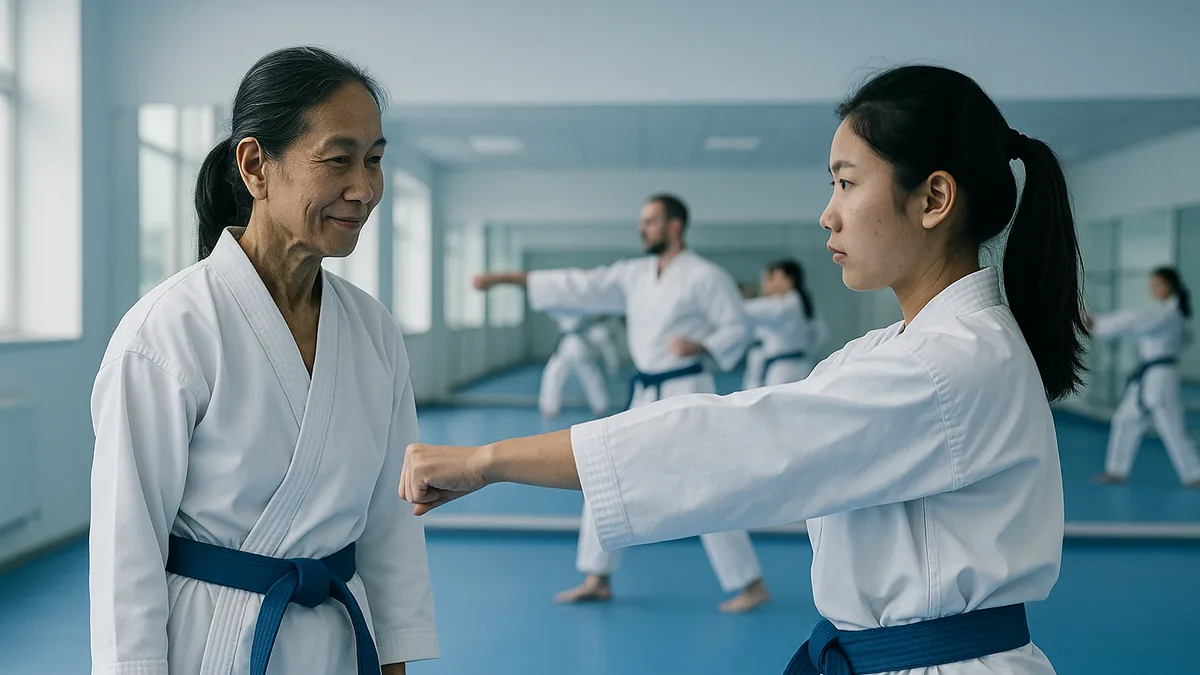
The first time I was asked to help mentor a junior student, I thought it meant showing them how to punch correctly. I spent twenty minutes adjusting their hikite, correcting their stance, explaining hip rotation. The kid improved a bit, nodded politely, and then went back to doing it the wrong way the moment I stepped back. My instructor watched the whole thing, said nothing until after class, and then told me: “You taught them what to do. You didn’t help them want to do it.”
That one comment changed how I approach mentoring more than any teaching methodology ever has.
Senior grades carry something in a club that instructors often can’t fully provide - proximity. You’re closer in rank to the newer students, closer in memory to what it felt like to not understand any of this, and closer physically during partner work and line drills. That proximity is either an asset or a liability depending on how you use it.
What Senior Grades Actually Owe the Club
Let’s be honest about what’s expected of you, because most clubs never make it explicit.
You owe the club your attention. Not your expertise, not your corrections, not your opinions on how Sensei runs things - your attention. Watching the room during training, noticing who’s struggling without making it obvious, being present for the session rather than coasting through your own repetitions on autopilot.
You owe the club consistency. Showing up. Being someone the junior grades see regularly enough that they start to feel comfortable around you. I’ve noticed that juniors rarely approach senior grades they don’t see often. Trust is built through repetition, same as technique.
You owe the club a version of yourself that’s worth emulating. This sounds obvious but it’s the one most senior grades quietly fail at. If you’re cutting corners on your basics because you’ve been training for a decade and you’re bored of them, the white belts are watching you cut corners and learning that it’s acceptable to do so. Your kihon in a class with beginners isn’t just your training - it’s a reference point for everyone in the room.
What you don’t owe the club is a second instructor. That’s not your role, and overstepping it is one of the most common problems I’ve seen in clubs with strong senior grades.
The Overstep Problem - And Why It Happens More Than You’d Think
One mistake I see constantly from well-intentioned senior grades is taking over. Not dramatically, not with any bad intent - just gradually accumulating authority they haven’t been given. They start correcting students during a drill the instructor just set. They offer technique advice that contradicts what the instructor just said. They pull a junior aside for a private tutorial in the middle of class without checking whether that’s wanted or appropriate.
It usually comes from a good place. You can see the mistake clearly. You know how to fix it. It feels almost negligent not to say something. I understand that feeling completely - I’ve acted on it and regretted it.
Here’s what I’ve come to understand: when you correct a student without the instructor’s knowledge or permission, you’re not just helping that student. You’re also potentially undermining the instructor’s authority, confusing the student with a different cue than they were given, and inserting yourself into a teaching relationship that isn’t yours. Even if your correction is technically accurate, the timing and context can make it counterproductive.
The cleaner approach is to flag it to the instructor. “I noticed Kenji is dropping his guard when he steps - did you want me to work on that with him?” That single question does three things: it respects the instructor’s authority, it gets you permission to help, and it ensures the student gets consistent feedback rather than competing voices.
When You’re Specifically Asked to Help
This changes when the instructor explicitly delegates to you. If Sensei asks you to work with the junior grades on a particular drill, you now have a defined role with defined scope. Stay inside it. Don’t let it expand into general coaching unless that’s invited.
What I tell students I’m working with in these situations is: “I’m going to help you with this one thing. If you have other questions, save them for Sensei or ask me after class.” That boundary is kind, not dismissive. It keeps the session focused and it models respect for the instructor-student relationship.
Creating an Environment Where Juniors Actually Learn
The thing that actually changed my understanding of mentorship was watching a very senior grade in my dojo - a third dan who had trained for over twenty years - pair up with a complete beginner during a partner drill. He didn’t correct a single thing for the first five minutes. He just trained with the person, matching their pace, letting them feel the drill without pressure. By the time he offered a small adjustment, the beginner was relaxed enough to actually absorb it.
Compare that to the approach I used to take: jumping in with corrections immediately, because I could see the problems and wanted to fix them. The beginner I was working with would tighten up. You could feel it - their movement would become more rigid, more self-conscious, less natural. The corrections were making them worse, not because the corrections were wrong, but because the environment wasn’t right for receiving them.
Creating a supportive environment isn’t about being soft or withholding feedback. It’s about timing. A correction lands differently when the person trusts you and feels physically comfortable in the drill. It lands almost not at all when they’re still tense and uncertain.
Practically, this means:
- Train with junior grades before you correct them. Let them feel you as a training partner first.
- Match the energy of the session. If it’s a high-intensity class, don’t pull someone aside for a five-minute technical discussion.
- When you do correct, correct one thing. Not three. Not two. One. The biggest difference I’ve seen in how corrections land comes down to this - one specific, clear thing they can actually work on changes more than a comprehensive list of everything they’re doing wrong.
- Ask before you touch. Always. “Can I show you something with your arm?” takes two seconds and matters enormously.
What Juniors Actually Need From You (Vs What You Think They Need)
I used to think junior grades needed technique. I now think they mostly need confidence and context.
Technique comes from the instructor, from repetition, from grading pressure, from years of refinement. What junior grades need from senior grades is the feeling that they belong in the dojo, that the path ahead is navigable, and that the people who have been training longer are approachable rather than intimidating.
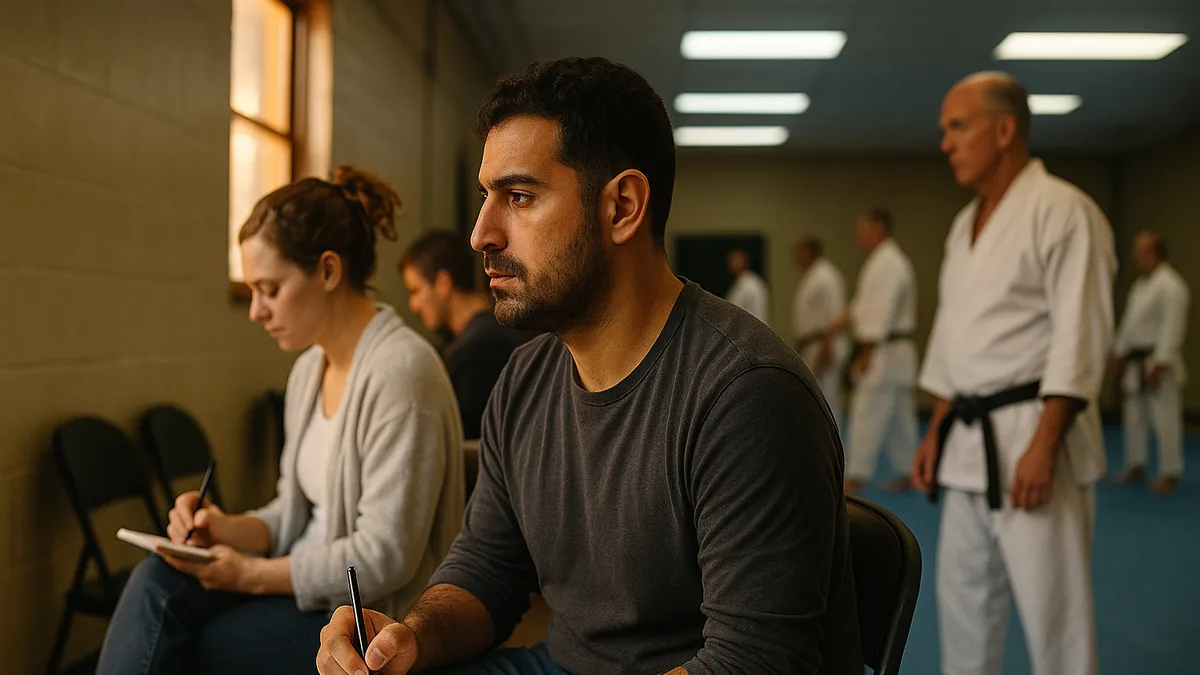
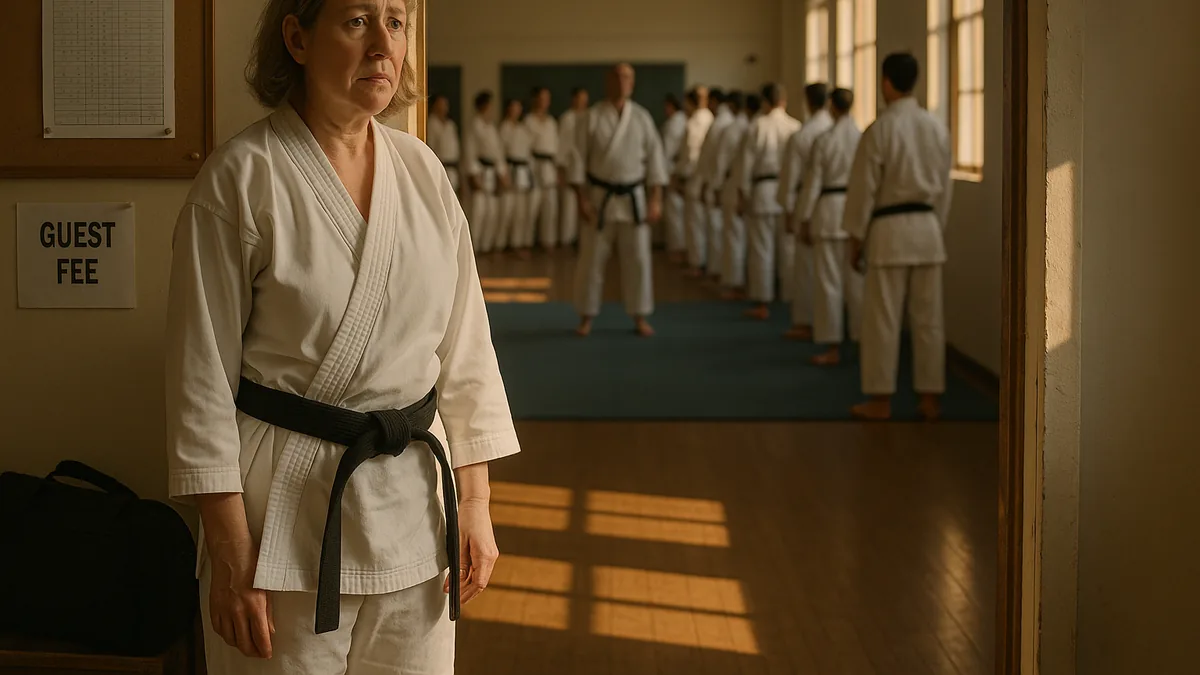
I’ve seen students quit - genuinely good students with real potential - because the senior grades in their club were unapproachable. Not unkind, just distant. They didn’t realise they were creating an atmosphere that made newer students feel like outsiders. If you’re interested in the culture side of this, the piece on karate club socials and off-mat culture gets into why that informal connection matters more than most instructors acknowledge.
Context is the other thing senior grades are uniquely placed to offer. When a junior is struggling with a grading and feels like they’re the only person who has ever found it hard, you can tell them honestly: “I failed my first attempt at this grade. Here’s what I did differently the second time.” That’s not technique instruction - it’s perspective, and it’s genuinely valuable. If they’re dealing with the aftermath of a grading setback, pointing them toward how to handle a grading failure gracefully is a concrete way to support them without overstepping into coaching territory.
Community Perspective
There’s a real disagreement in most clubs about how much authority senior grades should exercise, and it tends to split along two lines.
One camp - usually instructors and traditionalists - holds that senior grades should do almost nothing without explicit instruction. Their job is to train hard, be a good example, and wait to be asked. Anything more is overstepping. I have some sympathy for this view. I’ve seen clubs where well-meaning senior grades created genuine confusion by offering contradictory advice, and I’ve seen instructor-student relationships damaged by seniors who didn’t know where their role ended.
The other camp - usually the senior grades themselves - argues that rigid hierarchy wastes the resource of experienced practitioners. If you can see a white belt about to hurt themselves with bad form and you’re not allowed to say anything without a formal delegation of authority, that’s not traditional respect, that’s bureaucracy.
I think the truth sits closer to the first camp, but with flexibility. Default to restraint. Ask before you help. When in doubt, flag it to the instructor. But don’t use “I didn’t want to overstep” as an excuse for passivity when a junior genuinely needs support and the instructor is occupied elsewhere.
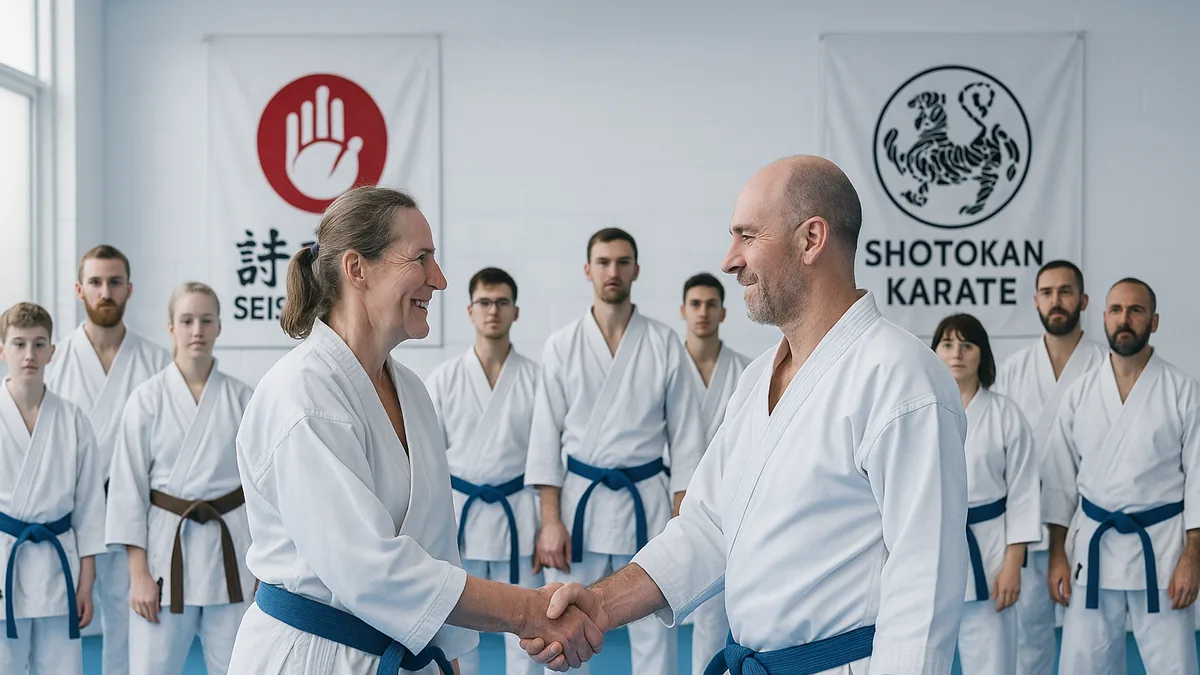
The clubs I’ve trained in that handled this best had an explicit culture around it - senior grades knew what they were expected to do, and juniors knew they could approach them. That clarity didn’t happen by accident. It came from instructors who talked openly about the mentorship dynamic rather than leaving everyone to figure it out. If your club runs interclub events or training days, those mixed environments often expose these dynamics in useful ways - there’s a good breakdown of how those situations work at interclub training days.
The Moment It Actually Clicks
There’s a point in training - usually somewhere around brown belt, in my experience - where you stop thinking about what you’re doing and start feeling it. The technique stops being a checklist and starts being a response. When you reach that point, you start to understand why your instructor kept saying things you couldn’t absorb as a beginner. The instruction wasn’t wrong - you just didn’t have the physical reference point to understand it yet.
Good mentorship creates the conditions for that moment to happen faster. You’re not shortcutting the process - the process takes as long as it takes - but you’re making the environment safe enough for genuine learning to occur, and you’re offering the right kind of support at the right time rather than the most technically comprehensive advice you can give.
That’s a harder skill than most senior grades realise. It took me years to stop confusing “giving good feedback” with “being a good mentor.” They overlap, but they’re not the same thing.
Key Takeaways
- Your role as a senior grade is to model, not to instruct - unless you’ve been explicitly asked to. When in doubt, flag concerns to the instructor rather than correcting directly.
- One specific correction lands better than three accurate ones. The biggest difference in how junior grades improve comes from clarity, not comprehensiveness.
- Train with junior grades before you correct them. Let them feel you as a partner first. A tense student can’t absorb a correction no matter how good it is.
- Ask before you touch. Every time. It takes two seconds and it matters.
- What junior grades often need most from senior grades isn’t technique - it’s perspective, approachability, and the reassurance that the path ahead is manageable.
- Default to restraint when it comes to authority, but don’t mistake restraint for passivity. Being present, consistent, and approachable is active mentorship, even when you’re not saying anything.
The weekly digest
New karate articles, once a week
One email every week with everything new on Karate Lifestyle. No spam; unsubscribe in one click.
We'll email you to confirm. See our privacy policy.