Training at Another Club as a Guest: The Etiquette, the Awkwardness, and How to Get the Most Out of It
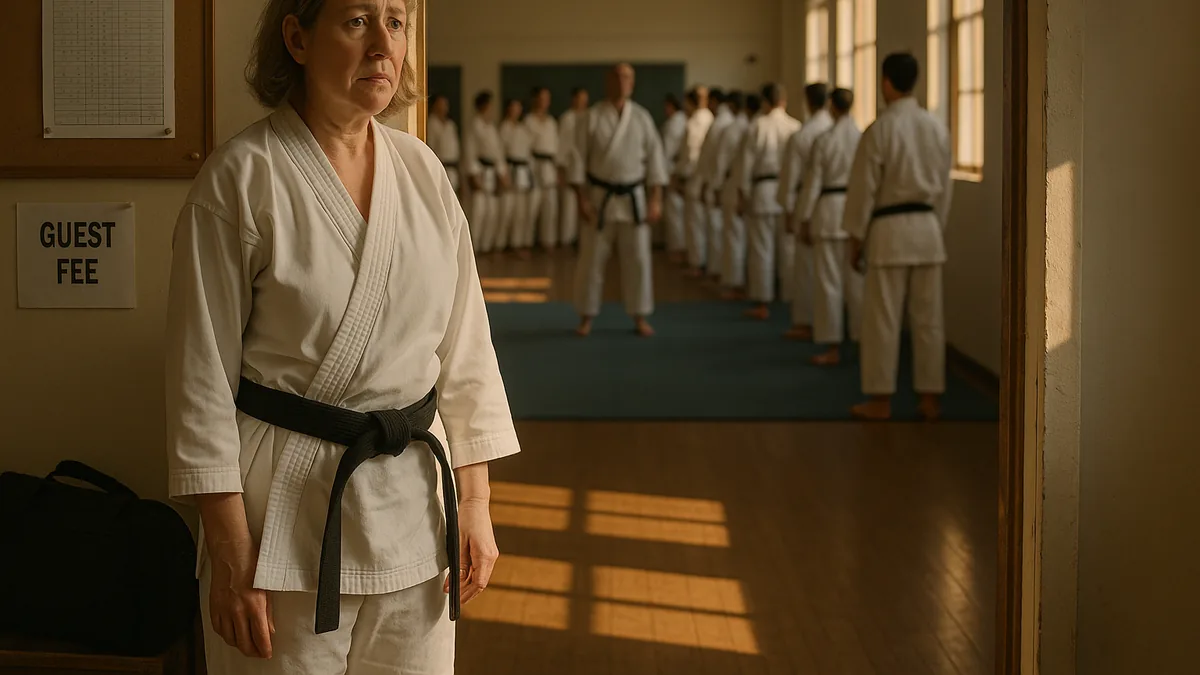
The first time I trained at another club as a guest, I bowed in, stood in the line, and spent the first twenty minutes quietly panicking because their count was different, their stances were deeper than anything I’d trained in, and the instructor kept correcting me on things my own sensei had drilled into me as correct. I didn’t know whether to hold my ground or just fold and do it their way. I did neither particularly well, and I left feeling like I’d wasted the session.
I’ve thought about that visit a lot since. Not because it was a disaster - it wasn’t - but because I made every mistake a guest karateka can make, and I made them all out of confusion rather than arrogance. Nobody told me the unwritten rules. Nobody told me what the etiquette actually looks like in practice, or how to mentally handle training somewhere that does things differently. I had to figure it out over years of visiting other clubs, hosting guests at my own dojo, and watching other guests get it wrong in the same ways I did.
If you’re serious about your training, you should be visiting other clubs. Not constantly, but regularly. The discomfort is the point. Here’s how to do it without embarrassing yourself or your home dojo, and how to actually get something useful out of it.
Before You Even Walk Through the Door
Contact the instructor first. Not the club Facebook page - the instructor. A short, respectful message explaining who you are, what grade you hold, where you train, and asking permission to attend as a guest. This matters more than people realise. Most instructors will say yes immediately, but the act of asking tells them something about you before you’ve thrown a single punch.
I’ve seen guests turn up unannounced at our dojo mid-session, bow in, and join the line. Technically harmless. But it puts the instructor in an awkward position - they don’t know your grade, your background, your injury history, or whether you’ve been asked to leave somewhere else. Asking in advance removes all of that friction.
When you make contact, don’t oversell yourself and don’t undersell yourself either. Just be accurate. If you’re a 3rd kyu training for shodan, say that. If you’ve been training for twelve years but took a seven-year break, mention the break. Instructors appreciate honesty, and it helps them decide where to place you in class.
One more thing before you arrive: check whether they have a guest fee. Some clubs charge a mat fee, some don’t. Either way, bring cash and offer. If they decline, fine - but offering is the right thing to do.
Arriving and Reading the Room
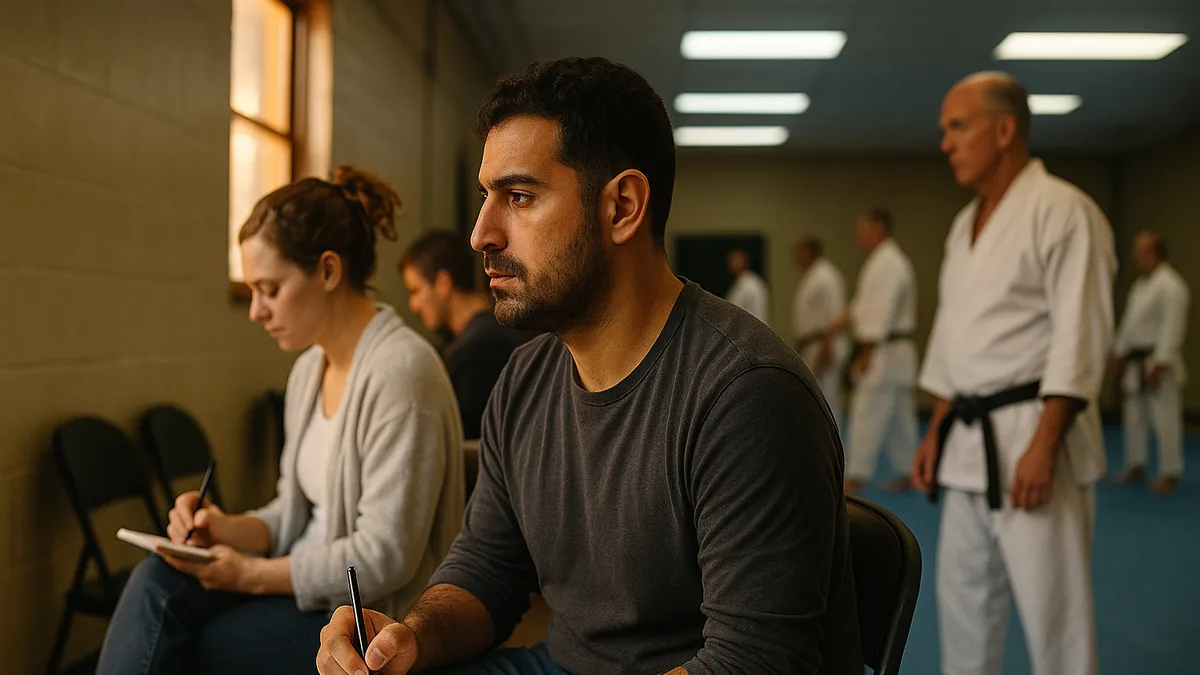
Get there early. Not five minutes early - fifteen minutes early. Watch how the dojo operates before class starts. Where do people leave their bags? Do they bow when entering the training area? Is there a formal line-up at the start, or does the instructor just call everyone to attention from wherever they’re standing? These things vary enormously between clubs and styles, and watching for ten minutes before class tells you more than any guide can.
What I tell students who are visiting somewhere new is this: treat yourself as a white belt until the instructor tells you otherwise. Not in terms of your technique - you shouldn’t suddenly forget fifteen years of training - but in terms of your attitude and your place in the room. You don’t know this dojo’s customs. You don’t know the internal dynamics. You don’t know which senior students are technically excellent and which ones have rank that outpaces their skill. None of that is your business on a first visit.
Stand where you’re told. If nobody tells you where to stand, go to the end of the line regardless of your grade. Let the instructor place you somewhere more appropriate if they choose to. I’ve seen 2nd dans walk into a guest session and position themselves at the front of the line - not aggressively, just out of habit - and watched the instructor’s face tighten. It’s a small thing. But small things matter in a dojo.
The Technique Difference Problem
This is where most guest visits get genuinely complicated, and I want to be direct about it because I’ve changed my view on this over the years.
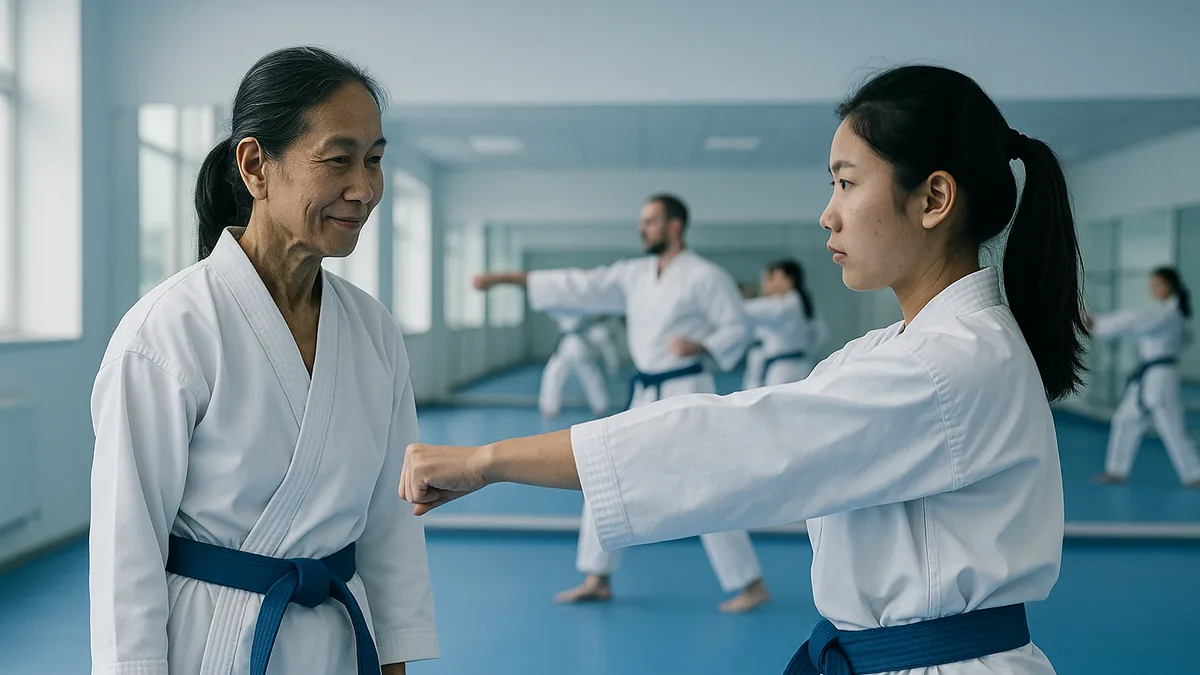
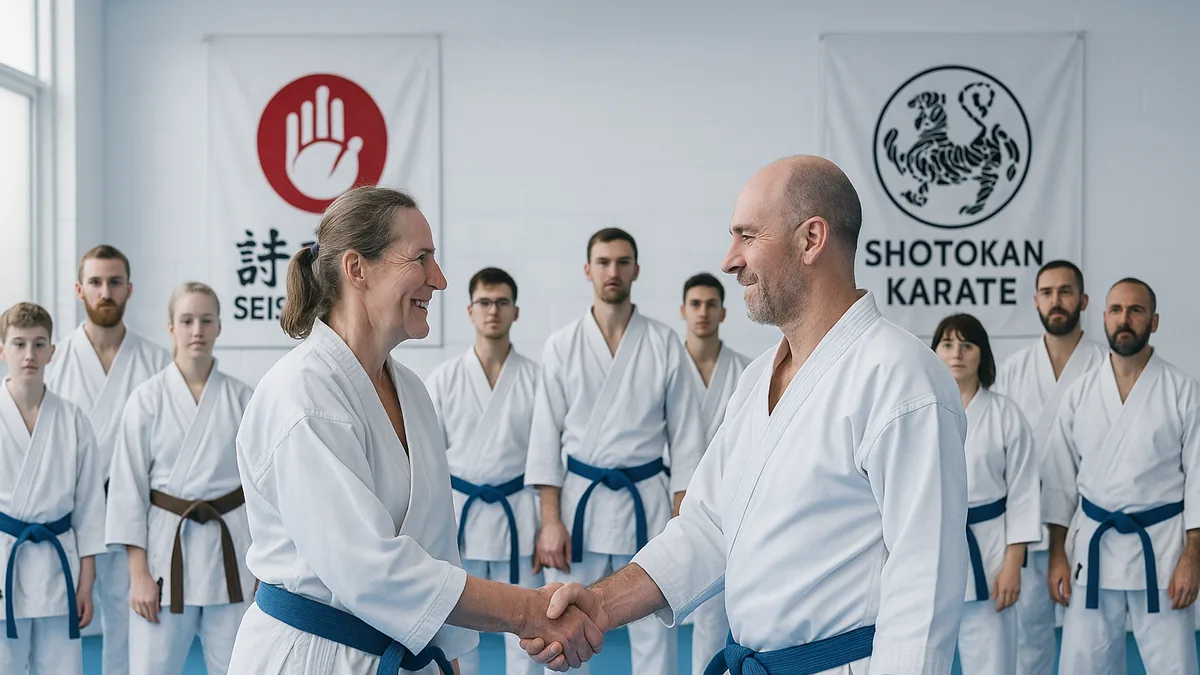
Different styles do things differently. Not just aesthetically - structurally. A Shotokan gyaku-zuki and a Wado-ryu gyaku-zuki are not the same punch. The hip mechanics are different, the stance depth is different, the body alignment through the technique is different. If you’re Shotokan and you train at a Goju-ryu dojo for a session, you will be corrected. You will be corrected on things your instructor has specifically taught you to do a certain way.
As a white belt I thought this was about one style being right and the other being wrong. By brown belt I realised it’s about understanding that each technical approach has its own internal logic, and the corrections you receive in a guest session are telling you something about that logic - not invalidating what you already know.
My position on this, and I hold it firmly: do it their way. For the duration of that session, do it their way. Not because your instructor is wrong, but because you will learn nothing if you spend the session mentally defending your home style. The moment you start internally arguing with a correction, you’ve stopped training.
I’ve noticed that the karateka who get the most from guest sessions are the ones who are genuinely curious about why the other style does it differently. Not suspicious - curious. When a Wado instructor corrected my hip position in a way that felt completely backwards to my Shotokan training, I asked about it after class. The explanation was twenty minutes long and changed how I understood my own hip rotation when I went back to my home dojo. That’s the value of guest training.
This connects to something worth reading if you haven’t already: What Karate Rank Actually Means Outside Your Own Organisation: A Honest Guide - because understanding how rank translates (or doesn’t) between organisations is part of approaching a guest session with the right mindset.
The Awkwardness Is Real - Here’s How to Handle It
Nobody talks about this enough. Guest training is socially awkward. You don’t know anyone. You don’t know the in-jokes. You don’t know who’s been training together for twenty years and who just started. You’re the outsider, and everyone knows it.
I’ve seen guests handle this badly in two opposite directions. Some become overly eager - talking too much, offering opinions on technique to people they’ve just met, trying too hard to fit in. Others go completely silent and closed off, which reads as arrogance even when it’s just nerves. Neither works.
What actually works is simple: be genuinely friendly but keep your mouth shut about technique unless asked. Engage in normal conversation during breaks. Show interest in the club. If someone asks where you train, answer honestly and without making comparisons. “I train at [dojo name] under Sensei X, we’re mainly Shotokan” is fine. “We do it differently at my club” is not something you say out loud, even if you’re thinking it.
The correction that makes the biggest difference in how you’re perceived as a guest isn’t technical - it’s attitudinal. The guests who get invited back, who get treated like part of the session rather than a tolerated visitor, are the ones who train hard, receive corrections graciously, and leave their ego at the door. Every instructor I’ve spoken to about this says the same thing.
What You’re Actually There to Learn
The mistake most people make when guest training is treating it like a normal session at a slightly different location. It isn’t. You should be treating it like a research trip.
Before you go, identify one or two specific things you want to understand better. Not vague things like “improve my technique” - specific things. Maybe you’ve been working on the mechanics of oi-zuki versus gyaku-zuki and you want to see how a different style approaches the body alignment and breathing for each. Maybe you want to understand how another instructor drills the transition between the two, what drills they use to differentiate them, how they cue the hip rotation differently for a stepping punch versus a reverse punch.
I’ve noticed that guest sessions become genuinely transformative when you arrive with a specific question and stay alert to how that question gets answered - often indirectly, through the way the instructor structures the class or corrects students.
Watch the senior students carefully. Not their kata - their basics. The way a 3rd dan from a different style throws a gyaku-zuki tells you something about what that style values. Is the rotation earlier or later? Is the shoulder more locked or more relaxed at impact? Where does the breath go? You won’t get answers to these questions by thinking about them - you’ll get them by training hard and paying attention.
If you want to dig further into finding clubs worth visiting, How to Find a New Karate Club When You Move or Change Styles has practical advice on evaluating clubs before you commit time to them.
After the Session
Bow out properly. Thank the instructor directly, not just in a general way to the room. If you received corrections that were genuinely useful, say so specifically - “that adjustment to my front stance really changed how the technique felt” is better than a generic “great session.” Instructors remember the guests who were specific.
If you want to return, say so. If you want to ask a follow-up question about something that came up in training, ask it now - not on the way out, but in a proper conversation after the session has formally ended.
One thing I’d strongly recommend: write down what you noticed while it’s fresh. Not just what you learned technically, but what you observed about how the class was structured, how corrections were delivered, how the senior students moved differently from the juniors. Some of the most useful training insights I’ve had came from guest sessions that I wouldn’t have remembered clearly if I hadn’t written them down the same evening.
The dojo politics angle is also worth being aware of - Dojo Politics: How to Navigate Them Without Losing Your Training covers the kind of internal dynamics that exist in every club, and being aware of them helps you read a room you’ve just walked into.
Community Perspective
There’s a genuine divide in how karateka feel about guest training, and it mostly breaks down along association lines.
Some organisations actively encourage their members to train at affiliated clubs and even clubs outside the association. They see cross-training as part of development. Others are more protective - not always out of ego, sometimes out of a legitimate concern that students at certain stages of their development need consistency, and that bouncing between different technical approaches before you’ve solidified your own foundation does more harm than good.
I think both positions have merit, and I’ve shifted on this over the years. When I was a junior kyu grade, visiting clubs with very different technical approaches did confuse me. My basics got inconsistent for a while. By the time I was a senior kyu and then a dan grade, guest training became one of the most valuable things I did. The timing matters.
What I’d tell any student is this: if your basics are still being actively corrected by your own instructor, focus on your home dojo first. Once your fundamentals are solid enough that you can adapt and return, guest training becomes genuinely valuable. Before that point, it can scatter your development.
There’s also the question of what you owe your home club - loyalty, consistency, showing up. Training Partners: How to Find, Keep, and Be a Good One touches on the relational side of this, which matters more than people admit.
Key Takeaways
- Contact the instructor before you arrive, not the day of - it shows respect and removes awkwardness for everyone
- Do it their way for the duration of the session; defending your home style in your head means you’ve stopped learning
- Arrive with one or two specific technical questions you want answered, even if indirectly - guest sessions with a focus are worth ten times more than ones without
- Watch how senior students move in basics, not kata - that’s where a style’s priorities show up most clearly
- The guests who get the most from these sessions are the ones who train hard, receive corrections without resistance, and ask good questions after class
- Write down what you noticed the same evening - the technical observations that feel obvious in the moment are the ones you’ll forget by morning
The weekly digest
New karate articles, once a week
One email every week with everything new on Karate Lifestyle. No spam; unsubscribe in one click.
We'll email you to confirm. See our privacy policy.