How to Find a New Karate Club When You Move or Change Styles
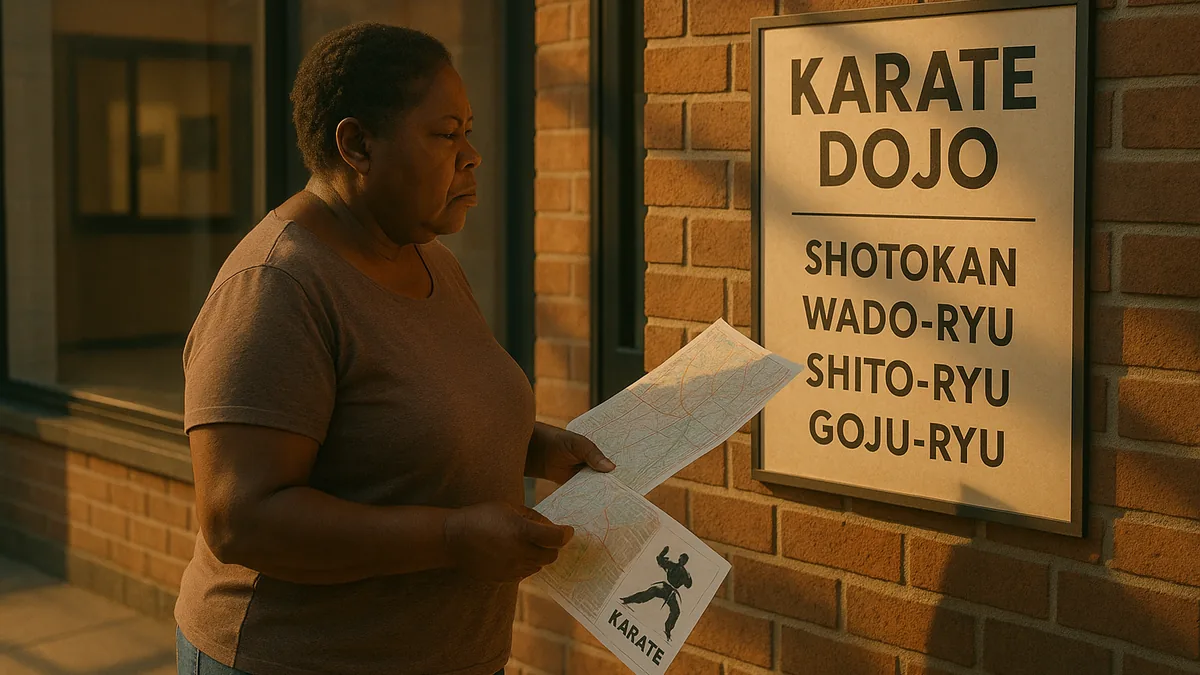
Moving to a new city and finding a new dojo is one of those things nobody really prepares you for. You train for years, build relationships, know exactly where you fit in the hierarchy, understand your instructor’s corrections before they finish the sentence - and then you uproot. Suddenly you’re a stranger walking into someone else’s dojo, and all of that context is gone.
I’ve done this three times. Once when I moved cities for work, once when I deliberately left a club that had stopped challenging me, and once when I wanted to cross-train in a style I’d been curious about for years. Each time I got it wrong before I got it right. What follows is what I wish someone had told me before I wasted six months training somewhere that wasn’t right for me.
Start With the Style, Not the Postcode
The most common mistake I see when people ask me how to find a new club is that they search by location first. I understand why - you want something convenient - but if you pick the closest club without thinking about style compatibility, you’ll either end up confused, frustrated, or quietly undoing years of good habits.
If you’ve trained Shotokan for ten years and you walk into a Wado-Ryu dojo expecting the same approach to kihon, you’re going to have a rough first few months. That’s not a bad thing if you’re prepared for it. It’s a very bad thing if you weren’t expecting it. The stances are different, the weight distribution is different, the whole philosophy of movement is different. I’ve seen experienced Shotokan practitioners walk into Wado classes and immediately start fighting their own muscle memory, getting visibly frustrated because nothing feels right. It doesn’t mean either style is wrong - it means they weren’t prepared.
Before you search for clubs, get clear on what you’re actually looking for. Are you trying to continue what you’ve been doing? Cross-train in something new? Start fresh? Those are three completely different searches. If you want to continue your current style, look for clubs affiliated with the same association if possible - the grading syllabus, terminology, and approach will be much more consistent. If you’re deliberately switching styles, read up on what you’re getting into first. The Karate Styles Compared guide is a solid starting point for understanding what actually differs between Shotokan, Goju-Ryu, Wado-Ryu, and Shito-Ryu before you walk through the door.
How to Actually Research a Club
Websites tell you almost nothing useful. That’s the honest truth. A club’s website will show you the schedule, the instructor’s credentials, maybe some photos of a grading. None of that tells you whether the training is any good.
What I’d actually do:
- Check the association affiliation. A club affiliated with a recognised national body (JKA, KUGB, WSKA, EKGB, etc.) has at least passed some baseline standard. That doesn’t guarantee quality, but it filters out the worst options.
- Look at the instructor’s lineage. Not to be a snob about it - but who trained them, and under what system? An instructor who graded through a credible association and has been teaching for years is a different proposition from someone who got a black belt online and opened a leisure centre class.
- Search for the club name and the instructor’s name together. You’ll often find forum posts, social media discussions, or community mentions that give you a more honest picture than any official website.
- Ask in karate communities online. The r/karate community can be hit or miss for technique discussions, but for local recommendations it’s genuinely useful. People are usually honest about which clubs in their area are worth visiting.
What I tell students who are moving is this: if you currently train at a decent club, ask your instructor for recommendations before you leave. Instructors often know people. The karate network is smaller than it looks, and a personal recommendation from a trusted source is worth more than anything you’ll find on Google.
The Trial Class Tells You Everything - If You Know What to Look For
Every club worth training at will let you attend a trial class. If they don’t, that’s already a red flag. What you do with that trial class is the thing that matters.
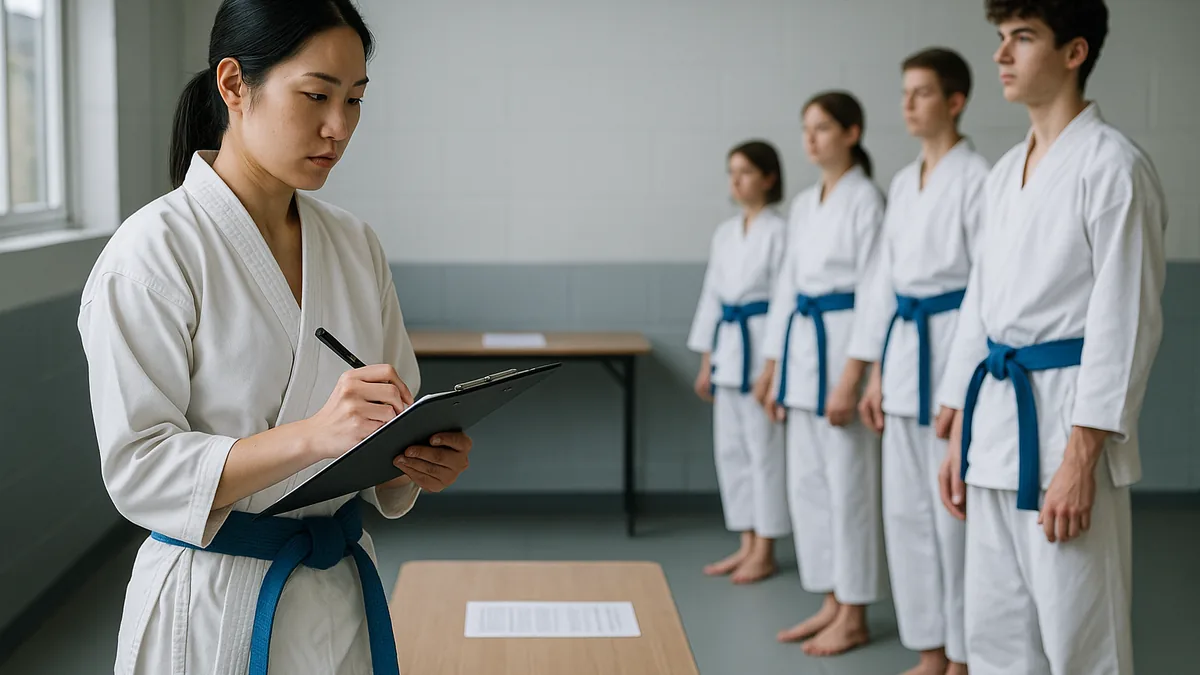
Most people walk in and evaluate the class on surface features - is the dojo clean, are the students polite, does the instructor seem confident. Those things matter, but they’re not what I’d prioritise. What I’m looking at is how the instructor handles correction.
I’ve noticed that the best instructors correct the same student multiple times in a single class, and each correction builds on the last. They’re not just calling out mistakes - they’re tracking where each student is in their understanding. Weaker instructors correct once and move on, or worse, they correct in a way that’s vague enough to mean nothing. “More power” is not a correction. “Your hip isn’t finishing the rotation - you’re stopping it early” is a correction.
Watch how the senior students move. In a good dojo, the senior students look different from the beginners in ways that go beyond just knowing more kata. There’s a quality to how they carry themselves, how they move between techniques, how they recover after a mistake. That’s what years of good instruction produces. If the black belts look like slightly more confident white belts, that tells you something.
Also pay attention to the atmosphere during sparring. Is there genuine respect, or is there a culture of the senior students using juniors as target practice? I’ve trained at clubs where the unwritten rule was that you could hit the newer students as hard as you wanted because they couldn’t hit back yet. That’s not training - that’s bullying with a gi on.
For more detailed guidance on what separates a good instructor from a mediocre one, the piece on what makes a good karate instructor goes deep on exactly this.
The Rank Conversation - Have It Early
One mistake I see constantly when experienced practitioners join a new club is avoiding the conversation about their existing rank. Either they don’t mention it and end up training at a level that doesn’t challenge them, or they mention it and expect it to be accepted without question, which creates a different kind of awkwardness.
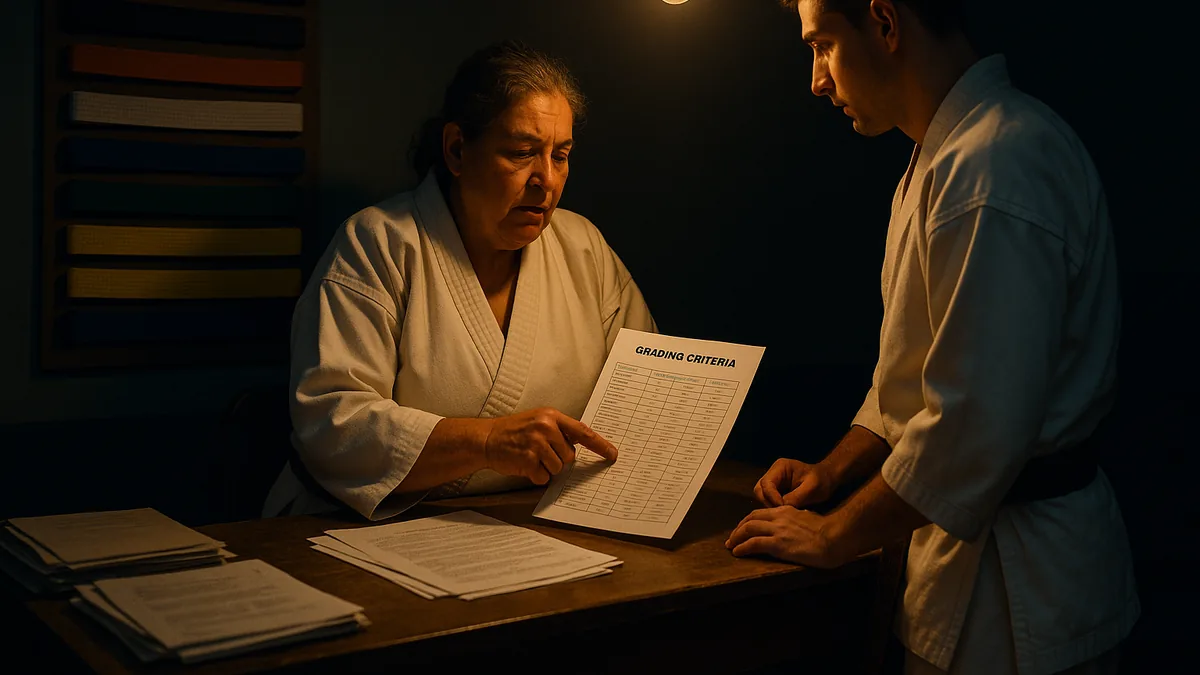
Here’s my honest take: your rank from another club or association is not automatically transferable, and you should go in expecting to prove yourself rather than expecting the new club to take your word for it. I know that feels frustrating after years of work. But think about it from the instructor’s perspective - they have no way of knowing what the grading standard was at your previous dojo. A 3rd kyu at one club might be equivalent to 1st kyu at another. It’s not an insult to ask you to demonstrate what you know.
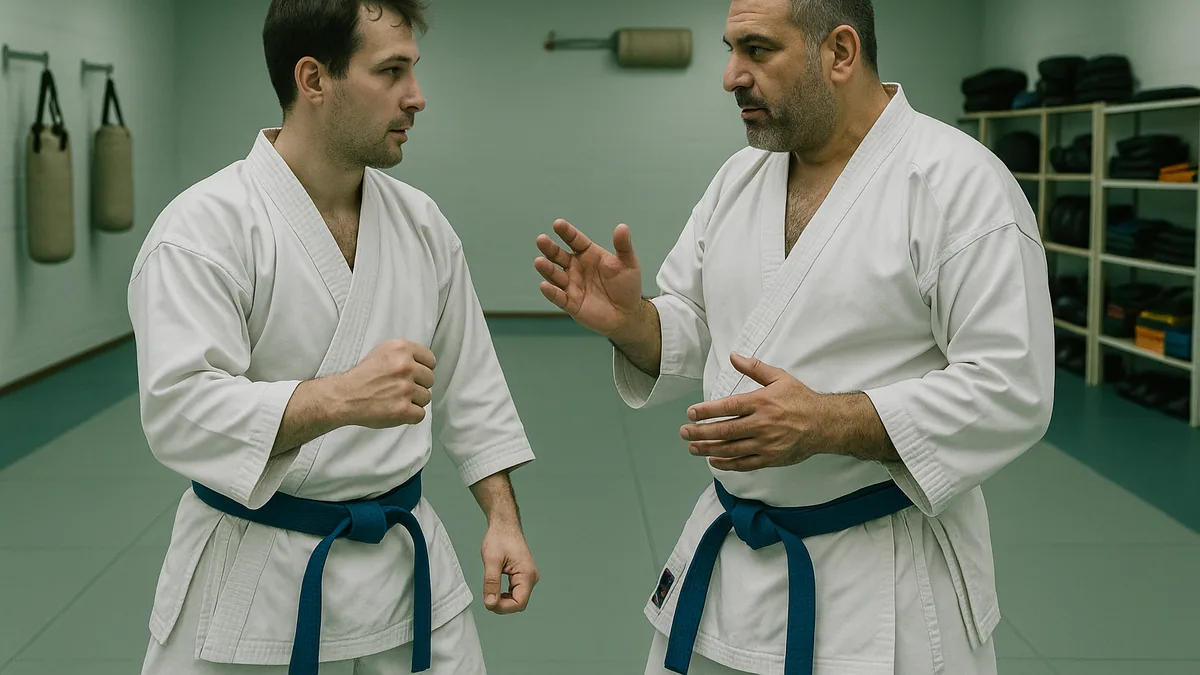
What actually works, in my experience, is being upfront about your background and then letting your training speak for itself. Tell the instructor what style you’ve trained, what grade you hold, and roughly how long you’ve been training. Then ask them what they’d suggest. A good instructor will watch you train for a few sessions before making any decisions. That process of being assessed again feels wrong at first - almost like you’re being demoted - but it usually results in a more accurate placement than any paper certificate.
I used to think rank was the thing that mattered. By brown belt I realised it’s just a rough indicator of where you are in a specific system’s curriculum. The actual training is what matters.
Use Your Network - This Is Underrated
The karate community is more connected than most practitioners realise, especially once you’ve been training for a few years. Your instructor knows instructors in other cities. Your training partners might have trained elsewhere before joining your club. Associations run national events where you meet people from all over the country.
Before I moved the second time, I mentioned it casually at training and within two sessions had three separate recommendations from people in my dojo - one from my instructor, one from a senior student who’d trained in that city years earlier, and one from someone who’d competed there. All three pointed to the same club. That’s a strong signal.
If you don’t have that kind of network yet, build it. Go to seminars. Enter competitions even if you’re not particularly competitive - the social side of those events is where you meet people from other clubs. Train at summer schools if your association runs them. The connections you make there are exactly what you’ll need when you eventually need to find somewhere new.
Community Perspective
This is genuinely an area where experienced practitioners disagree, and I think it’s worth being honest about that.
Some instructors take a hard line on rank transfer - if you didn’t grade through their association, you start from white belt. I’ve seen this applied to people with decades of experience, which feels absurd. But I’ve also seen the other extreme, where clubs accept whatever rank a new student claims and then have to quietly manage the fact that their “3rd dan” can’t perform basic kata to a passable standard.
The middle ground - which is where I’d sit - is to accept rank provisionally and let training determine where someone actually fits. Most reasonable instructors do this in practice even if their official policy says otherwise.
There’s also a real split in the community about cross-style training. Some traditional instructors see it as diluting your practice, and there’s a legitimate argument there - if you’re constantly switching between styles, you never develop the depth that comes from committing to one system for years. I’ve seen people who’ve trained in four different styles for three years each and can’t perform any of them well. But I’ve also seen practitioners who cross-trained deliberately and came back to their primary style with insights they wouldn’t have found otherwise. I think the difference is intent. Cross-training to understand something specific is different from style-hopping because you’re bored.
Key Takeaways
- Decide what you’re actually looking for before you search - continuing your current style, cross-training, or starting fresh are three different processes with different priorities.
- Check association affiliation and instructor lineage before attending a trial class - not as a box-ticking exercise, but as a filter for the most obvious red flags.
- In a trial class, watch how the instructor corrects students and how the senior grades move - these tell you more about the quality of teaching than anything else in the room.
- Have the rank conversation early and go in ready to prove yourself rather than expecting your previous grade to be accepted without question - it’s not a demotion, it’s just how a new instructor builds an accurate picture of where you are.
- Use your existing network before you use Google - a personal recommendation from someone who has actually trained at a club is worth more than any website or review.
- Give it at least two months before you decide a new club isn’t right for you - the first few sessions in any new dojo feel uncomfortable, and that discomfort is not the same thing as a bad fit.
If you’re just starting to think through what kind of club you’re looking for, the how to choose a karate club guide covers the foundational questions in more detail. And if you’re new to this community generally, the welcome to KarateLifestyle page is a good place to get a sense of what we’re about.
The weekly digest
New karate articles, once a week
One email every week with everything new on Karate Lifestyle. No spam; unsubscribe in one click.
We'll email you to confirm. See our privacy policy.