What Makes a Good Karate Instructor?
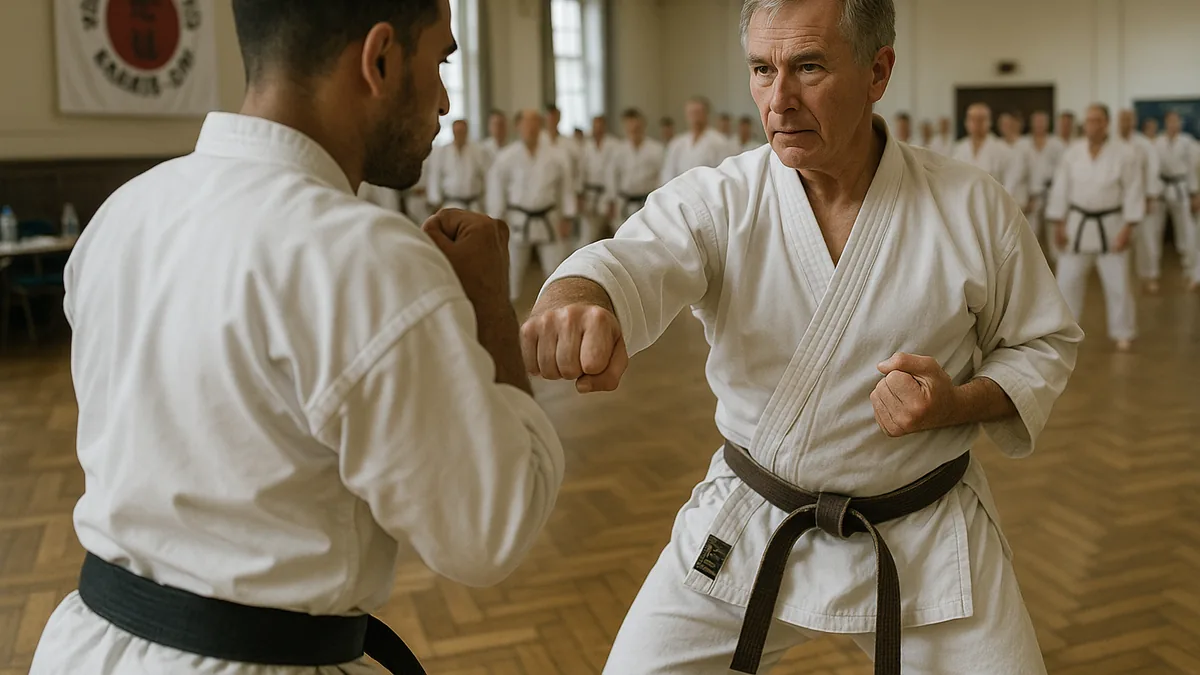
I’ve trained under about fifteen different instructors over the years. Some were competition champions. Some had modest competitive records. Some never competed at all. And the quality of their teaching bore almost no correlation to their personal achievement. The best instructor I ever trained under was a 4th Dan who’d never won a major tournament. The worst was a former national team member who couldn’t explain a technique to save his life.
This is the uncomfortable truth about karate instruction: being good at karate and being good at teaching karate are different skills. They overlap, certainly - you need sufficient technical ability to demonstrate and understand what you’re teaching. But beyond a baseline of competence, the additional factors that make someone a great instructor have almost nothing to do with how many trophies they’ve collected.
The Teaching-Performance Gap
Consider what elite performance requires: years of focused development of your own technique, an inward attention to your own body mechanics, competitive instinct, the ability to perform under pressure. These are valuable qualities, but they’re fundamentally self-directed.
Now consider what teaching requires: the ability to observe someone else’s movement and diagnose what’s wrong, the communication skill to explain corrections in ways different people understand, patience with repeated errors, the capacity to break complex movements into learnable components, awareness of where each student is in their development, and the restraint to not overwhelm someone with information they’re not ready to absorb.
These are fundamentally other-directed skills. They require empathy, observation, and communication rather than personal performance ability. Some high-level practitioners have both skill sets. Many don’t. And the ones who don’t often struggle as instructors despite their impressive technical credentials.
The reverse is also true. Some of the best teachers I’ve encountered are practitioners whose own ability plateaued at a solid but unspectacular level - but who developed an extraordinary capacity to analyse, explain, and develop other people’s technique. They see things that better technicians don’t, because they had to work harder to understand what was happening in their own bodies.
What Good Instruction Looks Like
Correction that identifies the root cause. A poor instructor watches your technique and says “that’s wrong, do it like this” - then demonstrates without explaining what specifically needs to change. A good instructor identifies the actual problem: “Your punch is slow because your shoulder is rising - that’s because your hikite isn’t pulling back level. Fix the pulling hand and the punching hand will sort itself out.” Root cause identification rather than symptom correction.
Differentiated feedback. Not every student needs to hear the same thing, even when they’re making the same mistake. A nervous beginner who’s doing their best needs encouragement with a gentle correction attached. A lazy brown belt who knows better needs direct, unambiguous feedback. A good instructor reads the student, not just the technique.
Knowing when to leave someone alone. This is underrated. Sometimes a student is working something out through repetition and the worst thing you can do is interrupt with another piece of information. Good instructors develop a sense for when intervention helps and when it just adds noise to an already busy processing load.
Demonstrating at the student’s target level. When a white belt asks how to perform a technique, showing them the elite version isn’t helpful. Good instructors can demonstrate at multiple levels - showing what the student should be aiming for next, not what perfection looks like in twenty years.
Explaining the why. The best instructors don’t just tell you what to do - they explain why it works that way. Not every time, not with every student, but enough that you develop understanding rather than just compliance. When you understand the biomechanical reason behind a correction, you can self-correct in future. When you only know “sensei said do it this way,” you’re dependent forever.
The Red Flags
Some problems in instruction are matters of style or preference. These aren’t. These are genuine warning signs:
Never allowing questions. Legitimate karate instruction includes space for genuine questions. An instructor who treats every question as a challenge to their authority is insecure, and insecurity in a position of physical authority creates problems. There’s a difference between “we’ll cover that later” (fine) and “you don’t question, you just do” (concerning).
Physical correction without consent. There are appropriate ways to physically adjust someone’s position - a tap on the hip to indicate rotation direction, a hand on the shoulder to demonstrate level. There are inappropriate ways: grabbing, forceful repositioning, any contact that causes pain presented as “correction.” Good instructors ask before touching and use minimal force.
One teaching speed for everyone. If the beginner and the 3rd kyu are getting identical instruction with identical expectations, something is wrong. Progression means different standards at different levels. An instructor who can’t differentiate is either teaching one student at a time or failing everyone else in the room.
Excessive ego in demonstrations. Instructors who consistently demonstrate techniques on the least experienced students, who use excessive force during demonstrations, or who seem to enjoy the power differential rather than the teaching moment - these are character issues that affect the entire club culture.
No continuing development. An instructor who stopped learning when they got their teaching grade is teaching from a static knowledge base that’s gradually becoming outdated. Good instructors still train, still attend courses, still learn from their own seniors. They model the ongoing development they expect from their students.
Discouraging training elsewhere. This is subtle but significant. Instructors who actively discourage you from attending courses, seminars, or other clubs are prioritising control over your development. Confident instructors encourage their students to train widely - they know that broader experience makes better karateka, and they’re not threatened by students seeing other approaches.
Competition Record vs Teaching Ability
I want to address this directly because it’s how many people choose instructors - and it’s a poor primary criterion.
A competition record tells you that this person was an effective performer under specific rule sets at a specific point in their life. It tells you nothing about their ability to teach. A former kata champion might be an excellent kata instructor - or they might be someone whose talent was so natural they never had to analyse their own movement and therefore can’t explain it to anyone else.
What’s more useful than a competition record:
- How long have they been teaching? Teaching is a skill that develops with practice, like any other.
- Who have they produced? Look at their students. Not just the talented ones - any decent club will have one or two natural athletes who’d be good regardless. Look at the average students. Are they progressing? Are they technically sound? Do they understand what they’re doing?
- How do they handle the struggling student? Watch a class and pay attention to the student who’s clearly finding it difficult. What does the instructor do? Ignore them? Give a generic correction? Or find a way to help them specifically?
- What’s the retention rate? Good instruction keeps people training. High turnover - especially among beginners - often signals a teaching problem rather than a student problem.
The Communication Spectrum
Different instructors communicate differently, and none of these styles is inherently wrong:
The demonstrator shows rather than tells. They’ll perform the technique, have you copy it, perform it again with emphasis on the specific element they want you to notice, and repeat until you get it. This works brilliantly for visual learners and can be frustrating for people who need verbal explanation.
The analyst breaks everything down verbally. They’ll explain the biomechanics, the timing sequences, the weight distributions, the angles. This works for people who learn through understanding but can overwhelm those who just need to feel the movement.
The analogist uses metaphors and comparisons. “Imagine you’re wringing out a towel” for hip rotation. “Think of your arm as a whip, not a bat.” These can be revelatory for some students and meaningless for others.
The feeler uses physical sensation as the primary feedback tool. “Can you feel your weight in your front heel? Move it to the ball of the foot.” This develops body awareness directly but requires the student to have sufficient proprioceptive vocabulary.
The best instructors use all four depending on the student and the situation. They notice when one approach isn’t landing and switch to another. This adaptability is itself a teaching skill that develops over time.
What Students Owe Good Instructors
This goes both ways. Good instruction requires responsive students.
Attention. When your instructor is explaining something, listen. Don’t chat, don’t fidget, don’t mentally rehearse what you were just doing. Give them your focus. They can’t teach someone who isn’t receiving.
Honest feedback. If you don’t understand a correction, say so. Most instructors would far rather you asked for clarification than nodded along while remaining confused. “I’m not sure what you mean - can you show me again?” is always appropriate.
Effort to implement. When you receive a correction, genuinely try to implement it. Not just in that moment - in subsequent repetitions, in the next class, ongoing. Nothing is more disheartening for a teacher than correcting the same thing weekly because the student isn’t actually working on it between sessions.
Respect for their time. Don’t monopolise your instructor’s attention during class. They have a room full of students. Ask your question, receive the answer, go and work on it. Extended conversations about theory are for after class, not during.
Finding the Right Fit
Choosing a karate club involves many factors, but instructor quality is the most important one. A beautiful facility with mediocre teaching will develop you less than a basic hall with excellent instruction.
What I’d suggest: attend three or four sessions before committing. Watch how the instructor interacts with different levels. Notice whether they seem to genuinely enjoy teaching or whether they’re going through motions. Pay attention to the senior students - they’re the product of this instruction, and they’ll show you what you’re working toward.
Trust your instinct about whether you’re learning. After a good class with a good instructor, you should feel like you understand something better than you did an hour ago - even if that something is small. If you consistently leave classes feeling like you’ve exercised but not learned, the instruction may not be working for you regardless of the instructor’s credentials.
Key Takeaways
- Teaching ability and personal performance ability are different skills - a competition record is not a reliable indicator of instruction quality
- Good correction identifies root causes rather than symptoms, and is differentiated based on the student’s level and needs
- Red flags include: never allowing questions, physical correction without consent, one speed for everyone, excessive ego, no continuing development, discouraging outside training
- Evaluate instructors by their students (especially average ones), retention rates, and how they handle struggling practitioners
- The best instructors adapt their communication style to the learner - demonstrating, analysing, using analogies, or guiding by sensation depending on what works
- Attend multiple sessions before committing and trust whether you’re actually learning, not just exercising
The weekly digest
New karate articles, once a week
One email every week with everything new on Karate Lifestyle. No spam; unsubscribe in one click.
We'll email you to confirm. See our privacy policy.