How to Choose a Karate Club
How to Choose a Karate Club
Most people walk into the wrong dojo first. I did. It took me three clubs before I found somewhere that actually taught me karate rather than just collecting my monthly fee and handing out belts on a schedule. I’m not saying that to be harsh - I’m saying it because choosing a club is genuinely difficult when you don’t know what you’re looking for, and the stakes are higher than people realise. A bad club doesn’t just waste your time. It can wire in bad habits, give you a false sense of progress, and put you off training for good.
If you’re a parent researching clubs for your child, or an adult thinking about starting for the first time, here’s what I actually look for - and what sends me straight back out the door.
Style Differences Actually Matter
One of the first things I tell anyone who asks me about starting karate is that “karate” is not one thing. Shotokan, Wado-Ryu, Goju-Ryu, Shito-Ryu, Kyokushin - these are meaningfully different approaches to training, not just different names for the same punches and kicks.
Shotokan tends to be long, linear, and focused on powerful basics. Wado-Ryu has softer, more evasive movement with clear jujutsu roots. Goju-Ryu emphasises close-range work and breathing. Kyokushin is full-contact and physically brutal in the best possible way. None of these is objectively better - but they suit different people.
I’d say the style matters less than the quality of instruction, but you should at least know what you’re signing up for. If you’re drawn to kata and traditional practice, a Kyokushin club might leave you frustrated. If you want full-contact sparring and physical conditioning, a club that spends most of its time on ceremonial kata performance might not scratch that itch.
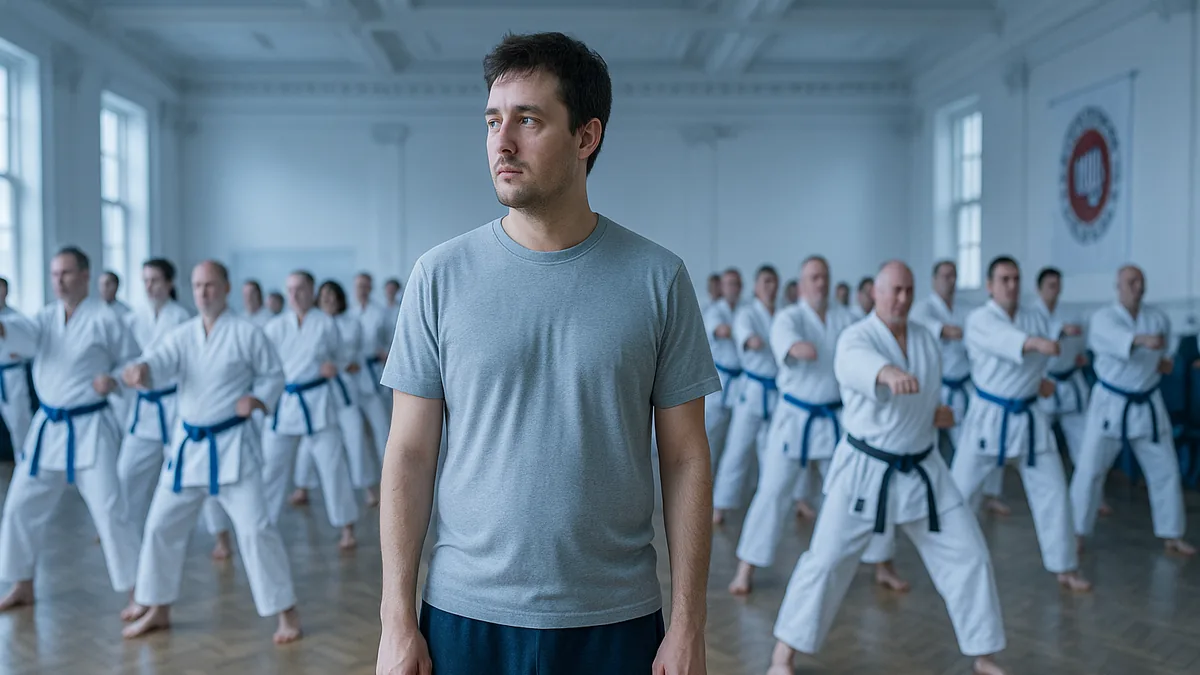
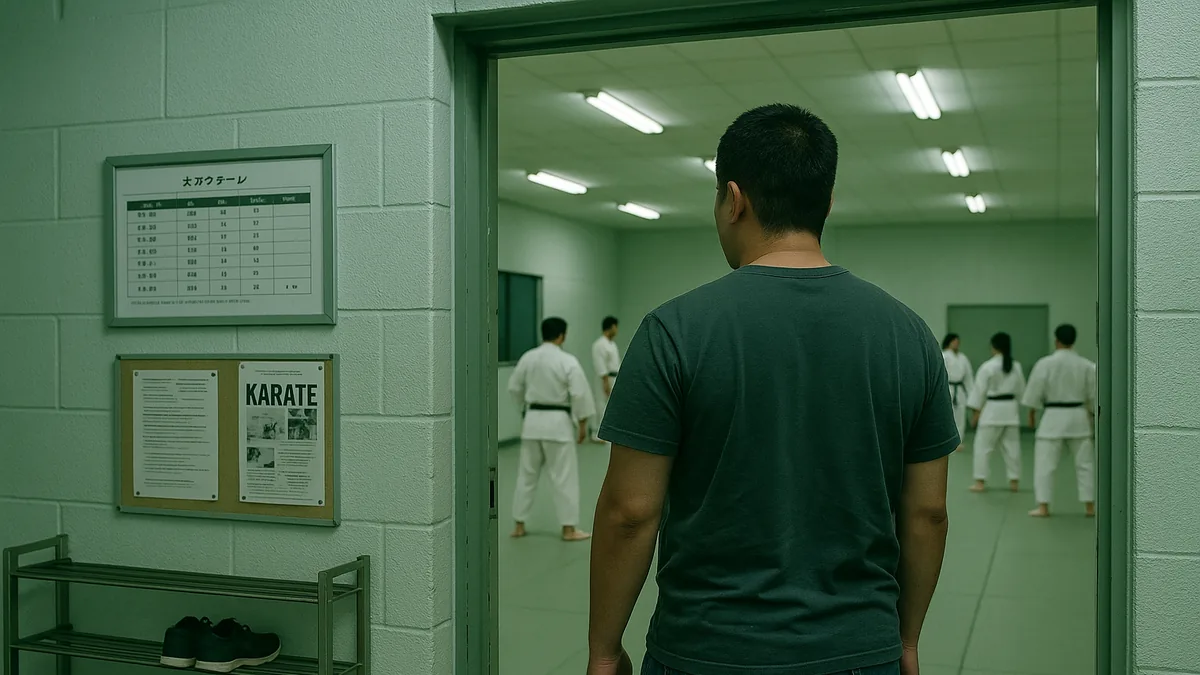
Visit a few. Watch a class before you commit to anything.
Green Flags: What a Good Club Actually Looks Like
I’ve trained at enough dojos to know what right feels like when you walk in. Here’s what I look for:
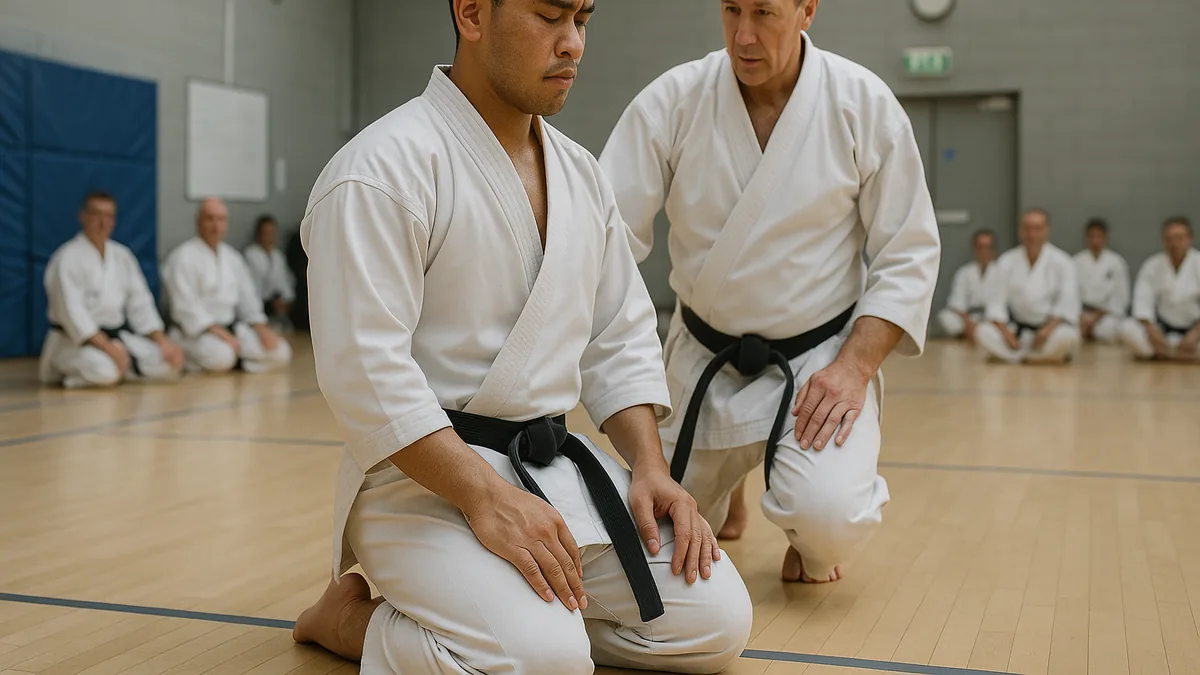
The instructor corrects individuals. Not just shouting counts at the class, but actually walking over, adjusting a stance, explaining why. The first time an instructor put my elbow in the right position during a block and I felt how different it was - that’s when I understood what teaching actually means.
Students of different grades train together. When senior grades are working alongside beginners, knowledge transfers naturally. You watch how a brown belt moves. They watch how they used to move. Everyone benefits.
The warm-up is purposeful. Not ten minutes of jogging in circles to fill time, but movement that prepares your body for what’s coming. A club that can’t structure a warm-up usually can’t structure a lesson.
Questions are welcomed. I’ve trained under instructors who treated questions as challenges to their authority. That’s a red flag dressed up as tradition. A good instructor wants you to understand, not just comply.
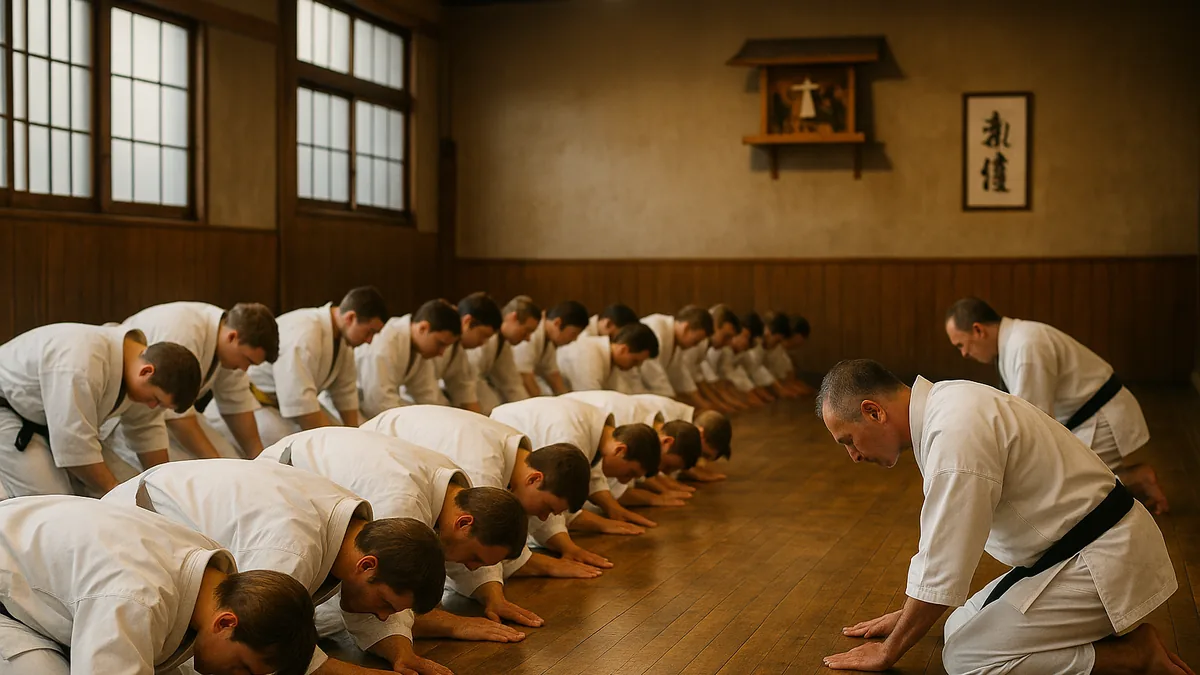
The dojo is clean and the etiquette is taken seriously. This sounds minor but it isn’t. How a club maintains its training space tells you a lot about how it maintains its standards. If you want to understand why etiquette matters beyond the surface level, the piece on karate etiquette covers it properly.
Red Flags: What Should Make You Walk Away
I’ve seen things in dojos that would make experienced practitioners wince. Here’s what to watch for:
Belts handed out on a timetable rather than a standard. I’ve watched students grade for brown belt who couldn’t perform a basic mae-geri with any control. When you ask how grading works and the answer is essentially “every few months,” that’s a belt factory. Progress should be tied to ability, not attendance.
High-pressure sales tactics at the door. Any club that wants you to sign a 12-month contract before you’ve watched a single class is not prioritising your development. Good clubs are confident enough in what they offer to let you try first.
Instructors who can’t demonstrate what they teach. Age and injury are real - I’m not saying a 60-year-old instructor needs to be doing flying kicks. But if an instructor can’t show you what correct technique looks like, or won’t, that’s worth questioning.
Sparring with no safety culture. I’ve been in dojos where the unspoken rule was that newer students were fair game for senior grades to work out their aggression. That’s not training - that’s bullying with a karate uniform on. A good club controls contact, especially with beginners.
No affiliation or insurance. More on this below, but any club that can’t tell you who they’re affiliated with or whether students are covered by insurance should be avoided.
Questions to Ask Before You Join
Don’t be shy about this. Any instructor worth training under will respect you for asking.
- What style do you teach, and what association are you affiliated with?
- Are students covered by insurance, and through which body?
- How does grading work? What’s the standard, and who assesses it?
- Is there a minimum contract, or can I pay monthly?
- What’s the ratio of kata, kihon, and kumite in a typical lesson?
- Are there separate classes for children and adults, or mixed?
- What protective equipment is required for sparring?
The answers matter less than how they’re given. An instructor who answers confidently and without irritation is someone who’s thought about these things. One who gets defensive or vague is telling you something.
Insurance and Governing Bodies: Don’t Skip This
I know this sounds like admin, but it’s genuinely important - especially for children’s classes.
In the UK, reputable clubs are affiliated with a governing body such as England Karate (the national governing body recognised by Sport England), or with a style-specific organisation like the JKA, KUGB, or WSKF. Affiliation isn’t just a badge - it usually comes with insurance cover for students, standardised grading criteria, and instructor licensing requirements.
Ask specifically: “Are students covered by insurance during training?” The answer should be an immediate yes, with the name of the body providing it. If there’s hesitation, or if the instructor says something vague like “we’re covered, don’t worry,” push for specifics.
Unaffiliated clubs aren’t automatically bad - some very experienced instructors run independent dojos - but you should understand exactly what you’re getting into and ensure you have separate cover if needed.
Belt Factories vs. Clubs That Actually Develop Karateka
This is where I have strong opinions, and I’m not going to pretend otherwise.
I think the proliferation of belt factories - clubs that grade students every 8-10 weeks regardless of ability because the grading fees are good revenue - is one of the most damaging things in modern recreational karate. I’ve graded students who came to us from other clubs holding ranks that bore no relationship to their actual ability. Not because the students were lazy, but because they’d never been held to a real standard.
The thing is, students usually know. I’ve seen white belts who were quietly embarrassed by their own grade because they’d been told they were ready when they knew they weren’t. That undermines confidence in a way that takes a long time to rebuild.
What I look for in a club that takes grading seriously: instructors who will tell a student they’re not ready, and students who respect that answer. A brown belt who earned it through three failed attempts at grading will carry themselves differently from one who got it on schedule. You’ll feel it when you train with them - there’s a groundedness there that comes from having actually been tested.
Community Perspective
This is one of those topics where experienced practitioners genuinely disagree, and I think it’s worth being honest about that.
Some instructors I respect deeply believe that strict affiliation and governing body membership is essential for maintaining standards. Others - equally experienced, equally rigorous - have left associations because they felt the politics and bureaucracy had become more important than the karate. Both positions make sense when you understand where they’re coming from.
There’s also a real debate about traditional vs. sport-focused clubs. Some practitioners feel that competition karate - WKF-style point sparring - has drifted so far from practical application that it’s become its own thing. Others argue that competitive training instils a pressure-testing that traditional kata-focused clubs can’t replicate. I’ve trained in both environments and I think they develop different things. Neither is the complete picture on its own.
What I’d say to a beginner: don’t get too caught up in this debate at the start. Find a club with a good instructor and a culture of genuine learning. The style and affiliation debates can wait until you have enough experience to form your own view.
What to Do in the First Trial Class
Watch how the senior students move before you try to copy anything. Not to intimidate yourself, but to understand what you’re working towards. When I was a white belt, I used to watch the black belts and think it was about power. By brown belt I realised it was about economy - how little unnecessary movement they made.
Don’t worry about looking foolish. Every person in that dojo was where you are. The instructors who’ve been training for 20 years remember being completely lost in their first class.
Pay attention to how the instructor treats the least experienced student in the room. That’s how they’ll treat you.
Key Takeaways
- Visit at least two or three clubs before committing - watch a class, don’t just read the website
- Ask directly about insurance and governing body affiliation; any hesitation is a red flag
- Grading should be tied to demonstrated ability, not time served - if belts are handed out on a schedule, walk away
- The style matters less than the quality of instruction, but understand what each style emphasises before you choose
- A good instructor corrects individuals, welcomes questions, and will tell a student they’re not ready - these aren’t signs of harshness, they’re signs of genuine teaching. For a deeper look at what separates good instruction from bad, what makes a good karate instructor is worth reading
- If you’re an adult starter, the piece on training karate after 40 is worth reading alongside this - some clubs are much better set up for adult beginners than others
- If you’re choosing a club for your child, is karate good for children? covers what the evidence says about benefits, what to watch for, and what age to start
Once you’ve found the right club and you’re ready to kit yourself out properly, the best karate gi for beginners guide will save you from making the usual expensive first mistakes.
The weekly digest
New karate articles, once a week
One email every week with everything new on Karate Lifestyle. No spam; unsubscribe in one click.
We'll email you to confirm. See our privacy policy.