Is Karate Good for Children?
Most parents who walk into my dojo asking about their child start with the same question: “Will it teach them to fight?” I understand why they ask it. But after 15 years of training and watching hundreds of children come through the door, I can tell you that fighting is probably the least interesting thing karate does for a kid.
The parents who get the most out of enrolling their children are the ones who stop thinking about karate as a combat skill and start paying attention to what actually changes over six months of consistent training. I’ve watched quiet, anxious seven-year-olds become kids who make eye contact when they speak to adults. I’ve seen children with no physical coordination learn to trust their own bodies. That’s not marketing copy - that’s what I’ve seen happen on the dojo floor, repeatedly, across different instructors and different clubs.
What Karate Actually Teaches Children (and It Takes a While to See It)
I used to think the main value for younger students was physical - coordination, fitness, flexibility. By the time I started grading students myself, I’d completely changed my mind. The physical stuff is real, but it’s the scaffolding. What’s being built underneath it is something else.
The structure of a karate class does something that almost no other children’s activity does: it requires a child to fail, repeatedly, in front of other people, and then keep going. Not in a humiliating way - in a very specific, contained way. You try the kata. You get it wrong. Sensei corrects you. You try again. That cycle, done properly, teaches children how to receive correction without collapsing, and how to persist without someone telling them they’re brilliant every five minutes.
I’ve noticed this most clearly at grading time. The children who struggle most aren’t always the ones with the least physical ability. They’re often the ones who’ve never been allowed to be bad at something. The correction that makes the biggest difference at grading isn’t technical - it’s getting a child to attempt something they’re not sure they can do, in front of an examiner, and not give up when it doesn’t go perfectly.
Discipline Is Not What You Think It Is
When parents say they want karate to teach their child discipline, they usually mean they want their child to do what they’re told. That’s not quite what happens, and I think the reality is more interesting.
What karate actually teaches - when it’s taught well - is self-regulation. The ability to control your own energy, your own attention, your own impulse to mess around when you’re bored. In a good children’s class, the instructor isn’t just barking commands. They’re creating an environment where the child learns to bring themselves into focus. You’ll feel the difference in a well-run class. There’s a quality of attention in the room that isn’t forced. Kids aren’t staring at the clock.
My instructor used to say “your body knows before your mind does.” I didn’t understand that until I was a brown belt working on timing in sparring. But I’ve watched it happen in children’s classes - a child who couldn’t sit still for two minutes at the start of term, managing their own breathing and attention by the end of it. That’s not obedience. That’s something the child built themselves.
What Age Should Children Start?
I’d say five or six is a reasonable floor, but I hold that loosely. What matters more than age is readiness - and readiness varies enormously between individual children.
The signs I look for: Can the child follow a two-step instruction? Can they copy a simple movement? Can they handle being corrected without completely shutting down? If the answer to those is yes, they’ll get something out of a well-structured beginners’ class. If the answer is no, starting them early won’t speed anything up - it’ll just frustrate them and the instructor.
I’ve seen parents push children into classes at four because they read somewhere that earlier is better. The children who start that young and thrive are the exception. Most of them spend the first year doing a kind of supervised play that looks like karate from a distance. That’s not necessarily wasted time, but parents should be honest with themselves about what they’re actually signing their child up for.
My preference is seven or eight for most children. At that age, they can absorb instruction, they have enough body awareness to feel when something is wrong, and they’re socially ready to train alongside peers without constant management. They also remember what they learned last week, which makes a real difference to how quickly they progress.
Confidence: The Specific Kind Karate Builds
There’s a difference between confidence that comes from being told you’re good and confidence that comes from knowing you can do hard things. Karate, done properly, builds the second kind.
I’ve noticed that the children who benefit most from karate aren’t always the ones who become technically excellent. Sometimes it’s the child who was terrified to stand in front of the class and perform a kata alone, who does it anyway at grading, who walks out of that dojo with something they didn’t have before. That experience of doing something frightening and surviving it - that’s the confidence I’m talking about.
What I tell parents is this: don’t measure your child’s progress by their belt. Measure it by whether they try things they’re not sure they can do. Measure it by whether they get up after they fall down - literally and otherwise.
Red Flags: What to Watch For in a Children’s Class
This is where I’ll be direct, because I’ve seen classes that I’d pull a child out of immediately.
The instructor uses fear as a primary motivator. Shouting at children, humiliating them in front of the group, using physical discomfort as punishment - these are not traditional discipline, they’re just bad teaching. A good children’s instructor is firm and demanding, but never cruel. If your child comes home upset about how they were spoken to, take that seriously. See what makes a good karate instructor for a more detailed breakdown of what to look for.
Belt promotions happen too fast. If a child is moving through belts every six weeks without demonstrating real improvement, the club is running a commercial operation, not a training programme. Belts should mean something. When they don’t, children learn that performance doesn’t matter - just showing up and paying fees does.
There’s no structure to the class. Some movement and energy in a children’s class is fine - it should be engaging. But if you watch a class and it looks like organised chaos with no clear learning objectives, that’s a problem. Children need the structure. It’s part of what they’re there for.
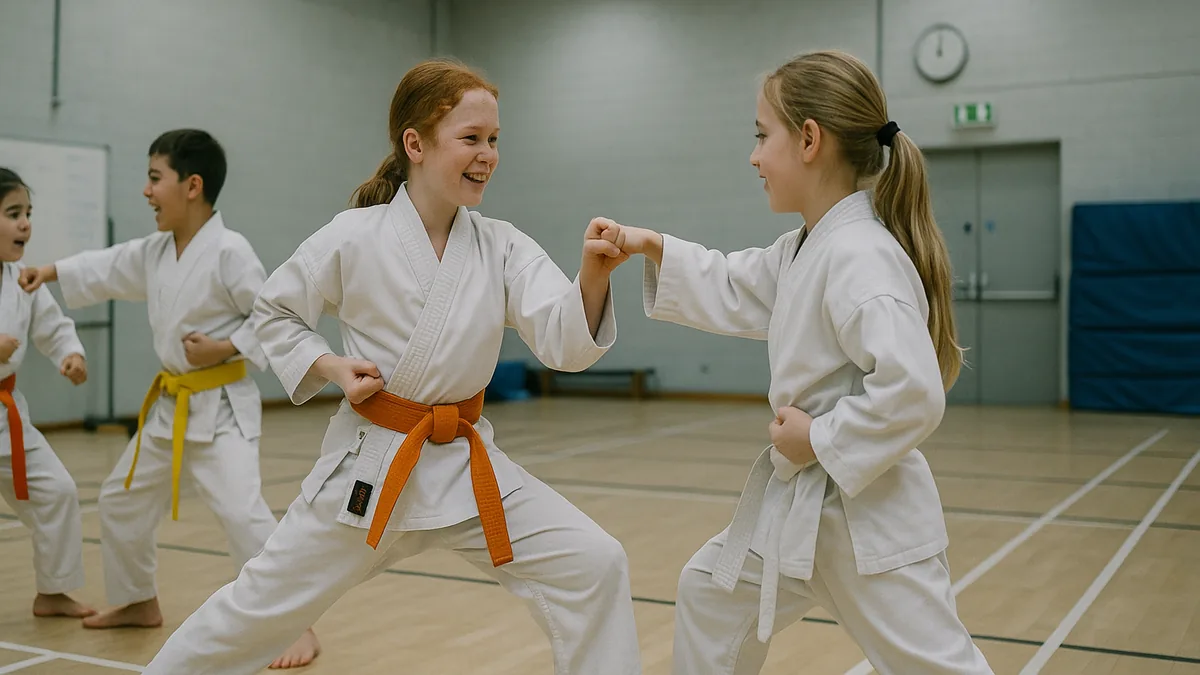
Contact is inappropriate for the age group. Young children should not be doing full-contact sparring. Light, controlled partner work is fine and valuable. But if you’re watching a class of eight-year-olds and someone is getting hurt regularly, something is wrong with how the class is being managed.
When you’re choosing a club, how to choose a karate club covers the practical checklist in more detail - but your gut reading of the instructor is usually more reliable than any certificate on the wall.
Community Perspective
This is an area where experienced practitioners genuinely disagree, and I think it’s worth being honest about that.
Some instructors - particularly those from traditional backgrounds - believe children’s classes should mirror adult classes as closely as possible. Same formality, same expectations, same standards. The argument is that watering it down disrespects the art and produces students who never develop real discipline.
Others, and I’d put myself closer to this camp, think that a children’s class needs to meet children where they are developmentally. That doesn’t mean soft standards - it means understanding that a seven-year-old’s attention span, emotional regulation, and physical coordination are genuinely different from an adult’s, and designing the class accordingly.
I’ve also heard real debate about competition for children. Some instructors think tournament experience is invaluable - it teaches children to perform under pressure, to win with grace and lose without falling apart. Others worry it pushes children toward a results-focused mindset too early and undermines the internal development that makes karate valuable. I’ve seen both outcomes. My honest view is that competition is fine if the child wants it, and counterproductive if it’s the parent who wants it.
Also worth knowing: common karate myths covers some of the misconceptions that follow children’s karate specifically - including the idea that a black belt child is a dangerous child. They’re not. They’re a disciplined child who has learned to fall safely.
What Actually Changes After a Year of Training
The honest answer is: it depends almost entirely on the quality of the instruction and the consistency of attendance. A child who trains twice a week with a good instructor for a year will be noticeably different - calmer, more physically coordinated, better at handling frustration. A child who trains sporadically with a mediocre instructor will have a collection of badges and not much else.
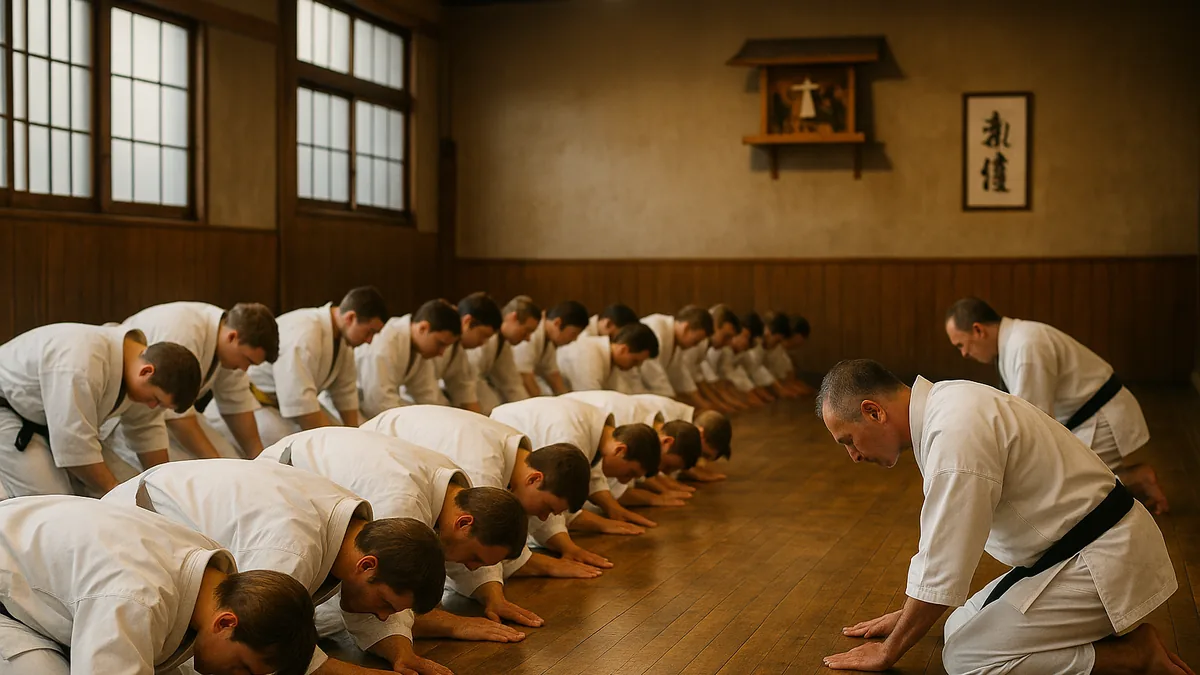
Karate etiquette is something children absorb without realising it - bowing, addressing instructors correctly, waiting their turn, respecting the training space. These aren’t arbitrary formalities. They’re a daily practice in paying attention to others, and children who do it consistently carry it into the rest of their lives.
What I tell parents at the end of the first term: don’t ask your child if they like karate. Ask them if they’re proud of something they did in class. That question gets you closer to whether the training is actually working.
Key Takeaways
- Watch one or two classes before enrolling your child - you’re assessing the instructor as much as the curriculum. A warm, demanding instructor who corrects children with respect is what you’re looking for.
- Don’t use belt progression as your measure of success. Watch for changes in how your child handles difficulty, frustration, and being corrected.
- Seven or eight is a solid starting age for most children - early enough to build good habits, old enough to actually retain and apply what they’re learning.
- If your child comes home upset about how they were treated in class, investigate it seriously. Good karate is demanding, not demeaning.
- Consistency matters more than frequency. Two sessions a week, every week, beats three sessions a week with lots of gaps.
- The confidence karate builds is specific: it comes from doing hard things in front of other people and not giving up. That’s the thing worth protecting in a children’s programme.
The weekly digest
New karate articles, once a week
One email every week with everything new on Karate Lifestyle. No spam; unsubscribe in one click.
We'll email you to confirm. See our privacy policy.