What to Expect at Your First Karate Class
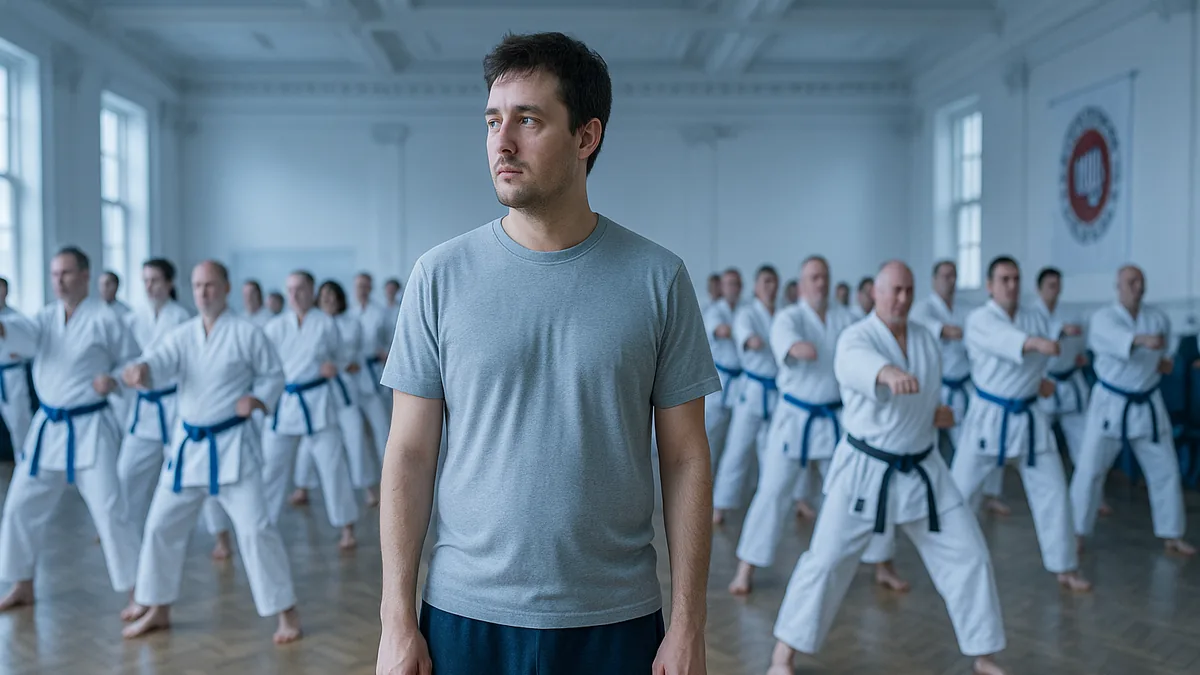
Most people walk into their first karate class expecting to learn how to fight. What actually happens is they spend forty-five minutes learning how to stand. And honestly? That’s exactly right - even if it doesn’t feel that way at the time.
I’ve been in enough first classes - my own, and hundreds I’ve helped run since - to know that the biggest source of anxiety isn’t the physical side. It’s not knowing what you’re walking into. The bowing, the Japanese commands, the way everyone seems to know exactly what to do without being told. That social uncertainty is what makes people quit after one session, not the fitness.
So here’s what actually happens.
What to Wear
Turn up in comfortable sports clothing for your first session. Loose tracksuit bottoms and a plain t-shirt are fine. You don’t need to buy a gi (the white uniform) immediately - most instructors will tell you to wait a few weeks until you’re sure you’re sticking with it. I’d actually recommend holding off even if your instructor doesn’t say this, because gis vary a lot in quality and weight, and you’ll have a better idea of what you want once you’ve trained in one borrowed from the dojo or seen what the senior students wear.
When you do buy a gi, don’t cheap out on the thinnest cotton you can find. I trained in a flimsy 6oz gi for two years as a beginner and spent most of that time pulling the jacket back into shape between combinations. A 10-12oz cotton gi holds its position, looks cleaner when you move, and lasts longer. It costs more upfront but you’ll thank yourself within a month.
A few practical points:
- Remove all jewellery before you arrive. Rings, earrings, necklaces - all of it. This isn’t optional and most dojos will ask you to remove them anyway. A ring during a block can cut your own hand badly.
- Trim your fingernails and toenails. Short. This is basic dojo courtesy.
- You train barefoot. No socks, no shoes on the training floor.
- Tie long hair back securely.
What Actually Happens in the Class
The structure varies by dojo and style, but most traditional classes follow a recognisable pattern: warm-up, kihon (basics), kata (forms) or pad work, and cool-down. Some dojos include kumite (sparring) from early on; others won’t let you anywhere near it for months. If sparring is important to you, it’s worth asking about this before you commit - I’ve written more about how to find the right club in How to Choose a Karate Club.
The warm-up will probably be harder than you expect. Not because it’s extreme, but because the specific movements - hip rotations, leg swings, low stances - use muscles in ways your body isn’t used to. Your inner thighs will ache after your first class. That’s normal.
After the warm-up, most classes move into basics. You’ll practice punches, blocks, and kicks in lines, moving up and down the dojo floor. The instructor will call out commands in Japanese. You won’t understand them yet. Watch what everyone else does and follow along - nobody expects you to know this on day one.
What I tell students before their first class is this: don’t try to get it right. Try to get it done. The details come later. The biggest mistake beginners make in their first few sessions is freezing up because they’re trying to copy the senior grades perfectly rather than just moving. You’ll look awkward. Everyone did. Just keep moving.
Etiquette - What You Actually Need to Know
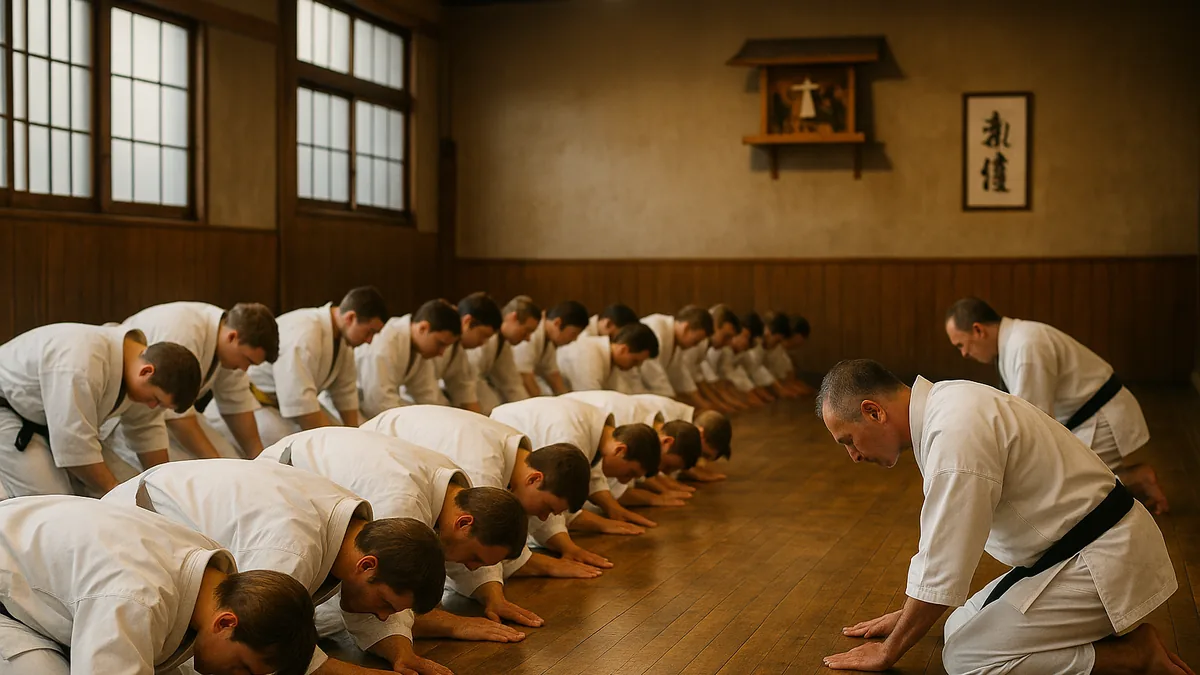
The etiquette in a traditional dojo can feel strange at first. Bowing when you enter the dojo, bowing to your training partner, bowing to the instructor. It’s easy to feel self-conscious about it, especially if you’ve never trained in a martial art before.
Here’s my honest take: most of it is just manners with a specific form. Bowing when you enter the training space signals that you’re shifting into a different mode of attention. Bowing to your partner before you practice with them is acknowledgement - you’re about to do something physically intense together, and you’re both agreeing to take care of each other. Once you understand it that way, it stops feeling odd.
The things that actually matter:
- Arrive on time. If you’re late, wait at the edge of the dojo until the instructor acknowledges you before joining the class. Don’t just walk in.
- Don’t talk during instruction. This sounds obvious but I’ve seen it derail whole classes. When the instructor is demonstrating, you watch. Questions come after.
- Address the instructor as Sensei (or whatever title they use - ask if you’re unsure).
- Don’t step over or on someone’s belt if it’s on the floor. It’s a small thing but senior students notice it.
- If you need to leave early, let the instructor know before class starts.
For a fuller breakdown of dojo customs, Karate Etiquette: What You Need to Know covers it in much more detail than I will here.
Fitness Expectations - Be Honest With Yourself
One mistake I see constantly with new starters is either underestimating the physical demands or catastrophising about them. Both cause problems.
Karate training is genuinely demanding over time. The stances are low, the repetitions are high, and the combination of aerobic effort and precise muscle control is something your body has almost certainly never done before. After your first class you will be sore in places that surprise you. The tops of your feet from kicking. Your hip flexors from chambering your knee. Your forearms from blocking.
But - and I want to be clear about this - you do not need to be fit to start. I’ve trained with students who came in barely able to run for a bus and who were competing at national level three years later. What matters is that you show up and work at your own level. Any instructor worth training under will scale expectations for beginners.
What I’d say to anyone worried about fitness: the class will push you, but nobody is going to make you feel bad for being a beginner. If anything, the people who come in overconfident about their fitness are usually the ones who struggle most, because they push too hard in the first few sessions and injure themselves before they’ve learned how to move properly.
If you’re returning to training after a long break or starting later in life, Training Karate After 40 is worth reading before you walk in the door.
The Mistakes I See Every Single First Class
Holding their breath. Almost universal. The moment someone concentrates hard on a technique, they stop breathing. The correction that makes the biggest difference here is teaching the kiai - the sharp exhalation on the execution of a technique. Once you link breathing out to striking, the tension releases and the technique loosens up immediately. You’ll feel it when it happens - the punch suddenly has a kind of snap to it that wasn’t there before.
Watching their own hands. Beginners stare at their fists while they punch. I understand why - they’re trying to check they’re doing it right. But it closes off your awareness and it’s a habit that takes months to undo if you let it bed in. I always tell new students: pick a point on the wall at eye level and look at it. Your hands are in your peripheral vision. Trust them.
Tensing up completely between techniques. This is the one that takes longest to correct. Beginners tend to stay rigid throughout the combination because they’re concentrating so hard. Correct technique requires you to be loose between movements and tight only at the moment of impact. When the hip rotation connects properly, you feel the impact through your whole body - there’s a solidity to it that has nothing to do with muscular tension. It took me about two years to really understand what my instructor meant when he said “relax.” I thought he was telling me to go slow. He wasn’t. He was telling me to stop fighting myself.
Community Perspective
There’s genuine disagreement in the karate community about how much tradition to maintain in beginner classes. Some instructors run very formal sessions from day one - full Japanese terminology, strict etiquette, no explanations beyond “do it again.” Others take a more relaxed approach, explaining the reasoning behind each technique and easing students into the formality gradually.
I’ve trained under both approaches. My honest view is that some structure from the beginning is valuable - it sets expectations and creates the right training environment - but burying beginners in ritual before they’ve thrown a single punch is more about the instructor’s preferences than the student’s development. The best first class I ever observed explained one bow, one stance, and one punch, and then drilled those three things for an hour. Every student left knowing something real.
What you’ll find varies enormously between dojos, styles, and associations. If the formality feels excessive and the instructor can’t explain why, that’s worth paying attention to.
Key Takeaways
- Turn up in loose sports clothing for your first session and hold off buying a gi until you’ve trained a few times and know what you want.
- Don’t try to copy senior grades perfectly in your first class - focus on keeping moving and following the general shape of what’s being asked.
- The etiquette isn’t arbitrary ceremony - bowing to your partner is acknowledgement that you’re about to train seriously together. Understand it that way and it stops feeling strange.
- Expect to be sore in unexpected places after your first session. Your inner thighs, hip flexors and the tops of your feet will all complain. That’s the right muscles working.
- The most common beginner mistake is holding tension throughout the whole combination instead of relaxing between techniques. Stay loose until the moment of impact - that’s where the power actually comes from.
- If you’re unsure whether the dojo is the right fit, watch a class before you commit. A good instructor will always let you observe first.
The weekly digest
New karate articles, once a week
One email every week with everything new on Karate Lifestyle. No spam; unsubscribe in one click.
We'll email you to confirm. See our privacy policy.