Karate Etiquette: What You Need to Know
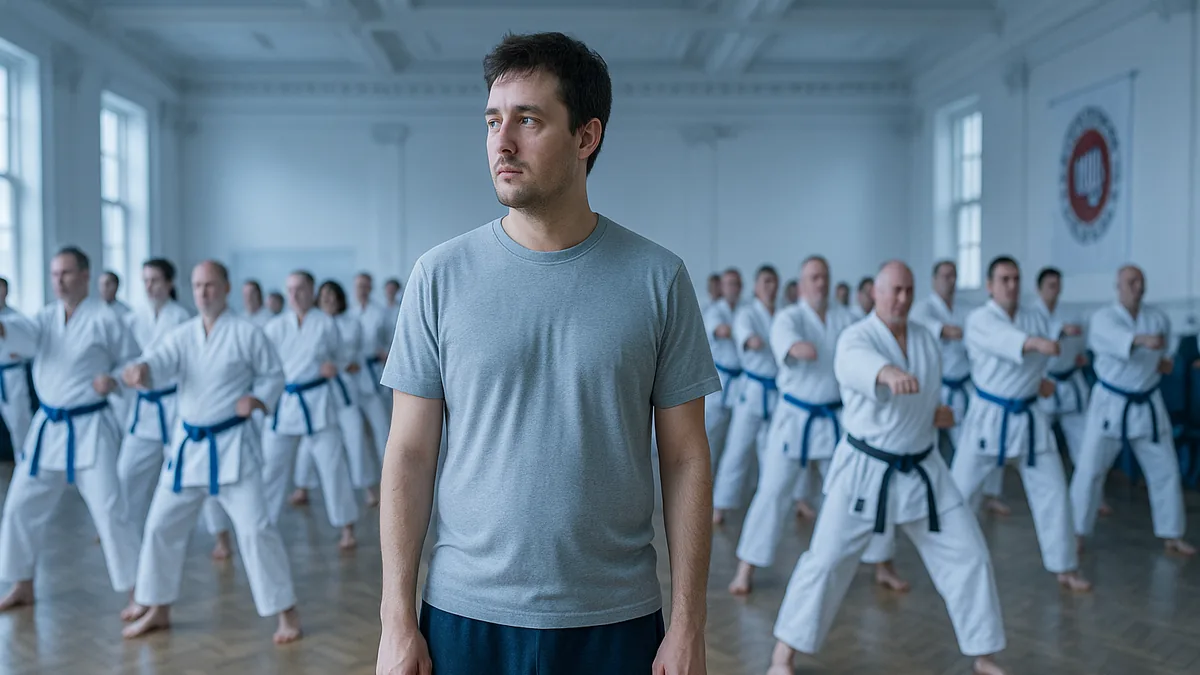
The first time I walked into a new dojo as a visiting student, I bowed at the wrong moment, called the senior instructor by his first name, and sat in the wrong spot during the opening ceremony. Nobody corrected me on the spot. They just watched. I found out later from a friend who trained there that the senior students had clocked every mistake within the first five minutes. That’s how dojo etiquette works. Everyone sees it. Almost nobody explains it.
That’s what this is. Not a list of rules from a handbook. What I’ve actually seen trip people up, what I wish someone had told me, and what I now tell every beginner who walks through the door.
The Bow - What It Actually Means and Why You’re Probably Doing It Wrong
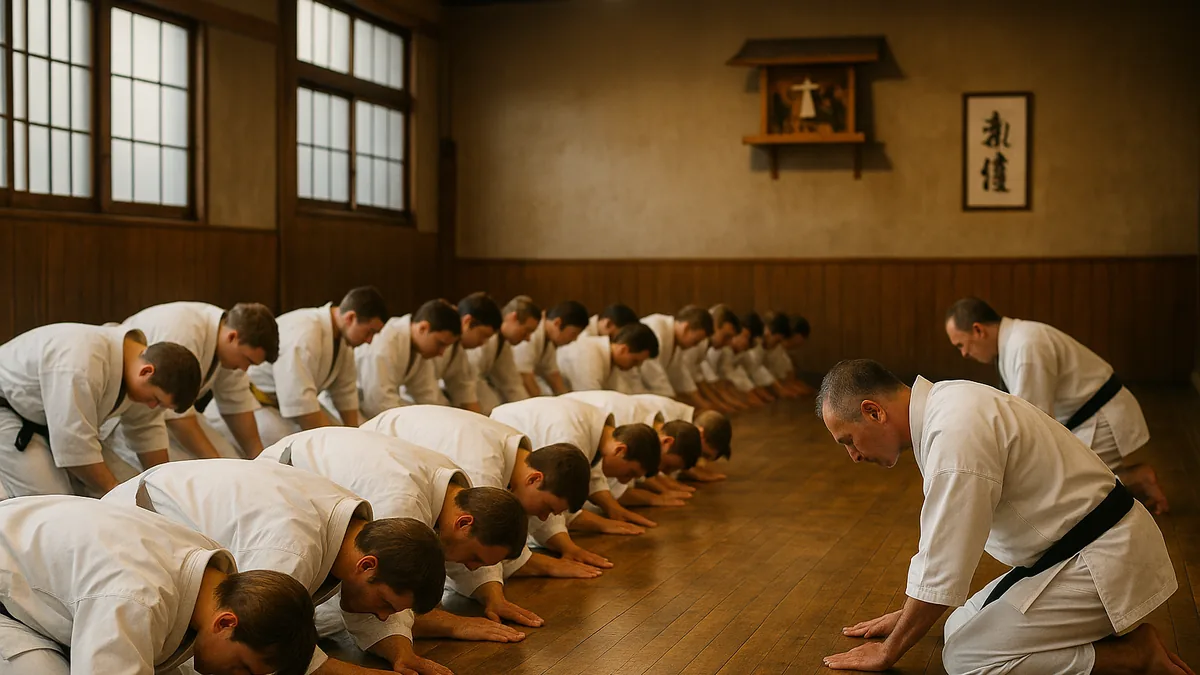
Most beginners treat the bow like a formality - something you do quickly so class can start. I did the same thing for years. You bow at the door, you bow at the start of class, you bow to your partner. It starts to feel automatic, which is exactly when it stops meaning anything.
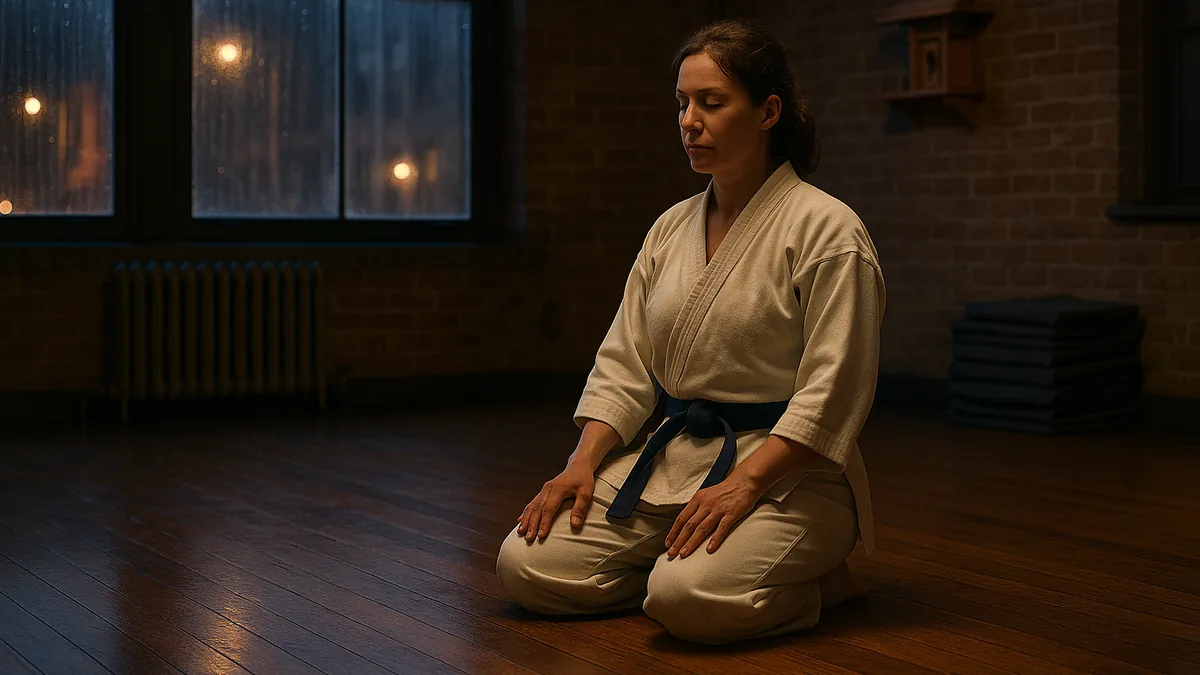
What I tell students is this: the bow is your signal to yourself that you’ve switched modes. You’re not at work, you’re not scrolling your phone, you’re not half-thinking about what’s for dinner. When you bow entering the dojo, you’re committing to being present. When you bow leaving, you’re acknowledging what happened in that session.
The physical mechanics matter too. A proper bow isn’t a nod. Your back should be straight, your eyes drop, your hands stay flat against your thighs. It should feel deliberate, not rushed. When I see someone do a quick head-dip and keep walking, I know they haven’t been told what they’re actually doing.
One mistake I see constantly: students bow to their partner and immediately look away or start adjusting their gi. The bow is a moment of mutual acknowledgement. Hold it briefly. Make it mean something. Your partner is about to punch you in the face - the least you can do is be present for the bow.
When to bow:
- Entering and leaving the dojo (even mid-session if you’ve stepped out)
- At the start and end of class
- To your training partner before and after any paired work
- When approaching or leaving a senior instructor
- When stepping onto and off the training floor during a grading
Gi Care - It Tells People More About You Than You Realise
I’ve graded hundreds of students over the years. Before anyone throws a single technique, I’ve already formed an impression based on their gi. A clean, well-maintained gi says the student takes training seriously. A grey, crumpled, slightly-damp-smelling gi says something else entirely.
I’m not being precious about this. It’s not about aesthetics. A clean gi is part of respecting the space, your instructor, and the people you’re training with. Nobody wants to grapple with someone whose gi hasn’t been washed since Tuesday.
The practicalities: wash your gi after every session, full stop. Don’t tumble dry it - hang it to dry and it’ll keep its shape and last far longer. If you’re not sure what gi to start with or how to size one correctly, Best Karate Gi for Beginners and the Karate Gi Size Guide will save you from the common mistakes there. And once you’ve got one, How to Care for Your Karate Gi is worth reading properly - not skimming.
A few things I see beginners get wrong:
- Leaving the gi in a bag overnight - it will smell. Wash it or at minimum hang it out immediately.
- Not ironing it - this matters more in some dojos than others, but for gradings, iron your gi. It takes ten minutes and it shows.
- Wearing a coloured t-shirt underneath - unless your instructor has specifically said this is fine, don’t. White only, or nothing.
- Letting the belt drag on the floor - when you’re tying your belt, don’t let the ends trail. It sounds minor. Seniors notice.
Addressing Seniors - The Hierarchy Is Real and It Matters
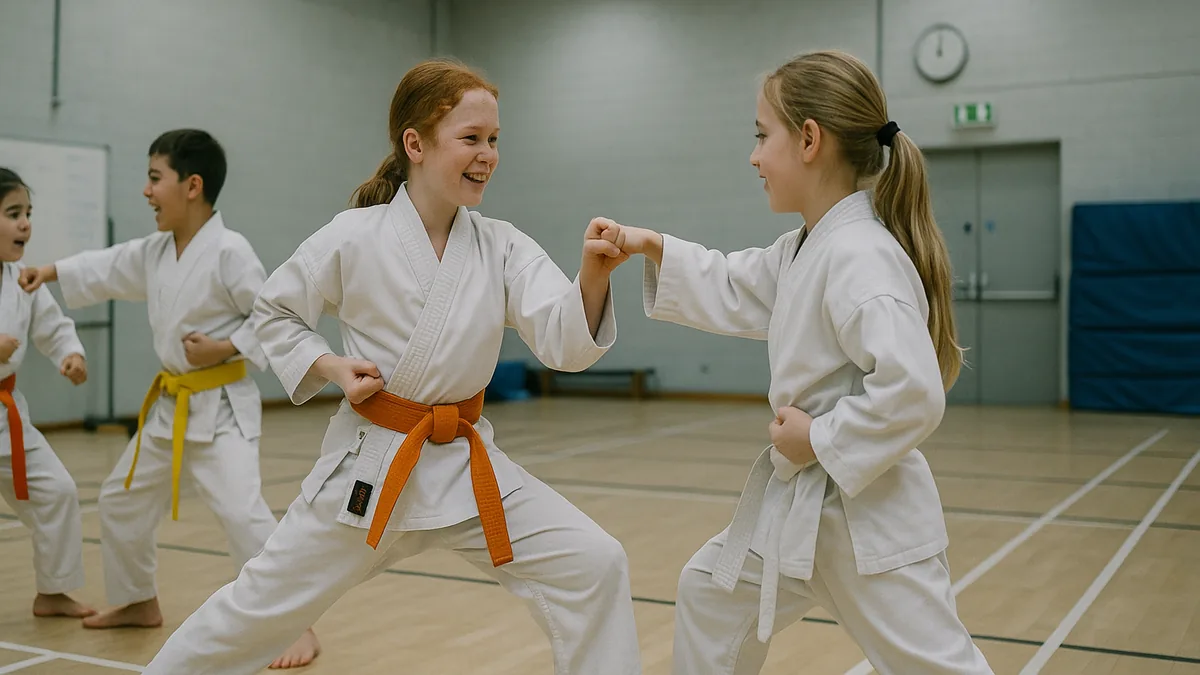
This is where a lot of beginners, especially adults coming in from professional backgrounds, struggle. You might be a manager at work. You might be older than the brown belt teaching your warm-up. It doesn’t matter. In the dojo, rank is rank.
I’ve noticed that the people who resist this the most in their first few months are often the ones who eventually come to appreciate it the most. The hierarchy isn’t about ego. It’s about acknowledging that the person with more rank has put in more time, absorbed more correction, and earned the right to lead that session.
What this looks like practically:
- Address your instructor as Sensei, not by their first name. If you’re unsure what to call a senior student, “Senpai” works, or simply ask your instructor how they prefer things in that dojo.
- When an instructor or senior is demonstrating, stop what you’re doing and watch. Don’t keep practising, don’t whisper to your partner, don’t stretch. Watch.
- If a senior corrects you, the response is “Oss” (or “Osu”) and you try the correction. Not “yeah but I was trying to…” - just receive it and apply it.
- Don’t offer corrections to people who outrank you. You might be right. It still isn’t your place.
It took me years to understand why this last one matters so much. It’s not about protecting egos. It’s about clarity of information. If everyone is offering corrections to everyone else, the training floor becomes noise. The hierarchy creates a clear channel for instruction.
Behaviour in Class - The Unwritten Rules Nobody Posts on the Wall
This is the section I wish someone had handed me on day one.
Don’t arrive late without acknowledging it. If you come in after class has started, wait at the edge of the mat, catch the instructor’s eye, and bow. Wait for them to acknowledge you before joining. Don’t just walk in and slot into a line.
Don’t leave the floor without permission. If you need water, need the toilet, or feel unwell, you ask. You don’t just walk off. This sounds strict, but it’s about discipline - the same discipline that eventually makes your technique reliable under pressure.
Keep the dojo clean. If you see something on the floor, pick it up. If you’re one of the last to leave, help tidy. This isn’t someone else’s job.
Don’t talk during instruction. I’ve seen this derail entire classes. One student starts a side conversation during a demonstration and suddenly three others are half-listening. The instructor has to repeat themselves. Everyone loses five minutes. If you have a question, raise your hand or ask at the right moment.
Fingernails and toenails. Cut them before every session. This is non-negotiable. Long nails in close-range work cause injuries. I’ve seen it happen. It’s entirely preventable.
Jewellery comes off. Rings, earrings, necklaces - all of it. Not loosened or tucked away. Off. A ring during impact work can break your own finger. An earring can be ripped out during any kind of contact drill. I’ve seen both happen.
The Mistakes That Actually Cost People
I want to be specific here because vague advice doesn’t help anyone.
Mistake: Rushing the bow at the start of class. This happens because beginners are nervous and want to get it over with. What I tell students is to slow down for that moment specifically. The opening ceremony sets the tone for your entire session. If you’re already rushing, you’ll rush your techniques.
Mistake: Not knowing where to stand in the dojo. Most dojos have a hierarchy of position - seniors toward the front or right, juniors toward the back or left. Watch where people position themselves in your first few sessions before you pick a spot. Don’t plant yourself at the front as a white belt. It’s not about being seen - it’s about being where you can observe the people ahead of you.
Mistake: Treating “Oss” as filler. Some students start saying it constantly - after every sentence, as a verbal tic. It has specific meaning: acknowledgement, respect, affirmation. Use it at the right moments and mean it. Overuse drains it of everything.
Mistake: Asking too many questions during drilling. Questions are good. Questions during a drilling block, when the instructor has just set you a task and wants to see you working, break the rhythm of the whole class. Note your question, ask it at the end of the drill or after class.
Community Perspective
Dojo etiquette genuinely varies between styles, associations, and instructors, and it’s worth knowing that going in. Some dojos are formal to the point where you bow every time you approach the equipment cupboard. Others are much more relaxed - a working training environment where the etiquette is real but the ceremony is minimal.
I’ve trained in both and I think there’s value in the formal approach, especially early on. The ritual creates mental structure. That said, I’ve seen dojos where the formality became a way for senior students to exercise petty authority rather than actually train anyone. That’s a red flag.
The things that don’t change across any dojo I’ve trained in: cleanliness, punctuality, respect for rank, and keeping your mouth shut when someone more experienced is demonstrating. Everything else has some variation. Pay attention to how your specific dojo operates in your first few weeks and calibrate accordingly. If in doubt, be more formal rather than less - you can always relax once you understand the culture.
Key Takeaways
- Bow with intention, not habit. Every bow is a moment of transition or acknowledgement. Make it deliberate. A rushed bow tells everyone in the room exactly how present you are.
- Your gi is your first statement. Clean, white, ironed for gradings. Wash it after every session. This is non-negotiable and it will be noticed before you throw a single technique.
- Receive corrections without explanation. “Oss” and apply it. Your job in class is to absorb instruction, not to justify what you were doing. The explanation can come later if you need it.
- Watch the room before you pick your spot. Position in the dojo is not random. Observe where seniors stand, where beginners stand, and position yourself accordingly.
- Ask questions at the right moment. During drilling is rarely that moment. After class, during a water break, or when the instructor specifically invites questions - those are your windows.
- The unwritten rules are the real ones. The written rules are on the wall. The ones that actually define your reputation in the dojo - punctuality, cleanliness, how you receive correction, how you treat training partners - nobody posts those anywhere. You learn them by watching and by occasionally getting it wrong.
If you’re training at home between sessions, the same discipline applies - Setting Up a Home Dojo has practical advice on creating a space where that mindset carries over. And if you’re coming to training later in life and wondering how the etiquette dynamic works when you’re older than most of your juniors, Training Karate After 40 addresses that directly. One specific etiquette question that divides practitioners is the use of “osu” - what is oss and should you use it covers the cultural politics behind it.
The etiquette isn’t separate from the training. It is the training. The discipline you build by bowing correctly, maintaining your gi, and receiving instruction without argument - that’s the same discipline that eventually shows up in your technique when it matters.
The weekly digest
New karate articles, once a week
One email every week with everything new on Karate Lifestyle. No spam; unsubscribe in one click.
We'll email you to confirm. See our privacy policy.