What Is Oss and Should You Use It?
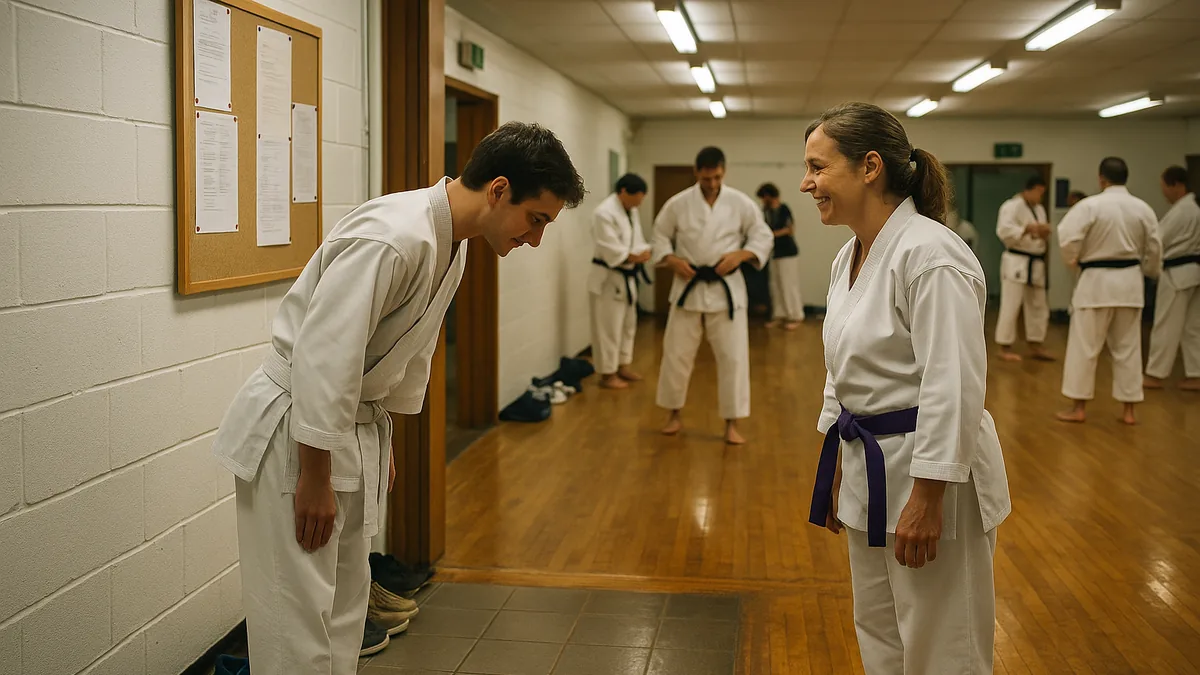
Walk into certain dojos and you’ll hear it twenty times in a single session. Walk into others and using it will get you a sharp look from the instructor. Few words in karate generate as much quiet disagreement as “osu” - or “oss,” depending on who’s writing it - and most people using it have no idea where it comes from or why some people find it genuinely irritating.
I’ve trained in environments where osu was the default response to everything. Understood an instruction? Osu. Greeting a training partner? Osu. Acknowledging a correction? Osu. I’ve also trained with Japanese instructors who visibly flinched when students said it. The disconnect is worth understanding, because it tells you something about how karate culture gets transmitted, distorted, and politicised.
Where It Actually Comes From
The word “osu” (押忍) is a contraction. The two kanji mean “push” (押) and “endure” (忍). The most widely accepted origin story places it in the Japanese military academies of the early 20th century, where it functioned as a compressed greeting between juniors and seniors - a way of saying “I acknowledge you, I’m ready, I’ll persevere” in a single syllable.
From military usage it migrated into certain martial arts environments. Kyokushin karate, founded by Mas Oyama in 1964, adopted it enthusiastically. In Kyokushin culture, osu became ubiquitous - a universal response that covered greeting, acknowledgement, understanding, gratitude, and farewell. One word for everything.
Here’s where it gets complicated: osu was never universal in Japanese karate. It was specific to certain subcultures within martial arts. Traditional Okinawan karate - the actual origin of what we now call karate - doesn’t use it. Goju-Ryu doesn’t use it traditionally. Wado-Ryu doesn’t use it. Even in Shotokan, its use varies enormously between organisations.
What happened is that Kyokushin’s global expansion in the 1970s and 80s spread the word beyond its original context. Full-contact karate became synonymous with toughness, and osu became associated with that toughness. Other styles picked it up through cross-training, through students who had trained in multiple environments, and through the general cultural osmosis that happens when martial arts communities overlap.
The Case for Using It
I’m not going to pretend there aren’t good reasons to use osu. In the right context, it works.
It’s efficient. In a fast-paced class where the instructor is calling techniques and the group needs to acknowledge without disruption, a single syllable covers it. “Hai” works equally well, but in many Western dojos, osu has filled that slot.
It builds group identity. There’s something about a shared verbal ritual that creates cohesion. When everyone responds to the instructor with the same word, it creates a sense of collective commitment. You might argue that’s superficial, but group dynamics are real and small rituals contribute to them.
It signals training attitude. In Kyokushin and its derivatives, osu carries genuine cultural weight. It means “I’ll push through, I’ll endure, I’ll keep going.” When someone responds to a difficult drill with osu, they’re explicitly committing to the effort. That’s not nothing.
It’s what the dojo uses. This is actually the strongest argument. If your club uses osu as standard practice, using it is simply following the culture of your training environment. Refusing to use it because you’ve decided it’s inappropriate would be odd and disruptive.
The Case Against
The objections are substantive, not just pedantic. Understanding them will save you from making an uninformed choice.
It’s gendered in Japanese. In Japan, osu is a masculine expression. Women in Japanese martial arts environments typically don’t use it - and being a woman using osu in a traditional Japanese dojo would signal that you’re either unaware of the cultural context or deliberately challenging it. Most Western practitioners don’t know this because the word arrived pre-stripped of its cultural baggage.
It’s informal to the point of rudeness. In Japanese social hierarchy, osu is what you’d use between equals or from junior to senior in very specific casual contexts. Using it toward a senior instructor - particularly a Japanese one - can land somewhere between overly familiar and disrespectful. The correct response to an instructor in formal Japanese karate is “hai” (yes/understood) or “osu gozaimasu” at minimum if you’re going to use the word at all.
It reduces vocabulary. This is the criticism I find most persuasive. When osu becomes the answer to everything - greeting, acknowledgement, thanks, farewell, understanding - it actually impoverishes communication. “Do you understand this technique?” “Osu.” Did you actually understand? Or did you just make the noise that everyone makes? “Hai, sensei” followed by a specific question shows more engagement than “osu” ever can.
It’s not historically part of most karate styles. If you’re training Shotokan under the JKA, or Wado-Ryu, or Goju-Ryu, or Shito-Ryu in their traditional forms, osu is an import. It’s not wrong in the way that wearing the wrong belt would be wrong - but it’s like using slang from a different region and not realising it marks you as an outsider to people who know the difference.
What Different Styles Actually Do
Kyokushin and derivatives (Ashihara, Enshin, Seido): osu is universal and expected. Not using it would be unusual. This is the natural home of the word in karate.
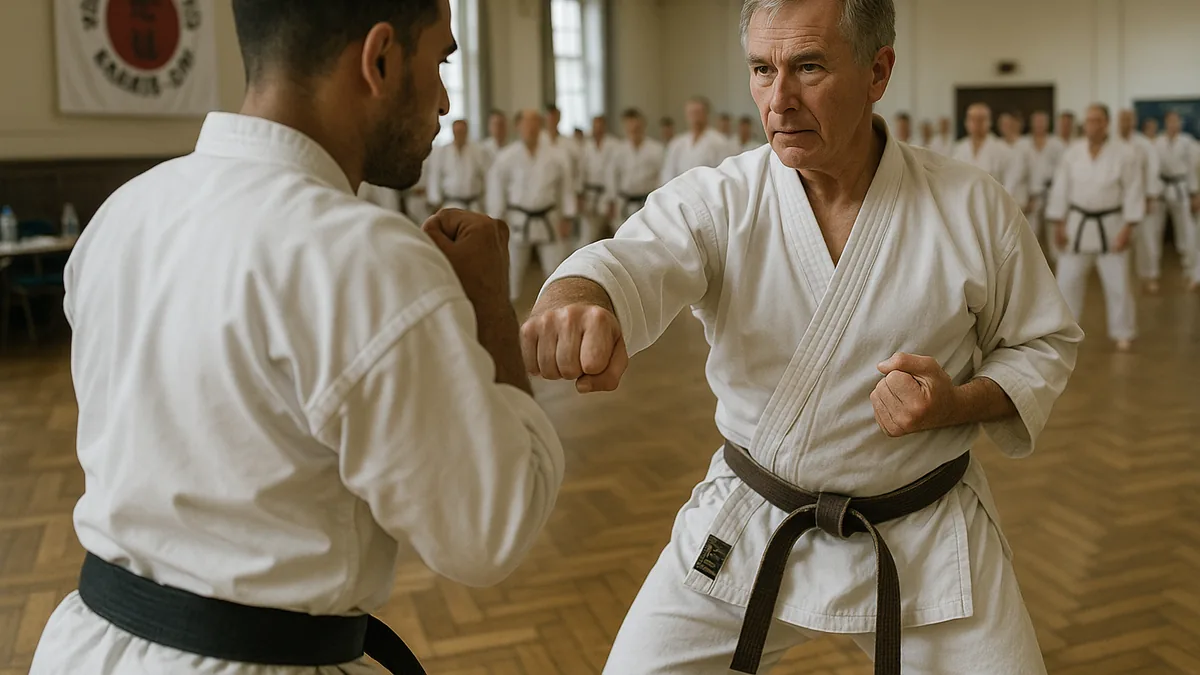
Shotokan: hugely variable. JKA-affiliated clubs tend not to use it formally. KUGB and some other large organisations use it commonly. Independent Shotokan clubs go either way depending on the instructor’s background. If you’re unsure, listen to what the senior grades do and follow their lead.
Wado-Ryu: rarely used in traditional settings. “Hai” is the standard acknowledgement. Some Western Wado clubs have adopted it through cross-pollination but it’s not traditional to the style.
Goju-Ryu: not traditionally used. Okinawan Goju-Ryu in particular has its own culture that predates and sits outside the Japanese mainland martial arts environment where osu originated.
Shito-Ryu: similar to Wado - not traditional to the style, though individual Western clubs may have adopted it.
Mixed or independent clubs: common usage. When a club draws from multiple style influences or has an instructor who trained in several environments, osu often appears because it arrived through one of those pathways.
The Cultural Politics
Here’s what nobody wants to say directly: there’s a class system in karate culture, and your use of osu positions you within it whether you intend it to or not.
Instructors who trained directly under Japanese masters, who’ve spent time in Japan, who value the formal cultural transmission of karate - many of these people view osu as a marker of casual, Westernised karate that has lost touch with its roots. Rightly or wrongly, they hear it and make assumptions about the quality of training the person has received.
Instructors who came through Kyokushin or full-contact lineages hear it as entirely normal, appropriate, and meaningful. For them, it carries the weight of physical endurance culture - thousands of push-ups, hundreds of fights, genuine suffering that the word acknowledges.
Neither group is wrong. They’re operating in different cultural streams that happen to share the word “karate.”
What I’d suggest is this: match your environment. If your dojo uses osu, use it. If it doesn’t, don’t import it. If you’re visiting a new club and you’re unsure, say “hai” - it’s always safe, it’s always appropriate, and nobody has ever been corrected for being too formal.
The Deeper Question
Beyond the politics, there’s a genuine question about what verbal rituals add to training.
My honest assessment: they add something, but only when they’re genuine. An osu that comes from actual commitment - “I’ll push through this” - is meaningful. An osu that’s just a reflexive noise filling the space where thought should be is empty.
The same applies to any response. “Hai” can be empty too if it’s just a sound. What matters isn’t the word - it’s whether there’s anything behind it. The student who responds to a correction with genuine acknowledgement, whatever word they use, is demonstrating more than the student who reflexively osu’s everything without processing what was said.
I’ve noticed in my own training that the verbal responses I give correlate with my engagement level. When I’m fully present, my responses are specific and deliberate. When I’m going through the motions, everything becomes a generic acknowledgement. The word I use matters less than the attention behind it.
If you’re new to karate and navigating the broader culture around etiquette and behaviour, Karate Etiquette covers the fundamentals that apply regardless of style or dojo culture.
Community Perspective
I’ve asked this question to dozens of instructors over the years and the responses cluster into three camps.
Camp one: “It’s fine, stop overthinking it.” These are usually instructors who grew up in environments where osu was standard and who view the debate as unnecessarily academic. Their argument is that karate is about training, not linguistic correctness, and that policing language is a distraction from actual development.
Camp two: “It’s inappropriate in our style.” These are typically instructors with strong connections to Japanese or Okinawan tradition who view osu as a cultural intrusion. They’ll correct students who use it - not aggressively, but firmly - and prefer “hai” or silence.
Camp three: “Context determines appropriateness.” This is where I sit. The word isn’t inherently right or wrong. It’s appropriate or inappropriate depending on where you are, who you’re with, and what tradition you’re training in. Learning to read those contexts is part of developing as a martial artist.
What I’d push back against is the use of osu as a substitute for actual communication. If your instructor asks whether you understand a technique and your answer is “osu” when you actually don’t understand, you’ve used a cultural ritual to avoid honest engagement. That’s the real problem - not the word itself, but what reflexive use of it sometimes hides.
Key Takeaways
- Osu originated in Japanese military culture and entered karate primarily through Kyokushin - it’s not universal and never was
- In Japanese culture the word is masculine and informal - using it toward senior Japanese instructors can be inadvertently disrespectful
- Match your environment: if your dojo uses it, follow the culture; if it doesn’t, don’t import it from elsewhere
- The strongest objection is that reflexive osu reduces communication - acknowledge instructions with genuine understanding rather than automatic responses
- “Hai” is always safe regardless of style, club, or context - when in doubt, use it
- The word itself matters less than whether there’s real attention and commitment behind whatever response you give
The weekly digest
New karate articles, once a week
One email every week with everything new on Karate Lifestyle. No spam; unsubscribe in one click.
We'll email you to confirm. See our privacy policy.