Karate Belt System Explained
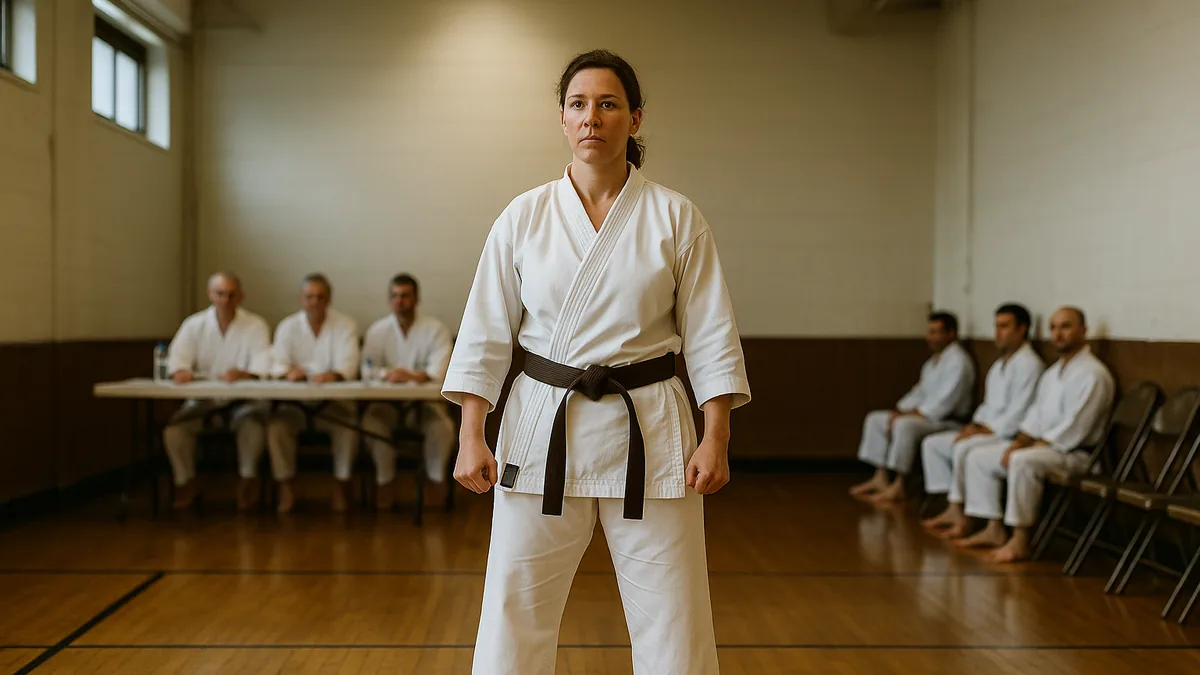
Most beginners walk into their first grading thinking it’s a test. I’d argue that’s the wrong frame entirely, and it’s one of the things I try to correct early. A grading isn’t a test you pass or fail based on what you know that day. It’s a snapshot of where your training is. The belt that comes out of it is a marker, not a reward. Understanding that difference changes how you prepare, how you train between grades, and honestly, how much you enjoy the whole process.
Here’s what I’ve seen over fifteen years of training and helping to run gradings: the students who treat belts as targets tend to plateau. The students who treat them as checkpoints keep improving. That’s not a motivational speech - it’s just what the floor shows you.
What the Colours Actually Mean
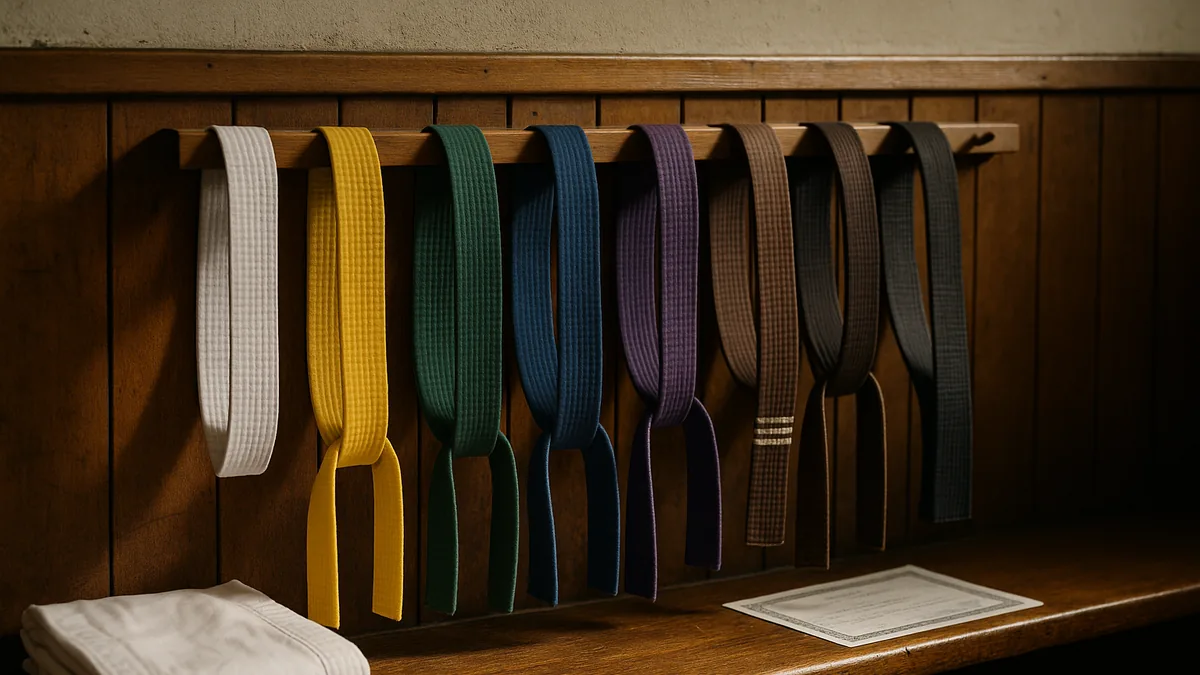
The short answer is that belt colours mark stages of development. The longer answer is that each stage represents a genuinely different relationship with the art, not just a longer list of techniques you can perform.
Most associations in the UK use a system that runs roughly like this:
- White - no grade, or 9th kyu depending on the association
- Yellow - 8th or 9th kyu
- Orange - 7th or 8th kyu
- Red - 6th or 7th kyu
- Purple - 5th or 6th kyu
- Blue - 4th or 5th kyu
- Green - 3rd or 4th kyu
- Brown - 3rd, 2nd, and 1st kyu (three separate grades)
- Black - 1st dan and above
The exact colours and order vary between styles and associations. Shotokan, Wado-Ryu, Goju-Ryu, and Shito-Ryu all do this slightly differently. What matters more than the colour sequence is what each stage actually demands of you.
I’ve noticed that white and yellow belts are almost entirely about coordination. You’re learning to move in ways your body has never moved before. The stances feel unnatural, the blocks feel backwards, and nothing connects. That’s completely normal. You’re not doing it wrong - your nervous system is just building new patterns from scratch. If you want to understand why stances matter so much at this stage, it’s worth reading Karate Stances Explained because the foundation you build now will either support everything that comes later or undermine it.
By the time you reach green and blue, the coordination issue is mostly solved. The challenge shifts to consistency and application. Can you do it under pressure? Can you do it when you’re tired? Can you do it against a moving partner who isn’t cooperating?
Brown belt is where it gets genuinely hard, and where most people stall. The techniques aren’t new - you’ve seen most of them. What’s being asked of you is quality, not quantity. I’ve had brown belt students who could list every technique they’d ever learned but couldn’t execute a clean gyaku-zuki under grading pressure. That gap between knowing and doing is what brown belt is for.
How Grading Actually Works
The format varies by association, but the core structure is usually the same: kihon (basics), kata, and kumite. Some gradings at lower levels skip kumite. Some add a written or verbal component at higher grades.
Kihon is where most beginners fall apart, not because they don’t know the techniques, but because they don’t understand what they’re being assessed on. You’re not being marked on whether you know what a gedan barai is. You’re being marked on whether you can execute it with correct form, consistent timing, and appropriate power - repeatedly, in a line, under observation. If you want to understand why kihon matters more than most beginners think, Why Kihon Still Matters at Every Belt Level goes into this in more depth.
Kata is the section where I’ve seen the most misunderstanding. Students memorise the sequence and think that’s the job done. It isn’t. Kata is a performance of applied technique - every move should have intent behind it. I’ve watched students perform a kata perfectly in terms of sequence and completely fail to convey that any of it means anything. Examiners notice. The kata looks empty, and they’ll tell you.
Kumite at lower grades is usually controlled, pre-arranged exchanges. Sanbon or ippon kumite, basic attack and defence. At higher grades it becomes jiyu-kumite - free sparring. This is where the gap between dojo training and actual performance becomes obvious. I’ll come back to that.
Time Between Grades
I’ll give you the honest answer here rather than the diplomatic one: it depends more on how you train than how long you’ve trained.
Most associations have minimum recommended periods between grades. Three months between early kyu grades is common. Six months becomes more typical as you progress. Brown to black belt often requires at least a year at each brown belt level. These are minimums - they’re not targets.
I’ve seen students who trained twice a week for six months and were clearly ready. I’ve seen students who trained the same amount and weren’t. The variable isn’t time - it’s quality of practice and how much you’ve actually internalised versus just repeated.
What I tell students is this: if you’re asking when you’ll be ready to grade, you’re probably not ready yet. Not because readiness is mysterious, but because when you’re genuinely ready, you usually know it. Your technique feels solid, your kata feels purposeful, your basics feel automatic rather than effortful. That feeling is real - it’s not arrogance, it’s the result of accumulated repetition.
If you’re training at home between sessions, How to Practise Karate at Home has practical guidance on how to make that practice count rather than just reinforcing bad habits.
What Examiners Are Actually Looking For
I’ve helped run gradings and I’ve been graded by some very experienced examiners. Here’s what I’ve observed from both sides of that equation.
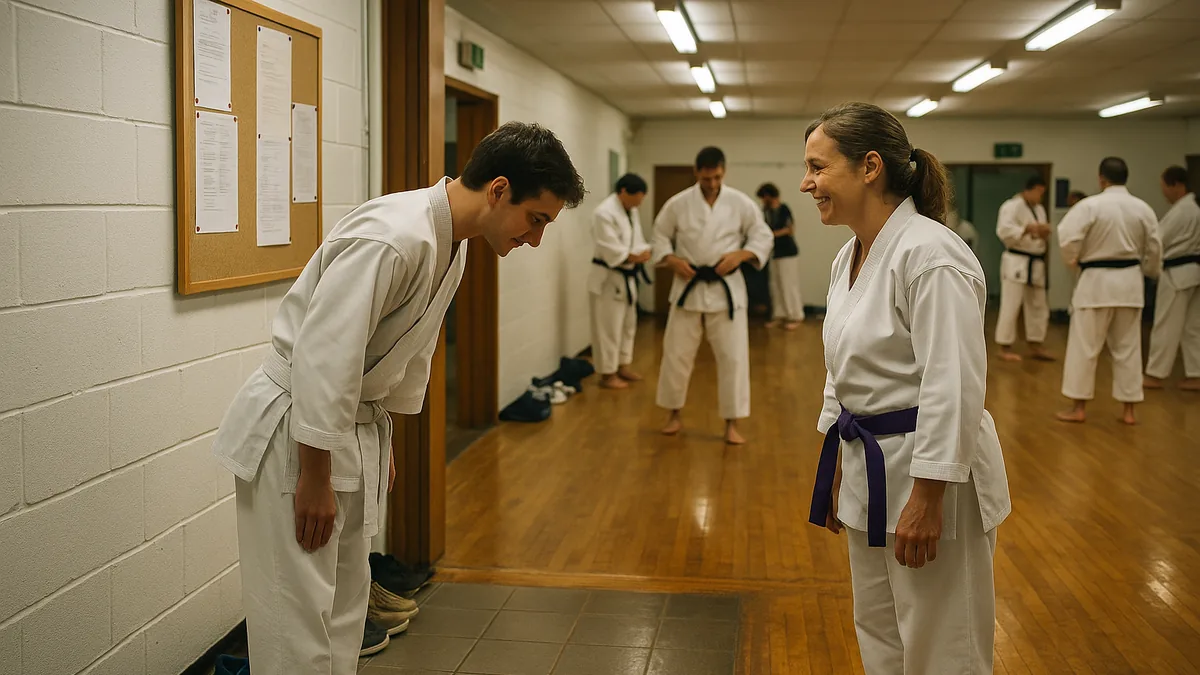
Attitude and focus - This gets assessed from the moment you walk into the room, not from when the grading starts. How you bow, how you stand waiting, how you respond to instruction. This isn’t about being robotic - it’s about demonstrating that you understand what a dojo is and what it asks of you.
Kihon quality over quantity - One mistake I see constantly at lower grades is students rushing through basics to demonstrate they know more techniques. Examiners don’t want speed. They want to see that you understand what you’re doing. A slow, controlled, well-structured oi-zuki tells an examiner far more than a fast, sloppy one. What Is Kihon? A Guide to Karate Basics breaks down what quality actually looks like in the basics.
Kata intent - I mentioned this above, but it’s worth being specific. When you execute a block in kata, your eyes should be on where the attacker would be. Your weight should be committed. The movement should have a clear beginning, middle, and end. When you step through a kata like you’re sleepwalking through a sequence you’ve memorised, that’s exactly what it looks like from the examiner’s side of the room.
Kumite composure - This is the one that surprises most students. At lower grades, examiners aren’t looking for you to dominate your partner. They’re looking for whether you stay calm, whether you control your technique, whether you can execute what you’ve been training when someone is actually moving toward you. I’ve seen students who were technically excellent in kihon completely fall apart the moment an opponent stepped forward. That’s useful information for both the student and the examiner.
Common Mistakes I’ve Seen at Gradings
Grading-mode training - This is where students train normally for months and then switch to a different, more careful mode in the two weeks before grading. You’ll hear your instructor say “train every session like you’re grading.” You won’t understand it until you grade and your body defaults to how it trained, not how you performed in those two careful weeks.
Forgetting to breathe - Sounds ridiculous, but I’ve watched it happen dozens of times. Tension in grading situations causes people to hold their breath through entire sequences. You’ll feel it yourself if it happens - your movement gets tight, your kiai sounds forced, and your technique loses its snap. The kiai isn’t just a shout - it’s a reset, a breath out, a moment of full commitment. If you want to understand how breathing connects to power generation, How to Generate Power in Karate covers this well.
Performing instead of executing - There’s a version of kata that looks impressive from the outside but feels hollow. Students sometimes develop a performance mode where they’re thinking about how they look rather than what they’re doing. The correction that makes the biggest difference here is simple: pick a point on the wall and treat it as your opponent. Every block, every strike, every movement is directed at something real. When you do this, the kata changes - it feels different, more purposeful, and it looks completely different to an examiner.
Blocking in karate is one area where this disconnect is especially visible. Students perform blocks as gestures rather than genuine defensive movements. If you’ve ever had an instructor correct your blocks and not understood why, Blocking in Karate: Why Most Blocks Fail addresses exactly this problem.
Community Perspective
There’s genuine disagreement in the karate community about how much the belt system actually matters, and I think it’s worth being honest about that rather than pretending there’s a party line.
Some traditionalists argue that the modern colour belt system - which was adapted from Judo and isn’t that old historically - has diluted the original purpose of grading. The argument is that frequent grades give students the feeling of progress without necessarily producing better karateka. I’ve had this conversation with instructors who don’t grade their students for the first year at all.
On the other side, most modern dojos find that structured progression keeps students engaged, gives them achievable milestones, and creates a framework for systematic learning. From a purely practical standpoint, I’ve seen this work. Students who have clear next steps tend to stay in training longer, and longevity in training is what actually produces skill.
My honest position: the belt system is a tool. Like any tool, it works well when used correctly and badly when misused. A dojo that grades students every three months regardless of quality is doing them a disservice. A dojo that never grades and leaves students with no sense of where they are is probably losing people unnecessarily. The balance most good instructors strike is grading when students are genuinely ready, not on a schedule.
What I’ve also noticed over the years is that your relationship with the belt system changes. As a white belt, I thought black belt was the destination. By brown belt, I understood it was just another stage. By the time I got there, I cared far less about the colour around my waist than about whether my technique was actually improving. That shift happens to most serious practitioners eventually. The belt system is most useful before that shift happens - and once it does, you’ll probably still appreciate that it got you to where you are. If you’re wondering about realistic timelines, how long does it take to get a black belt? covers honest timeframes for different styles and what the grade actually means.
Key Takeaways
- Train every session as if you’re grading - your body performs what it has practised, not what you intend on the day. When a grading does approach, how to prepare for a karate grading covers what examiners actually assess and how to structure your preparation
- When you execute kata, direct every movement at a real point in space - this changes the quality of your kata more than any technical correction
- Time between grades is a minimum, not a target - readiness is about quality of execution, not months on a calendar
- In kumite assessment, composure and control matter more than dominance - staying calm under pressure is what examiners are actually watching
- The correction that makes the biggest difference in kihon is almost always slowing down - speed without structure tells an examiner nothing useful
- Your relationship with the belt system will change as you progress - use it as a framework early on, but don’t let it become the reason you train
- The belt system is one of the most misunderstood aspects of karate - common karate myths debunked covers the black belt misconception and other ideas that don’t survive contact with real training
The weekly digest
New karate articles, once a week
One email every week with everything new on Karate Lifestyle. No spam; unsubscribe in one click.
We'll email you to confirm. See our privacy policy.