How to Generate Power in Karate
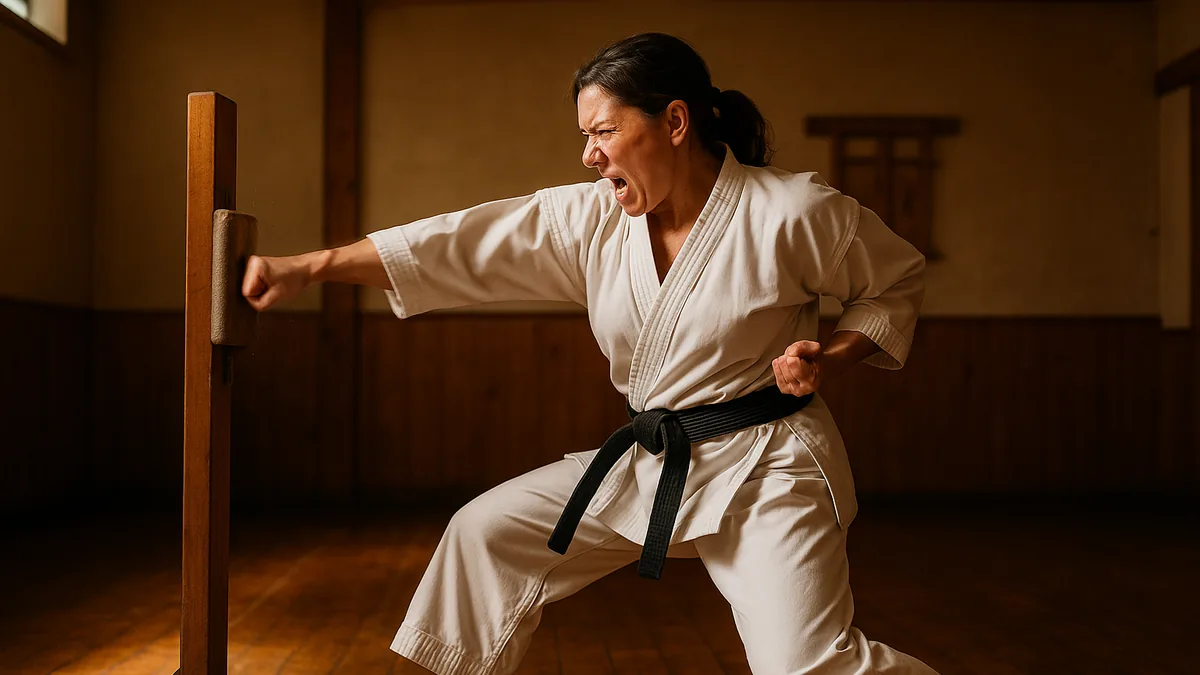
Most people who train karate for years still punch with their arm. I don’t mean that as an insult - I did it too, for longer than I’d like to admit. You can look technically correct, pass your grading, even win points in competition, and still be generating power from the wrong place entirely. The hip rotation is the whole punch. Without it, you’re just throwing your arm down a corridor and hoping something happens at the end.
I’ve been training for over fifteen years across four different dojos, under instructors with very different approaches, and the one thing every single one of them has hammered is the same thing: the power comes from the centre. What they didn’t always agree on was how to teach someone to feel it. That’s what I want to get into here - not the textbook version, but what it actually takes to understand this in your body, not just your head.
The Hip Is Not a Decoration
As a white belt, I thought hip rotation was something you added to a punch to make it look more karate-ish. Like it was aesthetic. You punched, and you also turned your hip, because that’s what karate looks like. It took me until around my second kyu to understand that I had it completely backwards. The hip is the punch. The arm is just the delivery mechanism.
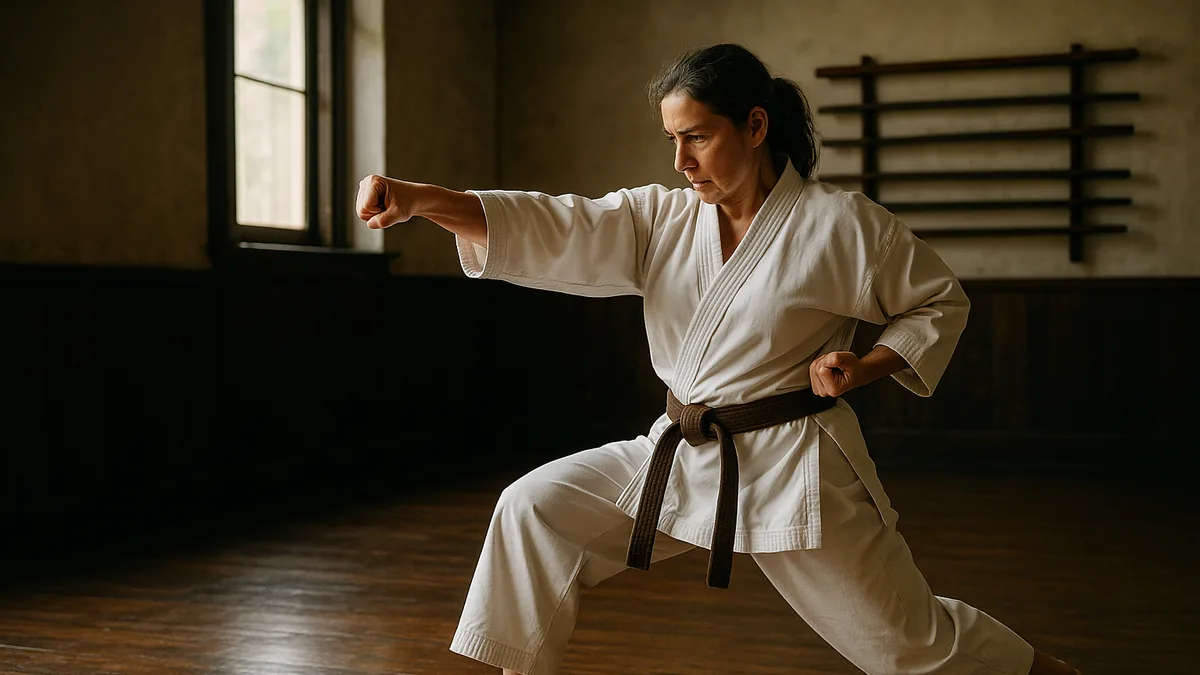
Here’s what I mean. When your hip rotation is properly connected to your technique, the force doesn’t start at your fist - it starts at your back foot, travels through your leg, loads into your hip, transfers through your core, and arrives at your fist at the moment of impact. Your arm is the last thing to move, not the first. When you feel that chain working, you’ll feel the impact through your whole body, not just in your shoulder. It’s a completely different sensation from an arm punch, and once you’ve felt it, you can’t unfeel it.
What I tell students when they first struggle with this is to stop thinking about the punch entirely. Just stand in zenkutsu-dachi and rotate the hip. Feel where it loads. Feel the tension in the obliques and the back leg. Then add the arm last. Most beginners immediately feel the difference in power even with a slow, deliberate movement. The arm didn’t change. The hip changed.
What Hip Rotation Actually Means (And What It Doesn’t)
One mistake I see constantly - and I mean constantly, across every dojo I’ve trained in - is students who think hip rotation means spinning their upper body. They swing their shoulder forward, the hip follows as a byproduct, and they end up overrotated, off-balance, and wide open for a counter. That’s not hip rotation. That’s a shoulder throw with a fist attached.
Real hip rotation in karate is more precise than it looks. The hip drives into the technique and stops. It’s a sharp, controlled movement, not a follow-through swing. The back hip snaps forward to the point of impact and locks. Everything else - the shoulder, the arm - follows that movement and arrives at the same moment. When it’s working, you’ll feel a kind of compression through your core at the moment of kime. When it’s wrong, you feel nothing except your shoulder pulling forward and your balance going with it.
The Hikite Connection
You cannot talk about hip rotation without talking about hikite, and I’d argue most people underestimate how much the pulling hand drives the whole thing. The hip doesn’t rotate in isolation - it’s the hikite snapping back to the chamber that pulls the hip through. They’re the same movement. When your hikite is weak or lazy, your hip rotation is weak and lazy, and your punch is weak and lazy. It’s that direct.
I’ve written more about this in the piece on why most karateka never fix their hikite, but the short version is this: if your hip rotation feels sluggish, fix your hikite before you fix anything else. Nine times out of ten, that’s where the problem actually lives.
Kime: The Part Everyone Gets Wrong
Kime is one of those words you hear in your first week of training and think you understand. You don’t. I didn’t. I thought kime meant tensing everything at the point of impact - like flexing hard at the end of the punch. So I’d punch, and at full extension I’d squeeze every muscle I had. Looked fine from the outside. Felt terrible. Slow, stiff, no real snap to it.
My instructor at the time - a fourth dan who had been training since before I was born - watched me do this for about three months before he finally stopped me mid-kata and said: “You’re braking the technique, not finishing it.” That landed. I’d been thinking of kime as something you apply after the technique. It’s not. Kime is the moment the technique becomes itself. It’s the instantaneous focus of all the mechanics - hip, core, arm, breath - into a single point in time and space. Then it releases. The tension doesn’t stay. It fires and it goes.
What Kime Actually Feels Like
When kime is right, the technique feels like a whip cracking. There’s a build-up of movement and then a sharp, brief focus at the end - and then it’s done. You’re already ready to move. When kime is wrong in the way I was doing it, the technique feels like you’re pushing into a wall. There’s effort, but no snap. No release.
The other thing I’ve noticed in students who struggle with kime is that they’re not breathing with the technique. The kiai - or even just the sharp exhale - is part of kime. The breath and the technique should arrive at the same moment. When they’re separated, the whole thing falls apart. You’ll feel it immediately when you get it right: the exhale, the hip, the arm, the impact - all one thing.
The Stance Is Where Power Starts
I can’t talk about generating power without talking about stance, because if your stance is wrong, nothing else works. The hip rotation has to come from somewhere, and it comes from the connection between your back foot and the ground.
In zenkutsu-dachi, the back leg isn’t just there for balance. It’s loaded. The hip rotation fires from that back leg pushing into the ground - the ground reaction force travels up through the leg and into the hip. If your back knee is collapsed inward, if your weight is too far forward, if your stance is too shallow, you’ve broken the chain before it even starts. The power has nowhere to come from.
I’d recommend reading the breakdown of karate stances if you want to go deeper on this, but the practical point is simple: before you worry about your punch, check your stance. Specifically, check whether your back leg is genuinely driving into the ground or just sitting there. There’s a difference, and you can feel it.
The Mistakes I See Most Often
Let me be specific here, because this is where most guides go vague and that’s where people stop improving.
Rotating too early. The hip starts moving before the technique is launched. By the time the punch arrives, the hip is already done. You’ve wasted the rotation. What I tell students is: the hip and the arm should arrive together. If your hip is finishing before your fist, you’re leading with the hip instead of driving with it.
Rotating too much. The hip overshoots. The practitioner ends up square-on or even past square, weight forward, back foot light. This is a balance disaster and leaves you completely exposed. The correction that makes the biggest difference here is to think of the hip snapping to a position, not through one. It stops at full rotation. It doesn’t keep going.
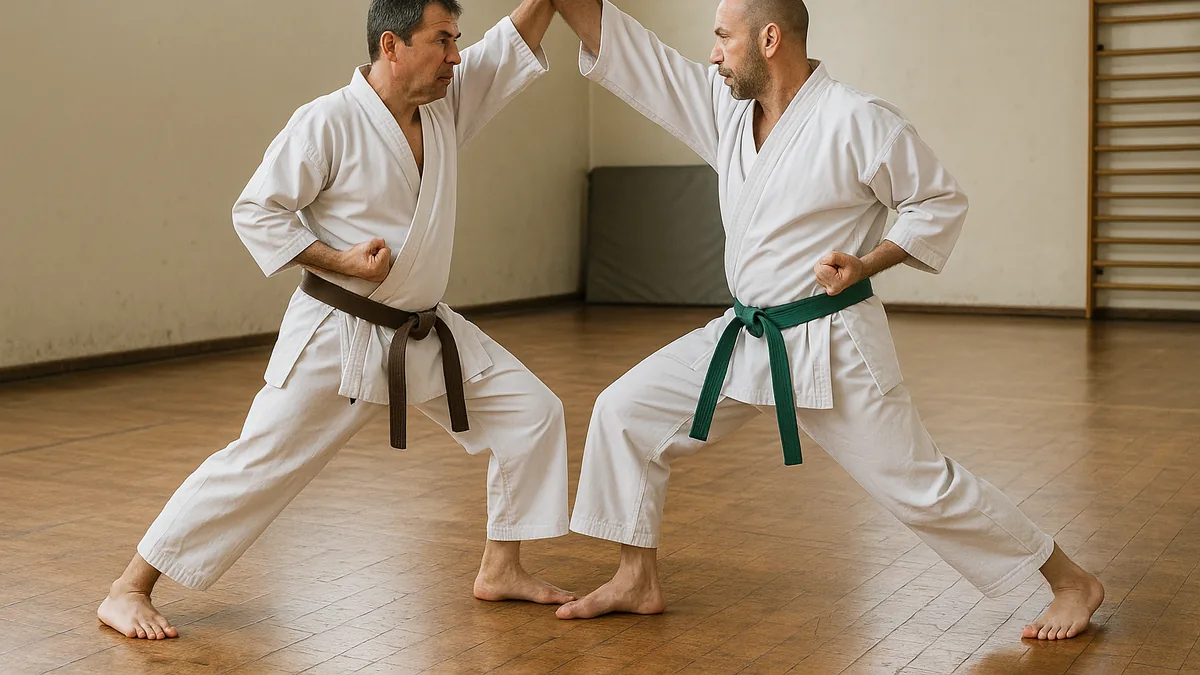
Disconnected upper and lower body. The arm punches and the hip rotates, but they’re doing it separately. There’s no chain. This usually happens when someone has been drilling the arm movement and the hip movement as separate things and never integrated them. The fix is to slow everything down - genuinely slow, almost slow-motion - and feel whether the hip and arm are moving as one unit. Speed hides a lot of disconnection. Slow reveals it.
Soft hikite. Already mentioned this, but it’s worth repeating because I’ve corrected this in students and watched their punch power visibly increase in the same session. The hikite is not a passive movement. It’s half the technique.
Holding the breath. Students tense up, hold their breath, and try to punch through the tension. The technique dies before it starts. Breath and kime are the same thing. Exhale sharp, exhale with the technique.
How This Changes in Sparring
In jiyu-kumite, this becomes your fastest counter off a failed attack from your opponent. When they overcommit to a chudan gyaku-zuki and pull back, your hip is already loaded from your defensive movement - you’re already in position to fire. If your hip rotation and kime are genuinely trained, that counter arrives before they’ve finished resetting. If you’re still generating power from your arm, you’re too slow.
The other thing I’ve found in sparring is that opponents feel the difference even when they can’t articulate it. A punch with proper hip connection and kime lands differently - there’s a compression to it that a pure arm punch doesn’t have. You’ll notice this when you’re on the receiving end of a senior practitioner’s controlled technique in partner work. Even at low power, it lands with a weight to it. That’s the hip. That’s kime. That’s the chain working.
Community Perspective
There’s a genuine debate worth acknowledging here, particularly around how much hip rotation is appropriate and when.
Some styles and instructors - particularly those with a competition focus - favour a more upright, faster technique with reduced hip rotation, prioritising speed and recovery over maximum power generation. The argument is that in scoring-based kumite, you need to get in and out fast, and a big hip rotation slows your reset. I’ve trained with people who hold this view, and they’re not wrong that it can work in that context.
My view is that this is a sequencing problem, not a rotation problem. Practitioners who reduce rotation to get faster are usually doing so because their rotation is slow and disconnected. When the rotation is properly trained - when it’s a sharp snap rather than a slow swing - it doesn’t cost you speed. It adds to it. The hip drives the technique and returns. The question is whether you’ve trained it to that level.
The other debate is around how explicitly hip rotation is taught to beginners. Some instructors don’t emphasise it early, preferring to let students develop basic form first and introduce rotation later. I understand the logic, but I disagree with it. In my experience, students who learn to punch without rotation first have to unlearn a deeply grooved pattern later. It’s much harder to add the hip to an established arm punch than it is to build the technique correctly from the start. If you’re looking for structured ways to build this from the ground up, kihon training drills for beginners is a good place to start.
What Actually Changes With Experience
As a white belt, you’re thinking about where your fist ends up. By brown belt, you’re thinking about where the power comes from. By the time you’re a few years into black belt, you’re thinking about timing - not just generating power, but generating it at exactly the right moment, against exactly the right resistance. The mechanics don’t change. Your understanding of them does.
The thing that actually changed my understanding wasn’t drilling more punches. It was doing more slow work - genuinely slow, where you can feel every part of the chain. Slow practice exposes what fast practice hides. If your hip and arm are disconnected, you’ll feel it at slow speed. You won’t feel it at full speed until someone who knows what they’re looking at points it out.
If you want to understand where all of this fits in the broader context of foundational training, the piece on what kihon actually is covers the philosophy behind why we train these mechanics the way we do - worth reading if you’re thinking seriously about your development. And if you want to see how these same mechanics express through kata sequences, What Is Bunkai? shows how the power chain operates in application rather than isolation.
Key Takeaways
- The hip rotation is the technique, not an addition to it. If you’re thinking of the hip as a supplement to your punch, you’ve got it backwards. Train the hip first, add the arm last.
- Kime is a moment, not a sustained tension. It fires and releases. If you’re holding the contraction, you’re braking the technique. Sharp exhale, sharp focus, then done.
- Fix your hikite before you fix your punch. Weak hikite is the most common cause of weak hip rotation, and it’s the correction that produces the fastest visible improvement.
- Slow practice reveals what fast practice hides. If you want to know whether your hip and arm are actually connected, slow down until you can feel every part of the chain. Speed it up only when the connection is there at slow speed.
- Your stance is your power source. The back leg has to be loading into the ground. If your stance is collapsed or shallow, you’ve broken the chain before it starts.
- In sparring, trained hip rotation isn’t slower - it’s faster. If rotation is slowing you down, it’s not trained yet. A sharp, connected rotation drives the technique and returns. That’s what you’re working toward.
The weekly digest
New karate articles, once a week
One email every week with everything new on Karate Lifestyle. No spam; unsubscribe in one click.
We'll email you to confirm. See our privacy policy.