Why Kihon Still Matters at Every Belt Level
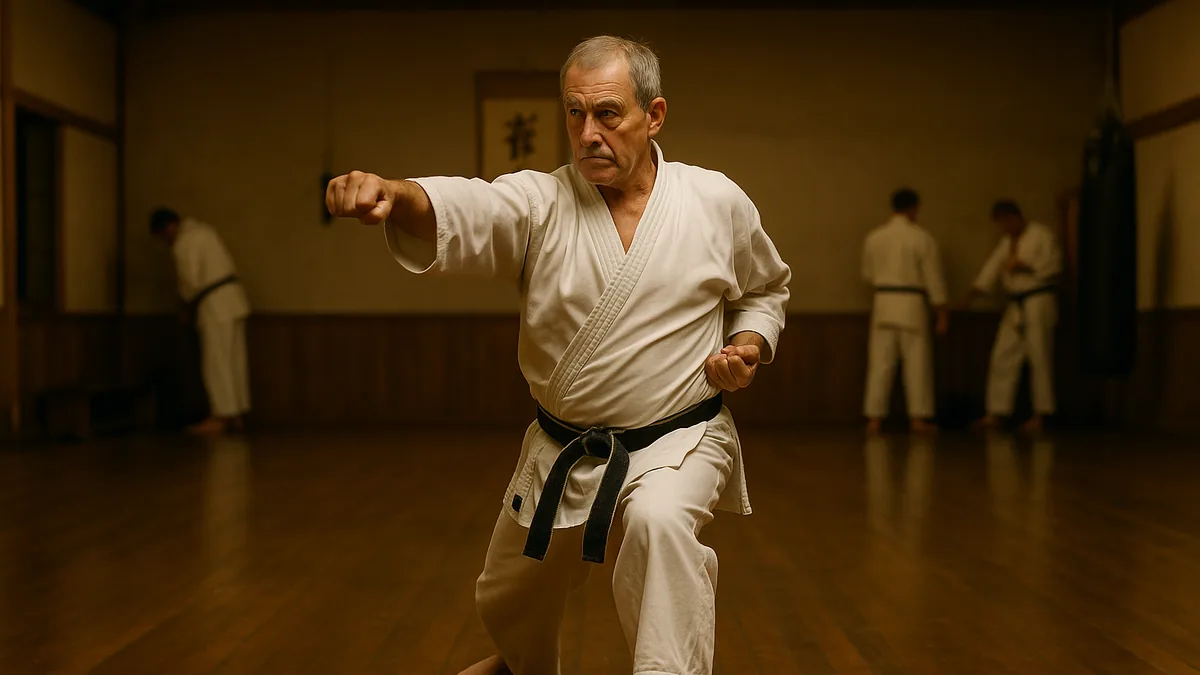
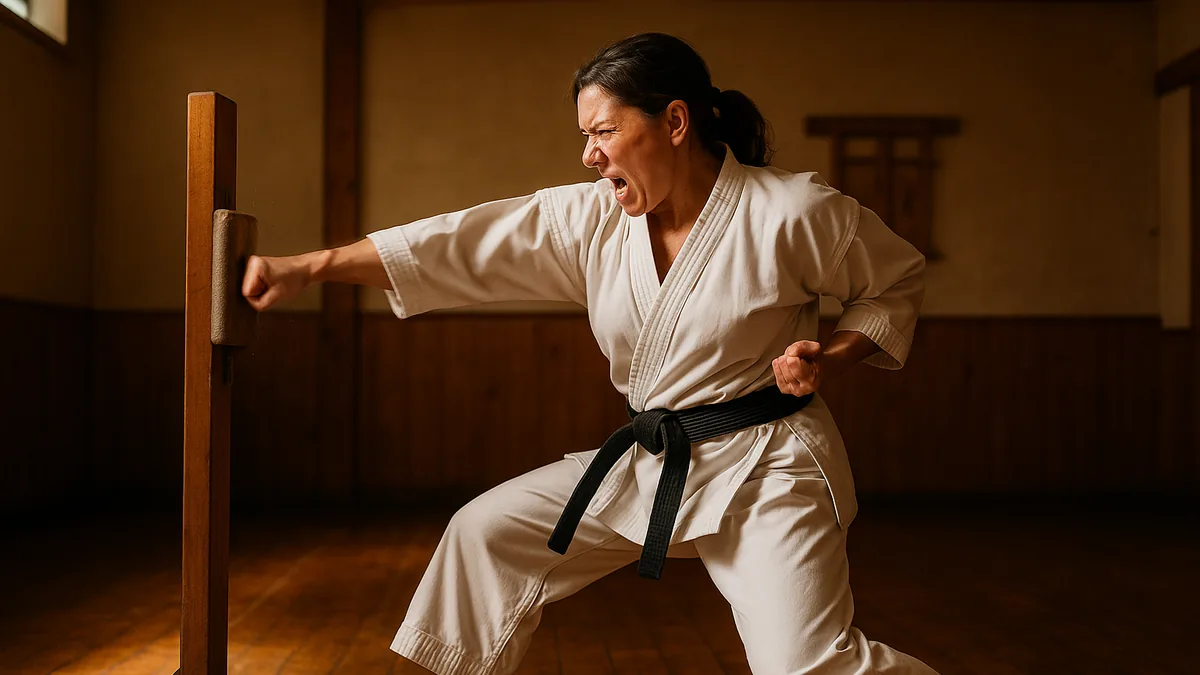
I’ve watched black belts fall apart during kihon practice more times than I can count. Not white belts - black belts. People who can spar well, who know their kata, who look competent on the floor. Then the instructor calls for a basic sequence - oi-zuki, gedan-barai, gyaku-zuki - and suddenly there’s no kime, the hikite is lazy, the stance is drifting, and the whole thing looks like they’re going through the motions to get to the part of class they actually care about. I’ve been that person. I know exactly what it feels like to treat kihon as a warm-up rather than the work itself.
That’s the problem. At some point, most of us decided that kihon was for beginners. And that decision quietly erodes everything else.
The Mistake Doesn’t Change - Your Ability to See It Does
Here’s what I’ve noticed across every dojo I’ve trained in: the mistakes in kihon are almost always the same ones. Punches that travel too far before the hip engages. Blocks that move from the wrong starting position. Stances that look right from the front but have no structural integrity when you push against them. The correction that works - every time, without exception - is slowing down and isolating the problem. Not drilling faster. Not adding combinations. Slowing down.
The difference between a beginner making that mistake and a senior making it is that the senior has learned to hide it at speed. The hip lag is still there. The hikite is still weak. But at full pace, it’s harder to see. Kihon at slow speed strips that camouflage away, which is exactly why experienced practitioners often resist it.
I used to think this was ego. Partly it is. But I’ve come to think it’s also discomfort - because slow kihon makes you feel the gaps in your technique in a way that fast, flowing practice doesn’t. And feeling a gap is harder than seeing one.
What Kihon Actually Trains (That You Can’t Get Elsewhere)
Sparring trains adaptability. Kata trains sequence and timing. Kihon trains the movement itself - the isolated, deliberate construction of a technique until it’s structurally sound enough to work under pressure.
My instructor used to say that kihon is where you make deposits and sparring is where you spend them. I didn’t really understand that until I started competing more seriously and noticed that the techniques I could actually land under pressure were the ones I’d drilled into the ground in basics. Not the flashy combinations I’d practised in partner work. The simple, well-grooved stuff. A clean gyaku-zuki. A properly timed kizami. Techniques where the hip rotation had been drilled so many times that it happened without thought.
If you want to understand what’s actually going wrong with your punching power, how to generate power in karate through hip rotation, kime, and the things most people miss starts in kihon - because that’s the only context where you can slow down the sequence enough to feel whether your hip is actually driving the punch or just arriving after it.
The Belt Level Problem
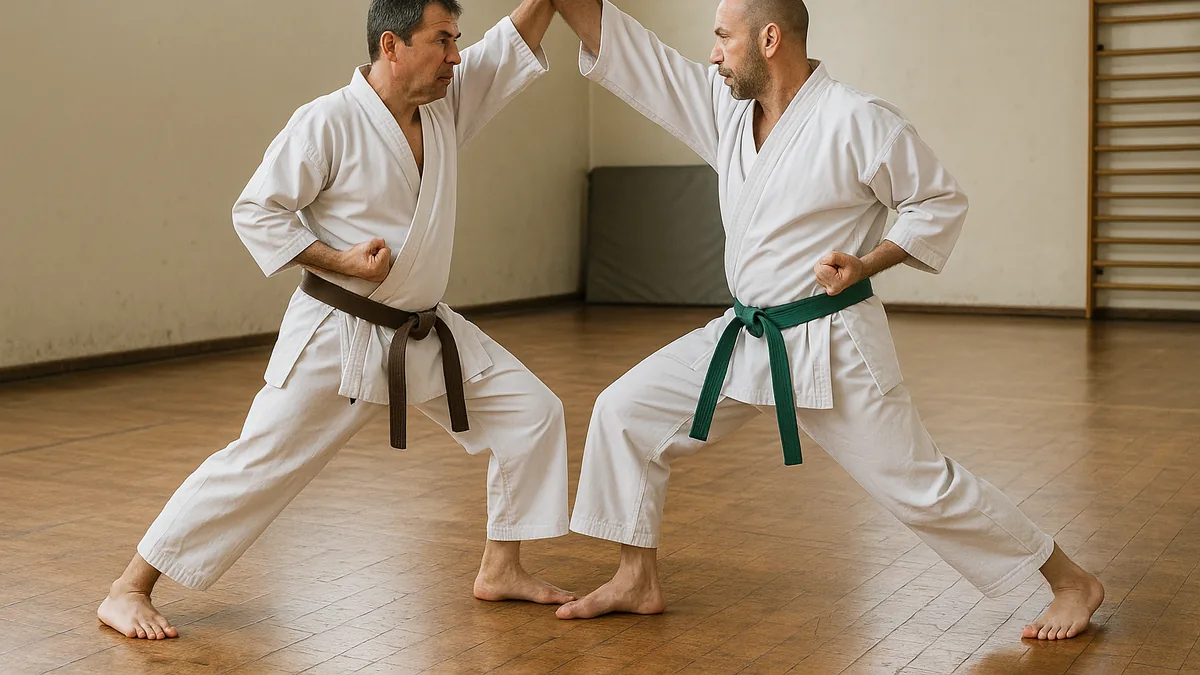
There’s a specific pattern I’ve seen repeat across multiple dojos. White and yellow belts take kihon seriously because they have no choice - they don’t know enough to skip ahead. Green and blue belts start to relax on it because they’re learning kata and kumite and kihon feels like old ground. Brown belts often neglect it entirely. Then somewhere in the black belt grades, the good ones come back to it - and they come back humbled, because they realise how much has drifted.
The practitioners I’ve trained with who had genuinely excellent technique - not just effective technique, but precise, powerful, well-structured movement - all shared one habit. They treated kihon as diagnostic. Every session, they were looking for something. A tendency for the front knee to drift inward in zenkutsu-dachi. A habit of dropping the elbow on the chamber. A slight forward lean that kills the structure on impact.
If your stances aren’t being regularly tested and corrected, you’re probably not standing the way you think you are. Karate stances explained - which ones actually matter is worth revisiting with this in mind, because the foundation of every kihon technique is the stance it’s built on.
The Specific Mistake I See Most Often at Intermediate Level
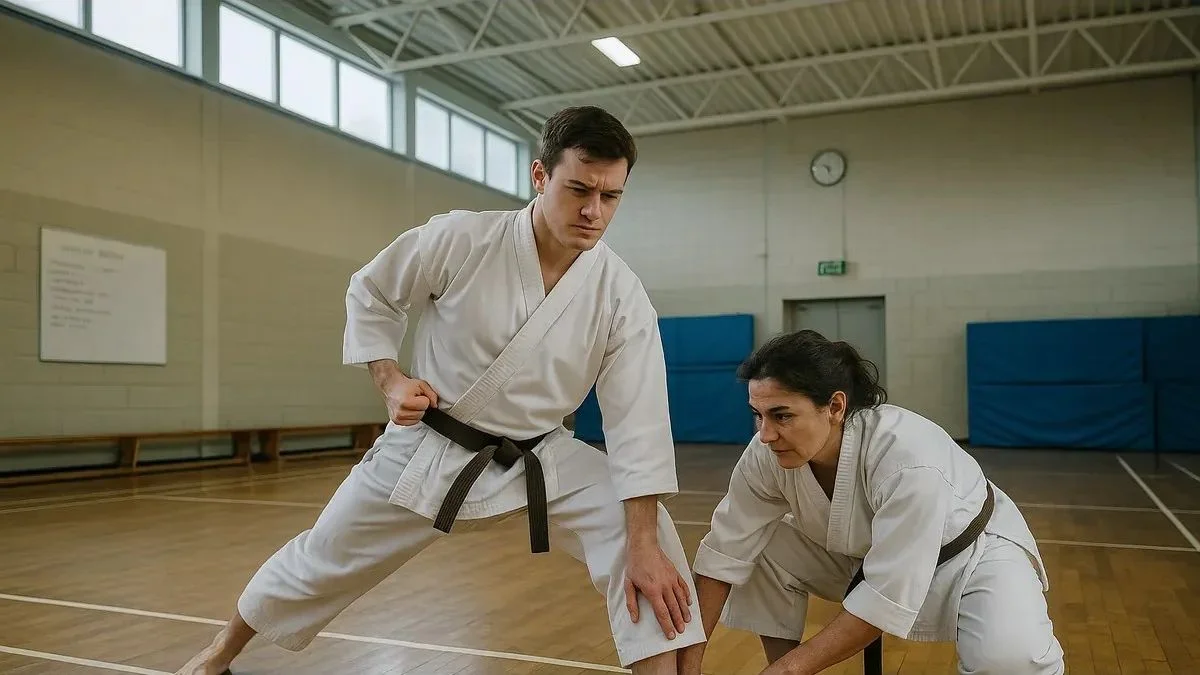
The biggest issue I see with intermediate practitioners - roughly green to brown belt - is disconnection between the upper and lower body during basics. The punch leaves before the hip arrives, or the hip finishes and the arm keeps going. You can see it clearly in a line drill: the arm is doing one thing, the legs are doing another, and the body in between is just along for the ride.
What correct technique feels like - when the timing is right - is a single pulse of energy arriving at the point of impact simultaneously from the floor up. The foot grips, the hip snaps, the shoulder follows, the fist lands, and kime locks everything in place for a fraction of a second before releasing. It doesn’t feel like a punch that travelled somewhere. It feels like a controlled explosion that started in your legs.
When that’s missing, no amount of strength compensates. I’ve trained with people half my size who hit harder than anyone I know because the connection was there. That connection is built in kihon. It cannot be built anywhere else, because kihon is the only context where you’re doing one technique, slowly, with full attention on the chain of movement.
Why most karateka never fix their hikite is directly related to this - because hikite is part of that chain, and when it’s passive, the whole sequence loses tension and the punch suffers for it even if the arm looks fine.
Community Perspective
There’s a genuine divide in how different dojos and styles weight kihon, and I think it’s worth being honest about it.
Some traditional JKA-lineage dojos spend the first thirty minutes of every class on basics regardless of the grade mix. I’ve trained in places like that and the floor-level technique across the whole dojo is noticeably better. But the complaint - and it’s not an unreasonable one - is that it can become mechanical. Drilling without understanding is just movement. You can spend years in a kihon-heavy dojo and still not understand why you’re doing what you’re doing, which produces technically clean but contextually empty karate.
On the other side, more kumite-focused dojos often treat kihon as a brief formality before getting to the interesting work. The practitioners tend to be sharper tactically, better under pressure, more adaptable. But I’ve also seen the technique quality suffer over time - especially in blocking, where shortcuts that work in sparring get grooved in as habits.
I think the balance most dojos claim to strike is the right idea but rarely executed well. What actually works, in my experience, is purposeful kihon - where you know what you’re looking for and why. Not drilling for its own sake, but drilling with a specific technical problem in mind. That approach works at every level, and it’s the one I’d recommend regardless of your style or association.
For anyone newer to this and wanting a structured starting point, kihon training drills for beginners gives a solid foundation to build from, and what is kihon - a practitioner’s guide is worth reading alongside it for context on why the drills are structured the way they are.
One more thing on blocking specifically: the reason most blocks fail in application isn’t footwork or timing - it’s that the block was never properly built in kihon. The arm position is wrong, the body isn’t behind it, and there’s no real stopping power. Blocking in karate - why most blocks fail and how to fix yours covers this in detail, but the fix always starts in basics.
Key Takeaways
- Slow kihon reveals what fast practice hides. If you only drill at full speed, you’re reinforcing whatever habits you already have - good or bad. Deliberate slow practice is where technique actually changes. The piece on why practising slowly builds speed covers the neuroscience behind this in detail.
- Treat kihon as diagnostic, not ceremonial. Every session should have a specific technical focus. Vague drilling produces vague improvement.
- The hip-arm connection is the most common breakdown at intermediate level. If your punch doesn’t feel like it starts from the floor, the timing is off - and kihon is the only place to fix it.
- Hikite is not decorative. A passive chamber hand kills the tension in your technique. If it feels optional, it’s wrong.
- Black belts who neglect kihon drift further than they realise. The mistakes don’t disappear - they just become harder to see at speed. Coming back to basics is not a step backward.
- Purposeful kihon beats high-volume kihon. Knowing what you’re looking for matters more than how many repetitions you do. Train with a question, not just a drill count.
The weekly digest
New karate articles, once a week
One email every week with everything new on Karate Lifestyle. No spam; unsubscribe in one click.
We'll email you to confirm. See our privacy policy.