Slow Training: Why Practising Slowly Builds Speed
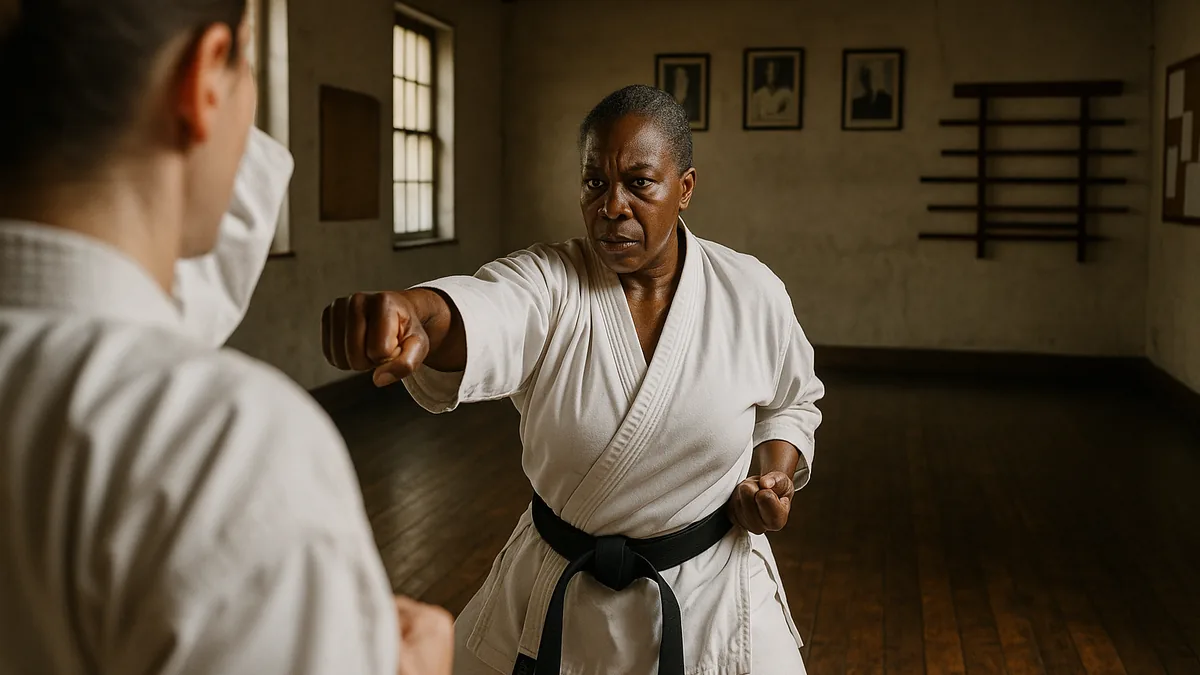
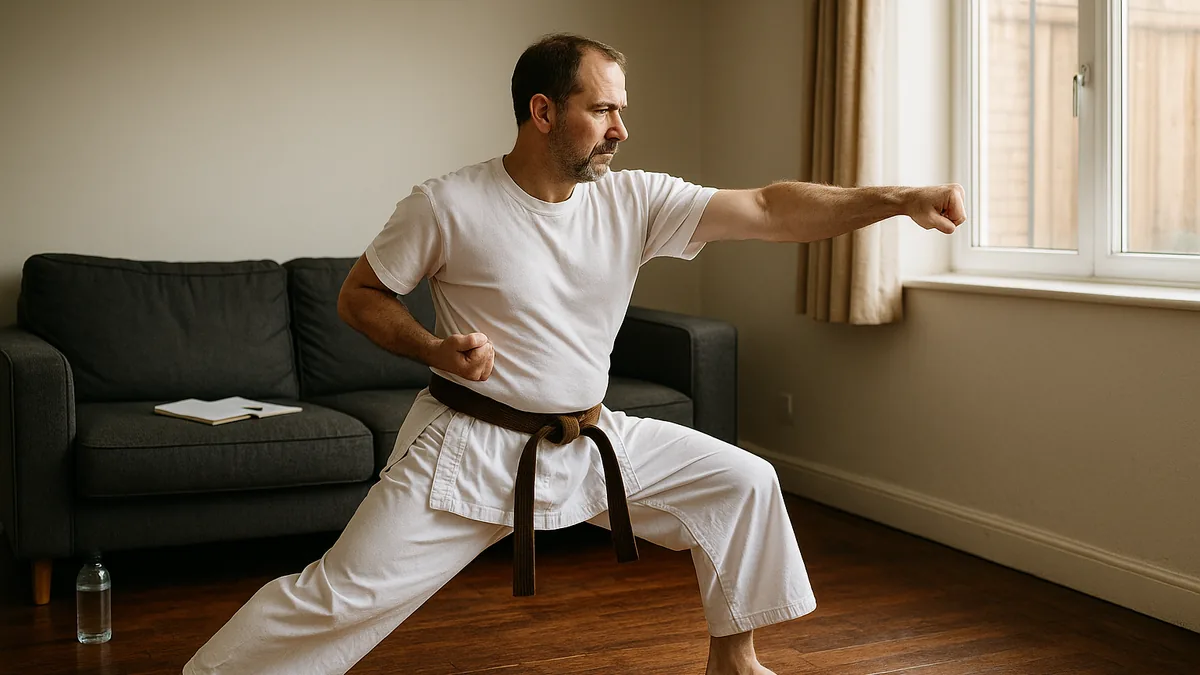
Everyone wants to be fast. Walk into any dojo and watch the lower grades during kihon - they’re rushing through every technique, snapping their arms out as quickly as possible, chasing speed like it’s the only thing that matters. The irony is brutal: the fastest karateka in the room are almost certainly the ones who spend the most time practising slowly.
This isn’t motivational waffle. It’s neuroscience. The mechanism through which your body learns to execute complex movements quickly is the same mechanism that requires you to perform them slowly first. Skip the slow phase and you’re not building speed - you’re embedding errors at velocity.
I resisted this for years. My instructor would call for slow-motion practice and I’d internally roll my eyes, thinking I was wasting time when I could be “actually training.” It took me far too long to understand that slow practice IS the training. Everything else is just testing what you’ve built.
The Neuromuscular Argument
When you perform a movement, your brain sends electrical signals through motor neurons to specific muscle fibres in a precise sequence. The first time you execute a technique, this signalling is inefficient - multiple muscles fire that don’t need to, the timing between different muscle groups is poorly coordinated, and antagonist muscles resist the movement instead of relaxing at the right moment.
Repetition changes this. Each time you perform a movement correctly, the neural pathway becomes slightly more efficient. Myelin - a fatty sheath around nerve fibres - builds up around frequently used pathways, making signal transmission faster and more reliable. This is literal physical infrastructure being constructed in your nervous system.
Here’s the critical point: this process doesn’t distinguish between correct and incorrect movements. It myelinates whatever pattern you repeat most. Perform a technique incorrectly ten thousand times and your nervous system will become extremely efficient at executing that incorrect pattern. You’ll be fast - at the wrong thing.
Slow practice exists to ensure that what you’re myelinating is correct. When you move slowly, you can monitor every phase of a technique: the initiation, the path, the rotation, the hip engagement, the finishing position, the recovery. At full speed, you cannot make these corrections - the movement happens too quickly for conscious adjustment.
What “Slow” Actually Means in Practice
There’s slow, and there’s useful slow. The distinction matters.
Useful slow practice isn’t just performing techniques in slow motion while thinking about something else. It’s performing them at a speed where you can consciously attend to every component of the movement simultaneously. For most techniques, this means roughly one-quarter to one-third of your maximum speed.
At this pace, you should be able to:
- Feel your weight transfer through your feet
- Monitor your hip rotation throughout the movement
- Check your shoulder position at every phase
- Verify your hand path follows the correct line
- Notice whether your breathing coordinates with the technique
- Confirm your core engagement timing
If you’re moving too fast to attend to all of these simultaneously, you’re moving too fast for the purpose of this exercise. The point isn’t to look impressive. The point is to program your nervous system with precision.
Some practitioners confuse slow practice with weak practice. They reduce speed but also reduce intent. This is a mistake. Slow practice should still have full muscular engagement at the appropriate moments - you’re simply executing the engagement sequence at a pace where you can verify its correctness. Your muscles should still fire with proper commitment; they’re just doing it in slow motion.
The Speed Paradox
Here’s where it gets counterintuitive. Slow practice doesn’t just build correct patterns - it actually builds the specific neural infrastructure required for speed.
Fast execution requires precise timing between agonist and antagonist muscles. Your gyaku-zuki is fast not because your pushing muscles are strong, but because your opposing muscles release at exactly the right moment. This release timing is what makes the difference between a fast punch and a slow one where you’re fighting your own body.
You cannot develop this release timing at full speed because you cannot consciously monitor it. But at slow speed, you can feel the moment your triceps engage and your biceps release. You can feel your hip flexors fire as your glutes disengage. You can train these transitions deliberately rather than hoping they’ll sort themselves out through volume.
Sprinters understand this instinctively. They don’t just run flat-out every session. They drill technique at sub-maximal speeds, building the motor patterns that will eventually express themselves at maximum velocity. The pattern is the same across every high-speed movement discipline.
The traditional karate approach - slow practice before fast practice, precision before speed - isn’t traditional because old masters didn’t know about modern training methods. It’s traditional because it works, and it works because neurology is neurology regardless of century.
Common Objections
“But I need to practise at fighting speed for it to transfer.”
You do - eventually. Nobody is suggesting you only ever train slowly. The argument is that slow practice builds the foundation that fast practice refines. Without the foundation, fast practice just embeds whatever errors you started with.
Think of it as a sequence: slow practice builds the correct pattern, medium-speed practice integrates it into flowing movement, full-speed practice tests whether the pattern holds under pressure. Skip step one and steps two and three have nothing correct to build on.
“I’ve been doing techniques for years - I don’t need slow practice anymore.”
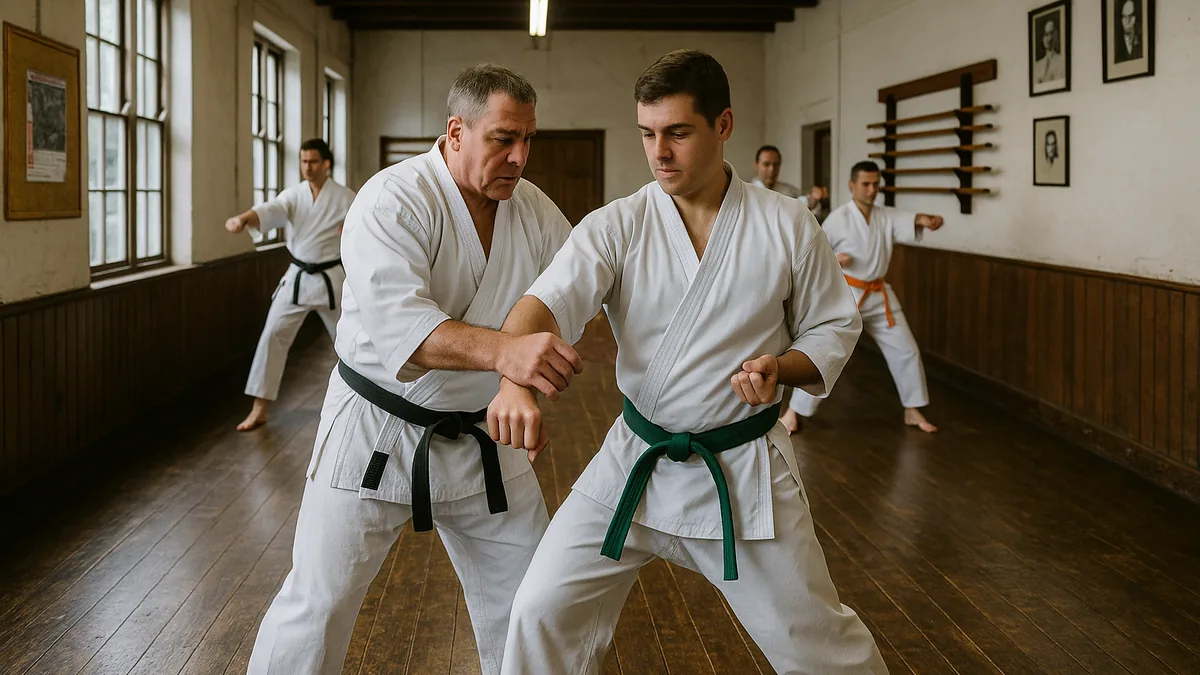
The senior practitioners I most respect are the ones who still do slow practice regularly. Not because they haven’t learned the techniques, but because slow practice reveals drift. Over time, small errors creep into any movement pattern. Regular slow practice is the diagnostic tool that identifies these before they become embedded habits.
I’ve trained with several Japanese instructors who begin every personal practice session with extremely slow basic technique - regardless of their decades of experience. They’re not learning the movements. They’re maintaining them.
“Slow practice is boring.”
It’s only boring if you’re not paying attention. If you’re genuinely monitoring every component of every technique, slow practice is mentally demanding. It requires sustained focus in a way that fast repetition often doesn’t. The boredom comes from doing it mindlessly - which, incidentally, defeats the purpose entirely.
Practical Application
Here’s how to integrate slow practice without it feeling like you’re wasting training time.
The warm-up set. Begin every practice session with one set of each basic technique performed at quarter-speed. This serves double duty: it warms the relevant joints and muscles, and it recalibrates your movement patterns before you start moving fast. Ten techniques, three repetitions each, quarter-speed. It takes about five minutes and it fundamentally changes the quality of everything that follows.
The correction set. When your instructor identifies an error in your technique, don’t just try to fix it at normal speed. Drop to slow motion and perform the corrected version twenty times. This gives your nervous system time to register the new pattern before you attempt to execute it quickly.
The cool-down audit. End each session with three to five minutes of slow technique as a physical audit. What’s tightening up? Where has your form drifted during the session? This is particularly valuable after kumite or intense pad work, where form tends to deteriorate under fatigue and pressure.
The solo session. If you train at home, dedicate at least one session per week entirely to slow practice. No timer, no target repetitions - just movement quality. This is where the deepest pattern refinement happens, because there’s no external pressure to move on or speed up.
What Senior Practitioners Know
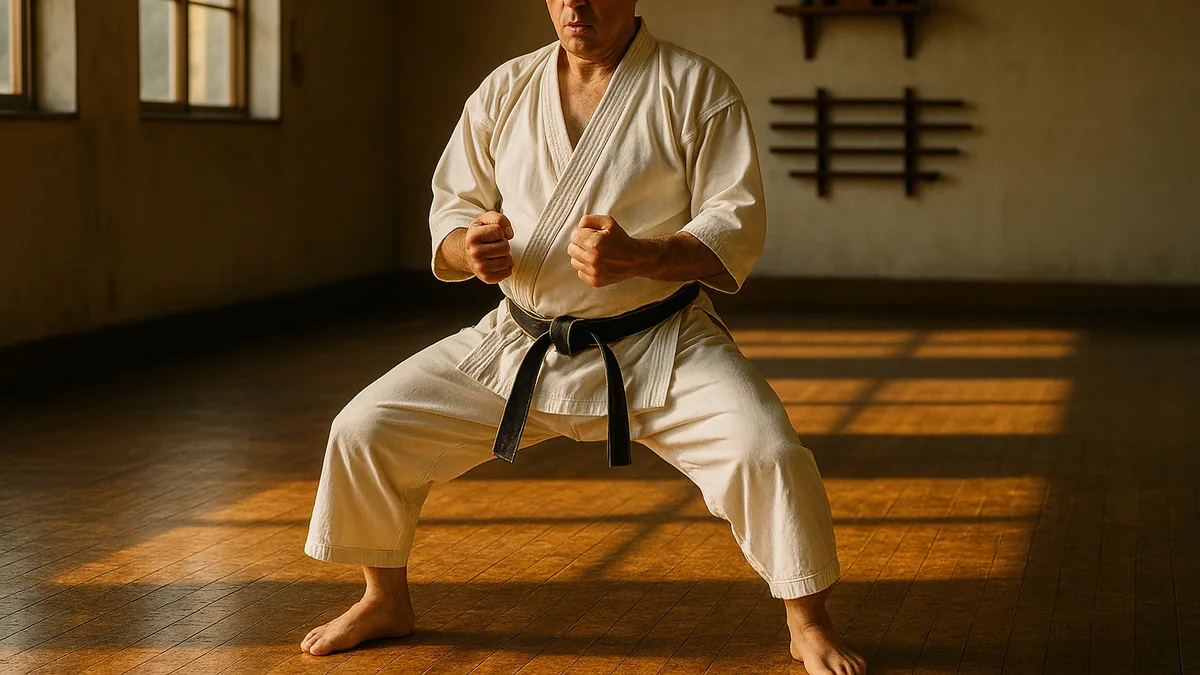
Watch a high-grade karateka perform slow basics and you’ll notice something: their slow techniques look qualitatively different from their fast ones, but the architecture is identical. The same hip rotation, the same timing, the same path, the same finishing position. The speed changes but the pattern doesn’t.
This is what correct slow practice produces. The movement becomes so deeply encoded that it remains stable regardless of execution speed. A practitioner who has built their technique through slow, deliberate practice can execute at full speed without the pattern degrading. A practitioner who only trained fast will find their technique falls apart under fatigue or pressure - because there’s no deep pattern to fall back on.
The belt system reflects this implicitly. Kihon at lower grades emphasises correctness over speed. As you progress through the grading system, the expectation shifts toward speed and timing - but only because the foundation should already be solid. The system assumes you’ve done the slow work. If you haven’t, the speed requirement at higher grades exposes the gap.
The Patience Problem
The real obstacle to slow practice isn’t physical - it’s psychological. We live in a culture that values visible results and measurable speed. Slow practice doesn’t produce immediately impressive outcomes. You can’t show someone your slow practice on video and impress them. The results are internal and delayed.
This is why so many practitioners skip it. The reward is invisible until it isn’t - until the moment in kumite where your counter-attack fires before your conscious mind registers the opening, because the pattern is so deeply embedded that it executes faster than thought. That’s the product of slow practice. That’s what you’re building.
Key Takeaways
- Fast techniques are built on correctly encoded neural patterns - these patterns can only be built at slow speed where conscious correction is possible
- Myelin doesn’t distinguish between correct and incorrect patterns - slow practice ensures you’re encoding the right movements
- Slow practice isn’t weak practice - full muscular engagement at reduced speed is the goal
- Speed comes from precise antagonist release timing, which can only be trained through conscious slow practice
- Senior practitioners maintain slow practice throughout their careers as a diagnostic and maintenance tool
- Integrate slow sets into warm-ups, corrections, and cool-downs rather than treating it as separate from “real training”
The weekly digest
New karate articles, once a week
One email every week with everything new on Karate Lifestyle. No spam; unsubscribe in one click.
We'll email you to confirm. See our privacy policy.