Breathing in Karate: When and How
Most karateka don’t breathe properly during training. I include my younger self in that statement. For years I was holding my breath through combinations, gasping between techniques, and wondering why I felt exhausted after three minutes of kumite when my fitness was genuinely good. The problem was never cardiovascular - it was mechanical. I was fighting my own breathing rather than letting it support my technique.
Breathing in karate isn’t just about getting oxygen. It’s a technical component of every technique you execute. It affects your timing, your power generation, your recovery between exchanges, and your mental clarity under pressure. Get it right and everything else improves. Get it wrong and you’re working against yourself no matter how fit you are.
The Basic Principle
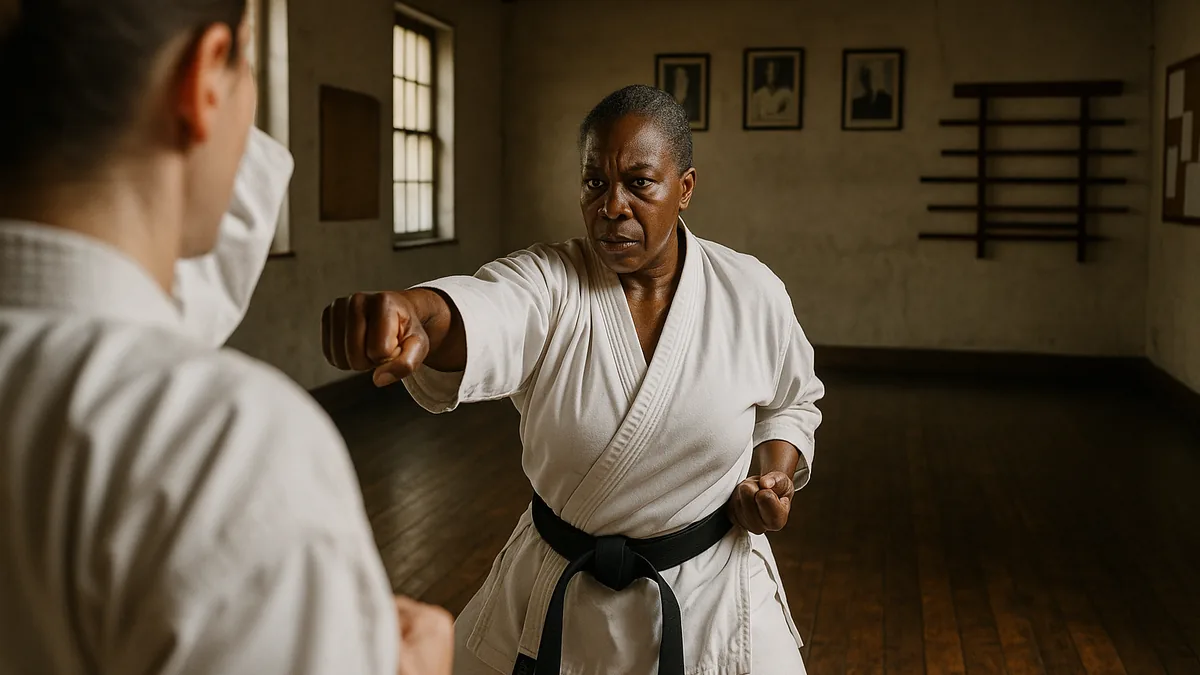
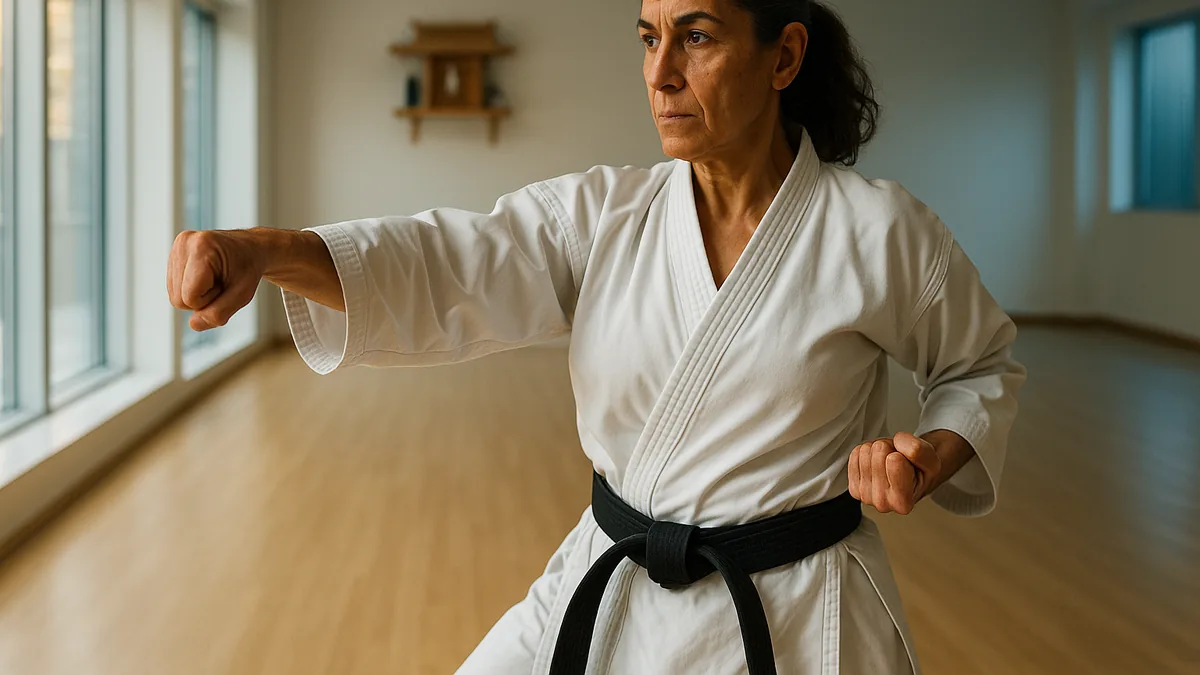
Every striking technique in karate should be accompanied by a sharp exhalation at the moment of kime. Not a vague breathing-out - a deliberate, controlled burst of air that coincides with the point of maximum contraction.
This isn’t decorative. It serves three specific functions:
Core activation. A sharp exhalation contracts the abdominal muscles, which stabilises the torso and connects upper body movement to the hips and legs. Without this contraction, power leaks at the midsection. The punch moves your arm but doesn’t engage the whole body. If you’ve ever hit a bag and felt like the impact wasn’t there despite fast arm speed, this is usually why. How to Generate Power in Karate covers the full chain, but breathing is where that chain either connects or breaks.
Tension at impact. The exhalation creates a momentary whole-body tension at the point of contact - the kime itself. Inhaling at the moment of impact is physically impossible to combine with maximum force. Try it. Throw a punch while breathing in. Then throw one with a sharp exhale. The difference is immediate and obvious.
Recovery. The sharp exhale forces a natural inhale immediately afterward. This creates a rhythm - exhale on technique, inhale on reset - that sustains you through long combinations without the gradual oxygen debt that comes from irregular breathing.
Ibuki Breathing
Ibuki is the formalised breathing method found most prominently in Goju-Ryu and its derivatives, but the principle appears across all styles in some form. Sanchin kata is the primary vehicle for training it, but the underlying mechanics apply everywhere.
There are two forms:
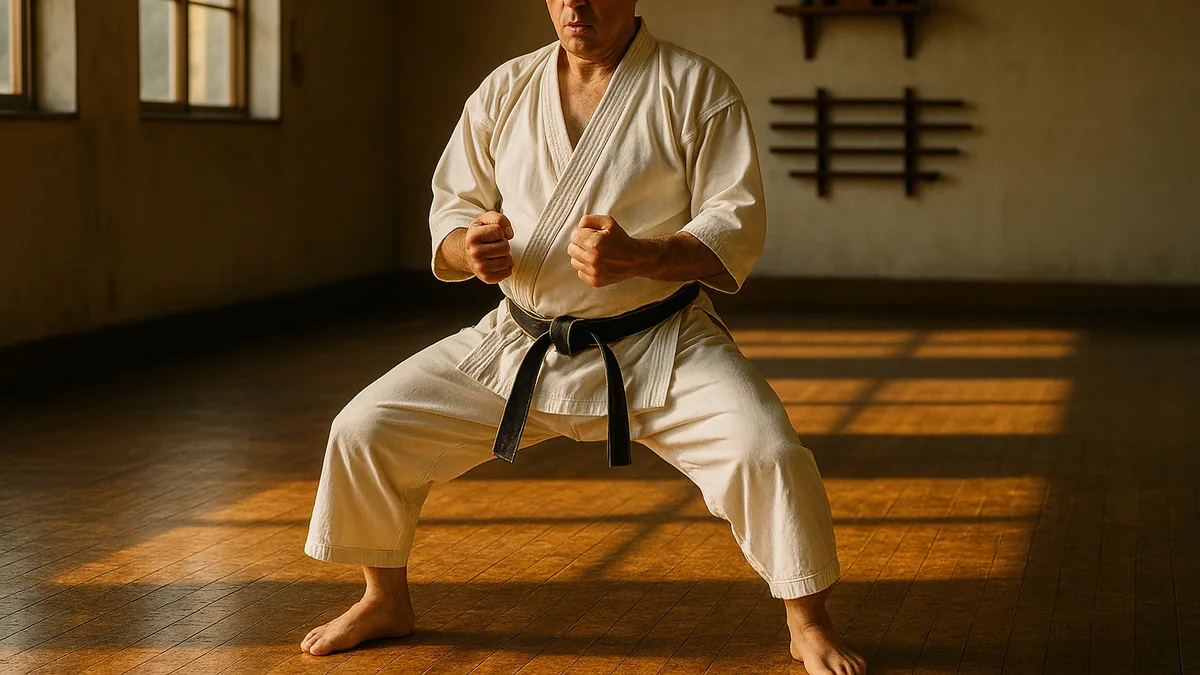
Hard ibuki - an audible, forceful exhalation with visible abdominal contraction. The breath is pushed out through a partially closed throat, creating a hissing or growling sound. The body contracts from the extremities inward, with the final tension settling in the lower abdomen. This is the dramatic version you’ll see in Sanchin demonstrations.
Soft ibuki - the same mechanical principle but silent and less visually obvious. The exhalation is controlled and complete, the core engages, but without the external tension display. This is the version you actually use during sparring and regular training.
What ibuki teaches you - whether you train Goju-Ryu or not - is the connection between breath and body state. When you exhale fully with intent, your body naturally enters a state of readiness. When you breathe shallowly or irregularly, your body is never fully set.
I didn’t understand this properly until I spent time with a Goju-Ryu instructor who had us do nothing but sanchin breathing for twenty minutes. No movement, no technique - just standing in sanchin-dachi and breathing. The control that develops from that kind of focused practice transfers directly to everything else you do.
Breathing in Kata
Kata breathing is where most students struggle because nobody explicitly tells them when to breathe. They learn the sequence of movements but not the rhythm of breath that supports them.
Here’s the general framework:
Exhale on every technique that has kime. Every punch, strike, block, or kick that has a clear endpoint should have an exhalation. Sometimes this is a kiai - the two designated kiai points in a kata are simply the loudest exhalations in a pattern of many smaller ones.
Inhale on transitions. The moments between techniques - the steps, the turns, the preparatory movements - are where you breathe in. These moments should feel like loading. You’re gathering air and energy for the next exhalation.
Never hold your breath through multiple techniques. This is the most common error I see. A student will execute a three-technique combination while holding one breath, then gasp at the end. Each technique in that combination should have its own exhalation, even if they’re rapid and small.
What changes your kata performance more than almost any other single correction is making the breathing audible to yourself. Not shouting - just hearing your own breath. When I started doing this, I immediately noticed where I was holding, where I was rushing, and where my breathing didn’t match my technique timing. The two should be synchronised perfectly. When they’re not, one of them is wrong.
Performing Kata With Intent discusses how breathing connects to the feeling of purpose that separates mechanical kata from meaningful kata. The breath is a large part of what makes kata feel alive rather than rehearsed.
Breathing Under Kumite Pressure
This is where breathing becomes genuinely difficult, because your body’s stress response actively works against controlled breathing.
In kumite, your heart rate is elevated, your sympathetic nervous system is engaged, and your natural tendency is toward rapid, shallow chest breathing. This is the opposite of what you need. Shallow breathing reduces oxygen delivery, increases tension, narrows your visual field, and makes you feel more panicked than the situation warrants.
The practical approach:
Use your guard position to breathe. When you’re in a neutral position between exchanges, take one deliberate abdominal breath. Not deep enough to relax you - just deep enough to reset your oxygen levels. The rhythm in kumite is: exchange, reset, breathe, assess, exchange.
Exhale on every attack and every defence. When you throw a combination, each technique gets a sharp breath out. When you block or evade, the same. This prevents the breath-holding that turns three-exchange sequences into oxygen-deprived scrambles.
The first thirty seconds problem. I’ve noticed - in myself and in students I coach - that the first thirty seconds of kumite is where breathing goes wrong most catastrophically. The adrenaline spike causes immediate chest breathing and tension. If you can control your breathing through that initial burst, the rest usually settles naturally. Practice this deliberately: when you start sparring, make your first priority three controlled breaths rather than immediate attack.
Recovery between rounds. If you’re doing multiple rounds of kumite in a grading or training session, the time between rounds is for active recovery. Walk slowly, breathe abdominally, let your heart rate drop. Don’t stand still and don’t sit down - both make the restart harder.
The Kiai Connection
The kiai is not a shout. This is possibly the most commonly misunderstood element of karate for beginners.
A kiai is a concentrated exhalation that produces sound as a byproduct. The sound comes from the force of air being expelled, not from your vocal cords forming a word or a scream. The kiai originates in the abdomen - in the hara - not in the throat.
When a kiai is correct, you’ll feel it in your core. The abdominal wall contracts sharply, the air is expelled from below, and the sound that emerges is deep, short, and forceful. When it’s wrong - when students are essentially just shouting - the sound comes from the throat, the core doesn’t engage, and the kiai adds nothing to the technique.
What I tell beginners: forget about the sound. Focus on the breath. Contract your lower abdomen sharply as if someone were about to punch you in the stomach, and let the air out fast. The sound will take care of itself. Once the breathing mechanics are right, the kiai becomes the natural endpoint of a strong exhalation rather than something you have to produce separately.
The two kiai points in a kata aren’t random. They mark moments of maximum commitment - usually after a sequence builds to its peak. The kiai should feel like the culmination of everything that came before it, not an interruption. If your kiai feels disconnected from the technique it accompanies, your timing is wrong.
Common Breathing Errors
Reverse breathing. Inhaling on technique and exhaling on transition. This is surprisingly common and completely undermines power generation. If you notice you’re doing this, slow everything down and consciously reverse the pattern. It usually takes a few weeks of deliberate correction before the right pattern becomes automatic.
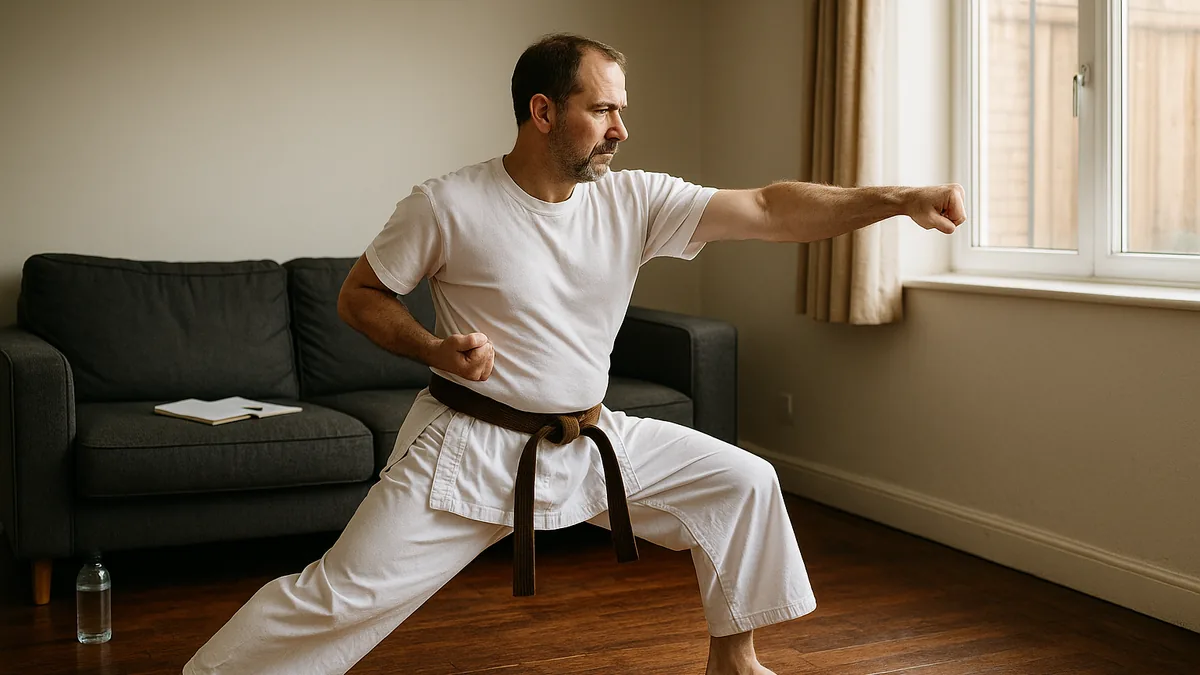
Chest breathing exclusively. The chest rises and falls but the abdomen stays rigid. This limits both oxygen intake and the ability to generate core-driven exhalation. The correction is to practise abdominal breathing in isolation - lying down, hands on your stomach, feeling it rise and fall with each breath - until diaphragmatic breathing becomes your default.
Breath-holding in combinations. Executing three, four, five techniques on a single held breath and then gasping. The longer the breath is held, the more tension accumulates, the less powerful each successive technique becomes, and the longer recovery takes afterward.
Kiai only at designated points. Some students exhale only when there’s a formal kiai and breathe irregularly through everything else. Every technique needs its own exhalation - the kiai is just the loudest one in a continuous pattern.
Gasping between kata sections. If you’re desperately sucking air between sequences in a kata, your breathing during the sequences is wrong. Fix the technique breathing and the recovery breathing will sort itself out.
Training Your Breathing
Sanchin practice. Even if you don’t train Goju-Ryu, spending time in sanchin-dachi practising controlled ibuki-style breathing will improve your breath-to-technique connection. Stand for five minutes and focus on nothing but exhalation quality and abdominal engagement.
Slow kata with audible breathing. Run through any kata you know at half speed and make every breath audible. You’ll immediately hear where your breathing is out of sync with your technique. Fix those points.
Bag work with breath focus. If you have access to a heavy bag, throw single techniques with maximum focus on the exhale-at-contact moment. Don’t think about power. Think about breath. The power follows from correct breathing mechanics.
Sprint intervals. Not karate-specific, but any form of high-intensity interval training with deliberate recovery breathing teaches your body to reset under cardiovascular stress. The skill transfers directly to kumite.
If you’re working on this at home, How to Practise Karate at Home has suggestions for structuring solo sessions that would complement breathing practice well.
Community Perspective
There’s an interesting divide in the karate community between styles that explicitly teach breathing methodology and those where it’s assumed you’ll pick it up naturally.
Goju-Ryu and its offshoots have sanchin kata as a dedicated breathing vehicle. Uechi-Ryu has sanchin and seisan with similar emphasis. These styles treat breathing as a distinct, trainable skill that deserves direct instruction.
Shotokan and Wado-Ryu tend to address breathing less formally. The principles are the same - exhale on technique, inhale on transition - but they’re usually taught implicitly through correction rather than through dedicated breathing exercises. I’ve trained in clubs where breathing was never explicitly discussed once, and I’ve trained in clubs where it was addressed in every session. The latter produced noticeably better results.
My position is that breathing deserves direct instruction regardless of style. It’s too fundamental to leave to chance, and most students won’t develop correct breathing habits without being explicitly shown what correct looks like. The good news is that once you understand the mechanics, the correction is relatively quick - a few weeks of conscious effort and the pattern embeds itself into your training permanently.
Key Takeaways
- Every technique needs a sharp exhalation at the point of kime - this isn’t optional, it directly connects to power generation and core stability
- Ibuki breathing teaches the connection between breath and body state - practise it in isolation to build the skill
- In kata, breathe on every technique, not just at kiai points - inhale on transitions, exhale on execution
- Kumite breathing breaks down in the first thirty seconds due to adrenaline - prioritise controlled breathing before your first attack
- The kiai comes from abdominal contraction, not throat tension - focus on the breath mechanics and the sound follows
- Train breathing deliberately through slow kata, sanchin practice, and bag work - don’t assume it will develop on its own
Understanding What Is Kihon? alongside breathing will help you see how the basics are designed to embed correct breathing patterns from the start - if they’re taught properly.
The weekly digest
New karate articles, once a week
One email every week with everything new on Karate Lifestyle. No spam; unsubscribe in one click.
We'll email you to confirm. See our privacy policy.