How to Perform Kata With Intent
Most people get kata wrong for years before anyone tells them why. Not wrong in terms of the moves - they know the sequence, they’ve drilled it hundreds of times, their stances are passable. Wrong in the way that matters: they’re performing a memory test, not a fight.
I’ve watched students grade at brown belt level doing kata that looked technically clean and felt completely empty. Every technique landed in the right place. Every turn was on the correct count. And there was absolutely nothing behind any of it. No threat. No intent. No opponent. Just shapes.
That’s the problem this article is about.
What “Intent” Actually Means on the Floor
You’ll hear instructors say “put your intent into it” and nod along without really knowing what you’re being asked to do. I did this for years. I thought intent meant trying harder, tensing more, making it look more aggressive. It doesn’t.
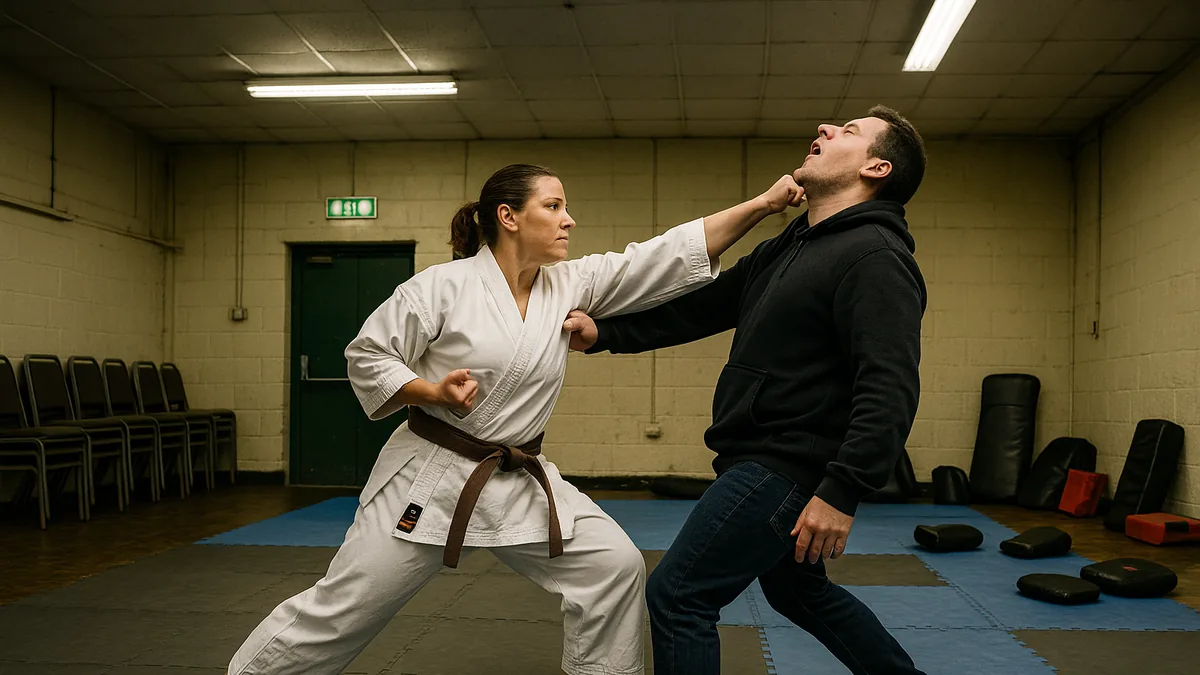
Intent means you have a specific, visualised opponent at every moment of the kata. Not a vague idea of someone. A person, at a specific distance, attacking from a specific angle. When you step into gedan barai, you’re not sweeping downward to show that you can - you’re deflecting a kick that’s coming at your groin from a bigger person who has reach on you. The block only makes sense if the kick exists in your head.
My instructor used to say “if I can’t tell who’s winning, you’re not doing kata.” I didn’t understand what he meant until I watched a senior student perform Bassai Dai at a prefectural tournament. The kata was technically similar to what I’d seen from other competitors. But watching him, you felt like someone was about to get hurt. You could see where the opponent was. You could feel the urgency in the transitions. That’s when it clicked.
The Bassai Dai breakdown goes into the specific bunkai behind each sequence - but the point here is broader than any single kata. Intent is what makes the techniques coherent. Without it, you have a well-rehearsed dance.
Kime: The Moment That Matters
Kime is the thing most intermediate practitioners think they understand and don’t.
What I see constantly - and I mean constantly, in every dojo I’ve trained in - is students confusing tension with kime. They tighten everything at the point of impact, hold it for a beat, then relax. That’s not kime. That’s a pose.
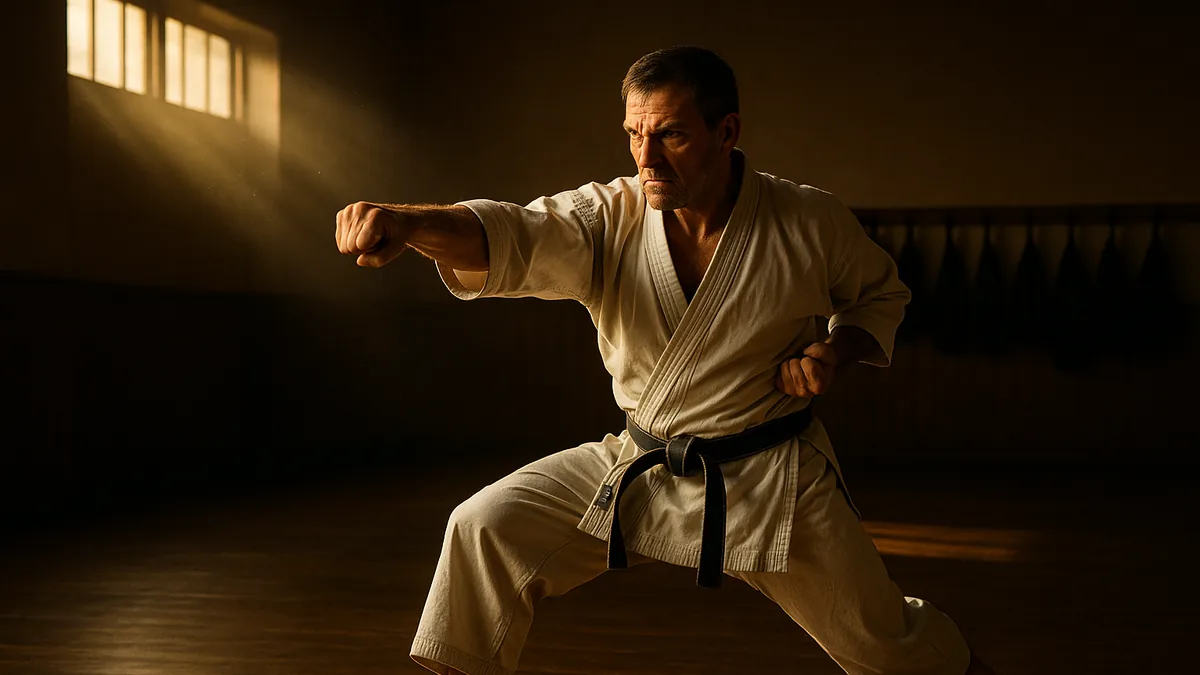
Real kime is a sharp, total contraction at the precise moment of impact, followed by immediate relaxation. The whole body fires at once - hip, core, shoulder, fist - and then releases. When it’s right, you feel it through your entire structure, not just your arm. The punch feels like it comes from your feet. There’s a snap to it, a crack of focused energy, and then it’s gone.
The mistake happens because beginners are taught to hold their end position so the instructor can check the form. That’s sensible for learning. The problem is students carry that habit forward and never unlearn it. The held tension becomes their version of kime. By the time they’re at intermediate level, it’s deeply ingrained.
The correction that works best is to have them throw a single technique at a pad and feel the difference between holding tension and releasing immediately. Most students, the first time they get genuine kime on a pad, look surprised. It feels different. Lighter in the arm, heavier in the impact. That’s the sensation you’re chasing in kata.
Breathing and Why Most People Get It Backwards
Here’s an opinion I’ve changed over the years: I used to think breathing in kata was about managing effort - breathe in on the transitions, breathe out on the techniques. Efficient, logical. And mostly wrong.
Breathing in kata is psychological before it’s physical. The exhale on technique isn’t just about core engagement. It’s about committing. A sharp kiai or focused exhale forces you to commit to the moment. You can’t half-commit with your breath. You either breathe out fully or you don’t.
What I’ve noticed is that students who breathe passively through kata - quiet, controlled, barely perceptible - tend to perform with the same quality of attention. Passive breath, passive mind. The two track each other.
The timing matters more than the volume. Exhale at the moment of kime, not before and not after. Before, and you’re tense before the technique lands. After, and you’ve already mentally moved on. The breath and the strike need to be the same event.
There’s also the question of where you breathe in. I prefer to take the breath on the transition - during the turn, during the step - so that the technique itself is always an exhale. This keeps you from holding your breath through combinations, which is a subtle energy drain that compounds over a full kata.
Zanshin: The Part That Doesn’t End
Zanshin is awareness that continues after the technique. That’s the literal translation, more or less. But understanding what it means in practice took me longer than I’d like to admit.
As a white belt I thought zanshin was about the pose at the end - standing still, looking focused, holding your position after the final technique. By brown belt I realised that was the smallest part of it.
Zanshin in kata means your attention never drops, even for a fraction of a second. Every transition, every turn, every moment between techniques - you’re still present, still aware of the opponent, still dangerous. The technique doesn’t end when your fist stops. You’re already reading what comes next.
The place where this breaks down most visibly is on the turns. Watch a group of students do any of the Heian kata - the Heian series is useful for this because the patterns are familiar enough to observe clearly - and watch what happens in the half-second before a turn. Most students mentally check out. They’re thinking about the next sequence. Their body goes slightly soft. Their eyes lose focus.
That gap is where zanshin lives, or doesn’t. The student who maintains it looks different from the student who doesn’t, even if their technique is technically identical. There’s a quality of readiness that never disappears.
Visualisation: What It Actually Looks Like in Practice
This is the element most intermediate practitioners skip because it feels too abstract. I’d push back on that. Visualisation is the most concrete thing in this list - it’s just internal rather than external.
Before I perform any kata now, I spend about thirty seconds running the opening sequence in my head with a specific opponent. Not a detailed fantasy - just enough to establish the scenario. Where they are, what they’re doing, what I’m dealing with. By the time I step into the first technique, the opponent already exists.
What this does is solve the intent problem automatically. If the opponent is real in your head, the techniques have reasons. The urgency is genuine because the threat is genuine, even if it’s imagined.
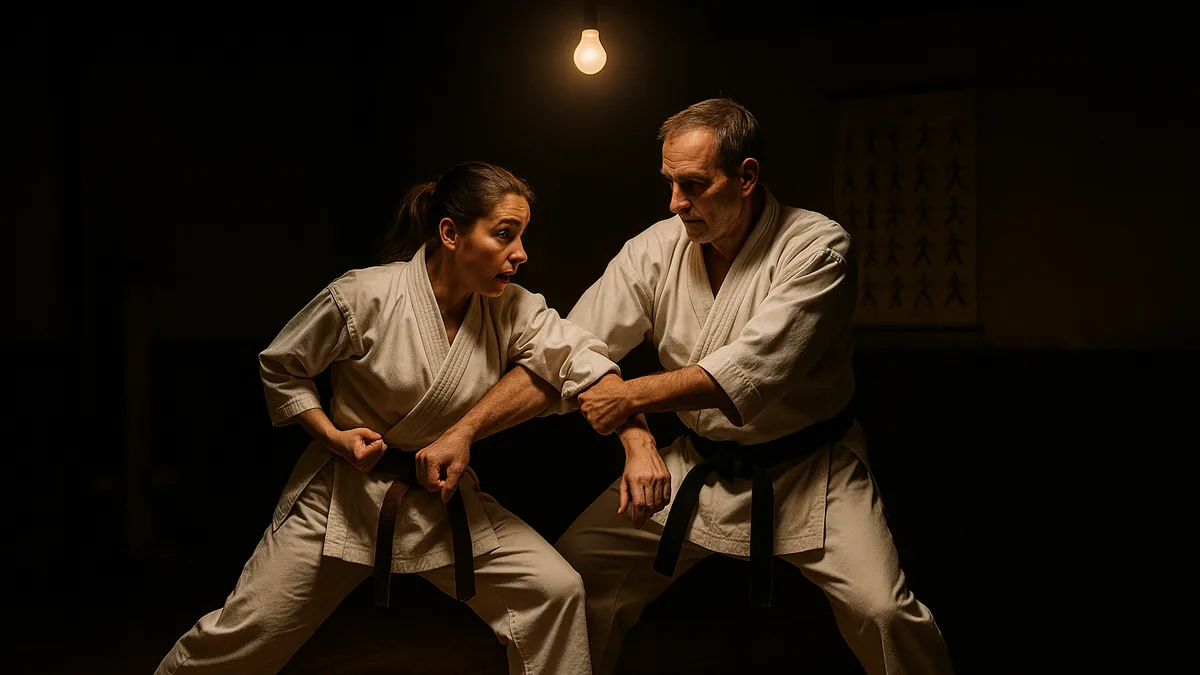
I’ve started doing this with students before grading - asking them to describe the first three techniques of their kata to me as if they’re explaining what’s happening in a fight. Not what the moves are, but what’s happening. Students who can’t do it are students who’ve been drilling shapes. Students who can tell you “I’m blocking a kick, grabbing the leg, and driving a punch into the ribs” are students who’ll perform with intent.
The hidden techniques in kata piece goes deeper into bunkai, which feeds directly into this - understanding what the techniques actually do makes visualisation much easier.
What Separates Mechanical from Meaningful
I’ve judged kata at club and regional level, and the difference between a mechanical performance and a meaningful one is obvious within the first four counts. You don’t need to see the whole kata.
Mechanical kata has consistent rhythm. Every technique takes roughly the same amount of time. The student is managing the sequence, ticking off moves. It’s accurate but it’s even, and real fighting isn’t even.
Meaningful kata has contrast. Fast transitions and explosive techniques. Moments of stillness that feel loaded, not empty. Combinations that feel connected rather than sequential. The rhythm is dictated by the scenario, not the student’s comfort level.
If you want to know what judges are actually looking for, the kata competition scoring breakdown covers the criteria in detail. But even outside competition, this contrast is the thing to chase. It’s the difference between a kata that demonstrates you know the moves and a kata that demonstrates you understand what the moves are for.
Community Perspective
There’s a genuine split in how different dojos approach kata intent, and I think it’s worth being honest about it.
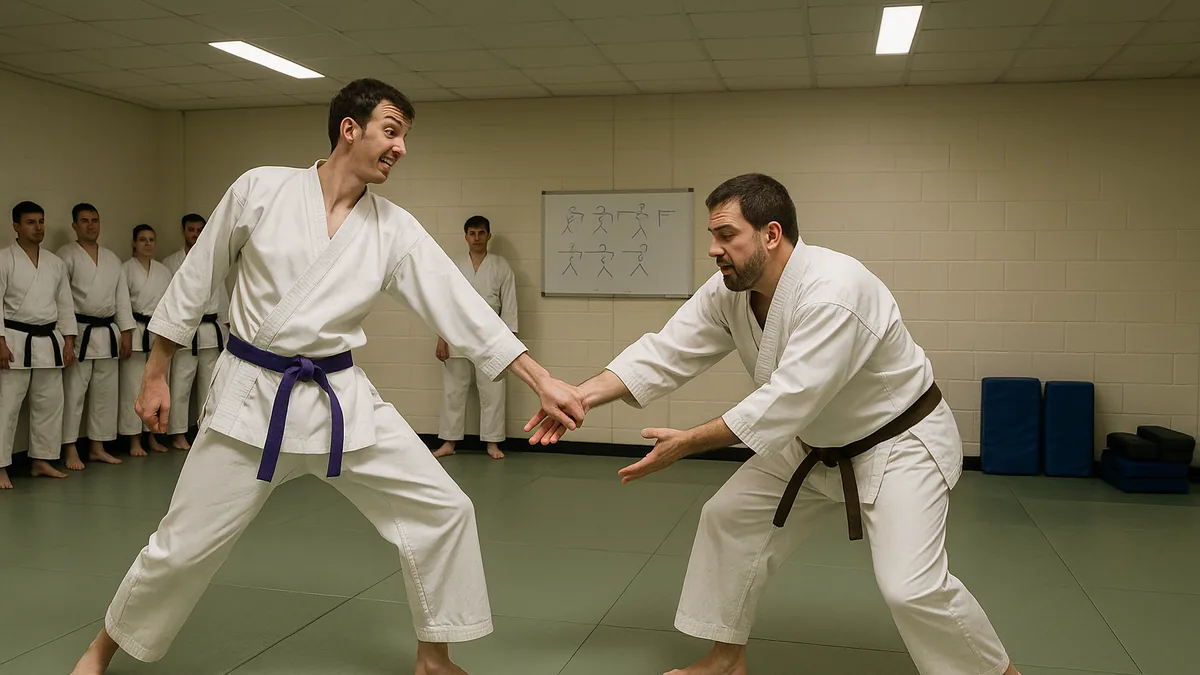
Traditional clubs - particularly those with strong JKA lineage - tend to emphasise the technical framework first. Get the form right, and the intent will come. The argument is that you can’t perform with real intent until the technique is automatic, and forcing intent too early leads to sloppy mechanics dressed up as power.
I’ve trained in dojos that lean the other way: start with the bunkai, understand the fight first, and let the technique develop in service of that understanding. I’ve seen this produce students with tremendous presence and genuine understanding of what they’re doing - and occasionally terrible stances.
My honest view is that the technical-first approach is safer for beginners but can become a ceiling for intermediate practitioners. If you’re at a level where the mechanics are solid and you’re still performing mechanically, the framework has done its job and you need to move beyond it. The intent isn’t something you add later as a finishing touch - it’s the point. The technique is in service of it.
This is also where styles diverge. Shotokan tends to emphasise strong, distinct kime. Wado-ryu practitioners I’ve trained with often describe intent through flow and evasion rather than impact. Neither is wrong - they’re different expressions of the same underlying principle.
Key Takeaways
- Before you perform kata, spend thirty seconds establishing the scenario in your head. Who is attacking, from where, with what. The techniques need reasons.
- Kime is a contraction and immediate release, not a held tension. If you’re posing at the end of each technique, you’re drilling the wrong habit.
- Watch your transitions and turns. Zanshin lives or dies in those half-seconds. If your attention drops between techniques, so does the quality of the whole performance.
- Exhale on the technique, not before it. The breath and the kime should be the same moment.
- Test your kata understanding by describing the first three techniques as a fight scenario. If you can’t, you’re drilling shapes.
- Contrast is the clearest marker of meaningful kata. Fast and slow, explosive and controlled. If your kata has a consistent rhythm, you’re managing the sequence rather than performing a fight.
The weekly digest
New karate articles, once a week
One email every week with everything new on Karate Lifestyle. No spam; unsubscribe in one click.
We'll email you to confirm. See our privacy policy.