Kata Competition: What Judges Score
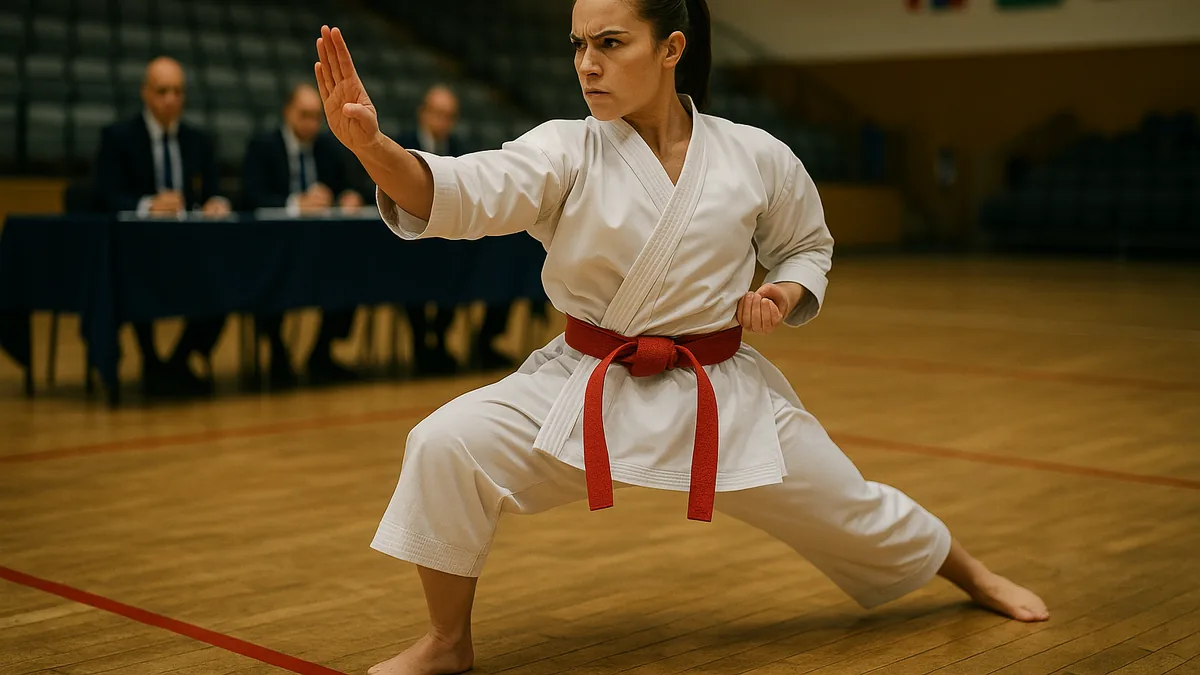
Most competitors lose kata competitions before they step on the floor. Not because their technique is bad, but because they’ve been preparing for the wrong thing.
I’ve watched this happen at regional level, national level, and in our own dojo during pre-competition training. A student spends six months drilling their chosen kata until every sequence is clean, every kiai lands on the right count, every turn is sharp. They step up, perform it exactly as they’ve drilled it, and score mid-table. They walk off confused. Their kata looked fine. What went wrong?
What went wrong is that they were performing for themselves - for the feeling of getting it right - rather than performing for the panel. Those are two different skills, and most people only train one of them.
What Judges Are Actually Watching
Let me separate this into WKF sport competition and traditional/association grading, because they’re not the same conversation, even though there’s significant overlap.
WKF Competition Scoring
Under WKF rules, judges score across two broad categories: technical performance and athletic performance.
Technical performance covers things like correct stances, proper execution of techniques, correct timing and rhythm, and embusen - which is the performance line of the kata. Athletic performance covers power, speed, balance, and focus (kime).
Here’s what that means in practice: judges are watching for evidence that you understand the kata, not just that you’ve memorised the sequence. The distinction matters more than most competitors realise. You can perform every technique in the correct order and still score poorly if the judges can’t see that you understand what you’re doing and why.
I’ve noticed that the competitors who consistently score well share one characteristic - their kata tells a story. You can follow the fight. You can see the opponent. The transitions between techniques make sense because there’s clear intent behind each one.
Traditional Association Grading
Outside WKF sport, scoring criteria vary by association, but the fundamentals are consistent. Examiners look at:
- Stance depth and stability
- Correct form on individual techniques
- Zanshin - continued awareness and focus after each technique
- Kiai placement and quality
- Rhythm and ma-ai (the sense of appropriate timing and distance)
- Overall composure and martial spirit
The thing that took me years to understand about traditional grading is that examiners aren’t just watching what you do - they’re watching how you carry yourself between techniques. A candidate who snaps into a sharp gyaku-zuki and then immediately relaxes their posture before the next move has already told the examiner something important. Zanshin isn’t a technique. It’s an attitude, and it either runs through your whole performance or it doesn’t.
What Judges Actually Deduct For
This is where preparation goes wrong most often, so I’m going to be specific.
Loss of balance during transitions. Not dramatic falling - just that slight wobble when you step into a deep front stance and your weight doesn’t settle properly. Judges see it. It’s usually caused by looking at the floor during the move instead of holding your focus forward.
Kiai that doesn’t match the technique. The kiai should feel like an expression of the technique, not a sound effect added on top. When the kiai and the technique don’t land together - when the shout comes a beat before or after the strike - it tells the judge your kiai is performed rather than felt. What I tell students is this: if you can think about when to kiai, you’re already too late.
Embusen drift. You’re supposed to finish in the same spot you started. Most competitors drift slightly without realising it. In a scored competition, this is a visible technical error. In a grading, it suggests you don’t fully own the kata yet.
Rushed sequences. This is the one I see constantly, and it almost always comes from nerves. Competitors speed up through sections they find difficult, hoping to get through them before anything goes wrong. Judges notice the acceleration. The correction that makes the biggest difference here is drilling those difficult sections at half-speed until the pace feels natural, not forced.
Weak kime. This is hard to define but easy to spot. Kime is the focus and tension at the point of impact - that momentary snap where everything locks. Without it, techniques look soft. The physical sensation is distinct: when kime is working properly, you feel a brief, total contraction through the whole technique, not just in the striking limb. It feels like the technique lands somewhere, even in the air.
How to Prepare for Competition Kata
I’ll be direct here: most people don’t prepare for competition, they just train more of the same thing they’ve always been doing and hope it transfers. It doesn’t, not reliably.
Choose your kata strategically. I prefer competitors to perform a kata they own completely over a kata that looks impressive but has gaps. Judges can see the difference between a student performing Bassai Dai with genuine understanding and one who’s learned the sequence for competition. If you want to understand what genuine ownership of a kata looks like, spend time with the Bassai Dai Breakdown and ask yourself honestly whether you understand the intent behind each section, not just the choreography.
Film yourself. Not to watch back immediately, but to watch back after you’ve trained the kata again the next day. You’ll see things your body doesn’t tell you. The gap between what your technique feels like and what it looks like is often significant, especially in the first few years of training.
Perform for an audience before you compete. This sounds obvious but most competitors don’t do it. Performing in front of people changes your nervous system response. Your timing shifts, your breathing changes, and sections you thought were solid suddenly feel uncertain. Train that feeling by performing for your training partners, your instructor, or anyone who’ll watch. The kata you perform alone in the dojo is not the kata you’ll perform in competition.
Work your opening. The first few seconds of your performance set the judges’ expectations. A strong opening - composed, deliberate, with clear yoi - tells the panel you’re in control. A rushed or uncertain opening does the opposite, and you spend the rest of the performance recovering. I used to underestimate this completely. My instructor told me repeatedly that the yoi is where the kata begins. I didn’t understand it until I watched senior competitors and noticed how different their composure looked from the moment they stepped on the floor.
Know your bunkai. Even in sport competition where bunkai isn’t performed, understanding the application of what you’re doing changes how you perform it. There’s no substitute for this. If you’re working through the Heian series at competition level, you should understand the fighting logic of each sequence, not just the form. The Bunkai Partner Drills are worth your time here - performing a technique against a real partner, even slowly, gives it a weight and intent that solo drilling doesn’t.
The Mistake That Costs Most Competitors
I want to come back to something, because I think it’s the most important thing in this article.
Most competitors train kata as a sequence of techniques. Judges score kata as a unified performance. These are not the same thing.
A sequence of techniques is what you learn when you’re a beginner. You’re focused on getting from point A to point B without making errors. That’s appropriate at that stage - you can see this clearly if you look at what Heian Shodan is actually designed to teach, which is the foundational movement patterns, not competition performance.
But competition judges aren’t watching for the absence of errors. They’re watching for the presence of something - intent, understanding, martial spirit, whatever you want to call it. The competitors who score well aren’t just technically correct. They’re performing something that feels real.
I’ve seen technically excellent kata score below average because the competitor looked like they were reciting something they’d memorised. I’ve seen kata with minor technical imperfections score well because the competitor was genuinely present in the performance, with clear focus and evident understanding.
The correction that actually fixes this isn’t technical. It’s conceptual. You have to stop thinking about getting through the kata and start thinking about what the kata is doing. The hidden techniques in kata article gets into this in more depth, and it’s worth reading if you’re at the stage where your technique is clean but your scores aren’t reflecting it.
Community Perspective
There’s a genuine split in the karate community about sport kata versus traditional kata, and it affects how people think about competition preparation.
Some instructors - particularly those from traditional backgrounds - are sceptical of WKF sport kata entirely. Their argument is that competition scoring incentivises performance over substance: that competitors learn to make techniques look powerful rather than be powerful, and that the judging criteria reward theatrical interpretation over martial understanding. I’ve trained with instructors who hold this view firmly, and I understand where it comes from.
On the other side, sport kata competitors argue that the discipline required to perform at that level - the consistency, the control, the ability to deliver under pressure - develops real martial skill, even if the context is different from traditional practice.
My honest position: both things are true, and the tension between them is worth sitting with rather than resolving too quickly. If you’re preparing for WKF competition, train for WKF scoring. But don’t let competition preparation replace your understanding of what the kata actually contains. The best competitors I’ve seen are the ones who do both - who understand the bunkai, who’ve drilled the applications, and who bring that understanding into their competition performance. That’s what makes a performance look real rather than rehearsed.
Tekki Shodan is a good test case here. It’s rarely chosen for open competition because it’s visually unspectacular. But the practitioners who understand it - who’ve drilled the lateral movement and the close-range applications - perform it with a weight and intent that’s immediately visible. That understanding doesn’t come from competition training. It comes from the dojo floor.
Key Takeaways
- Judges score unified performance, not sequences of techniques - train for intent and understanding, not just technical accuracy
- The biggest deductions come from embusen drift, rushed transitions, and kiai that doesn’t match the technique - these are fixable with targeted drilling, not just more repetitions
- Perform in front of people before you compete - your nervous system responds differently to an audience, and you need to train that response
- Know your bunkai even if you’re competing in sport kata - understanding the application changes how the technique looks and feels
- Your opening sets the judges’ expectations - the yoi and the first sequence matter more than most competitors realise
- Choose a kata you own completely over a kata that looks impressive but has gaps in your understanding
The weekly digest
New karate articles, once a week
One email every week with everything new on Karate Lifestyle. No spam; unsubscribe in one click.
We'll email you to confirm. See our privacy policy.