Bunkai Partner Drills
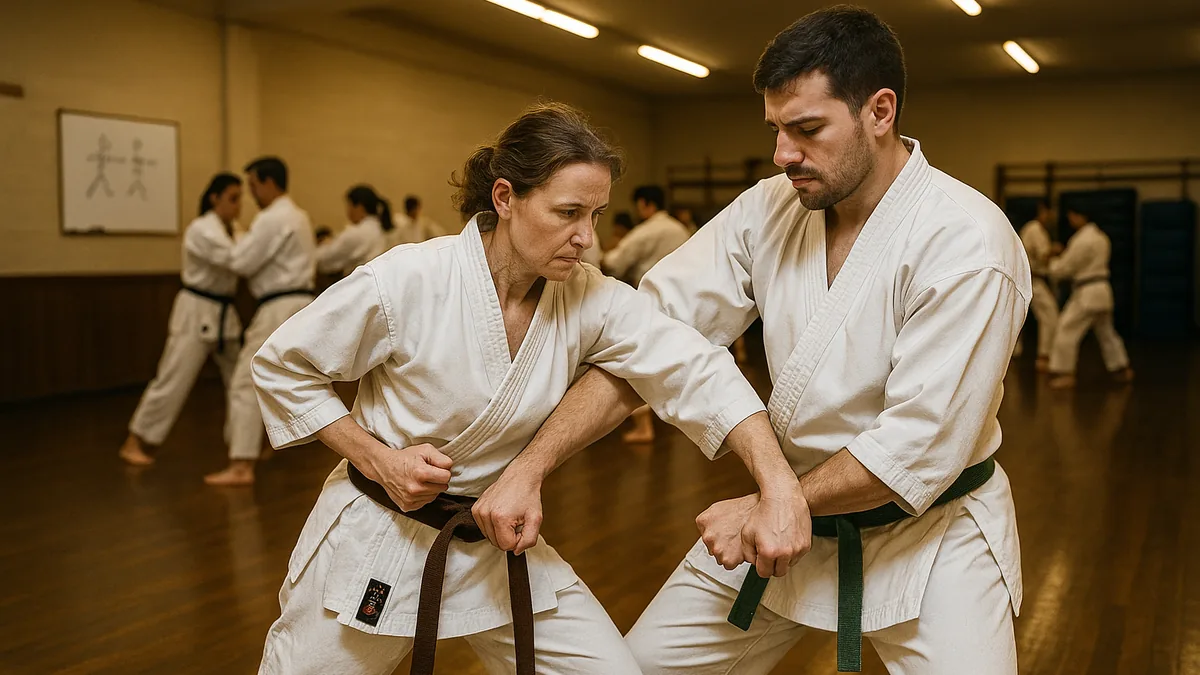
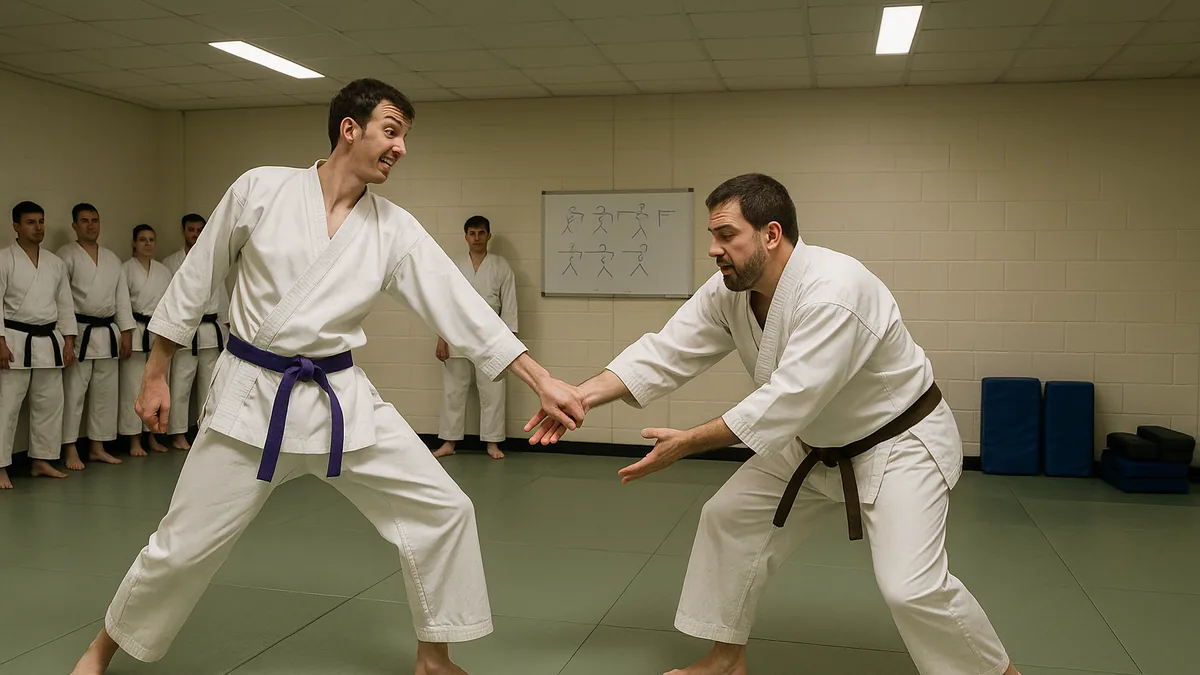
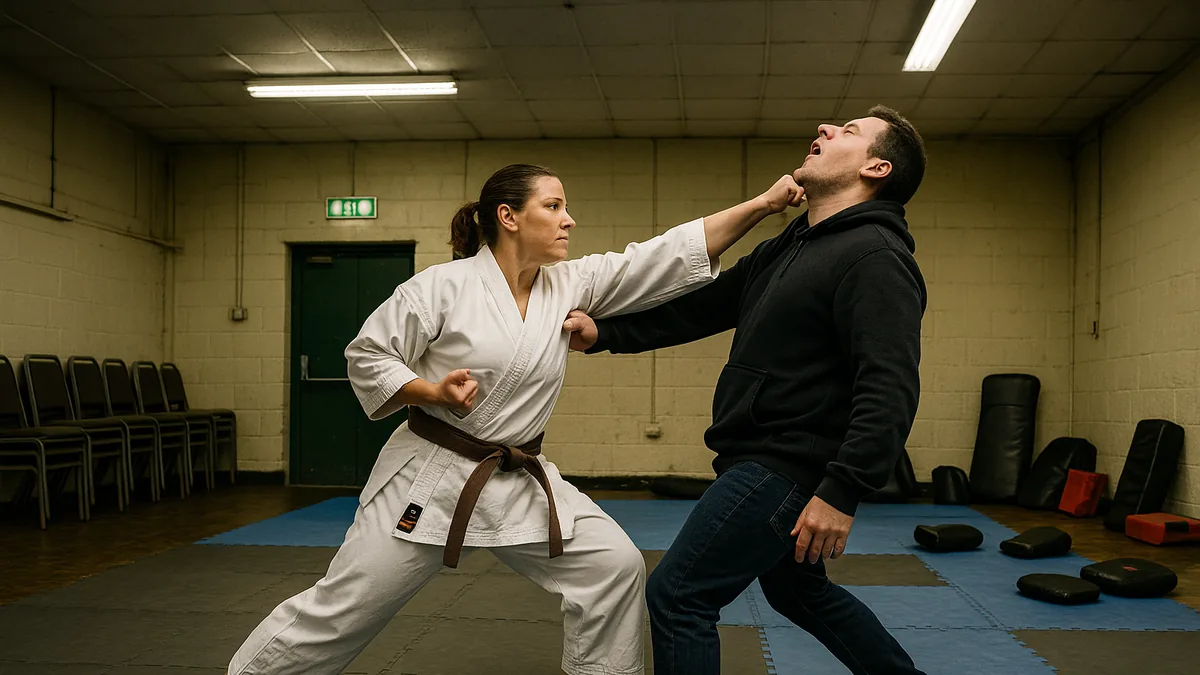
Most students treat bunkai like a performance. Uke attacks, tori executes the sequence, both bow, and everyone feels good about it. That’s not bunkai training - that’s choreography rehearsal. The moment you put any resistance into it, or change the angle slightly, the whole thing falls apart. I’ve seen brown belts completely freeze when uke doesn’t attack exactly as scripted. That tells you everything about how the drill was being run.
The fix isn’t complicated, but it does require being honest about what you’re actually training for. If you want bunkai to mean something, you need to build it the same way you’d build any combative skill - start with understanding, add compliance, then gradually introduce resistance and unpredictability. Skip any of those steps and you’re either drilling blindly or getting hit.
Why Most Bunkai Drills Fail
The problem I see most often is that students learn the movement pattern without understanding the principle behind it. They can reproduce the sequence perfectly in isolation, but they don’t know why they’re redirecting the arm at that angle, or why the hip drops in that moment. So when something changes - uke moves differently, the timing is off, the attack comes from a different range - they have no framework to adapt.
What I tell students is that every kata movement is a solution to a problem. Your job in bunkai training is to understand the problem first. Once you understand what the technique is solving, you can start testing whether your solution actually works. That’s when the training gets honest.
If you want context on what each kata is actually teaching before you drill the applications, the Heian Series breakdown is worth reading first. It’ll change what you’re looking for when you train these sequences.
Building the Foundation: Compliant Drilling
Don’t rush past this stage. I know it feels slow. I used to think compliant drilling was just for beginners who couldn’t handle pressure yet. My instructor kept pulling me back to it even at shodan, and I didn’t understand why until I started teaching and watched myself make the same corrections over and over. Compliant drilling is where you build the motor pattern correctly. If you skip it, you’re just building bad habits faster.
Drill 1: Single Technique Isolation (Heian Shodan - Age Uke Sequence)
Why it matters: The rising block in Heian Shodan is almost never trained as what it actually is - a rising deflection that creates a counter opportunity. Most people treat it as a static block. This drill fixes that.
Setup: Partners stand in natural stance, close range. Uke raises one hand slowly to simulate a downward strike or grab to the head. Tori has hands at sides.
Execution:
- Uke telegraphs the attack with a slow, committed downward strike to the head.
- Tori steps offline - not straight back, but at roughly 45 degrees to the outside of the attack.
- The rising arm doesn’t meet the attack head-on. It intercepts and redirects upward and outward, like you’re guiding a branch out of your path.
- As the deflection happens, tori’s other hand comes to the hip, loaded for the counter.
- Hold that position. Both partners check the geometry - is tori genuinely offline? Is the deflecting arm actually redirecting or just blocking?
What to feel for: When the timing and angle are right, you feel almost no impact through your arm. The attack slides off rather than hitting a wall. If your shoulder is absorbing force, you’re blocking, not redirecting. The difference is immediately obvious once you’ve felt both.
Common mistake: Stepping back instead of offline. I see this constantly, and it happens because students are thinking about the block rather than the position. The step is actually the most important part. A perfect arm technique from the wrong position gives uke a free second attack.
Drill 2: Two-Count Application (Heian Nidan - Uchi Uke into Counter)
Why it matters: Heian Nidan contains some of the most practically useful sequences in the Heian series, but the inside forearm block is almost always drilled wrong - as a standalone technique rather than as a setup.
Setup: Partners in fighting stance, arm’s reach apart. Uke attacks with a committed mid-level straight punch.
Execution:
- Uke attacks with a relaxed but committed punch - not slow, not full power, but purposeful.
- Tori steps to the outside, inside forearm sweeping across to redirect the punch outward.
- The redirecting hand doesn’t stop - it continues its arc and grabs the wrist or sleeve.
- Tori’s rear hand delivers the counter while maintaining control of uke’s arm.
- Pause. Check that the control is genuine - uke should feel their arm is actually managed, not just touched.
What to feel for: The inside forearm block should feel like you’re sweeping something aside, not stopping it. Your elbow leads slightly, and the forearm follows through. When it connects correctly, you feel uke’s arm move across their centreline - that’s the moment their structure is compromised and the counter lands with almost no resistance.
Common mistake: Blocking and then grabbing as two separate movements. They need to overlap. The grab happens as the block is completing, not after. I’ve corrected this hundreds of times. Students separate them because they’re thinking step by step instead of feeling the continuous motion.
Progressing to Resistance
Once the pattern is clean and both partners understand what’s supposed to happen, you start adding resistance. Not suddenly - incrementally.
The progression I use runs like this: compliant and slow, compliant and full speed, semi-resistant, resistant, and finally variable. Each stage should feel stable before you move to the next.
Semi-resistant means uke gives maybe 30% resistance - they’re not trying to make the technique fail, but they’re not helping either. This is where you find out if your structure is actually there or if you’ve just been going through motions.
Resistant means uke is genuinely trying to not let the technique work, but within a defined parameter - they’ll attack as agreed, but they won’t make it easy. This is the most valuable stage and the one most dojos skip.
Variable means uke has freedom to vary the attack within a category - different angles, different timing, same general type of attack. This is where bunkai starts to feel like actual training.
Drill 3: Bassai Dai - Opening Sequence Under Resistance
If you want the full breakdown of Bassai Dai’s structure before drilling this, the Bassai Dai breakdown covers it well.
Why it matters: The opening movement of Bassai Dai - the large sweeping block - is one of the most misunderstood techniques in the kata. It’s not a block against a single punch. It’s a response to a grab or clinch attempt. Drilling it against resistance makes this obvious in a way that explanation never quite does.
Setup: Uke grabs tori’s lapel or sleeve with both hands - a committed, two-handed grab. Tori’s arms are trapped inside uke’s arms.
Execution:
- Tori does not pull back. The instinct is to retreat - resist it.
- Tori drives forward as both arms sweep upward and outward, breaking uke’s grip from the inside.
- The step forward is essential. The technique doesn’t work from a retreating position. This feels wrong at first, but trust the mechanics - driving into a grab gives you the leverage to break it.
- As the break completes, tori is inside uke’s space, and the secondary technique follows.
Adding resistance: Uke genuinely holds. Not trying to hurt anyone, but genuinely gripping and not letting go easily. Tori has to generate enough structure and drive to make the break work.
What to feel for: When the drive and arm movement coordinate correctly, you feel the grip break almost automatically - the mechanical advantage is just there. When it doesn’t work, you’re usually either not driving forward enough, or your arms are separating instead of working together as a unit.
Common mistake: I’ve seen students do this with perfect arm movement but no forward drive, and it does nothing against a real grip. The step is doing most of the work. The arms direct the force - they don’t generate it.
What Changes With Experience
As a white belt, I thought bunkai was about finding the right technique for each movement. By brown belt, I realised it was about understanding principles well enough to adapt in the moment.
The biggest shift I’ve noticed in senior practitioners is that they stop thinking about individual techniques and start thinking about positions and opportunities. A beginner runs the sequence. An experienced practitioner gets to a position and reads what’s available. The kata gave them the vocabulary - training gave them the ability to use it conversationally.
The other thing that changes is sensitivity. After enough repetitions, you start feeling when a technique is about to work before it completes. You can feel uke’s structure compromise, feel the moment their base shifts. That doesn’t come from drilling slowly forever - it comes from gradually increasing resistance until you’re forced to develop that sensitivity to succeed.
For more on how this kind of training connects to your performance under pressure, Does Kata Actually Help Your Sparring? addresses this directly and honestly.
Community Perspective
There’s a genuine split in the karate community about how far to push bunkai resistance. Some instructors - particularly in more traditional lines - argue that full resistance fundamentally changes the technique and you end up training something different from what the kata contains. Others, particularly those with cross-training backgrounds, argue that untested technique is just movement.
I think both positions have some truth. I’ve seen bunkai training become so “alive” that it turned into generic grappling with kata names attached - the kata connection was lost entirely. But I’ve also seen traditional bunkai training that was so compliant it would embarrass anyone who tried it against genuine resistance.
My position: the kata gives you the template. Resistance testing tells you whether your understanding of that template is correct. If the technique falls apart under modest resistance, you haven’t understood it yet - you’ve memorised it. That’s a different problem, and more compliant drilling won’t fix it.
Key Takeaways
- Compliant drilling builds the pattern - resistant drilling tests whether you actually understand it. Both are necessary. Neither replaces the other.
- The step is almost always more important than the arm technique. If your position is wrong, your arms are working against you.
- When a bunkai technique feels effortful against genuine resistance, that’s usually a signal that the principle hasn’t clicked yet - not that you need more strength.
- Progress resistance gradually and honestly. If you jump to full resistance before the pattern is clean, you’re just teaching yourself to muscle through things.
- Sensitivity to uke’s structure - knowing when a technique is about to work - develops through resistance training, not through repetition alone.
- The application you drill most isn’t necessarily the most important one. I’d rather see a student deeply understand two sequences from Heian Shodan than have a surface-level answer for every movement in the kata.
The weekly digest
New karate articles, once a week
One email every week with everything new on Karate Lifestyle. No spam; unsubscribe in one click.
We'll email you to confirm. See our privacy policy.