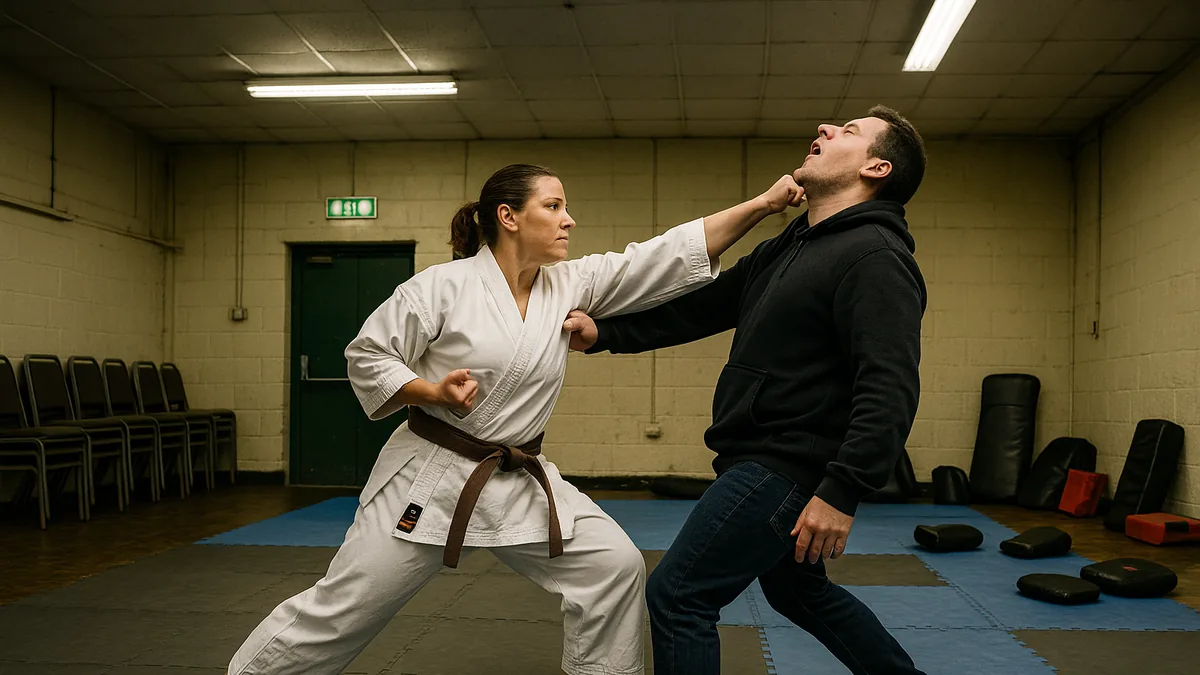
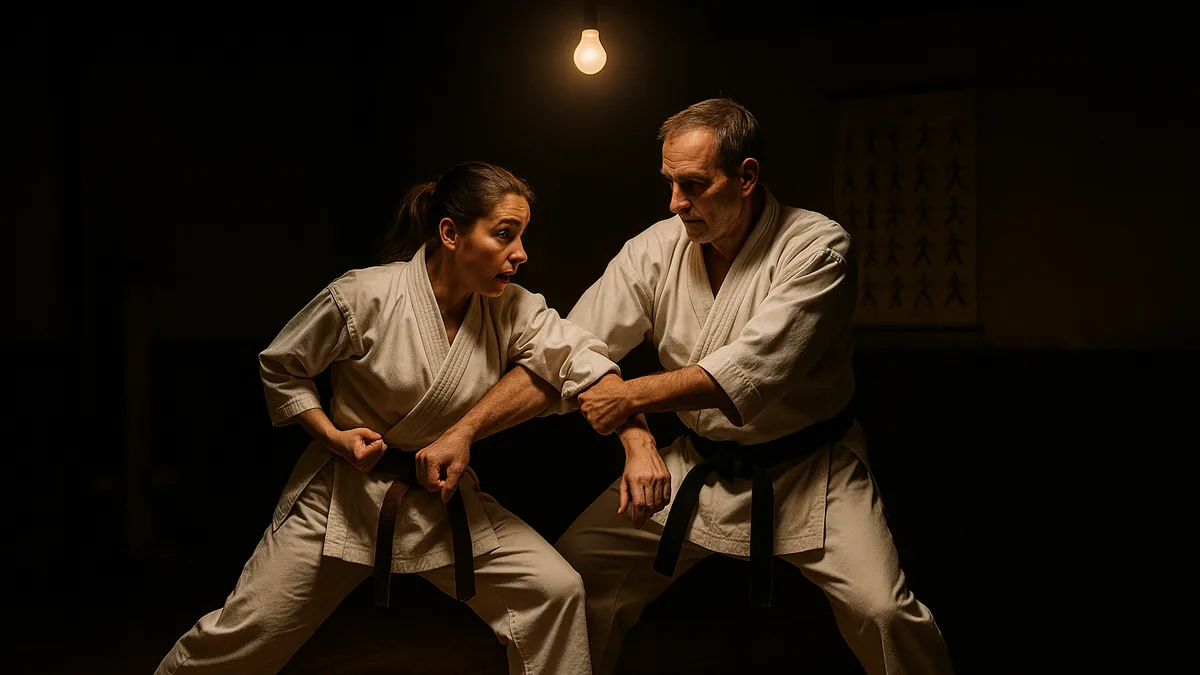
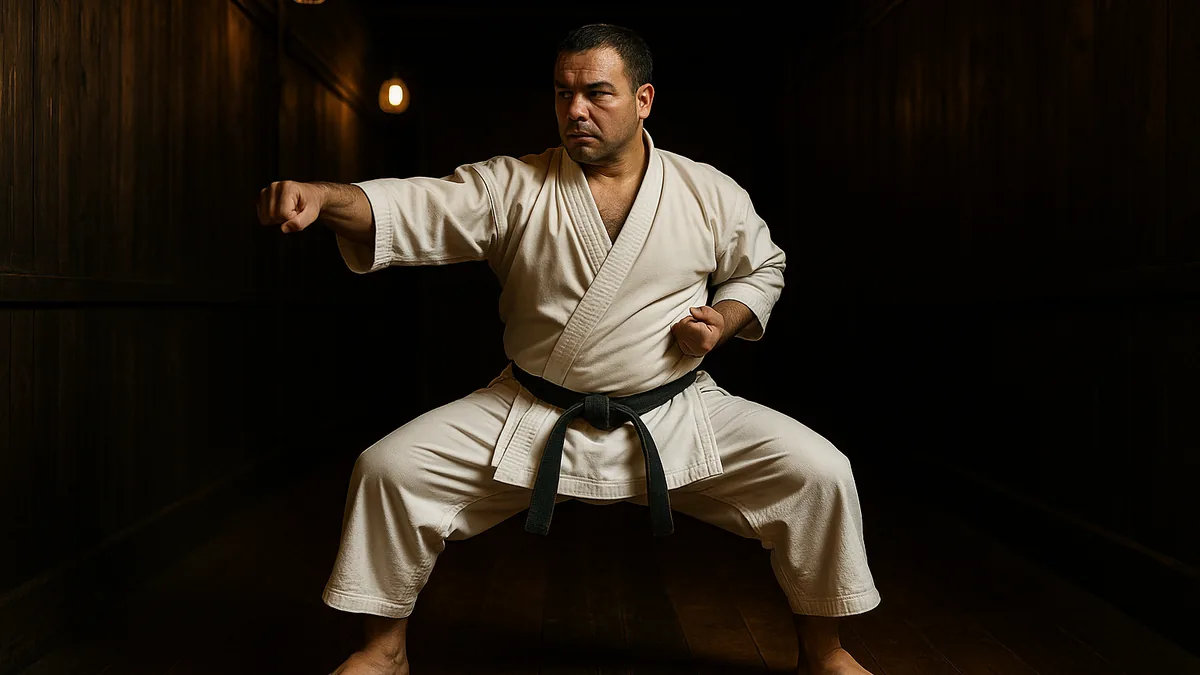
The Heian Series: What Each Kata Teaches
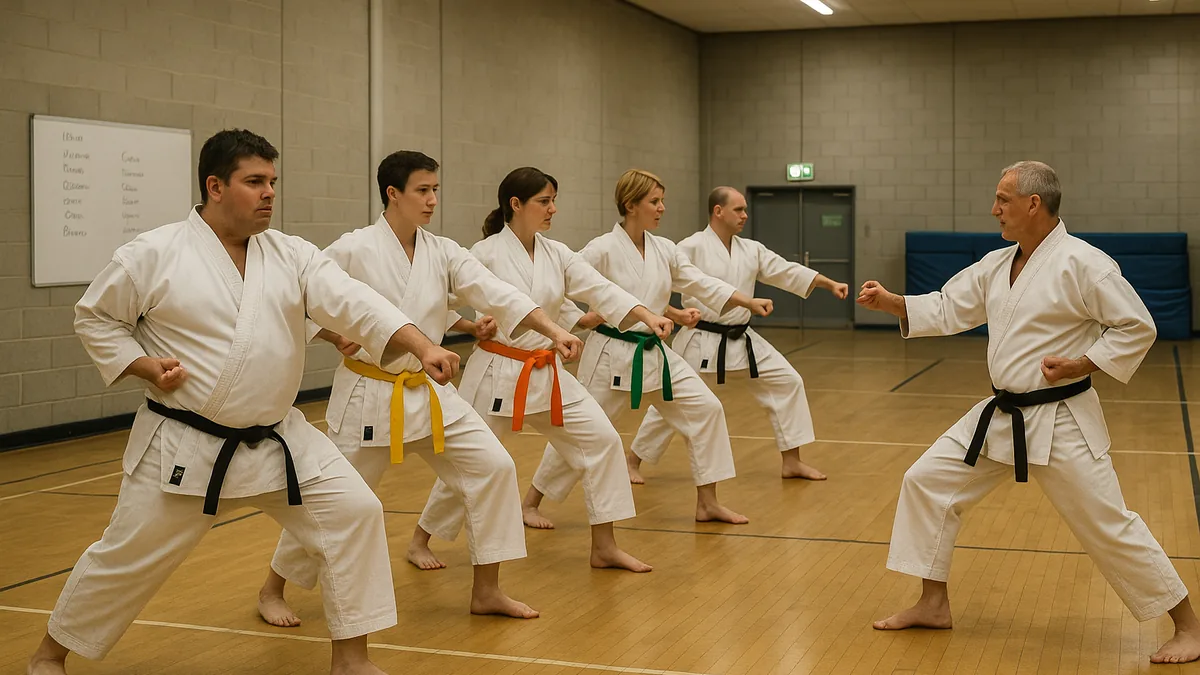
Most people rush through the Heian series. They treat it like a queue they have to stand in before getting to the “real” kata - Bassai Dai, Kanku, the ones that feel more impressive at competition. I’ve watched students drag themselves through Heian Godan at kyu grade with the energy of someone filling in paperwork, already thinking ahead to what comes next.
That’s a mistake. And I say that as someone who made exactly the same mistake for the first few years of my training.
The Heian series isn’t a waiting room. It’s a curriculum. Each kata in the sequence is teaching you something specific, and if you don’t know what that something is, you’ll perform it adequately and absorb almost nothing from it. I’ve seen brown belts who can execute Heian Shodan cleanly from memory but couldn’t tell you what it actually trained them to do. That’s not their fault - it usually means nobody told them what to look for.
So here’s what I look for, and what I tell my students to look for, having spent fifteen years watching people get this right and wrong.
Why the Order Matters
Before getting into each kata individually, it’s worth saying something about the sequence as a whole, because I think this is genuinely misunderstood.
The Heian series isn’t five separate kata that happen to share a name. It’s one progressive lesson broken into five stages. Each kata assumes you’ve internalised what came before it. The problem is that in most dojos, students are taught each new kata as soon as they’re ready to grade - which means they move on before the previous one has settled into their body.
I’ve noticed that the students who develop the strongest fundamentals are almost always the ones who spent longer than required at each stage. Not because they were slow learners, but because they kept training the kata they already knew while learning the new one. The students who rush straight to the next kata the moment they’ve passed their grading tend to have gaps that show up later - usually in their timing, their transitions, or their ability to generate power without telegraphing.
The order matters because each kata is asking more of you than the last. Not more techniques, necessarily - more coordination, more body awareness, more timing. If the foundations aren’t there, the later kata won’t make sense physically, even if you can perform the sequence from memory.
Heian Shodan: Learning to Move Your Body as One Unit
White belts tend to think Heian Shodan is about learning the techniques. Gedan barai, oi-zuki, age-uke - they’re focused on what their arms are doing. That’s natural. That’s what’s new and unfamiliar.
What Heian Shodan is actually teaching is how to move your body as a single unit. The turns, the transitions, the stepping - all of it is asking you to coordinate your lower body with your upper body in a way that most people have never had to do before. The techniques are almost secondary to that lesson.
The correction that makes the biggest difference at this stage is getting students to feel the connection between their foot landing and their technique arriving. When you step into zenkutsu-dachi and execute oi-zuki, those two things should happen at the same moment. When they don’t - when the foot lands and then the punch arrives half a second later - you lose all the power that the movement was generating. It feels like punching while standing still, because you effectively are.
I used to think the problem was that students weren’t punching fast enough. My instructor at the time kept correcting me, saying my step and my technique were “separate.” I didn’t understand what he meant until I started grading students myself and could watch it from the outside. The step and the technique aren’t two things you do in sequence. They’re one thing. When it connects properly, you feel a kind of solidity in the impact that you can’t generate with arm speed alone - it travels through your whole body.
One mistake I see constantly at this stage: students turning their head before they turn their body. The instruction is to look before you move, which is correct - but many beginners interpret this as a sharp, isolated head snap, disconnected from the rest of the movement. What should happen is that the eyes lead, the body follows immediately, and the whole turn happens as one movement. When students snap their head and then pause before turning, the kata starts to look like a series of disconnected events rather than continuous movement.
Heian Nidan: Introducing Timing and Rhythm
Heian Nidan is where students first encounter techniques that require a different kind of timing - and where a lot of them start to struggle in ways they can’t articulate.
The combination sequences in Nidan are longer and more varied than Shodan. You’re dealing with different stances, different rhythms, techniques that require the arms to work independently of each other. The uraken, the yoko-geri, the shift into kokutsu-dachi - these all ask for a level of body control that Shodan didn’t require.
What I tell students is that Nidan is teaching you rhythm. Not just speed, but the ability to vary your speed - to have moments of deliberate slowness followed by explosive acceleration. The kata has a heartbeat to it. If you perform every technique at the same pace, you’ve missed the lesson.
The biggest mistake at this stage is performing Nidan at a uniform tempo. I’ve seen it hundreds of times at gradings - a student who has clearly trained hard, who knows the sequence perfectly, who executes each technique with reasonable form, but who moves at the same speed from beginning to end. The kata becomes flat. There’s no contrast, no dynamic. And the irony is that the techniques that are supposed to be fast don’t actually look faster, because there’s nothing slower around them to provide contrast.
The correction that works here is to identify the explosive moments in the kata and deliberately slow down just before them. Not hesitate - slow down with control, with intent. Then let the fast technique be genuinely fast. Once students feel the difference between those two qualities in their own body, they start to understand what rhythm in kata actually means.
Heian Sandan: Coordination and Close-Range Work
If Shodan teaches you to move and Nidan teaches you rhythm, Sandan is teaching you coordination - specifically, the ability to use your arms and legs independently and simultaneously.
The sequences in Sandan are more complex in terms of what different parts of your body are doing at the same time. The combination of hiza-geri and elbow strikes, the morote-uke sequences, the transitions that require you to be doing something with your hands while your feet are still moving - these demand a level of coordination that earlier kata didn’t require.
I’ve noticed that students who struggle with Sandan are almost always struggling with the same thing: they can’t do two things at once yet. They’ll land the knee strike and then add the elbow, rather than having them arrive together. Or they’ll step and then block, rather than stepping into the block. The sequence is right, but the timing is off by fractions of a second that add up to a kata that looks hesitant and disconnected.
This is also where close-range application starts to become apparent, if you’re paying attention to bunkai. The techniques in Sandan are predominantly close-range. The elbows, the knee, the grabs implied in the morote sequences - this is not long-range striking kata. Understanding that changes how you perform it. The movements become more compact, more direct. The stances are often shorter. There’s less reach and more drive.
The physical sensation to look for: when the elbow strike and the knee connect simultaneously, there’s a kind of compression through your centre - like you’re driving two forces toward each other through your own body. When only one of them arrives, it just feels like a single strike. When both arrive together, it feels like something more complete. That’s the coordination lesson Sandan is teaching.
Heian Yondan: Developing Fluidity and Transitional Movement
Yondan is the kata that separates students who’ve been training their kata from students who’ve just been memorising it.
The transitions in Yondan are the most demanding in the series up to this point. The jump, the combination sequences that flow from one technique directly into the next without a clear pause, the stances that require genuine flexibility and balance - these expose every weakness in your foundation. If your hip rotation isn’t working, Yondan will show it. If your balance in single-leg positions is uncertain, Yondan will show it.
What Yondan is teaching is fluidity. The ability to move from one position to the next without losing power, without losing balance, without the technique “resetting” between movements. A lot of students at this stage have been training in a way that’s slightly staccato - technique, pause, technique, pause. Yondan doesn’t allow that. The techniques have to flow.
I think this is the most commonly underestimated kata in the series. Students treat it as “the one before Godan” rather than as a lesson in its own right. In my experience, the students who spend serious time with Yondan - really working the transitions, the timing, the flow - develop a quality in their movement that carries over into everything else, including their kumite. If you’re interested in how kata training connects to sparring, there’s a longer discussion of that at Does Kata Actually Help Your Sparring? - but the short version is that Yondan, done properly, is where a lot of that transfer starts to happen.
One mistake I see at grading level with Yondan: students who treat the jump as a performance moment. They put extra effort into making it look dramatic, and in doing so they lose the technique that follows. The jump is not the point. The technique you land into is the point. I’ve started telling students to almost forget the jump is there - focus entirely on where you’re landing and what you’re doing when you arrive. The jump takes care of itself.
Heian Godan: Synthesis
Godan is where everything comes together, and it’s the hardest kata in the series to perform well precisely because of that.
Every lesson from the previous four kata is present in Godan. The basic coordination from Shodan, the rhythm from Nidan, the close-range complexity from Sandan, the fluid transitions from Yondan - Godan demands all of it simultaneously. The jump, the uke sequences, the timing of the final combinations - this is not a beginner’s kata wearing a complicated face. It’s a genuinely demanding piece of work.
As a white belt, I thought Godan was impressive because of the jump. By brown belt I realised the jump is probably the least important thing in it. What’s actually impressive - and difficult - is the control in the slower sequences, the precision in the uke combinations, the ability to maintain power and focus across a longer, more varied kata without losing consistency.
The mistake I see most often with Godan is inconsistent kime. Students will have strong, focused technique in the sequences they’ve drilled most, and noticeably weaker kime in the transitions or in the sequences they find technically harder. The kata becomes uneven. Some moments have real impact and others are just movement. For kata grading, this is one of the things examiners notice immediately - not whether every technique is perfect, but whether the quality is consistent throughout.
What I tell students working on Godan is to identify their weakest sequence and train that in isolation until it matches the rest. Don’t keep running the whole kata and hoping the weak parts improve by osmosis. They won’t. Find the weak section, drill it separately, then put it back into context.
Community Perspective
There’s a genuine debate in most dojos about when students should move on from each Heian kata, and I’ve heard good arguments on both sides.
Some instructors take the view that students should be pushed through the series at pace - that the early kata are foundations, and you don’t fully understand them until you’ve seen where they lead. There’s something to this. I’ve watched students return to Heian Shodan after years of training and suddenly see things in it they couldn’t see as beginners. The perspective changes.
Other instructors - and I lean toward this view - believe that moving on too quickly creates gaps that become harder to fill later. If a student doesn’t have genuine body unity in Shodan, they’ll struggle with the coordination demands of Sandan. If they haven’t internalised the rhythm of Nidan, Yondan’s flow requirements will feel impossible.
I think the honest answer is that both things are true depending on the student. Some students need to see the whole picture before the individual parts make sense. Others need to fully inhabit each stage before they can move forward. What I’d push back on is the idea that grading timelines should be the deciding factor. The kata is ready when the student is ready - not when the calendar says so.
Key Takeaways
- Train the kata you already know while learning the new one. The Heian series only works as a curriculum if you’re building each stage on top of the last, not replacing it.
- In Shodan, the step and the technique are one movement, not two. If they’re arriving separately, you’re losing most of the power the movement was designed to generate.
- Rhythm in Nidan means contrast - deliberate slowness before explosive acceleration. Uniform tempo kills the kata regardless of how clean the techniques are.
- Identify your weakest sequence in any kata and drill it in isolation. Running the whole kata repeatedly won’t fix the weak section - it just trains you to compensate around it.
- The jump in Godan is not the point. Focus on where you’re landing and what you’re doing when you arrive. The jump will look after itself.
- Kime should be consistent throughout the whole kata, not just in the sequences you’ve drilled most. Examiners notice unevenness more than individual technical errors.
If you want to go deeper on how kata practice connects to actual fighting application, What Is Bunkai? is worth your time. And if you’re preparing for a grading, Kata for Grading: What Examiners Look For covers what actually gets noticed - which is sometimes different from what you’ve been told to focus on in training.
The weekly digest
New karate articles, once a week
One email every week with everything new on Karate Lifestyle. No spam; unsubscribe in one click.
We'll email you to confirm. See our privacy policy.