Training Kata for Self-Defence
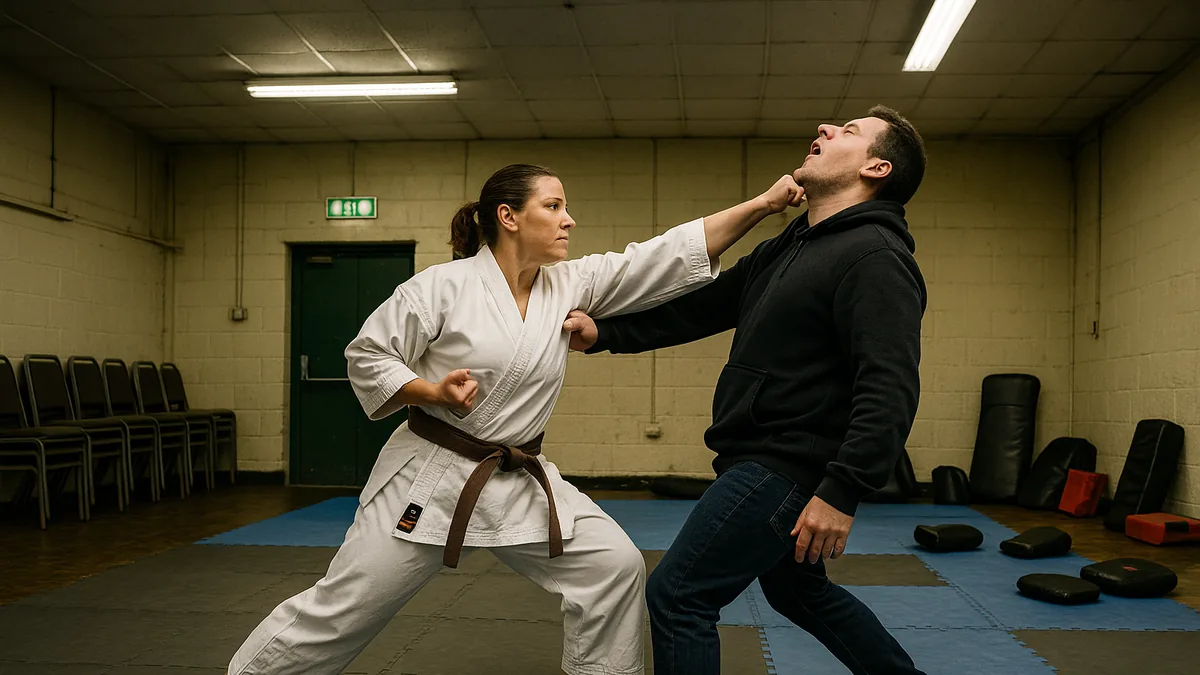
Most people perform kata like they’re being graded on it forever. Clean lines, good kiai timing, snappy transitions. And then someone grabs them in a car park and they have absolutely no idea what to do with their hands.
That’s not kata’s fault. That’s how we train it.
I’ve spent a long time thinking about why the gap exists between kata performance and actual self-defence capability, and the honest answer is that most of us were never taught to bridge it. We learned the sequence, drilled the sequence, got graded on the sequence, and somewhere in there the fighting content got stripped out completely.
The good news is it’s still in there. You just have to know how to find it.
What Kata Actually Contains (And What We Ignore)
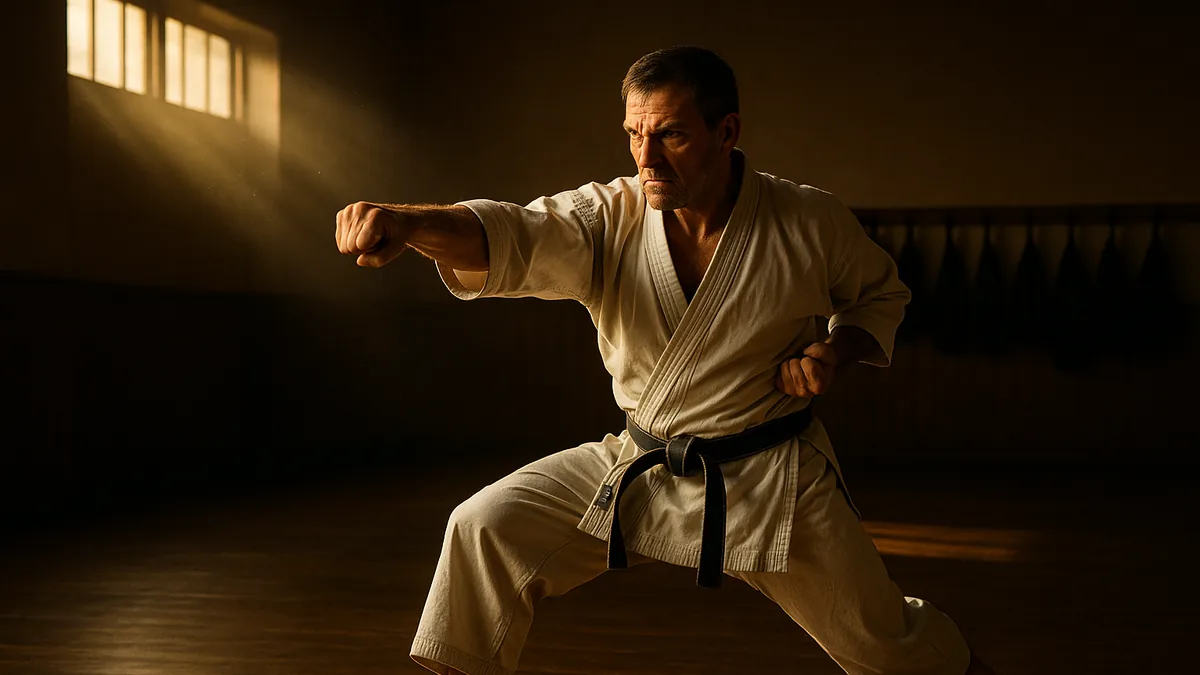
Here’s something I tell students regularly: every kata was built around a set of fighting principles. The movements aren’t decorative. They’re not calisthenics. Someone put them in that exact sequence because they work together as a system for dealing with real attacks.
The problem is that by the time kata reaches most modern dojos, the fighting context has been separated from the movement. We teach the shape without the meaning. And once you train that way for a few years, the shape is all you see.
I used to think kata was about demonstrating technique cleanly. That was my entire focus through kyu grades - get the stances right, get the timing right, make it look sharp. My instructor at the time kept saying “know why you’re doing it.” I nodded. I had no idea what he meant.
What he meant was this: if you don’t know what you’re defending against, you can’t perform the movement with any real intent. You’re just doing shapes. And shapes don’t transfer to self-defence.
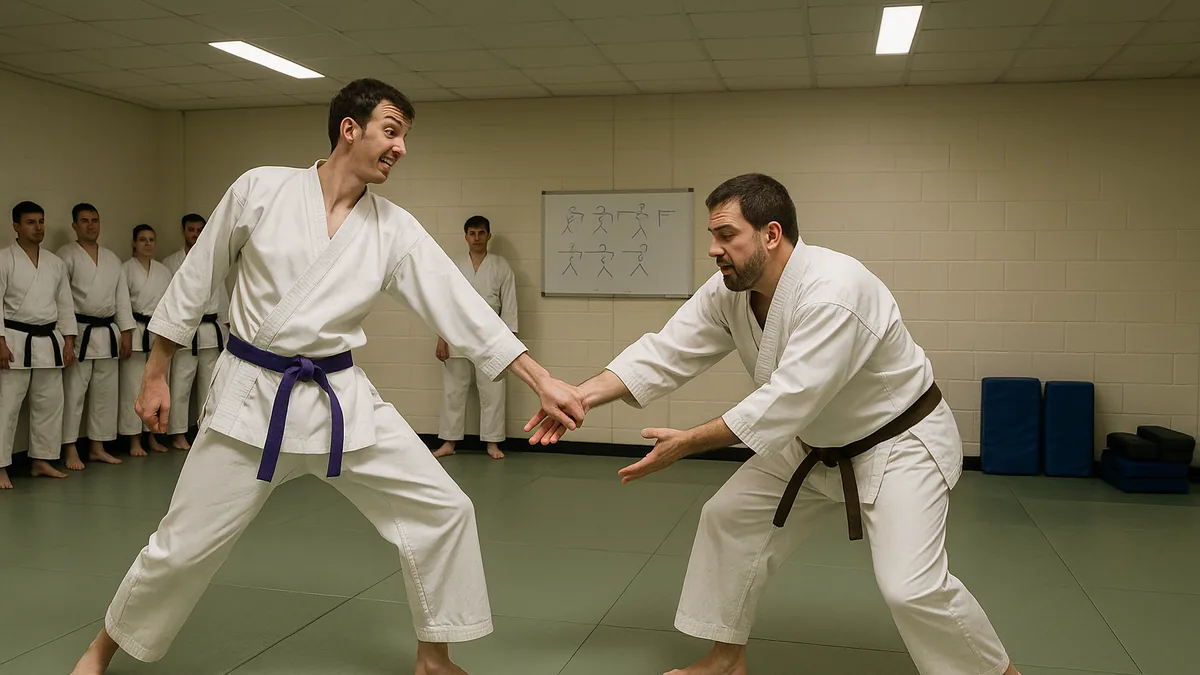
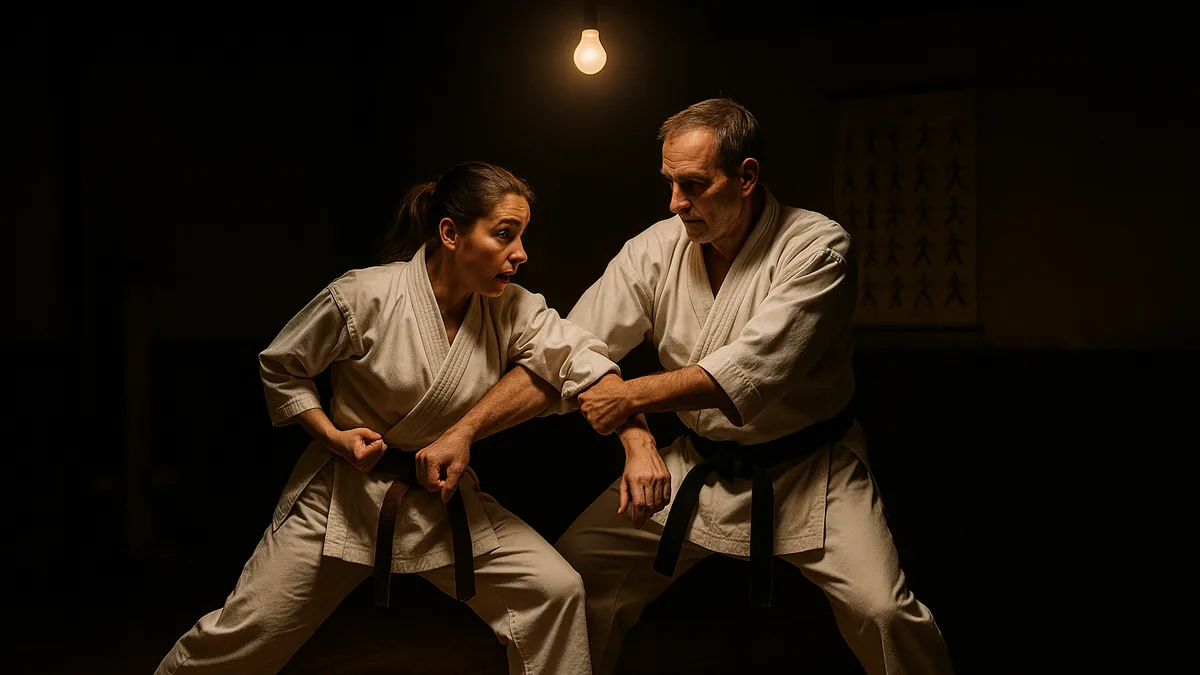
The shift for me came during a bunkai session with a senior student who’d trained under a different lineage. He grabbed my arm during what I thought was a simple downward block in Heian Shodan and showed me three different ways that same movement could break a grip, redirect a push, or set up a takedown. I’d done that movement probably ten thousand times. I’d never once thought about what was actually happening in it.
If you want to go deeper on this, the Hidden Techniques in Kata article covers exactly this territory - the layers of application that sit underneath the surface movements.
Realistic vs Unrealistic Applications
This is where I’ll be direct, because there’s a lot of nonsense floating around kata application circles.
Not every application is equally valid. Some bunkai is genuinely useful. Some of it is creative fiction that would get you hurt in a real situation. The fact that you can find an interpretation for a movement doesn’t mean that interpretation is practical.
I’ve seen instructors demonstrate kata applications where both people are standing perfectly square, the attacker throws a slow punch from a metre away, and the defender executes a seven-step response involving two joint locks, a throw, and a finishing strike. That’s not self-defence. That’s choreography.
What I look for when evaluating an application:
- Does it work against a resisting partner? If it only works when your partner cooperates, it’s not self-defence training. It’s a demonstration.
- Is the entry realistic? Most real attacks aren’t stepping punches from a fighting stance. They’re grabs, shoves, haymakers, or ambushes from close range. Does the application account for that?
- Is the timing achievable under pressure? Techniques that require precise timing against a slow, telegraphed attack fall apart when the attack is fast and committed.
- Does it work for your body type? A small person applying a kata technique against a larger attacker needs different mechanics than the textbook version. If the application only works under ideal conditions, it’s not robust enough.
I think the single most useful filter is the resisting partner test. Take the application, find a training partner who isn’t going to make it easy for you, and see what survives. Some techniques hold up immediately. Others need significant modification. Some fall apart entirely and you have to go back to the kata and ask what you’re actually missing.
The Bunkai Partner Drills resource is worth working through if you want a structured way to do this - it takes you from cooperative practice into genuine resistance progressively, which is the right way to build confidence in an application.
Pressure Testing: How to Actually Do It
One mistake I see constantly is treating bunkai practice as a performance rather than an investigation. Two people stand in front of the class, demonstrate the application cleanly three times, and everyone claps. Nobody learned anything.
Real pressure testing is messier than that. It should feel uncomfortable. The point is to find where the technique breaks down, not to confirm that it works when conditions are perfect.
Here’s how I structure it with students:
Stage one - cooperative drilling. Both partners know what’s coming. The attacker provides the right stimulus at the right speed. This is just learning the shape of the application. Don’t skip it, but don’t stay here too long.
Stage two - semi-cooperative resistance. The attacker knows what attack they’re throwing but starts adding realistic speed and commitment. The defender has to find the technique under actual pressure. This is where most applications start showing cracks.
Stage three - contextual drilling. The attacker can vary what they throw within a defined range. Maybe grabs or strikes, but not both. The defender has to identify the stimulus and respond with the appropriate kata application. This is much harder and much more valuable.
Stage four - live application. Light sparring or controlled grappling where the defender is specifically looking to apply the kata technique when the opportunity presents itself. This is the real test.
Most people never get past stage one. That’s why their kata doesn’t transfer to self-defence.
The physical sensation matters here too. When a kata application is working properly under pressure, it doesn’t feel like you’re executing a technique - it feels like the situation is resolving itself because you’re in the right position. When it’s not working, you’ll feel yourself forcing it, muscling through resistance, or losing structure entirely. That feeling of forcing is the signal to stop and diagnose, not push harder.
The Mistakes I See Most Often
Treating the block as a block. This is probably the most widespread misunderstanding in kata application. Most movements we call “blocks” are better understood as strikes, grabs, or redirections. When you train them as passive defensive movements, you lose half the technique. What I tell students is to ask what your blocking arm is doing to the attacker’s body, not just what it’s doing to their attack.
Ignoring the chamber. The hikite - the pulling hand - is doing something. In kata application, it’s almost always controlling the attacker’s limb, pulling them off balance, or setting up the next movement. I’ve watched students drill kata for years and never once think about what the retracting hand is actually grabbing. Once you start training the chamber as an active controlling movement, the applications become dramatically more coherent.
Applying techniques in isolation. Kata movements flow in sequences for a reason. The step before the technique is usually setting up the technique. The movement after it is usually the follow-through or the transition to the next problem. When you pull a single movement out and try to make it work as a standalone self-defence technique, you often lose the structural logic that makes it functional. Look at two or three movements together. The Heian Shodan Breakdown does a good job of showing how the sequences connect, rather than treating each movement as an isolated event.
Practising at kata speed only. Kata has its own rhythm. That rhythm is useful for learning and for developing power mechanics, but it’s not fighting speed. If you only ever apply techniques at kata pace, you’ll find yourself defaulting to that pace under pressure, which is too slow. You need to drill applications at full speed so the nervous system knows what that feels like.
How Understanding Changes Over Time
As a white belt, I thought kata was about getting the movements right. Clean execution, correct stances, proper kiai. That’s what got you through gradings, so that’s what I focused on.
By brown belt I’d started to understand that the movements were vehicles for principles - that the hip rotation mattered not because it looked good but because it’s where the power comes from, and that the same principle applied across multiple kata and multiple techniques.
It took me until well into my black belt years to genuinely understand that kata is a self-defence curriculum. Not a supplement to self-defence training. The actual curriculum. The sequences encode specific responses to specific types of attack, and when you understand them at that level, your kata performance changes completely. You can’t fake intent when you actually know what you’re defending against.
That shift in understanding is what How to Perform Kata With Intent is really about - it’s not a performance tip, it’s a fundamental change in how you relate to the material.
Community Perspective
There’s a genuine split in the karate community about how much self-defence content kata actually contains, and I think it’s worth being honest about it.
One camp - and this includes some serious, experienced practitioners - argues that kata were primarily teaching tools for solo practice, that the self-defence applications were always secondary, and that trying to extract practical fighting content from them is overreaching. They’d point to the fact that many kata applications are speculative reconstructions, not documented lineage.
The other camp argues that kata are exactly what the older practitioners described: complete fighting systems encoded in movement, and that the loss of application knowledge is a modern problem caused by the sport and performance focus of the last century.
I sit closer to the second camp, but I hold it loosely. I think some kata contain dense, practical fighting content. I think others are more about developing movement principles than specific techniques. And I think the quality of the application depends enormously on who’s teaching it - creative bunkai from someone who’s never been hit isn’t the same as application from someone who’s cross-trained in grappling and actually tested the material.
The honest position is that you have to test it yourself. If an application works under pressure against a resisting partner, keep it regardless of whether it’s “traditional.” If it doesn’t work, discard it regardless of how authoritative the source sounds.
Key Takeaways
- Test every application against a resisting partner. If it only works cooperatively, it’s not self-defence training yet. Use the four-stage progression from cooperative to live to build genuine confidence in the technique.
- Stop treating blocks as blocks. Ask what your blocking arm is doing to the attacker, not just to the attack. The chamber hand is almost always doing something too - find out what.
- Look at sequences, not individual movements. The movement before and after the technique you’re studying is usually part of the same application. Isolating single movements loses the structural logic.
- Drill applications at full speed. Kata pace builds mechanics. Fighting pace builds reflexes. You need both, and most people only train one.
- Use realistic attack scenarios. Grabs, shoves, and committed haymakers are more common than stepping punches. If your application only works against a textbook attack, it needs more work.
- Let the material change your performance. When you genuinely understand what a kata sequence is defending against, your execution changes - you’ll feel the difference in your stances, your transitions, and your intent. That’s the signal that the training is working.
The weekly digest
New karate articles, once a week
One email every week with everything new on Karate Lifestyle. No spam; unsubscribe in one click.
We'll email you to confirm. See our privacy policy.