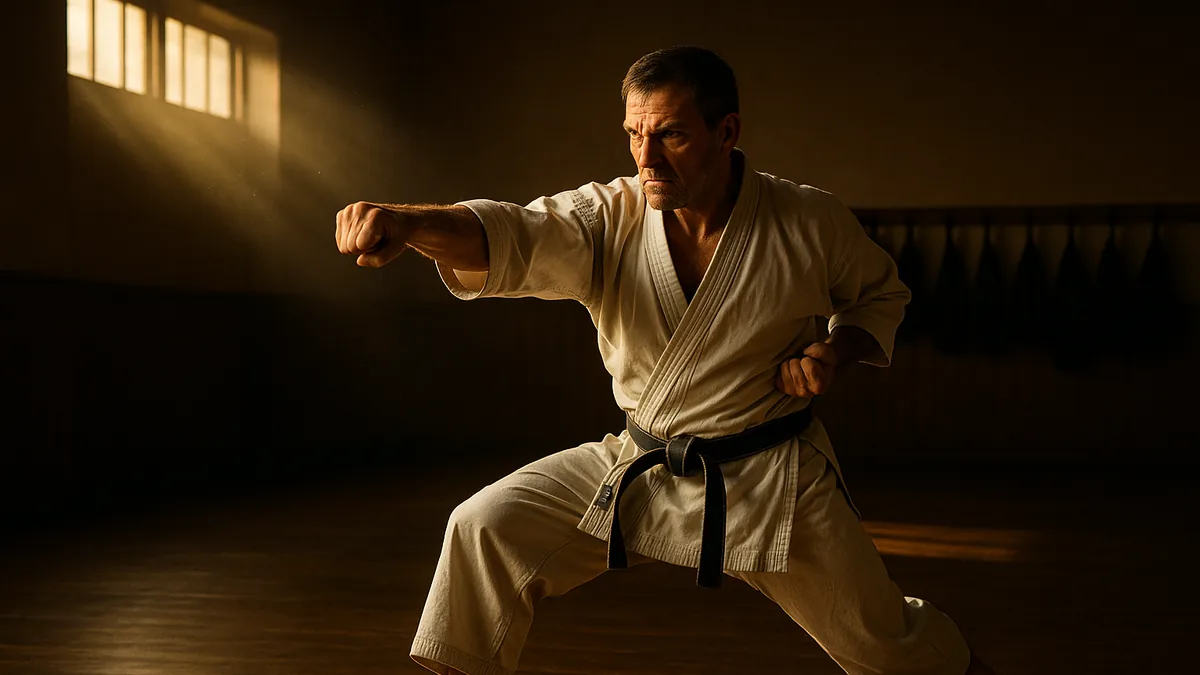
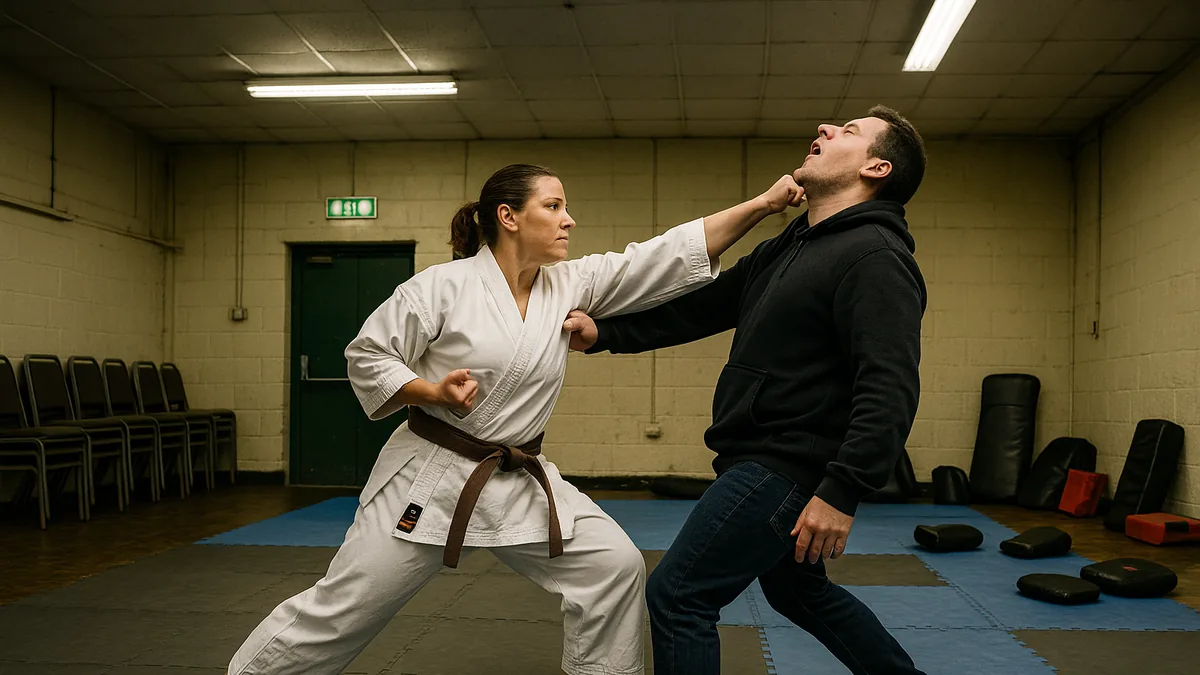
Hidden Techniques in Kata
Most people performing kata are doing an elaborate mime of a fight they’ve never actually understood.
I don’t say that to be harsh. I said the same thing about my own practice for the first eight or nine years. I was performing the shapes. Doing them well, even - good timing, sharp kiai, decent stances. My instructors were happy enough. But I was missing the actual content of what I was doing, and nobody had quite spelled out why that mattered yet.
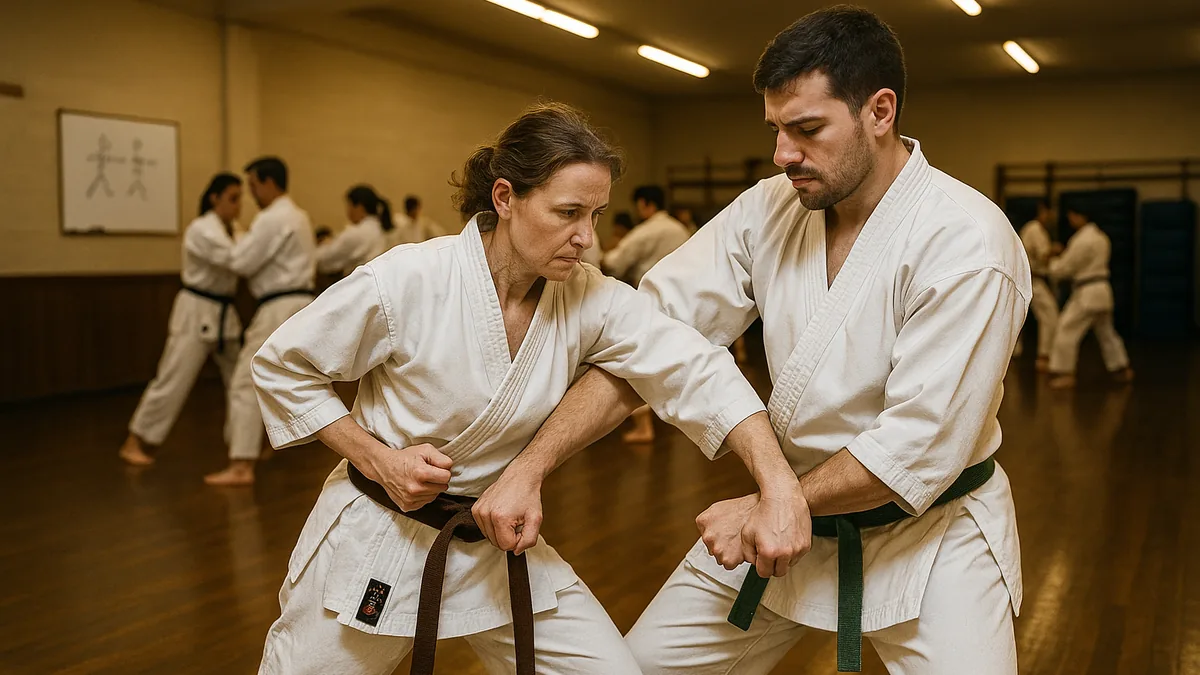
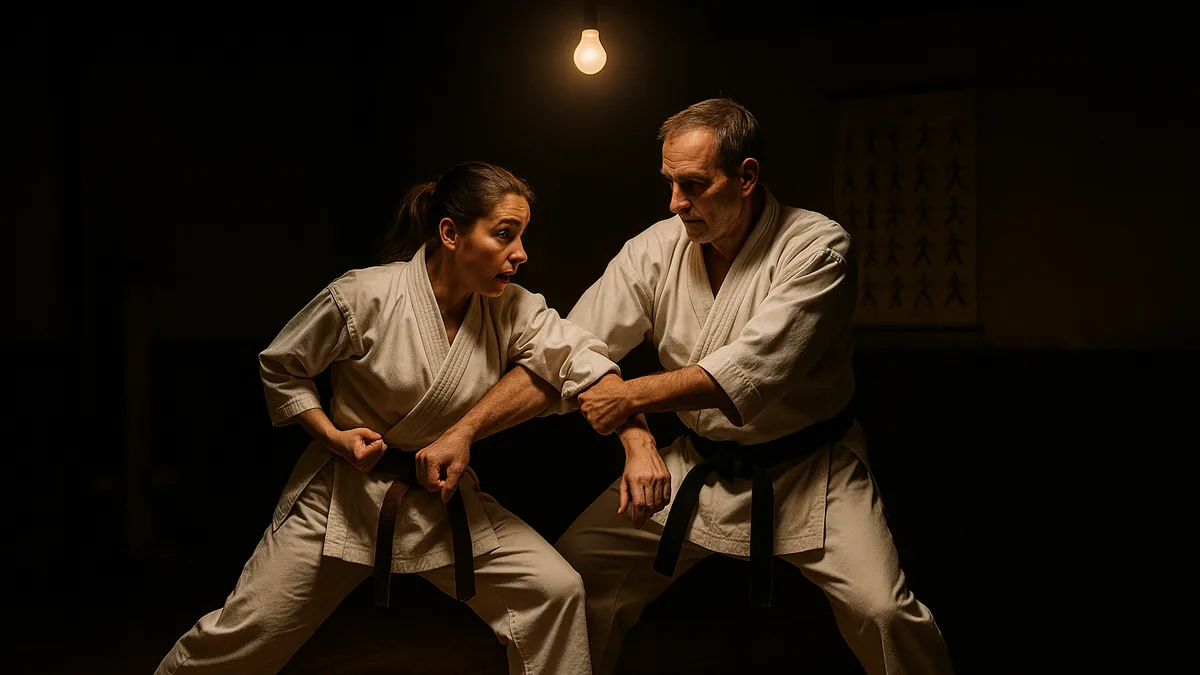
The thing that changed my understanding wasn’t a seminar or a book. It was a senior student at a different dojo grabbing my wrist during a casual bunkai session and showing me that the movement I’d been performing as a simple downward block in Heian Shodan was actually a wrist release into a takedown. He walked me through it slowly. I felt my balance go in a way that surprised me completely. And then I went home and looked at every kata I knew with different eyes.
That was fifteen years ago. I’m still finding things.
What “Surface-Level Bunkai” Actually Means
When most clubs teach bunkai, they teach the obvious layer. Block, counter, done. Oi-zuki becomes “someone punches, you block and punch back.” It’s not wrong exactly, but it’s like reading a sentence and only understanding half the words.
The original kata were designed to encode fighting knowledge in a form that could be transmitted without a written manual. The people who created these sequences were not choreographing a performance. They were hiding a curriculum. And the curriculum includes throws, joint locks, chokes, sweeps, and controls that most modern practitioners never see because they’re looking at the shape of the movement rather than the mechanical function of it.
I’ve seen students train Bassai Dai for years without realising that the opening sequence contains a clear hip throw entry. It looks like a block. The arms move like a block. But the body mechanics - the weight transfer, the hip rotation, the direction of force - are the mechanics of unbalancing a grabbing opponent and loading them for a throw. Once you feel it done to you properly, you cannot unsee it. If you haven’t worked through the Bassai Dai Breakdown with that lens, I’d suggest going back to it.
Surface-level bunkai fails because it treats every movement as a striking or blocking technique. That’s a modern assumption, not a historical one. The people who created these kata trained in systems that included grappling, and the kata reflect that.
The Throws and Takedowns You’re Already Doing
Here’s what I tell students when we start serious bunkai work: if your kata contains a large circular arm movement combined with a significant weight shift or step, there’s a good chance you’re looking at a throw entry or a sweep.
The gedan-barai in Heian Shodan is a perfect example. As a white belt, I thought this was about blocking a low kick. By brown belt, I’d started to understand it as a possible wrist grab release. By the time I was grading students myself, I was teaching it as at least three distinct techniques depending on context - including a basic hip throw entry where the “blocking” arm controls the opponent’s sleeve and the stepping action provides the kuzushi.
The mechanics are all there. The step creates the angle. The arm movement creates the off-balance. The hip rotation provides the throw. You’re doing the motion already. The question is whether you understand what the motion is for.
Tekki Shodan is another one worth examining closely. The lateral movements and the kagi-zuki sequences contain clinch work and short-range controls that make no sense as “block then punch” but make complete sense as entries for close-range throws and sweeps. The Tekki Shodan Breakdown covers the structure of the kata, but the grappling content in those sequences deserves its own extended drilling session with a partner.
The correction that makes the biggest difference when I introduce this to students is getting them to feel the direction of force rather than just see the shape of the arm. Block and throw use completely different force vectors even when the arm position looks similar from the outside.
Locks and Chokes Hidden in Plain Sight
Joint locks are everywhere in kata, and they’re hiding in the transitions.
Most practitioners focus on the positions - the stances, the finished techniques. The transitions between movements are treated as getting from A to B. But I’ve noticed, consistently across multiple dojos and training groups, that the transitions are often where the actual technique lives.
The movement between a high block and a reverse punch in a basic sequence? That’s a potential armbar entry if you understand the rotation happening at the elbow. The double-arm movements in Heian Godan? Several of those contain wrist lock mechanics that only become obvious when you slow them down and apply them against a resisting partner.
Chokes are less common but they’re there. Any time a kata has you pulling one hand back to your hip while the other arm extends or rotates across the centreline, you’re potentially looking at a strangle or a neck control. The hikite - the pulling hand - is not a stylistic affectation. It represents a grip on something. Usually a sleeve, a wrist, or a lapel. When you perform hikite as if you’re just chambering your hand, you lose the mechanical meaning of the entire technique.
I used to think hikite was about generating power through opposition. My instructor said this repeatedly. I didn’t fully understand it until I drilled bunkai where I was actually gripping and pulling an opponent’s arm while the other technique landed. Then the power generation made sense, but more importantly, the control element made sense. You’re not just pulling for power. You’re pulling a limb to expose a target, break a grip, or set up a throw.
Why Most Practitioners Miss This
The honest answer is that most modern karate training doesn’t create the conditions for this understanding to develop naturally.
We train kata solo, we train bunkai against compliant partners doing scripted attacks, and we do kumite under rules that exclude the techniques the kata are actually about. These three training environments don’t overlap enough. A practitioner can be technically excellent in all three and still have a fundamental gap in their understanding of what the kata contain.
I think this is the core of the kata vs kumite debate that gets argued endlessly online. People who train kata without understanding the grappling content quite reasonably question its martial value. People who understand the grappling content know the kata are a complete fighting system, not a supplement to sparring. Both groups are looking at the same kata and seeing completely different things.
The other reason practitioners miss it is that the hidden techniques require a different kind of partner work to reveal. You can’t discover the throw in a gedan-barai by doing kata solo or by having someone throw a scripted punch at you. You need someone to grab your wrist, genuinely resist, and let you work out the mechanical solution. That kind of drilling is less common than it should be. The Bunkai Partner Drills resource is worth working through systematically if you want to start uncovering this layer of your practice.
The Heian Series as a Complete Curriculum
One thing I’ve changed my mind about over the years is the Heian series. I used to think of them as beginner kata - necessary foundations, but essentially simple. I now think they’re a complete fighting curriculum that most people never fully extract.
The Heian series introduces every major principle of fighting: distance management, angular entry, off-balancing, close-range control, and finishing techniques. What looks like a progression from simple to complex is actually an introduction to a complete system. Each kata adds context to the previous one.
Heian Nidan introduces the first clear joint lock mechanics. Heian Sandan has clinch entries that most people perform as blocks. Heian Yondan has a takedown sequence that’s hiding in plain sight in the opening movements. By the time you get to Heian Godan, you’re working with complex combinations that assume you understand everything that came before.
If you want to test this, go back to Heian Shodan with a training partner and spend an entire session only on the first four movements. Don’t move on until you’ve found at least three distinct interpretations of each one. It will take longer than you expect. What you find will change how you see the rest of your kata practice.
Community Perspective
This is genuinely contested territory, and I want to be honest about that.
There are serious, experienced practitioners who think the grappling interpretation of kata is largely retrospective - that modern bunkai researchers are finding things that weren’t originally intended, or that were lost so long ago that the reconstructions are essentially creative guesswork. I don’t fully agree, but I respect the position. The historical record is genuinely incomplete.
There are also practitioners who go so far in the other direction that they see highly complex grappling sequences in every single movement, producing bunkai that’s theoretically interesting but practically unworkable. I’ve been in seminars where the bunkai was so elaborate that it required the attacker to cooperate in their own defeat across six or seven steps. That’s not martial application. That’s choreography.
What I’ve settled on, after training with a range of instructors and testing things in actual pressure drilling, is that the most credible applications are the ones that work when the partner resists. If it only works against a compliant partner doing a specific scripted attack, it’s probably not what the kata intended. If it works against genuine resistance with reasonable training partners, you’ve probably found something real.
The disagreements between styles and associations on this are real and worth taking seriously. Shotokan, Goju-ryu, and Wado-ryu all have different traditions of kata interpretation, and those differences reflect genuine differences in emphasis rather than one being right and the others being wrong.
Key Takeaways
- Every large circular arm movement combined with a weight shift deserves examination as a potential throw entry - perform it with a partner before you decide it’s just a block.
- Hikite is never decorative. Train every technique as if you’re actually gripping something with the pulling hand, and the mechanical meaning of your kata will change immediately.
- The transitions between techniques are where the locks and controls live. Slow them down, apply them against resistance, and see what you find.
- If your bunkai only works against a scripted attack from a compliant partner, you haven’t found the technique yet - you’ve found a performance of it.
- Go back to the Heian series with experienced eyes. Spend a full training session on one kata, looking specifically for grappling content. What you find will reframe everything you thought you knew about “beginner” kata.
- The test of any bunkai interpretation is whether it works under pressure. If it does, train it. If it doesn’t, keep looking - the kata almost certainly contains something better.
The weekly digest
New karate articles, once a week
One email every week with everything new on Karate Lifestyle. No spam; unsubscribe in one click.
We'll email you to confirm. See our privacy policy.