The Kata vs Kumite Debate
I’ve sat through enough post-class conversations to know how this one goes. Someone mentions they’re focusing on kata for their next grading, and someone else - usually the guy who only shows up for kumite nights - makes a face. Or it goes the other way: a kata competitor rolls their eyes when the sparring crowd talks about “real training.” Both sides are wrong, and I say that having been firmly in both camps at different points in my training.
The kata vs kumite debate is one of those arguments that sounds meaningful until you actually think about it. Then it falls apart.
The Divide Is a Training Artefact, Not a Philosophical Truth
Here’s what I’ve noticed across every dojo I’ve trained in: the kata-vs-kumite split almost always traces back to how someone was introduced to karate, not to any genuine understanding of either discipline. Students who came up under instructors who treated kata as a performance exercise tend to dismiss it as irrelevant to fighting. Students who were never taught to extract meaning from kata movements - what we call bunkai - naturally conclude there isn’t any.
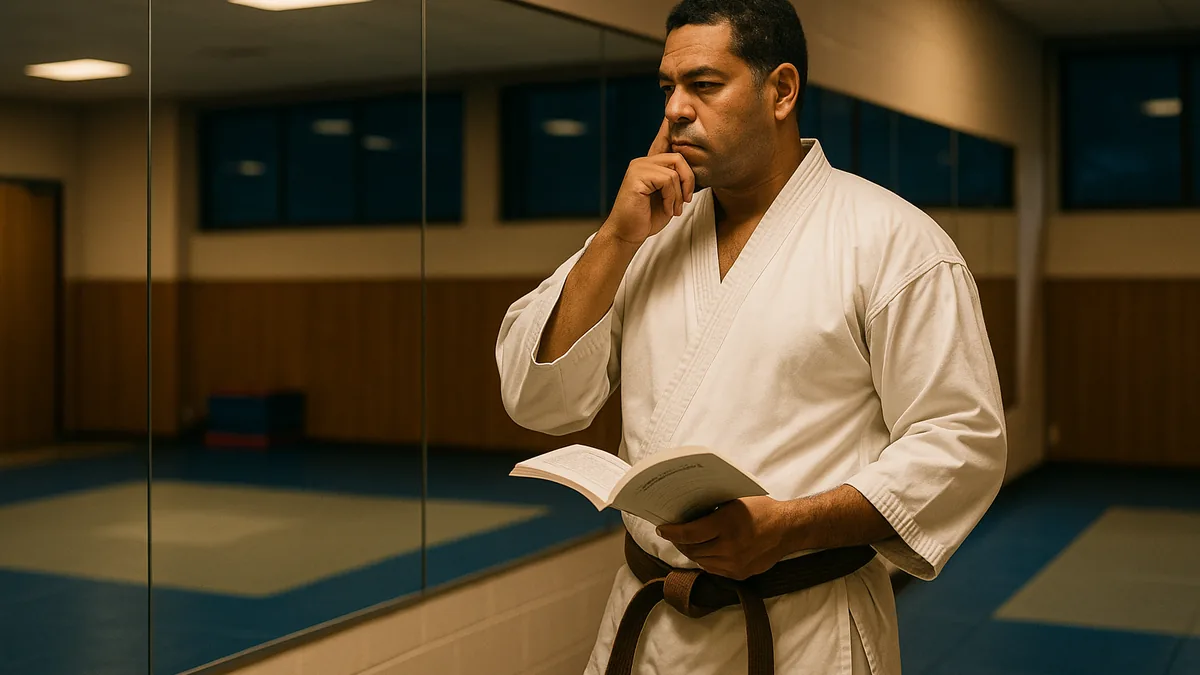
I used to think this way. As a junior grade, I was convinced kata was something you did to pass gradings and then moved on from. I’d rush through the forms to get to partner work. My instructor at the time - a Shotokan man with about thirty years on me - watched me do this for months before he said anything. When he finally did, it wasn’t a lecture. He just asked me to do the first three moves of Heian Shodan and then grabbed my wrist and showed me what I’d just done. Or rather, what I hadn’t done, because my body hadn’t been doing any of it with intent.
That was the thing that changed my understanding. Not a concept - a physical demonstration of the gap between going through motions and actually moving.
What Kata People Get Wrong
The kata side of this argument isn’t automatically right just because I think the divide is false. I’ve seen plenty of kata practitioners - some with excellent competition records - who couldn’t apply a single movement under pressure. And the reason is usually the same: they’ve trained the form without ever asking what it’s for.
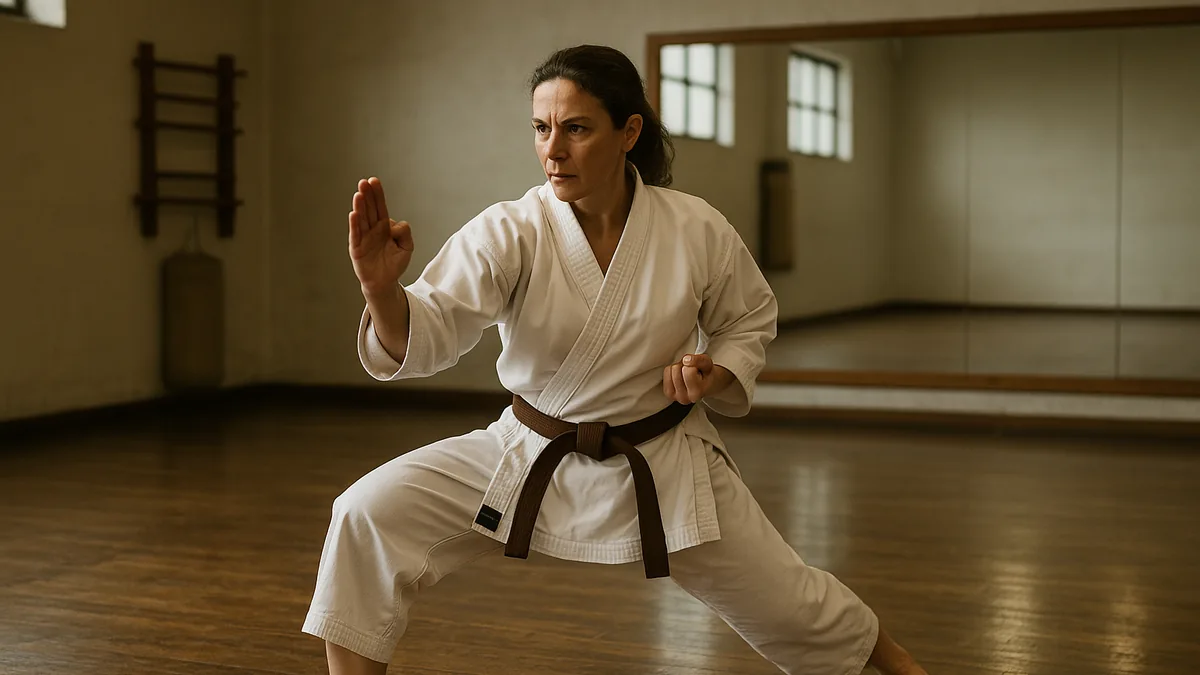
One mistake I see often is treating kata as a choreography problem. The goal becomes smoothness, precision of line, timing of kiai. Those things matter, but they’re outputs of correct understanding, not the understanding itself. When you train kata as performance, you end up with beautiful movement that has no weight to it. Technically correct on the outside, empty on the inside.
What that feels like in practice: the technique looks right but you don’t feel the connection through your body. A good gyaku-zuki should feel like the floor, your hip, your shoulder, and your fist are all part of one thing firing in sequence. When it’s just choreography, it feels like your arm moving and everything else following along politely. There’s a difference, and you know it when you feel it - even if it takes a while to notice you’ve been missing it.
If you’re working on kata quality beyond just memorisation, the things that actually move the needle are covered well in how to improve your kata.
What Kumite People Get Wrong
The kumite-only crowd has its own blind spots, and I’d argue they’re more costly in the long run.
What I tell students who dismiss kata is this: your kumite is only as good as your vocabulary. If your toolbox is built entirely from sparring, you’ll only develop techniques that are easy to land in sparring - which tends to mean fast, simple, low-commitment attacks. Kata is where the more complex mechanics live. The off-angle entries, the simultaneous block-and-counter, the weight transfer into a close-range finish. These aren’t things you’ll stumble onto by accident in jiyu-kumite.
I’ve seen brown belts with solid sparring records who couldn’t do a convincing uchi-uke because they’d never needed to use it against a compliant partner first. And then they wonder why their timing against circular attacks is unreliable. The kata work isn’t separate from the sparring problem - it’s the foundation the sparring problem sits on.
There’s also a timing argument here that people miss. Improving kumite timing is partly a sparring problem, but it’s also a body-mechanics problem. Kata trains the mechanics until they’re automatic. You don’t build timing by thinking about timing - you build it by removing the mechanical hesitation that timing gets lost in.
Community Perspective
This is genuinely one of those topics where I’ve watched people’s opinions shift dramatically with experience, and I think that’s worth acknowledging.
Most junior grades who prefer kumite aren’t wrong to prefer it - sparring gives you immediate feedback, and that’s addictive and useful. Most senior grades who emphasise kata aren’t being nostalgic or traditional for its own sake - they’ve usually had enough years of sparring to notice what the kata work actually built in them.
The split also runs along style lines. Kyokushin practitioners will often tell you kata is secondary to conditioning and full-contact work. Shotokan and Wado-ryu dojos tend to give kata more formal weight. Neither tradition is wrong - they’re optimising for different things. But I’d push back on anyone from any style who claims their approach makes the other redundant.
What I’ve seen change over time: practitioners who spent their early years dismissing kata often circle back to it in their thirties and forties, when they start asking deeper questions about what they’re actually doing and why. The ones who dismissed kumite in favour of kata sometimes hit a wall when they realise their movement has never been tested under pressure. Both journeys tend to arrive at the same place - that you need both, and that they’re the same thing looked at from different angles.
The Actual Point
Kata is compressed kumite. Kumite is expanded kata. That’s it.
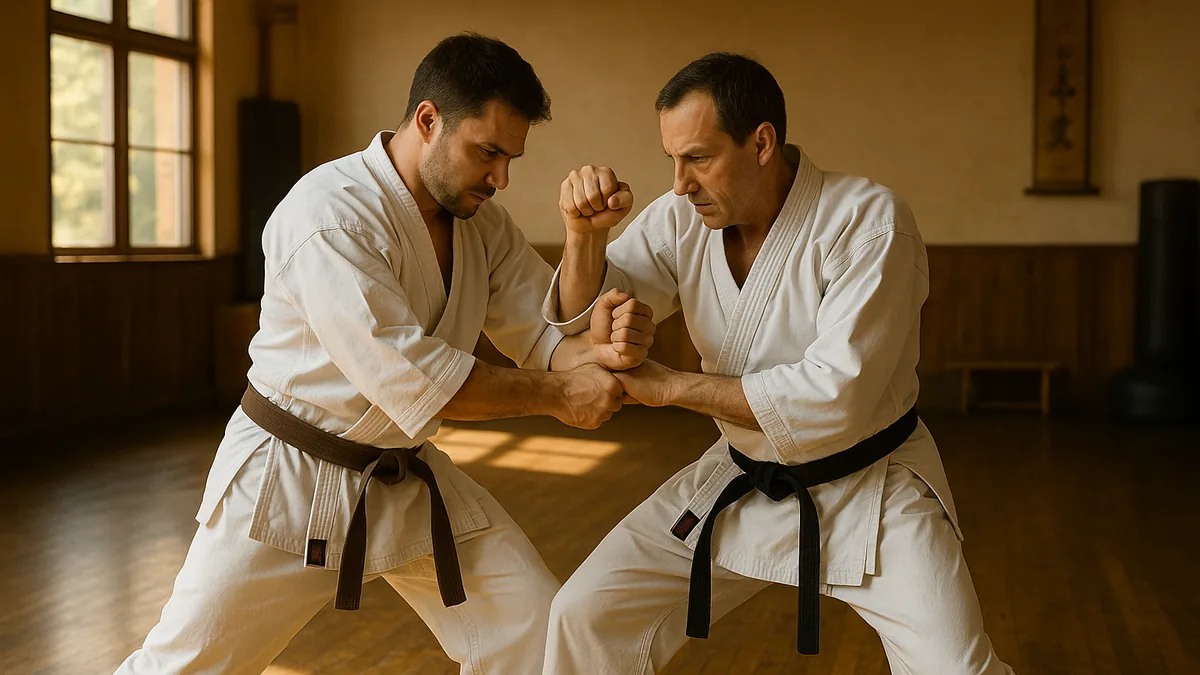
The bunkai in any kata is a set of scenarios. The kata teaches your body how to move through those scenarios with correct structure. The kumite tests whether that structure holds when someone is trying to stop you. If you’re doing kata without ever asking what the movements actually mean, you’re missing half the training. If you’re sparring without ever building the mechanics that kata is designed to develop, you’re building on sand.
I prefer training environments where both are taken seriously and where neither is treated as the “real” work. The dojos I’ve found most useful were the ones where your kata performance told your instructor something about your sparring, and vice versa. Where the same correction - drop your weight, commit to the hip, don’t telegraph - applied in both contexts. Because it does. It always does.
If you’re preparing for a grading and wondering how kata and kumite get assessed differently, what examiners actually look for in kata is worth reading - but the short version is that good examiners aren’t fooled by clean lines without intent, and they’re not fooled by aggression without control either.
Key Takeaways
- Kata without bunkai is choreography. If you can’t explain what each movement is doing to a training partner, you’re training the shape, not the technique. Start asking the question.
- Kumite without kata mechanics is a limited toolbox. The techniques you never drill in isolation are the ones you’ll never use under pressure. Kata is where you build what sparring will eventually test.
- The correction is always the same. When your instructor fixes something in kata - weight distribution, hip engagement, the moment of commitment - that fix applies directly to your sparring. They’re not separate problems.
- Your preference reveals your gap. If you strongly prefer one over the other, that preference is probably pointing at the thing you need to work on. Strong kumite players who avoid kata are avoiding something. Strong kata performers who avoid sparring are too.
- Pressure-test your kata work. Drilling bunkai with a resistant partner, even lightly, tells you immediately whether your kata mechanics are functional or decorative. If the application falls apart, the kata work needs revisiting - not the application.
- The debate itself is a distraction. Time spent arguing about which matters more is time not spent training either. The practitioners I respect most don’t have this argument - they just train both, and they train them as one thing.
The weekly digest
New karate articles, once a week
One email every week with everything new on Karate Lifestyle. No spam; unsubscribe in one click.
We'll email you to confirm. See our privacy policy.