How to Transition Between Kata for Grading and Kata for Understanding
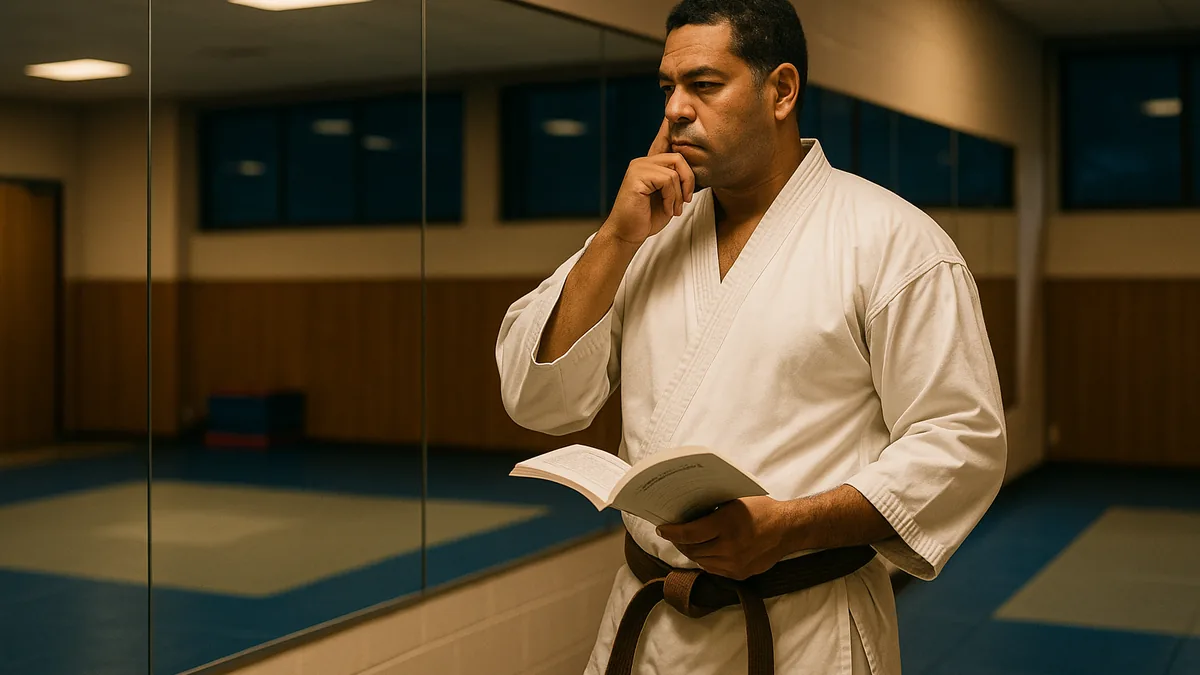
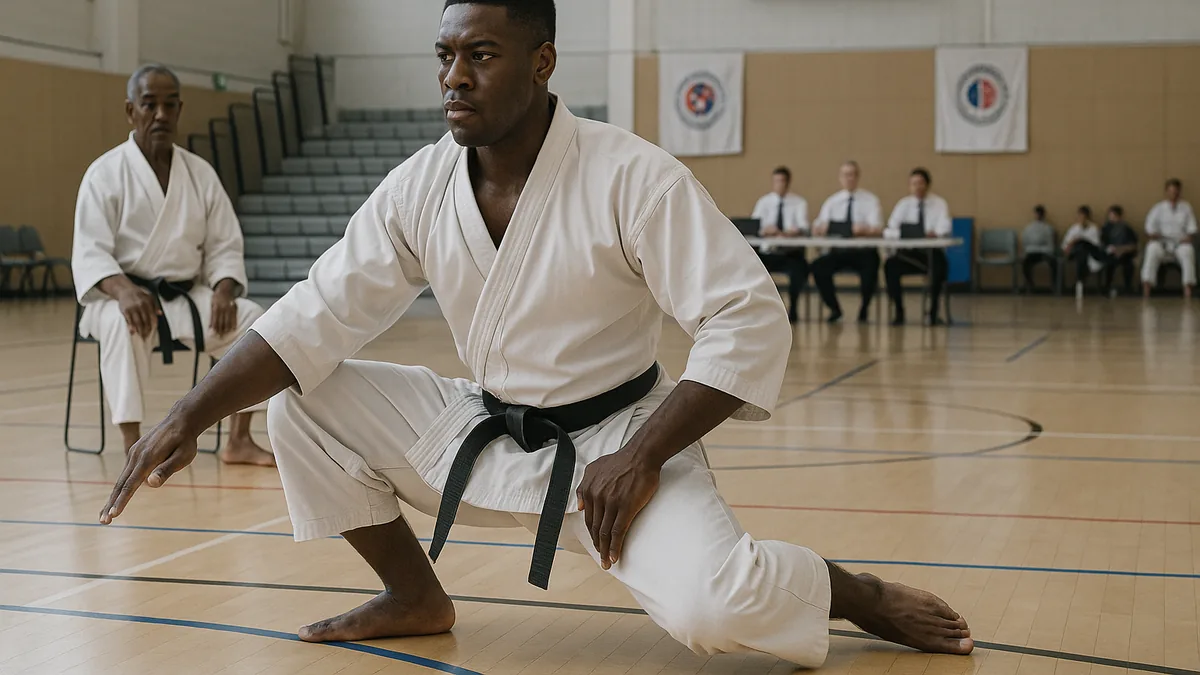
Most people preparing for grading treat kata like a performance to be rehearsed. I understand why - the grading context almost demands it. You need to hit your timing, your kiai needs to land in the right place, your stances need to look correct to whoever is sitting at the table. But there’s a version of kata training that only ever lives in that performance mode, and I’ve watched students spend years in it without ever crossing over into something deeper. The transition between those two modes is what I want to talk about here.
The Problem With Grading Kata
I’ve noticed that students who are preparing for grading almost always narrow their focus at exactly the wrong moment. They start cleaning up the surface - tidying the angles, counting the moves, making sure they remember which direction to face. That’s not entirely wrong. You need those things. But what gets dropped in the process is the intent behind each movement, and once you lose that, the kata starts to feel hollow. You can see it from across the dojo. The body is doing the right things but nothing is being communicated.
My instructor used to say “the kata doesn’t care about your grading.” I didn’t understand it at the time. I thought he was being philosophical. What he meant was that the kata has a fixed internal logic - a set of principles baked into its structure - and if you’re performing it for an audience rather than engaging with that logic, you’re essentially doing a different thing. The movements might look similar from outside, but they feel completely different from inside.
The thing that changed my understanding was the first time I drilled bunkai seriously with a training partner. I’d been doing Heian Shodan for years. I thought I knew it. Then someone grabbed my wrist and I tried to apply the first sequence and nothing worked the way I expected. The angles were wrong, the distance was wrong, my timing was off. I went back to the kata and it looked completely different to me. I could suddenly feel what the opening movements were asking for.
What “Kata for Understanding” Actually Means
This isn’t mystical. It’s practical. When I say understanding, I mean knowing what each technique is solving. Not in a vague “this is a block, this is a strike” way - that’s surface reading. I mean understanding the tactical problem that each sequence addresses and feeling the physical solution in your body.
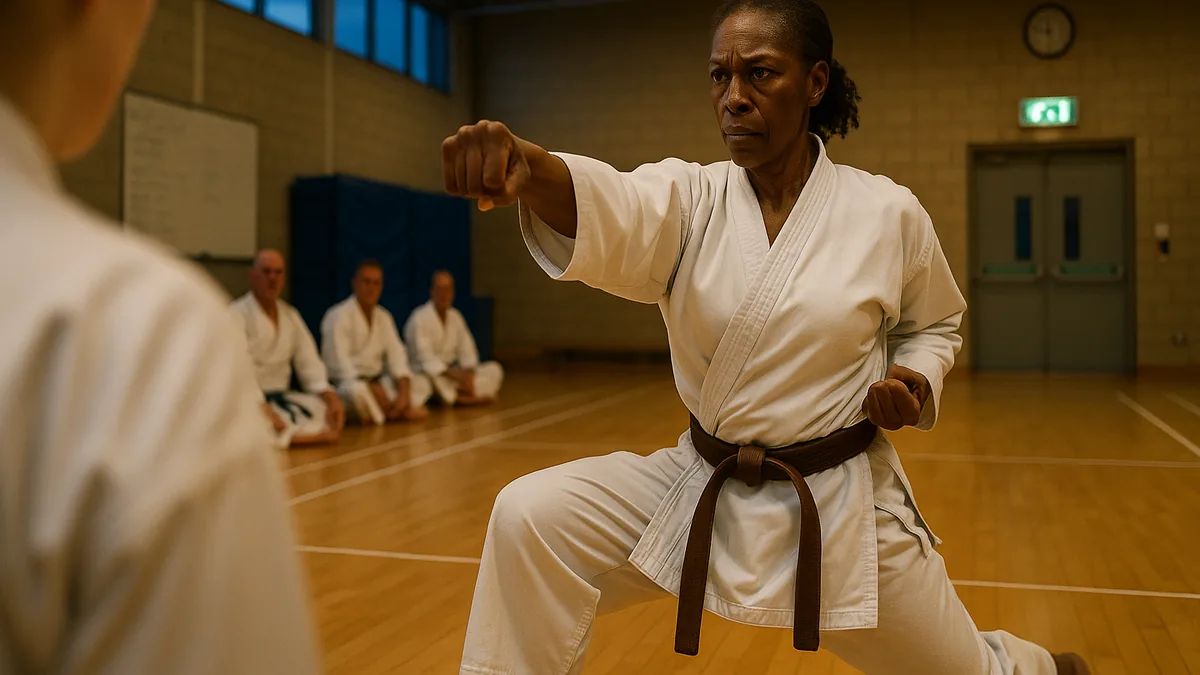
Bunkai practice is the fastest route to this. Not the sanitised version where you and a partner take turns doing pre-arranged attacks that nobody would ever throw in real life. I mean working with a partner who is actually trying to grab you, push you off balance, or close distance, and using the kata sequence to deal with it. That kind of drilling changes how the kata feels when you perform it solo. The movements stop being shapes and start being actions.
What I tell students who are stuck in grading mode is this: pick one sequence from your kata - just one - and spend a month figuring out what it’s actually for. Not what the syllabus says. What does it feel like when the technique works against resistance? What does the body position at the end of that sequence actually set you up for? If you can answer those questions from physical experience rather than from memory, you’ve made the transition.
The Specific Mistake I See Most Often
The biggest mistake I see in students preparing for grading is that they practice the kata at performance speed before they’ve earned that speed. They rush through sequences they don’t fully understand because slowing down feels like going backwards.
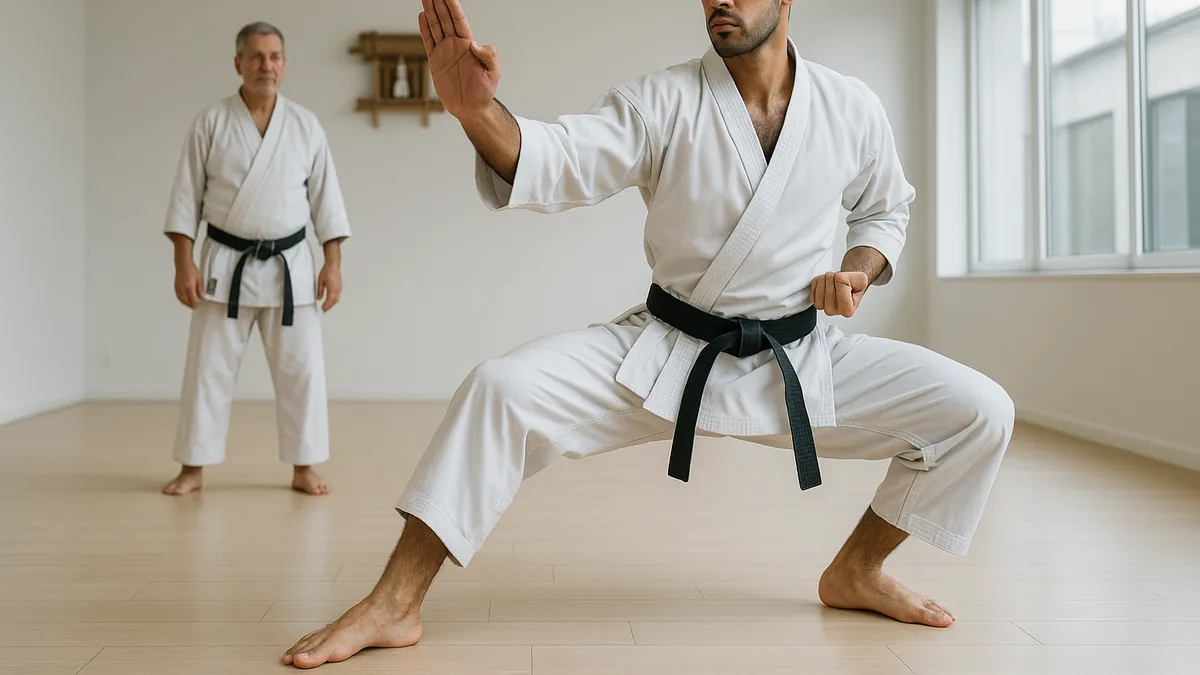
Here’s what actually happens when you slow down: you start to feel the weight transfers. You notice that your back foot has to be properly loaded before the technique has any power behind it. You feel the rotation through your hips and torso and understand that the arm is just the end of a chain that starts at the floor. At performance speed, you can fake all of that. At slow speed, you can’t. The kata will tell you immediately when you’re not connected.
The correction that works - and I’ve used this with dozens of students - is to have them perform the kata at roughly half speed with the instruction to feel each technique land as if they were hitting something. Not imagining hitting something. Feeling the body mechanics complete. You’ll feel the difference immediately. A technique done properly at half speed has a satisfying solidity to it. A technique done improperly at full speed feels like you’re waving your arms.
If you want to go deeper on the performance side of this, what examiners are actually looking for is worth reading - but come back to this, because understanding and performance are not the same thing and you need both.
How to Actually Make the Transition
The honest answer is that you can’t do it alone. You need an instructor who will push you past the surface reading of the kata. I’ve trained in dojos where kata was taught almost entirely as choreography - learn the sequence, clean it up, grade, move on. I’ve also trained in dojos where kata was treated as a library of principles that you spend years unpacking. The difference in what students understood by mid-level grades was stark.
Seek out the deeper conversation with your instructor. Most instructors who have been training for a long time have opinions about what the kata is actually doing - they’ve just learned that most students aren’t ready to hear it yet, or aren’t asking. Ask. Tell them you want to understand the applications. Ask them what they were thinking about when they were your grade. That conversation will teach you more than another hundred solo repetitions.
I’d also recommend looking at how to improve your kata with this framing in mind - not as a checklist of technical fixes, but as a process of deepening what you understand about each movement.
One thing worth knowing: this transition doesn’t happen once. It happens repeatedly. I’ve gone back to kata I thought I understood and found entirely new layers in them after training in a different context. The kata doesn’t change. What changes is the quality of attention you bring to it.
Community Perspective
There’s a genuine split in how different dojos and associations approach this. Some instructors believe you should understand the applications before you perform the kata at all - that performing without understanding is actively harmful because it builds wrong habits of intent. Others believe the body learns the mechanics first and the understanding follows naturally with time and experience.
I’ve seen both approaches produce good karateka and I’ve seen both produce students who plateau. My honest view is that the mechanics-first approach works fine up to around intermediate grades, and then it stops being sufficient. At some point you need the understanding to keep developing, and if you’ve spent years performing without thinking about application, that transition becomes harder rather than easier.
There’s also a real conversation to be had about whether kata from different styles are doing different things - whether the principles you extract from a Shotokan kata translate cleanly to a Goju kata, for example. Performing the same kata across different styles gets into some of this. The short version is: the principles overlap more than the surface differences suggest, but the emphasis changes, and that matters when you’re trying to understand rather than just replicate.
The kata vs kumite debate also touches on this - because a lot of the frustration people feel about kata comes from training it in isolation from any application context. When kata and kumite are trained as connected things, the question of whether kata is useful tends to answer itself.
Key Takeaways
- Pick one sequence from your current kata and drill it with a partner against light resistance. Do this before your next grading, not after.
- Slow your kata down to half speed and feel each technique complete. If it doesn’t feel solid at half speed, it isn’t solid at full speed - you’re just moving too fast to notice.
- Ask your instructor what they think the kata is actually doing. Not what the syllabus says. What they think. That conversation is where the real instruction lives.
- Performance mode and understanding mode are different mental states. You need both, but they require different kinds of practice. Don’t let grading preparation crowd out understanding work in the weeks before a test.
- The transition is ongoing. Going back to a kata you’ve already graded in and finding new things in it is a sign you’re developing, not a sign you missed something the first time.
- If your kata feels like a routine you’re reciting, that’s information. It means the intent hasn’t connected yet. That’s fixable - but only if you’re honest about it.
The weekly digest
New karate articles, once a week
One email every week with everything new on Karate Lifestyle. No spam; unsubscribe in one click.
We'll email you to confirm. See our privacy policy.