How to Use Kata as a Warm-Up Without Turning It Into Mindless Repetition
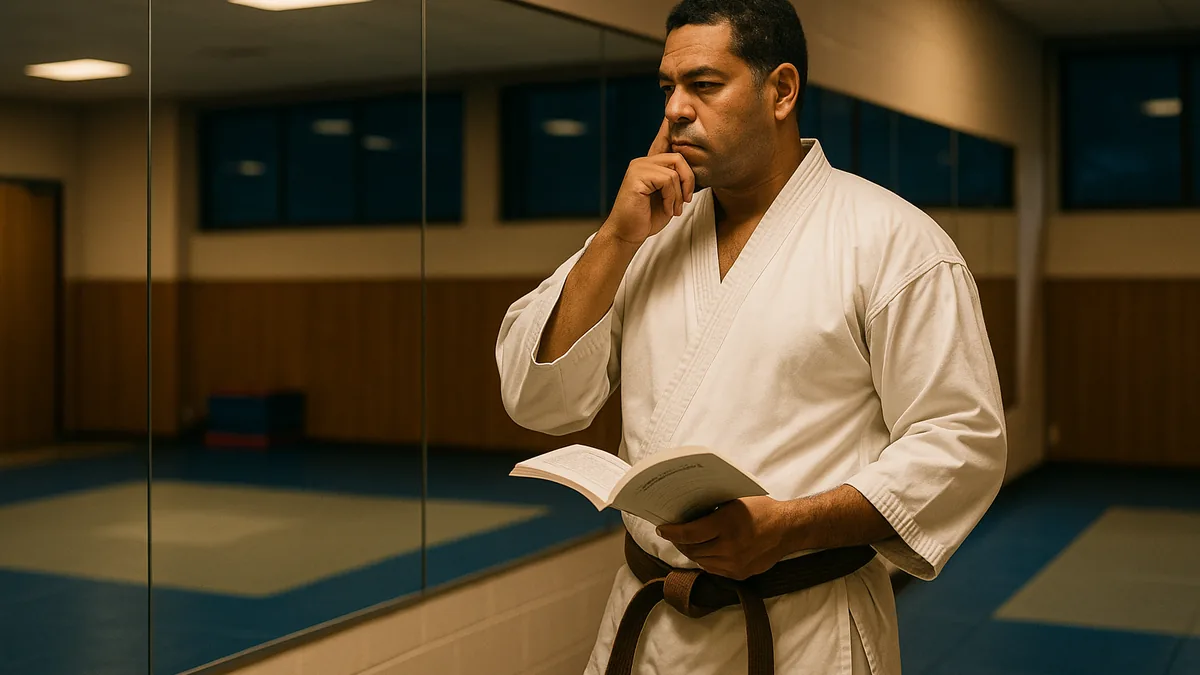
Most instructors use kata as a warm-up the same way they use jogging - something to tick off before the real training starts. Students go through the motions, the room gets a bit warmer, and nobody’s mind is actually in the room yet. I’ve watched this happen in dojos for years, and I’ll be honest: I did it myself as a junior instructor. We’d open class with Heian Shodan, everyone would shuffle through it half-asleep, and then we’d wonder why the first round of kumite looked sloppy.
The problem isn’t using kata as a warm-up. The problem is treating it like a formality.
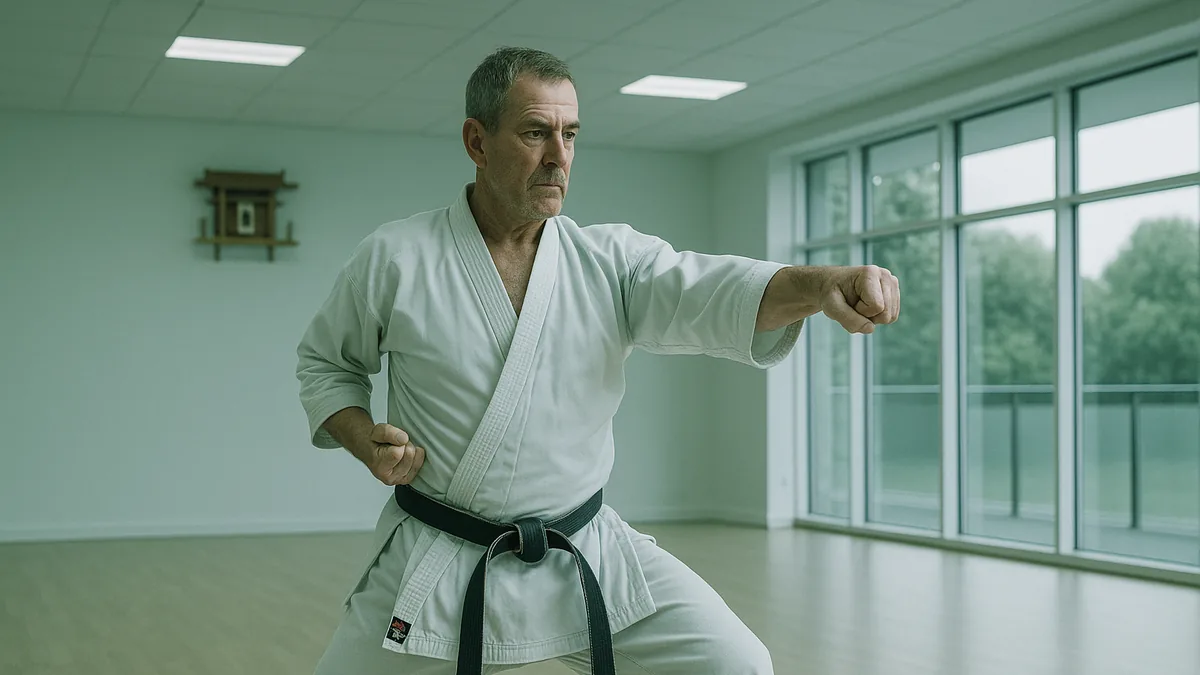
Done right, kata as a warm-up does three things simultaneously - it warms the body, focuses the mind, and starts building the technical habits you want students carrying into the rest of the session. Done wrong, it trains students to perform kata without presence, which is exactly the habit that explains why kata looks the same at brown belt as it did at yellow belt.
Here’s what actually works.
Why Mindless Repetition Happens and What It Costs You
The mistake I see most often is instructors calling kata at the start of class with no instruction, no focus point, and no variation. Students fill in the floor, someone calls “Yoi,” and thirty people run on autopilot.
Autopilot is the enemy of kata. When the body knows the sequence well enough to run it without the mind, that’s not mastery - that’s muscle memory operating below conscious level. Which sounds good until you realise that below conscious level means no correction is happening, no refinement is occurring, and every repetition is just reinforcing whatever habits are already there.
I used to think that high repetition was the goal. My first instructor used to say “kata trains itself if you do it enough.” I didn’t understand what he meant until I watched a senior brown belt perform the same kata she’d been doing for four years - technically accurate, completely empty. She knew the sequence cold. She had no idea what she was doing. The repetition had trained the form but not the practitioner.
What you want from a warm-up kata is attention, not just movement. The drills below are how you get both.
The Core Approach: Build the Warm-Up Around a Single Focus
Before I get into specific drills, here’s the principle that ties everything together: every time you run kata as a warm-up, give students one thing to focus on. One. Not “focus on your technique” - that’s not a focus, that’s a category. Pick something specific.
- Today we’re focusing on the transition between moves - specifically, whether your weight is settled before your technique lands.
- Today we’re watching the breath - when does it happen, is it sharp, is it timed to the technique?
- Today we’re thinking about the embusen - are you on the line at the end, and what does it tell you about your stances?
This single-focus approach changes the quality of attention in the room immediately. Students aren’t trying to do everything right - they’re tracking one thing, which means they’re actually tracking it. The embusen focus is particularly useful early in a session because it forces postural awareness without demanding speed.
Drills That Actually Work
Dynamic Segment Isolation
This is the drill I use most often for warm-ups, and I’d put it above everything else on this list for practical value.
Why it matters: Running full kata cold means students compromise range of motion in the early sequences because the body isn’t ready. Isolating segments dynamically lets you warm specific muscle groups while teaching kata structure, not just kata sequence.
Setup: Pick three to four consecutive moves from the kata. Not the whole form - three or four moves. For Heian Shodan, that might be the opening sequence through the first turn.
Execution:
- Call the segment slowly - almost exaggeratedly slow. Students perform each move with full extension, full hip engagement, pausing briefly at each technique.
- Run it again at half-speed, continuous, no pause.
- Run it a third time at full speed with kiai where appropriate.
- Rest. Brief explanation of what they should have felt in step three that they didn’t feel in step one.
What to feel for: In step one, students should feel the stretch through the hip flexors on the stepping moves and through the shoulder on the blocks. If they don’t feel anything, they’re not using full range. In step three, the technique should feel like it’s arriving, not like it’s being placed. There’s a difference - when timing is right, the block or strike has a sense of completion to it. When it’s off, it feels like you’re stopping your arm in approximately the right place.
The mistake I see most often: Students speed up in step one because slow feels wrong to them. It does feel wrong at first - slow kata exposes every fault in balance and structure, which is uncomfortable. That discomfort is the point. What I tell students is: if it feels easy slowly, you’re cheating the range of motion.
Breathing Kata
This one gets resistance from students who think it’s going to be meditative and slow. It isn’t. It’s one of the most physically demanding ways to run kata, and it exposes technical problems faster than almost anything else.
Why it matters: Most practitioners breathe reactively during kata - they breathe when they need air, not when the kata demands it. This creates a disconnect between physical exertion and technical execution. Breathing in kata is structural, not incidental - when the breath is right, the technique is sharper. When it’s wrong, even correct-looking technique is missing power.
Setup: Run the kata with an explicit instruction: every technique must have an audible exhale. Not a kiai - a sharp, short exhale through the nose or mouth timed to the moment of impact.
Execution:
- Walk through the kata at slow pace. Students exhale on every technique. Every one.
- Increase to moderate pace. Same instruction.
- Run at full pace. The breathing should now be automatic enough to hold.
What to feel for: When the exhale is timed correctly, you’ll feel the core engage fractionally before the technique lands. It’s subtle but real - like the breath is driving the technique rather than accompanying it. When it’s off, the exhale comes after the technique, and the technique feels disconnected from the body’s centre.
Common mistake: Students exhale continuously rather than sharply. A long breath out through a whole sequence is not the same as a sharp exhale on each technique. The correction that works: I have them put one hand on their abdomen and feel for the contraction. If the hand doesn’t move noticeably on each technique, the breath isn’t sharp enough.
Pace Variation Kata
This is the simplest drill on the list and the one most instructors underuse.
Why it matters: Monotony of pace is the primary driver of mindless repetition. When students know exactly how fast the next move is coming, they stop making decisions - they just follow the rhythm. Varying pace forces continuous attention.
Setup: Full kata, no modifications to technique.
Execution:
- Call “slow” and students perform the next sequence at half-speed.
- Call “normal” for standard pace.
- Call “fast” for maximum controlled speed.
- Change calls unpredictably. Don’t establish a pattern.
What to feel for: The transition from slow to fast should not feel like the student is rushing. If it feels rushed, the slow sections are too slow - the student has lost their connection to the technique and is just waiting. The goal is that fast feels like compressed slow, not like a different activity.
I’ve noticed that this drill immediately identifies students who are following the group rather than performing independently. When pace changes unexpectedly, the followers are always half a beat behind. That’s useful information.
Mirrored Kata as a Warm-Up Tool
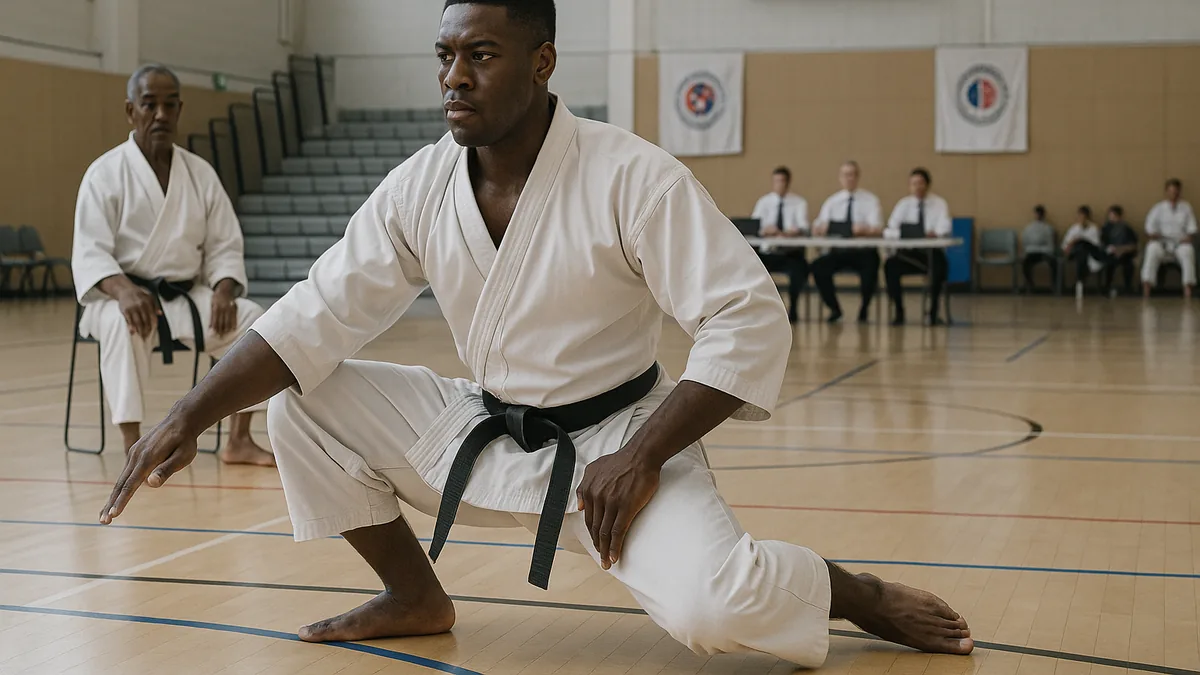
Running kata on the opposite side is something most instructors reserve for advanced training, but I’d argue it’s one of the most effective warm-up tools available. Mirroring a kata reveals habitual movement patterns that students have stopped noticing on the dominant side - and a warm-up is exactly when you want that kind of attention.
Use it sparingly and with a specific purpose: “We’re doing this on the left side today so you can feel what your right side is actually doing.” One run-through is enough.
Community Perspective
There’s a genuine split in how different dojos approach this. Traditional schools often hold that kata should not be used as a warm-up at all - that it deserves its own dedicated time when the practitioner is already prepared physically and mentally. The argument is that using kata to warm up conditions students to treat it as a functional exercise rather than a complete practice.
I understand that position. I don’t fully agree with it.
My view is that the problem isn’t using kata as a warm-up - it’s using it badly. A mindful, structured kata warm-up can reinforce technical habits and mental focus simultaneously. A sloppy, unconscious one does the opposite. The format is neutral; the execution is everything.
Sport-oriented dojos tend to go the other direction and treat kata purely as physical preparation, which loses the technical value entirely. Neither extreme serves students well.
What I’ve found works is a middle position: use kata as a warm-up deliberately, with clear instruction, a specific focus, and enough variation that students can’t drift. Reserve full, uninterrupted kata performance for later in the session when the body is warm and the mind is engaged. Both have a place.
Key Takeaways
- Give students one specific focus point every time you use kata as a warm-up. “Focus on your technique” is not a focus point.
- Slow kata is not easy kata. If students are comfortable performing it slowly, they’re not using full range of motion.
- Sharp exhales timed to each technique are a technical requirement, not a breathing exercise. When the breath is right, the technique is sharper - you’ll feel it.
- Pace variation is the fastest way to break autopilot. Change pace unpredictably and watch who’s actually performing versus who’s following.
- Segment isolation warms specific muscle groups while building kata structure. Three to four moves, three speeds, brief explanation. That’s the whole drill.
- If kata warm-ups in your dojo look the same every session, your students are training the habit of mindless repetition. That habit shows up directly in how kata develops - or fails to develop - over years of training.
The weekly digest
New karate articles, once a week
One email every week with everything new on Karate Lifestyle. No spam; unsubscribe in one click.
We'll email you to confirm. See our privacy policy.