Kata Breathing: Where to Breathe, Where to Kiai, and Why Most Practitioners Get It Wrong
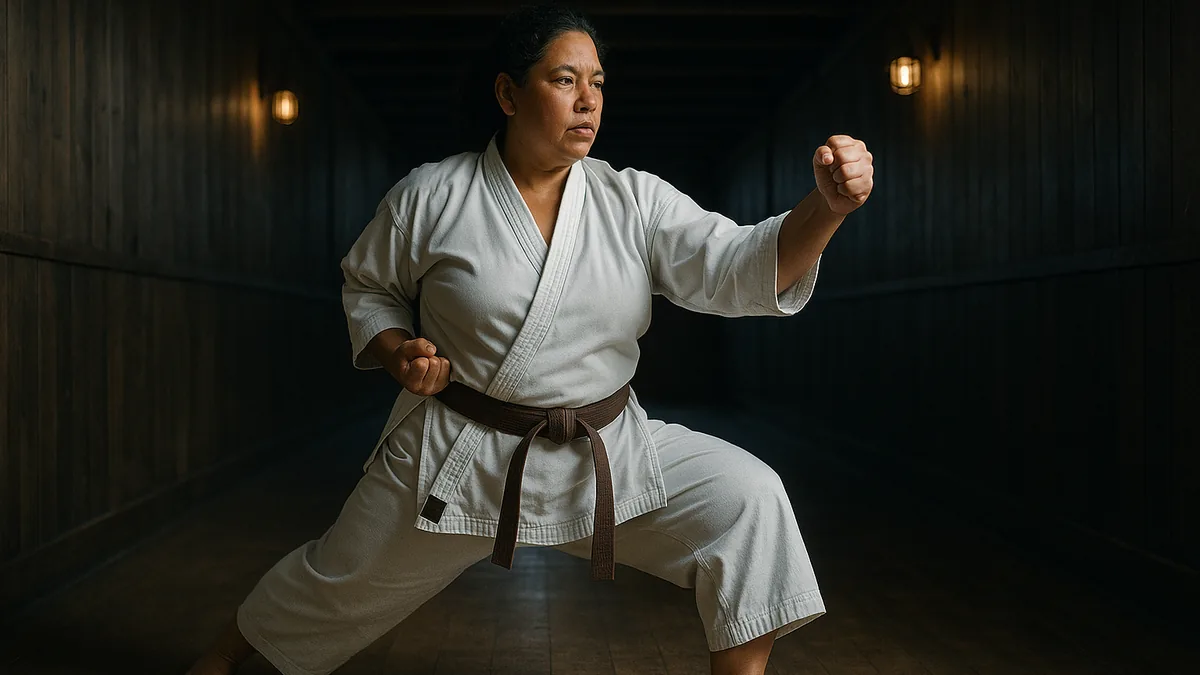
Most practitioners treat breathing in kata like an afterthought. You do the techniques, you kiai when you’re told to, and somewhere in between you remember to breathe. I’ve watched hundreds of students perform kata this way - including myself for the first few years - and the result is always the same. The kata looks mechanical. The power arrives late or not at all. And by the third sequence, the practitioner is already running out of gas.
The thing is, it’s not laziness. It’s a misunderstanding about what breathing in kata is actually for.
What Breathing in Kata Is Actually Doing
Most beginners think breathing is about not passing out. Keep oxygen coming in, keep moving. That’s the survival version of kata breathing, and it’ll get you through the sequence, but it won’t get you anywhere near good kata.
What I tell students when they start asking serious questions about this is that the breath is the technique. Not supporting the technique. Not accompanying the technique. The breath is what makes the technique happen at the level it’s supposed to happen.
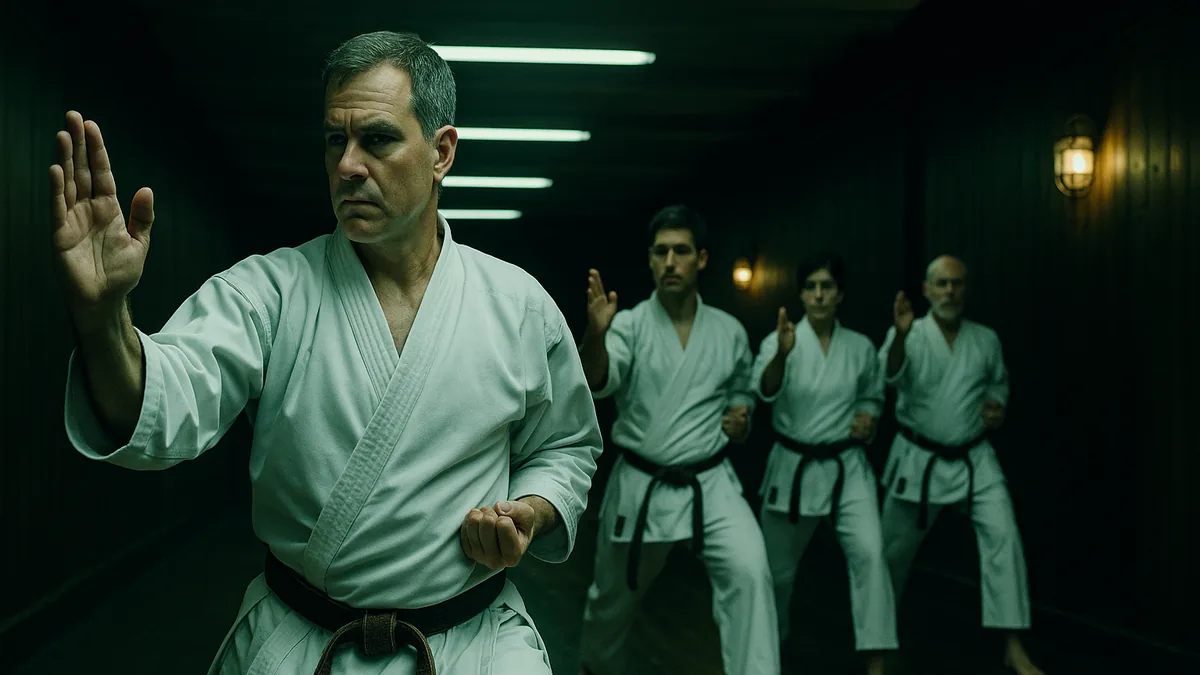
The exhale on a strike isn’t just releasing air. Done correctly, it tightens the core at the moment of impact, stabilises the spine, and transfers force from the ground up through the body into the target. You’ll feel this the first time you get it right - there’s a snap through the whole torso that wasn’t there before, and the strike feels like it lands with your entire body weight behind it rather than just your arm. When that connection isn’t there, the punch feels like you’re throwing your arm at something. When it is there, it feels like the arm is just the final link in a chain that starts at the floor.
The inhale is equally important and almost nobody talks about it. The inhale is preparation. It’s how you reset tension between techniques, how you signal to your body that the next movement is coming, and how you create the conditions for the next exhale to work properly. Shallow, irregular breathing between techniques means your body is never fully prepared for what’s coming. The kata ends up being a series of isolated efforts rather than a continuous, connected performance.
I used to think the breathing would sort itself out as I got more experienced. My instructor kept telling me to breathe and I kept nodding and not really changing anything. It wasn’t until I started doing Sanchin seriously - where the breathing structure is explicit and unavoidable - that I understood what had been missing everywhere else.
Where the Breath Goes: The Basic Framework
The structure that actually works, in my experience, is this:
- Exhale on every technique with intent - strikes, blocks with power, transitions that require tension
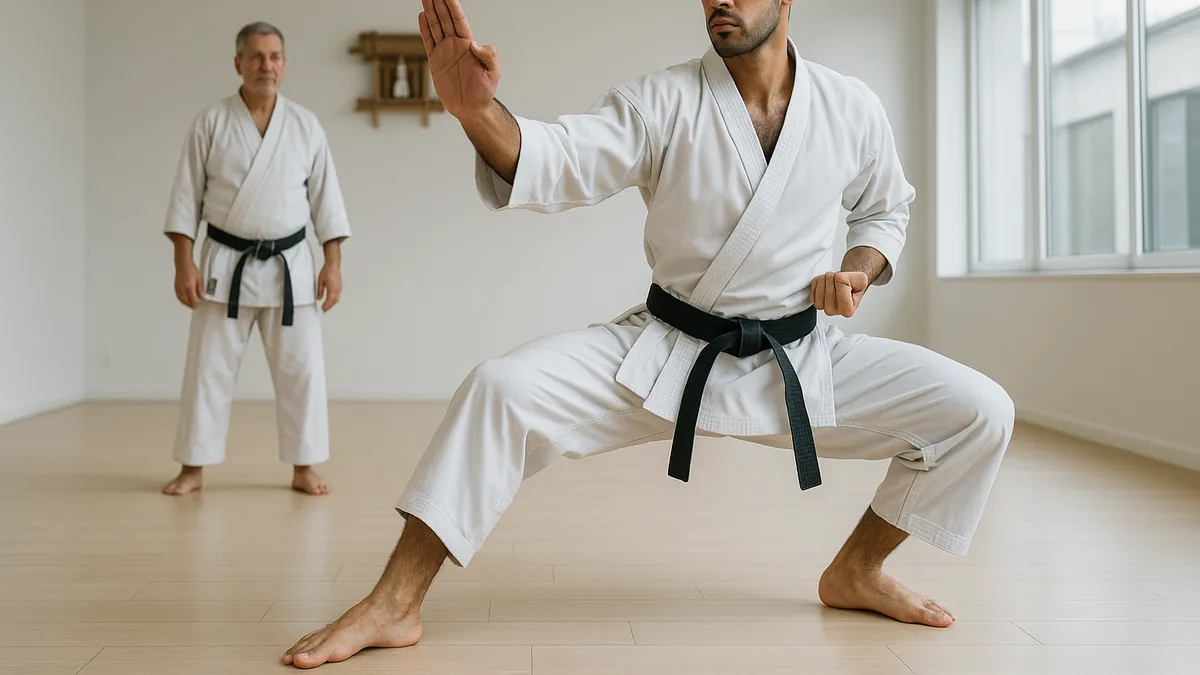
- Inhale during movement between techniques - steps, turns, repositioning
- Complete the exhale before the next inhale - don’t stack breaths, don’t start inhaling before the previous exhale is finished
That last point is where most people go wrong. I’ve noticed that under pressure - in grading, in competition, or just when trying to perform a kata well - practitioners start cutting their exhales short and inhaling too early. The breath becomes shallow and fast, the core never fully engages, and the techniques lose their edge. If you watch someone doing this, you can see it in the shoulders. They start to rise with each breath instead of staying down and relaxed.
The correction that makes the biggest difference here isn’t telling people to breathe differently. It’s telling them to slow down. The breath dictates the pace of the kata, not the other way around. If you’re rushing the technique to keep up with where you think the timing should be, you’ve already lost the breath.
There’s a useful drill for this: perform a section of your kata at half speed, and force yourself to complete every exhale fully before you move into the next technique. It will feel wrong at first - too slow, too deliberate, almost theatrical. But what you’re doing is re-establishing the relationship between breath and movement. Once that’s in place, you bring the speed back up and the breath follows naturally.
If you’re working on this alongside broader kata refinement, the article on how to improve your kata covers some complementary areas that will reinforce what you’re building here.
Kiai: The Part Everyone Gets Wrong
I’ll be direct about this: the kiai is the most misunderstood element in kata, and most practitioners - including senior ones - are doing it badly.
The most common version I see is what I call the performance kiai. Loud, sharp, designed to sound impressive. The student tenses up, shouts from the throat, and produces something that sounds like a bark. It’s not wrong exactly, but it’s not right either. The sound is coming from the wrong place, and more importantly, the physical effect of the kiai isn’t happening.
A proper kiai comes from the hara - the lower abdomen. When it’s done correctly, you feel a compression in the core that’s different from a normal exhale. It’s almost like a controlled punch of air from the belly. The sound is a byproduct of that compression, not the goal. When I’ve felt this done properly by senior practitioners - and I mean felt it, standing next to them - there’s a physical presence to it that a throat-shout simply doesn’t have.
Placement: Where in the Kata, and Why
Most kata have two designated kiai points, and they’re not arbitrary. They mark the moments of maximum commitment in the sequence - the techniques where, in a real application, you would be delivering a decisive strike. The kiai is meant to reflect that commitment physically. It’s the body saying “this is the one.”
One mistake I see constantly is practitioners kiai-ing at the wrong moment within the technique. They shout as they’re chambering, or just before contact, rather than at the precise moment of execution. This is usually because they’re thinking about the shout rather than the technique. The kiai should arrive exactly when the technique arrives - same moment, same commitment. If you’re off by even half a beat, the kiai and the technique are disconnected, and both suffer.
The other mistake - and this one is more subtle - is treating the kiai as a separate event rather than a peak within a continuous breath structure. The kiai is the climax of an exhale that started earlier in the sequence. If you’ve been breathing correctly through the preceding techniques, the kiai arrives naturally with more power and less effort. If you’ve been holding your breath or breathing shallowly, the kiai is an isolated effort and it shows.
What I tell students preparing for grading is this: if your kiai sounds different from the rest of your kata breathing, something is wrong. The kiai should be continuous with everything that came before it, just louder and more compressed. Examiners notice this even if they can’t articulate exactly what they’re hearing. For more on what actually gets evaluated, the kata for grading breakdown is worth reading before your next assessment.
The Mistakes I Keep Seeing
Breath holding during complex sequences. This is almost universal in beginners and surprisingly common in intermediate practitioners. When the technique gets complicated - a combination, a turn, a jump - the breath stops. The student is concentrating on the movement and the breath gets suspended. The result is that the techniques in that sequence lose their power, and then there’s a gasping reset afterwards that disrupts the rhythm of everything that follows. The fix is to make breathing the priority during practice, even if the techniques suffer temporarily. You can’t layer good breathing on top of already-established movement patterns if the movement patterns were built without breath.
Breathing to the sequence rather than the technique. Some practitioners have learned a rough breathing pattern for their kata - breathe here, breathe there - without understanding why those points were chosen. When the kata is performed faster or slower than they practiced, the breathing falls apart because it was tied to timing rather than technique. The breath should be attached to what the body is doing, not to a count.
Kiai as punctuation rather than commitment. I’ve graded students who perform their entire kata at one energy level and then suddenly shout at the kiai points. The kiai is supposed to represent a peak of intensity within the kata, but if the rest of the kata is flat, the kiai just sounds loud rather than powerful. The kata needs to build to those moments. There’s a related issue in how practitioners approach the overall arc of kata performance - if this sounds familiar, why your kata looks the same at brown belt as it did at yellow belt gets into this problem in more depth.
Forgetting to breathe during yoi and musubi-dachi. The preparation and closing positions are part of the kata. I’ve seen practitioners hold their breath through both. The breath in yoi should be a deliberate, settling inhale that establishes your state before the kata begins. The breath at the close should be a complete exhale that signals the kata is genuinely finished. These aren’t decorative moments.
How This Changes at Different Stages
As a white belt, I thought kata breathing was about not getting tired. By green belt, I thought it was about adding power to individual techniques. It wasn’t until brown belt that I started to understand it as a structural element - something that shapes the entire kata rather than just the individual moments.
The shift happens when you stop thinking about the techniques and start thinking about the kata as a single continuous thing. The breath is what makes it continuous. Without deliberate, connected breathing, kata is a sequence of techniques. With it, it’s something closer to what it’s supposed to be.
Senior practitioners often talk about the “feel” of a kata - how some performances feel right and others don’t, even when the techniques look identical. I think breath is most of what they’re responding to, even when they don’t name it. A kata performed with correct breathing has a quality to it that’s hard to describe but immediately recognisable. The transitions feel inevitable. The kiai lands with genuine weight. The kata has a shape.
This connects to the broader question of transitioning between kata for grading and kata for understanding - the breathing is one of the main things that separates a kata you perform from a kata you actually understand.
Community Perspective
There’s genuine disagreement between styles and dojos about how explicitly breathing should be taught. Some instructors - particularly in Goju-ryu and Uechi-ryu, where breathing kata like Sanchin and Tensho are central to the curriculum - teach breath mechanics from very early on. Others, particularly in some Shotokan and Wado-ryu dojos, take the view that correct breathing develops naturally as technique improves and shouldn’t be over-coached in beginners.
I’ve trained in both environments. My honest view is that explicit early instruction is better, but I understand the counterargument. If you front-load breathing instruction, some students become so self-conscious about their breath that their movement suffers. There’s something to be said for letting movement develop first and then layering breath awareness on top.
Where I think most dojos get it wrong - regardless of style - is in how kiai is taught. It’s almost always taught as a sound rather than a physical action, and that single misunderstanding follows practitioners for years.
Key Takeaways
- The exhale on a technique isn’t just releasing air - it’s what connects your body into a single unit at the moment of impact. If your strikes feel like arm-only efforts, the exhale isn’t happening properly.
- Complete each exhale before beginning the next inhale. Stacking shallow breaths is the single most common cause of a kata that loses power halfway through.
- The kiai should arrive exactly at the moment of technique execution, not before, not after. Practice the timing separately if you need to.
- Train the breath at half speed first. Perform your kata slowly enough that you can complete every exhale fully before moving. Then bring the speed back up.
- If your kiai sounds disconnected from the rest of your kata, it is. The kiai is the peak of a breath structure that should have been building through the preceding sequence.
- Watch senior practitioners and listen, not just look. The breath is audible if you pay attention, and it will tell you more about the quality of the kata than the technique shapes will.
The weekly digest
New karate articles, once a week
One email every week with everything new on Karate Lifestyle. No spam; unsubscribe in one click.
We'll email you to confirm. See our privacy policy.