Why Your Kata Looks the Same at Brown Belt as It Did at Yellow Belt
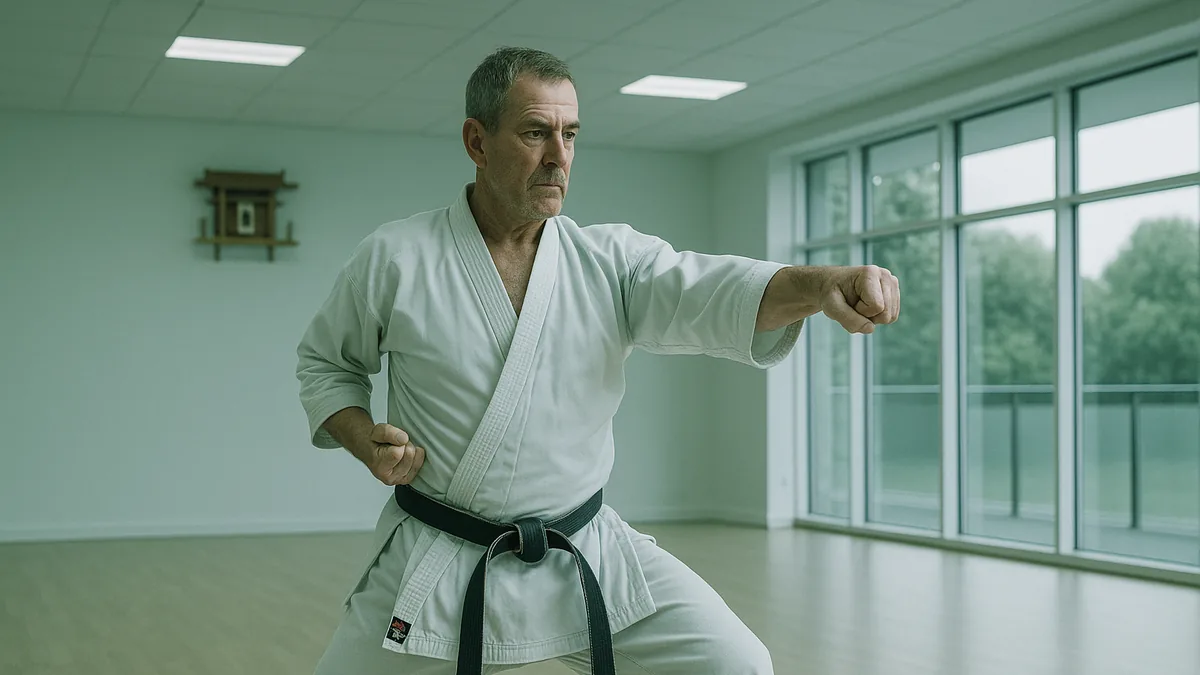
I’ve graded students who’ve been training for four or five years and watched them perform Heian Shodan with the same flat, mechanical quality they had at their first grading. Not because they haven’t practised. They have. They’ve done hundreds of repetitions. But somewhere between yellow belt and brown belt, the training stopped being training and became maintenance. They’re not improving the kata anymore - they’re just keeping it alive.
That’s a real problem, and it’s more common than most instructors want to admit.
The Repetition Trap
Here’s what I think happens. Early on, repetition feels like progress because it genuinely is. You don’t know the sequence, then you do. You can’t remember the turn, then you can. Every session produces visible improvement, and your brain registers that as learning.
But at some point - and it’s different for everyone, but I’d say around green or purple belt for most people - the kata becomes automatic. You stop thinking about it. You can perform it while mentally somewhere else entirely. And that’s when the repetition stops being useful.
I’ve noticed this most clearly when I ask students to slow down. Not to do the kata slowly as a stylistic choice, but to genuinely slow each technique to about a third of normal speed and feel what’s happening. Most of them can’t do it cleanly. The technique that looked fine at full speed falls apart when there’s no momentum carrying it through. The hips aren’t rotating, the stance is shallow, the kime isn’t there. The speed was hiding the problems.
What I tell students is this: if you can only perform a technique correctly at full speed, you don’t actually own that technique. Speed is a mask. Slow it down and the truth comes out.
This is the repetition trap. You’ve done the kata so many times that your body has memorised a version of it - but not necessarily the correct version. And every repetition is now reinforcing the same errors.
What You’re Actually Supposed to Be Doing With Each Repetition
I used to think kata practice was about ingraining muscle memory. Do it enough times, do it the same way, and eventually it becomes automatic. My first instructor drilled this into us. A thousand repetitions. Ten thousand. That’s how you get good.
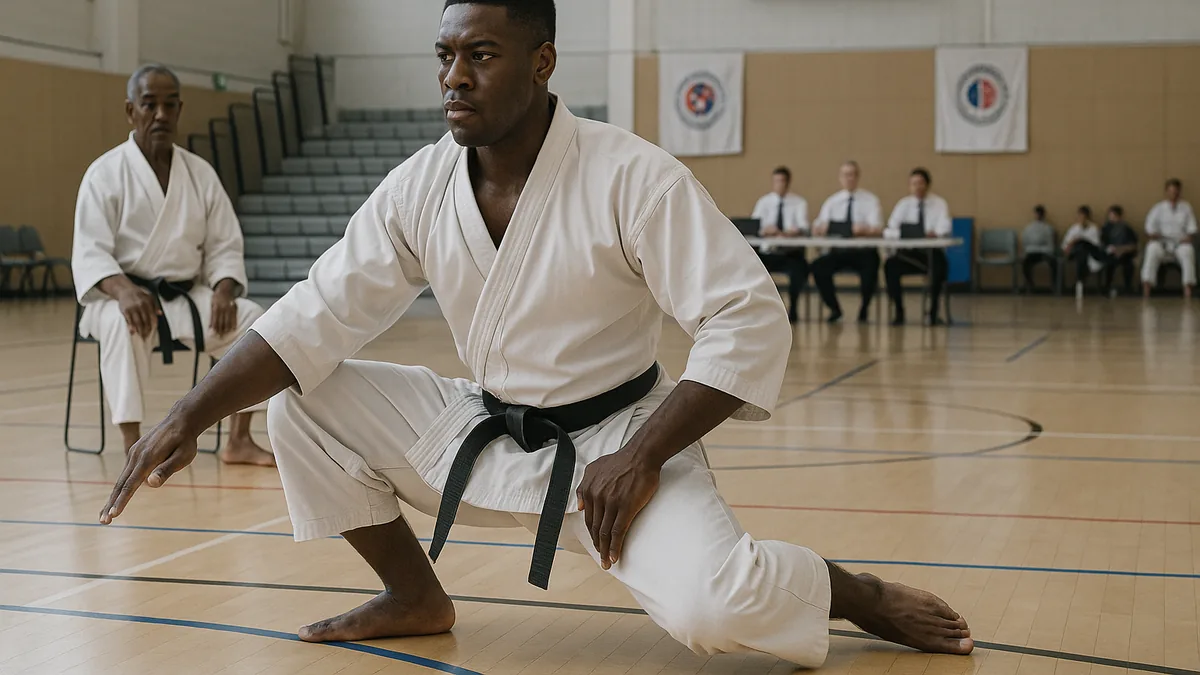
It took me years to understand why that advice is incomplete. The thing that actually changed my understanding was watching a senior student - he was a second dan at the time - perform Bassai Dai at a prefectural competition. He’d been doing that kata for over a decade. But watching him, you could see him thinking inside every movement. Not hesitating - the timing was perfect. But present. Engaged with what he was doing rather than just executing a sequence.
I asked him about it afterwards. He said something I’ve quoted to students many times since: “Every time I do this kata, I’m trying to find something I missed last time.”
That’s a completely different relationship with repetition. Not maintenance. Active investigation.
What this looks like in practice is that each performance of the kata has a specific focus. Not the whole kata - one thing. The transition between movements three and four. The connection between the block and the following gyaku-zuki. The way the back foot loads before the turn. You’re not trying to fix everything at once. You’re examining one aspect under a microscope, performing the whole kata but paying particular attention to that single element.
This approach feels slower. Students resist it because it doesn’t feel productive in the way that doing ten full-speed repetitions does. But the improvement is real and it compounds. Fix the hip rotation in one technique and you’ll find it needs fixing in six others. Work through those and suddenly the whole kata has more power.
Common Mistakes I’ve Seen (and Why They Happen)
The sequence-first mistake. Most beginners learn kata by learning the sequence. This is unavoidable - you have to know where you’re going before you can think about how to get there. The problem is that many practitioners never move past this stage. They still experience the kata as a series of steps rather than a series of techniques. The movement is correct but the intent is absent.
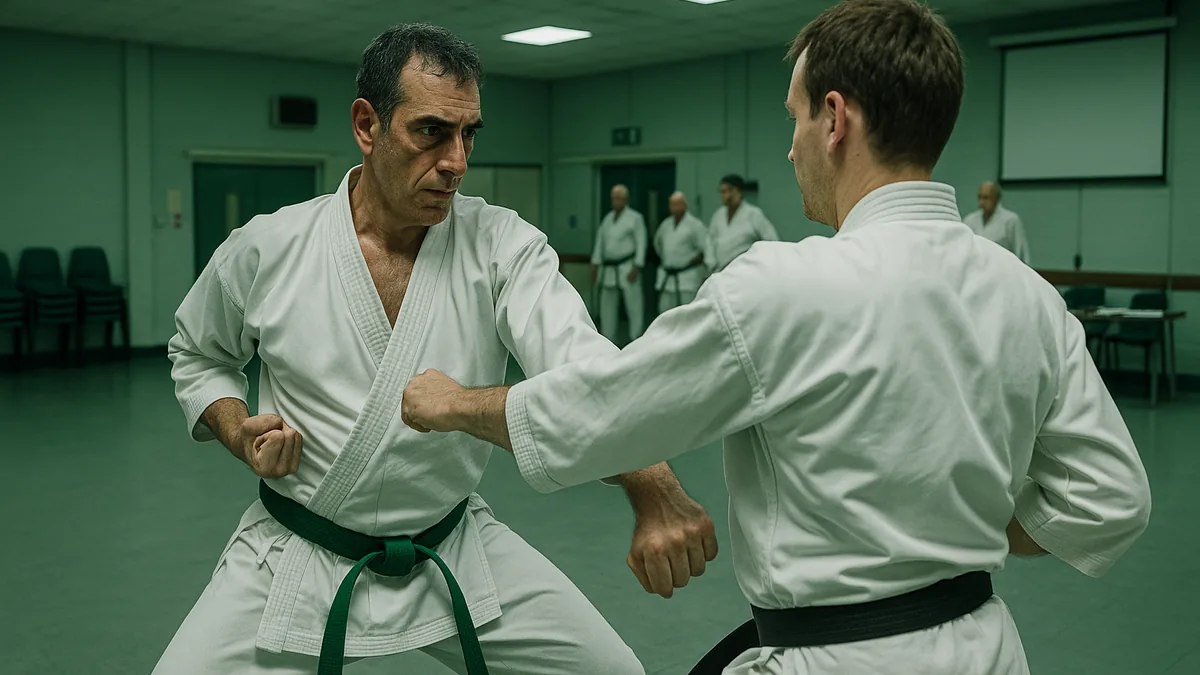
The correction that makes the biggest difference here is bunkai. When you understand what a movement is actually doing - when you know that the low block in Heian Shodan is grabbing and redirecting, not just blocking downward - the movement changes. The intent changes the body. I’ve seen students improve their kata significantly in a single session by spending the first half on bunkai and the second half performing the kata. Suddenly there’s a reason for what they’re doing.
Rushing the kiai. I see this constantly. The kiai is treated as a punctuation mark, a signal that a section of the kata is ending. Students rush toward it. The techniques immediately before the kiai are often the weakest in the whole performance because the student is already mentally at the kiai rather than in the technique they’re currently executing.
What I tell students is that the kiai should feel like it surprises you. Not literally - you know it’s coming - but the energy should build through the preceding techniques and release at the kiai rather than the kiai being the destination you’re running toward. When the kiai is right, you feel it through your whole body. When it’s wrong, it’s just a shout at the end of a movement.
Treating turns as transitions. This one is subtle and I didn’t fully understand it myself until a senior instructor pointed it out to me during a training camp. I was treating the turns in kata as the spaces between techniques - moments of repositioning rather than moments of technique. He stopped me mid-kata and said the turn itself is a technique. The pivot, the chamber, the weight transfer - all of it is functional. When you treat it as a transition, you rush it and you lose the structure that makes the following technique work.
You’ll hear your instructor say “don’t rush the turns” repeatedly. You won’t understand what they mean until you slow down and feel how much power you’re losing by not being properly set before the technique lands.
How Your Focus Should Change With Experience
As a white belt, I thought kata was about memorising and reproducing a sequence correctly. By brown belt I realised it’s about understanding a conversation between techniques - how each movement sets up the next, how the body has to be positioned at the end of one technique to execute the next one with any real power.
By the time I started training at second dan level, I understood something else: kata is a problem-solving exercise. The kata doesn’t change. Your understanding of it does. A technique you’ve performed a thousand times can reveal something completely new if you approach it with a genuine question rather than a familiar routine.
This is why senior practitioners and beginners can perform the same kata and have it look completely different, even if the sequence is identical. It’s not just about technical refinement, though that matters. It’s about the relationship between the practitioner and the kata. Does kata actually help your sparring? - I’d argue the answer is yes, but only if you’ve developed this kind of active relationship with it. If you’re just running through the sequence, the sparring benefit is minimal.
The Feedback Problem
Here’s something that makes this worse: most practitioners don’t get nearly enough specific feedback on their kata.
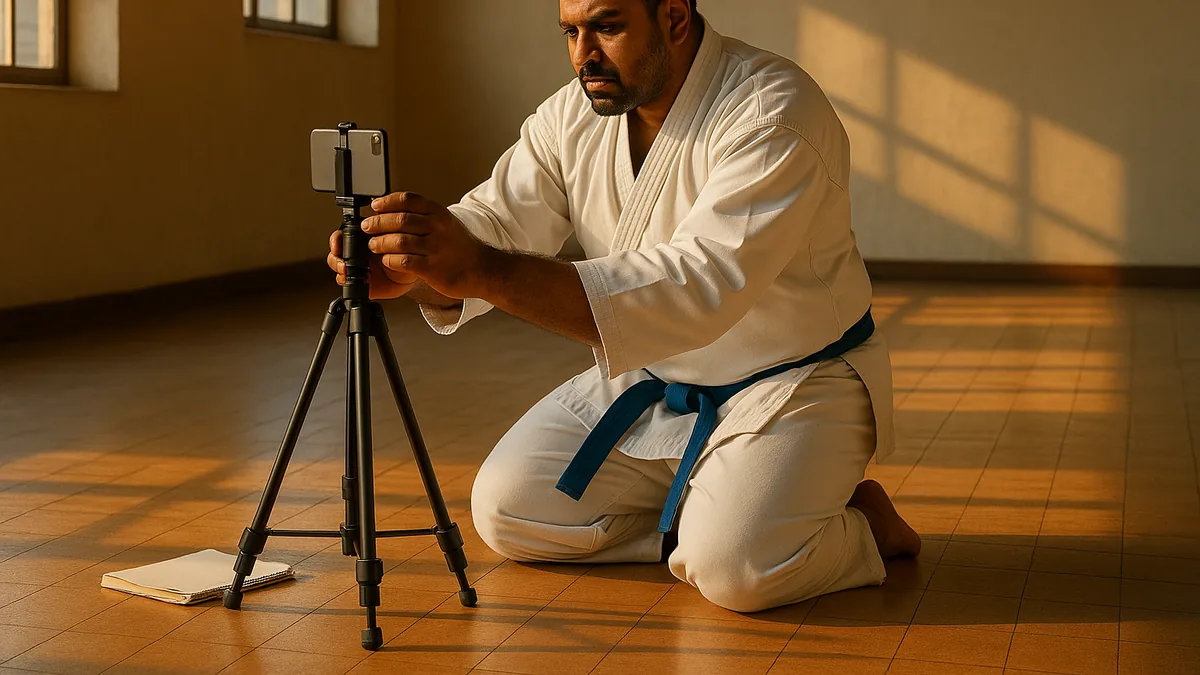
Class time is limited. If there are fifteen students in a session and you spend forty minutes on kata, the instructor might correct each student once or twice. That’s not enough to identify and address the patterns that are holding someone back. And most students don’t ask for feedback outside of class.
I think this is partly because asking for feedback feels vulnerable. You’ve been doing this kata for two years. Asking for a correction feels like admitting you’ve been doing it wrong for two years. But that’s exactly the right attitude to have. The brown belt who asks for corrections is the one who improves. The one who waits to be corrected stays where they are.
What actually works is asking specific questions. Not “how’s my kata?” but “can you watch my hip rotation on the gyaku-zuki sequences?” Give your instructor something specific to look at and you’ll get specific feedback. Vague questions get vague answers.
If you’re preparing for a grading, it’s worth reading what examiners actually look for in kata - because the things they’re watching are often not the things students think they’re watching. Examiners are looking at whether you’re present in the kata, whether the techniques have intent and kime, whether the timing feels natural or mechanical. These are all things that come from the kind of active, investigative practice I’m describing.
Community Perspective
There’s a genuine disagreement in the karate community about how much kata should be standardised versus personalised, and it’s relevant here.
Some instructors - particularly in more traditional associations - will tell you that deviation from the prescribed form is a mistake, full stop. The kata is the kata. Your job is to reproduce it accurately. Any individual interpretation is ego getting in the way of learning.
Others, particularly those who’ve trained across multiple styles or spent time in Okinawa, will tell you that the kata was always intended to be interpreted, that the standardisation we see now is a relatively recent development and that rigid reproduction misses the point.
I’ve trained in dojos that held both positions, and I’ve changed my view on this over time. My current position is that standardisation is necessary and useful early on - you need a clear model to work toward. But if you’re still treating kata as a standardised sequence at brown belt level, you’ve missed a developmental stage. The standard form is a starting point, not a destination.
Performing the same kata in different styles illustrates this clearly - the same kata looks different across styles not because one style is wrong but because different teachers have emphasised different things. Understanding that should free you up to engage more actively with your own performance.
Key Takeaways
- Repetition without awareness is maintenance, not improvement. Each practice session needs a specific focus - one aspect of the kata you’re actively investigating, not the whole thing at once.
- If you can only perform a technique correctly at full speed, you don’t own it. Slow practice reveals what’s actually happening in your body and exposes the errors that speed conceals.
- Bunkai is not separate from kata training - it’s the thing that gives kata training its purpose. If you don’t know what a movement is for, you can’t perform it with the right intent, and intent is what separates competent kata from excellent kata.
- Ask for specific feedback, not general feedback. “Can you watch my kime on the final sequence?” will get you more useful information than “how does it look?”
- The turns and transitions are techniques, not spaces between techniques. The power in the following technique depends on how well you set up during the turn. Rushing them costs you more than you think.
- If you want to understand where your kata actually is, find a senior practitioner you trust and ask them to watch it with the instruction to tell you the single most significant thing holding it back. Then spend three months on that one thing before asking the question again.
For a more structured approach to breaking down what’s happening in a specific kata, the Kanku Dai breakdown is worth working through even if that’s not your current focus kata - the principles it surfaces apply broadly. And if you’re looking for a practical framework to improve your kata systematically rather than hoping repetition eventually sorts things out, that’s the place to start.
The weekly digest
New karate articles, once a week
One email every week with everything new on Karate Lifestyle. No spam; unsubscribe in one click.
We'll email you to confirm. See our privacy policy.