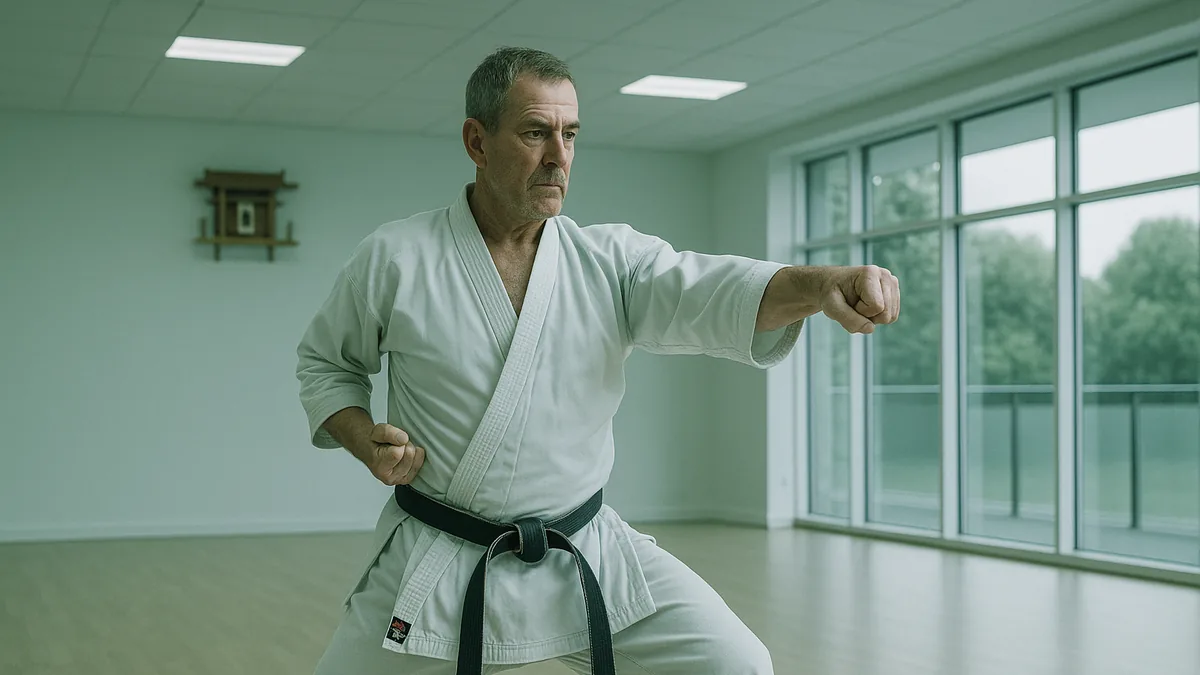
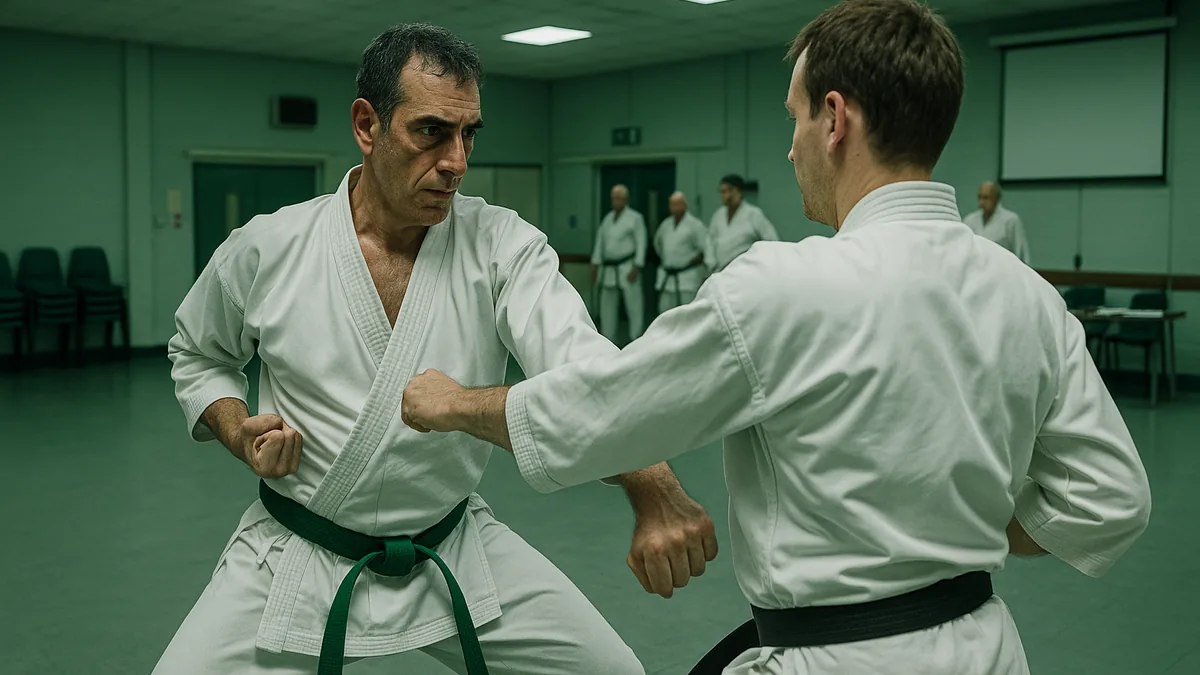
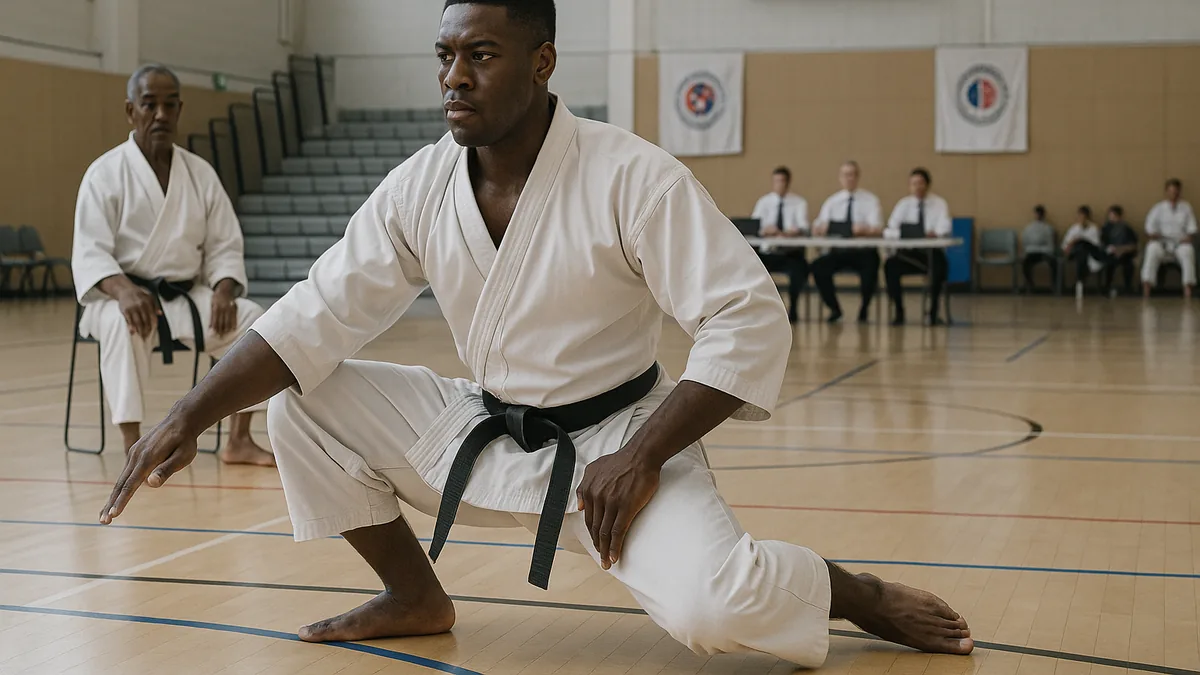
How to Self-Assess Your Kata When You Have No Instructor Watching: What to Film, What to Look For, and What Video Hides
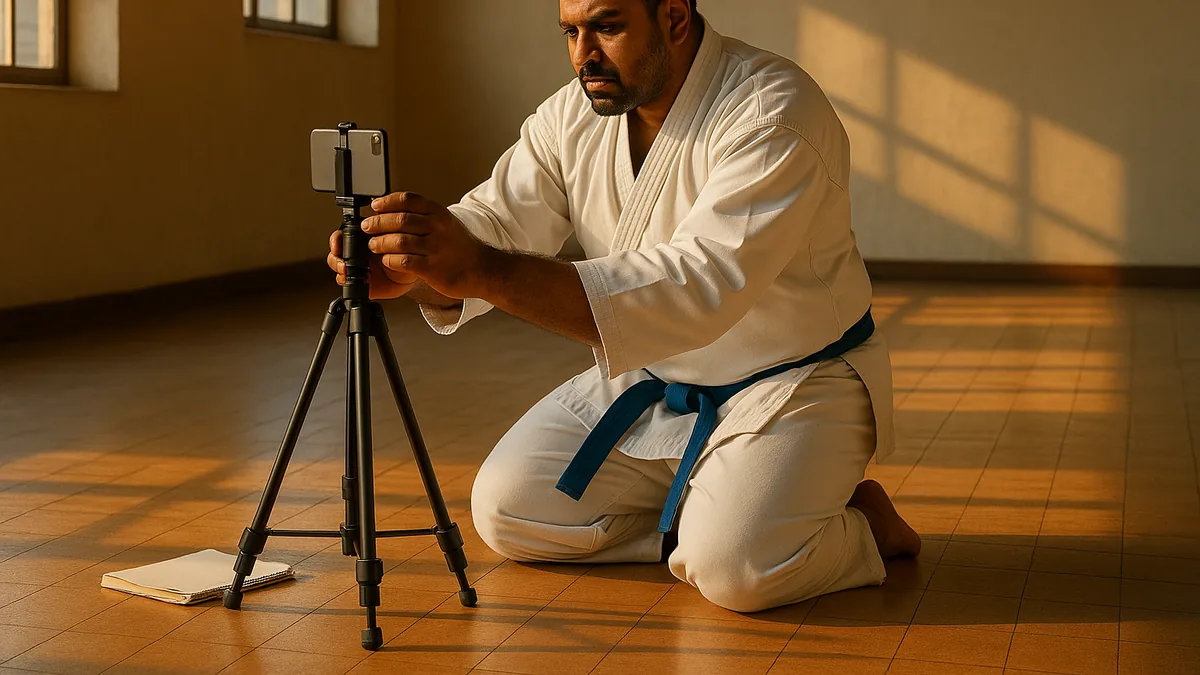
Most people who film their kata do it wrong. Not the filming itself - the reviewing. They watch it once, wince at something they don’t like, and either feel bad about it or convince themselves it wasn’t that bad. Neither response makes them better. What actually makes you better is knowing what to look for before you press record, understanding what the camera will show you accurately, and knowing what it will lie to you about completely.
I’ve been doing this long enough to have made every mistake in this process. I’ve also watched students do the same. Here’s what I’ve learned works.
Before You Film: Set Yourself Up to Learn Something
The single biggest error I see is filming with no intention. Someone sets up their phone, performs the kata, watches it back, and comes away with a vague sense that “something looked off.” That’s not self-assessment. That’s just watching yourself.
Before you press record, decide what you’re assessing. One session, look at your embusen - are you actually finishing where you started, or have you drifted? Another session, look at your kime. Another, look at your transitions between techniques. If you try to assess everything at once, you’ll assess nothing properly.
I’d recommend filming at least three consecutive performances of the same kata in one session. Not because you need three angles on the same thing, but because kata is never the same twice. The first run is usually self-conscious. The second is where you start to relax. The third is closer to your actual level. Judge yourself on the third, not the first.
Camera position matters more than most people think:
- Front-on shows you your guard height, your hikite, your hip alignment, and whether your stances are wide enough
- Side-on shows you your chamber depth, your weight distribution, your spine angle, and whether your blocks are actually covering the target line
- 45 degrees shows you rotational power in your techniques - this is the angle most people skip and the one that reveals the most about your hip use
If you only ever film front-on, you’re missing half the picture. I spent about three years only filming front-on and wondering why my punches looked weak on camera even when they felt strong. The side angle showed me immediately - I was rotating my shoulder without rotating my hip. The arm was moving. The body wasn’t.
What the Camera Shows You Accurately
The camera is brutally honest about certain things, and this is where it earns its value.
Embusen is one of them. If you want to understand why the floor pattern of your kata matters, read the piece on Embusen: Understanding Kata Floor Patterns and Why They Are Not Decoration. But from a self-assessment standpoint, the camera gives you something your instructor can’t always give you in a group class - a bird’s-eye view equivalent. You can see your start and finish point. You can see if you’re consistently drifting in one direction. Drift usually means one side is weaker than the other, and you’re compensating without knowing it.
Rhythm and timing are also visible on camera. Not just speed - rhythm. One mistake I see constantly in students preparing for grading is that they’ve learned to rush the difficult bits. They know subconsciously that their combination is weak, so they speed through it hoping no one notices. On camera, it’s obvious. The rhythm breaks. Watch your kata back with the sound off and tap your finger to the beat. If you can’t find a consistent beat, your timing is inconsistent. Examiners notice this even if they can’t articulate why the kata felt uneven. If you’re preparing for grading, Kata for Grading: What Examiners Look For goes into this in more detail.
Zanshin - your awareness and composure at the end of techniques and at the completion of the kata - is visible on camera and routinely ignored in self-review. Watch what you do after your final technique. Watch what happens to your guard between combinations. Most people drop everything the moment the “hard bit” is done. That’s not zanshin. That’s relief. They look completely different, and a camera will show you which one you’re doing.
What Video Hides (and This Is the Bit Most People Miss)
Here’s where I have to be honest with you about the limits of this whole exercise, because if you over-rely on video you’ll develop a distorted picture of your own kata.
Video cannot show you what you feel. This sounds obvious but the implication isn’t. You can watch yourself perform a gyaku-zuki that looks perfectly acceptable on camera - weight transfer visible, hip rotation visible, arm extension correct - and that technique might still be generating almost no real power. Why? Because the feeling of the technique, the connection between the floor, the hip, the core, and the fist, isn’t visible. It’s felt. When the hip rotation connects properly, you don’t just see it - you feel the impact through your whole body, right down to the floor contact. That feeling is either there or it isn’t, and the camera won’t tell you.
This is why I think video self-assessment should always be paired with tactile feedback - hitting a bag, hitting pads, or at minimum, focusing on what you feel during the performance, not just what you see during review.
Kime is the hardest thing to assess on camera. Kime is muscular tension at the moment of impact - the brief, total contraction that gives a technique its stopping power. On camera, a technique with good kime and a technique with no kime can look identical. The difference is felt in the body of the person performing it, and in the body of anyone receiving it. You can develop a false confidence reviewing your kata on video and thinking your kime looks fine. I’ve graded students whose kata looked sharp on video and felt completely empty in person. The camera missed it entirely.
Speed creates visual illusions. A fast technique often looks like a powerful technique on camera. A slower technique with better body mechanics often looks less impressive. Don’t let video convince you that faster is better. If you’re speeding up to look good on camera, you’re training the wrong thing.
The Review Process That Actually Works
Watch your footage twice before you do anything else. First watch: no pausing, no rewinding, just watch it as a whole. You’re looking for overall impression - does it look like a kata, or does it look like a sequence of techniques? There’s a real difference, and you’ll feel it when you watch.
Second watch: pause it. Rewind it. Slow it down if your phone allows. You’re looking for the specific thing you decided to assess before you filmed. Only that thing. If you decided you were looking at your kizami-zuki chamber, look at that. Don’t get distracted by your stance width or your kiai timing. Those are for another session.
Then - and this is the part most people skip - film yourself doing the kata again immediately after reviewing the footage. Not tomorrow. Now. You want to take what you just saw and try to correct it while it’s fresh. The gap between seeing the problem and attempting the correction should be as small as possible.
I used to think reviewing footage the next day was fine. My instructor disagreed. He told me the body forgets faster than the mind does. I didn’t understand that until I started doing it his way and noticed the difference. When you review and then immediately re-perform, you’re creating a feedback loop. When you review and sleep on it, you’re just creating a memory.
The Mistakes I See Most Often in Video Self-Assessment
Assessing aesthetics instead of mechanics. People watch themselves and think about whether they look good. That’s not the same as assessing whether the technique is working. A technique can look impressive and be mechanically broken. Focus on the mechanics - chamber, rotation, extension, recovery - not on whether you look like a senior grade.
Only reviewing the parts they already know are weak. This is natural but counterproductive. Your weak points get attention anyway because they bother you. It’s the things you think are fine that need the camera most. I’ve noticed that students who think their basics are solid are often the ones with the most embedded errors in their basics - precisely because they stopped looking at them years ago.
Not filming enough. One performance per session gives you almost no data. You might have had a good day or a bad day. Film multiple performances across multiple sessions before you draw conclusions about your kata. A pattern across ten performances is meaningful. A single bad performance is just a bad performance.
If you’re working on a kata that you’ve been neglecting or undervaluing, the piece on The Kata Nobody Wants to Practice is worth reading - the shorter, simpler kata are often the ones that reveal the most about your fundamentals when you put them on camera.
Community Perspective
There’s a genuine divide among practitioners about how much video review is actually useful, and I think it’s worth being honest about it.
Some traditionalists argue that video self-assessment is a distraction - that you should be developing internal awareness through repetition, not external awareness through a screen. I have sympathy for this view. There’s a real risk that you become good at performing for the camera rather than good at performing the kata. I’ve seen this happen. Someone trains with their phone filming and starts to unconsciously adjust for the angle rather than for the technique.
On the other side, practitioners who’ve trained without regular instructor feedback - solo training, rural areas, irregular access to a dojo - often find video review genuinely transformative because it’s the only external feedback available to them.
My view is that video is a useful tool with real limitations, not a replacement for an instructor’s eye and certainly not a replacement for the physical feedback you get from hitting something. Use it as one input among several. If you’re also working on how to improve your kata more broadly, video fits into that process rather than defining it.
Key Takeaways
- Decide what you’re assessing before you film, not after. One specific focus per session is worth more than a vague general review.
- Film from at least two angles - front and side. The side angle reveals hip mechanics that front-on completely misses.
- Review and re-perform in the same session. The feedback loop only works if the gap between seeing and correcting is short.
- Video shows you shape and timing accurately. It cannot show you kime, connection, or power - those require tactile feedback alongside your camera review.
- Your third performance in a session is more representative than your first. Judge yourself on that, not on the self-conscious opening run.
- The things you think are fine are the things most worth filming. Your weak points already get attention. Your assumed strengths don’t.
The weekly digest
New karate articles, once a week
One email every week with everything new on Karate Lifestyle. No spam; unsubscribe in one click.
We'll email you to confirm. See our privacy policy.