The Kata Nobody Wants to Practice: Why the Shorter, Simpler Kata Deserve More Time Than You Give Them
Most of us, somewhere around blue or purple belt, stop treating Heian Shodan like it matters. We’ve moved on. We’re learning Bassai Dai, maybe starting to look at Kanku Dai, and the shorter kata feel like something we’ve already paid our dues with. I get it. I did the same thing. And I was wrong about it for years.
What changed my thinking was a grading I watched about a decade ago. A senior student, two gradings away from shodan, performed Bassai Dai with decent timing and reasonable power. Then a junior student, maybe eight months in, performed Heian Nidan. The junior student’s kata was cleaner. Every transition was deliberate. Every stance had weight in it. The senior student looked like someone who had moved on. The junior student looked like someone who was actually there. The examiner noticed. I noticed. And it stuck with me.
The short kata aren’t a warm-up act. They’re a diagnostic tool. They show exactly what you’ve built and exactly what you’ve skipped.
What the Simple Kata Are Actually Testing
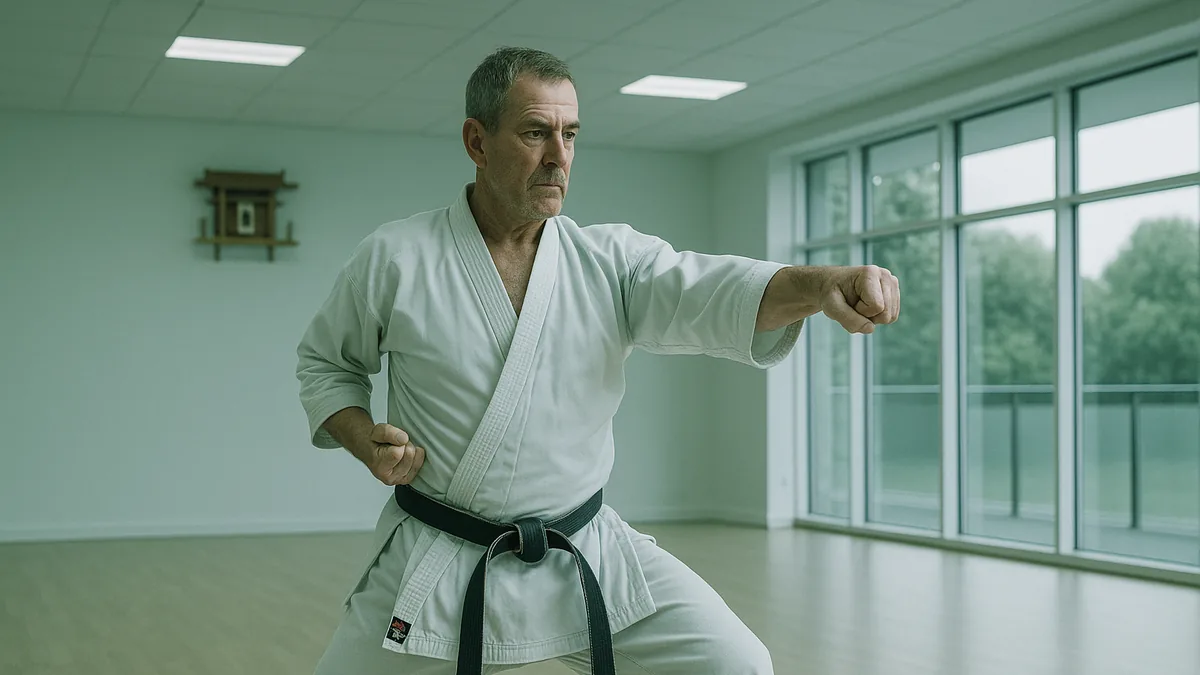
Here’s the thing about Heian Shodan, Taikyoku, or whatever your syllabus uses at the beginning - they’re not simple because the techniques are easy. They’re simple because there’s nowhere to hide. You can bury a weak gyaku-zuki inside Bassai Dai. You cannot bury it inside a kata with twelve moves.
I’ve noticed that students who neglect their foundational kata tend to develop what I’d call “performance habits” - they learn to make advanced kata look acceptable without ever fixing the underlying mechanics. The hip doesn’t fully rotate. The front knee tracks inward on the zanshin. The kiai sounds like it’s coming from the throat. These things are survivable inside a complex kata. They’re brutally obvious inside a short one.
What I tell students who are preparing for grading is to perform their first kata - whatever that is for their grade - before they perform their grading kata. Not as a warm-up. As an honesty check. If the foundational kata feels loose, the grading kata will be worse. The complexity of the longer form doesn’t improve your basics. It just obscures them.
If you want to understand what examiners are actually watching for, Kata for Grading: What Examiners Look For goes into this in more detail - but the short version is that clean basics in a short kata will carry you further than impressive-looking complexity that doesn’t hold together under scrutiny.
The Precision Problem Nobody Talks About
One mistake I see often is students treating kihon and kata as separate things. Kihon is where you drill technique. Kata is where you demonstrate it. That’s not wrong exactly, but it misses something important.
The shorter kata are where you find out if your kihon has actually transferred. And for most of us, it hasn’t transferred as completely as we think.
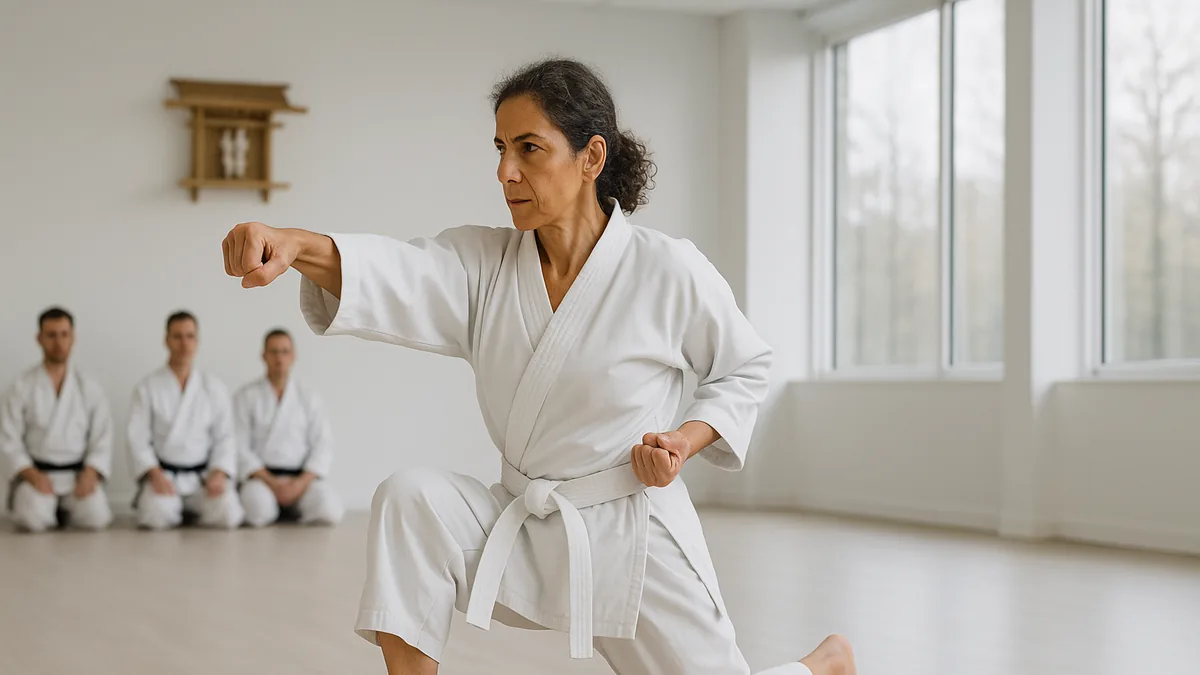
Here’s a specific example. In Heian Shodan, the gedan barai into oi-zuki sequence - you do it four times. Same technique, same direction, same rhythm. By the third repetition, I can tell everything about where a student’s attention is. Most people start to coast. The stance gets a little shorter. The block arm starts to drift. The stepping rhythm goes slightly mechanical. By the fourth repetition, they’ve stopped performing karate and started performing a sequence.
What I tell students is this: every repetition of a technique inside a kata should feel like the first time you’ve ever done it, with all the attention that implies. That’s harder than it sounds. It requires you to be present inside a kata you’ve done three hundred times, and to treat it like it still has something to teach you.
It does. It always does.
The physical sensation of a correctly performed gedan barai - where the blocking arm actually snaps into position and the hikite pulls back with genuine tension - feels completely different from a technically acceptable one. You’ll feel it through your shoulder and lat on the hikite side, not just in the blocking arm. When both sides are working together, there’s a kind of solidity to the movement that you can’t fake. When only the blocking arm is moving, it feels light. Incomplete. Like you threw the technique without throwing it.
Precision Builds Differently in Short Kata
I prefer drilling short kata for precision over long kata for exactly this reason: the feedback loop is faster. You complete the kata in under a minute. You can immediately run it again with one specific correction in mind. You can isolate a problem, address it, and test the fix inside the same training session.
With a kata like Kanku Dai, by the time you’ve worked through enough repetitions to genuinely address one technical problem, you’re tired, your focus has shifted, and you’ve probably introduced two new inconsistencies somewhere else. That’s not an argument against training long kata - it’s an argument for using short kata as your precision laboratory.
There’s also something about the embusen of shorter kata that rewards this kind of attention. The floor patterns are simpler, which means your spatial awareness has to be sharper, not duller. If you finish Heian Shodan two feet off your start position, there’s no complex sequence to blame it on. You drifted. You can read more about why the floor pattern matters in Embusen: Understanding Kata Floor Patterns and Why They Are Not Decoration - but the point here is that a simple embusen is a harder embusen to execute precisely, not an easier one.
How to Actually Use These Kata in Training
I’ve been in dojos where the shorter kata only come out during gradings or when a junior student needs to be assessed. That’s a waste. Here’s how I’d use them in regular training:
-
Slow-motion single run: Walk the kata at roughly a third of normal speed. No kiai, no snap. Just feel every transition, every weight shift, every moment where your balance is temporarily compromised during a step. You’ll find problems you didn’t know you had.
-
One-technique focus: Pick a single technique - say, the shuto-uke in Heian Shodan - and run the entire kata with your attention only on that technique. Every other movement is on autopilot. You’re watching the shuto-uke.
-
Paired application drilling: Take a sequence from the kata and drill the bunkai with a partner. Short kata have dense, practical sequences. If you’re unsure where to start with application, Does Kata Actually Help Your Sparring? covers the connection between kata practice and live training, and it’s worth reading if you’ve ever questioned whether any of this transfers.
-
Contrast drilling: Run your foundational kata, then immediately run your grading kata. The contrast is instructive. You’ll notice where the habits from the shorter kata either carry forward cleanly or disappear under pressure.
Community Perspective
There’s a genuine split in how dojos approach foundational kata for senior students. Some instructors - mine included for most of my training - essentially retired the short kata once you’d graded past them. They were considered done. Other instructors, particularly those with a strong bunkai focus, keep returning to them at every grade because the application depth rewards experienced practitioners more than beginners.
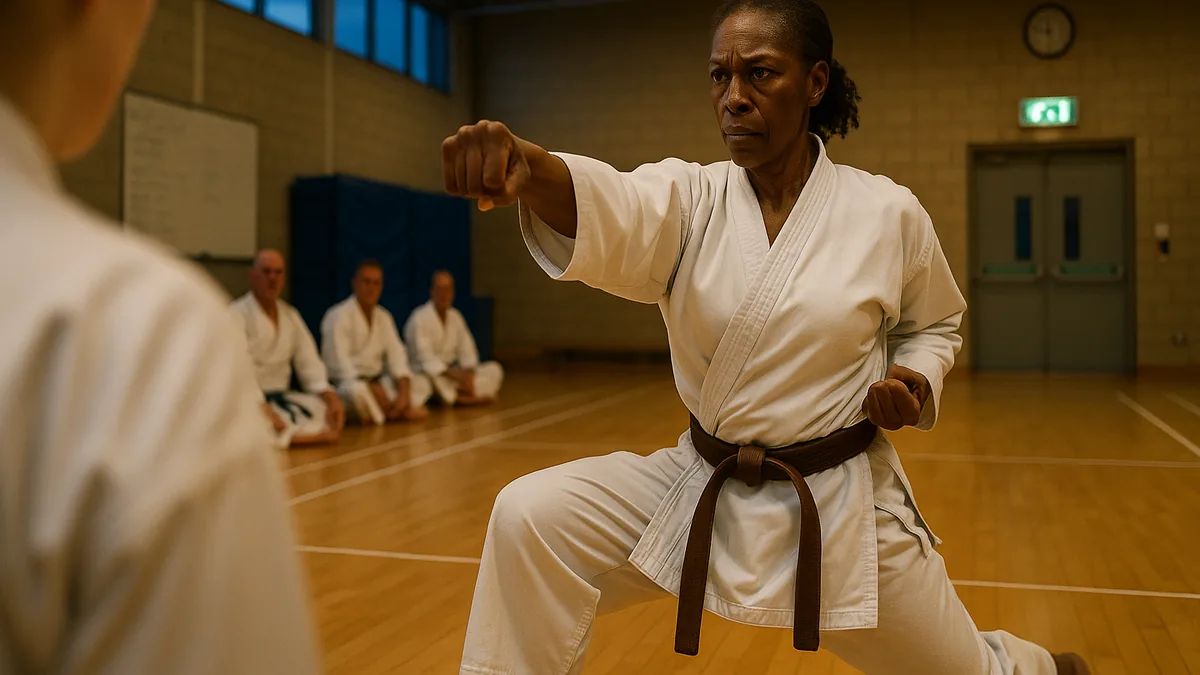
I’ve trained in both environments, and I think the bunkai-focused approach is right. Not because the foundational kata are secretly complex - they’re not - but because what you bring to them changes. A white belt performing Heian Shodan is learning where to put their hands. A brown belt performing it should be feeling every technique as a functional movement with a specific purpose. The kata didn’t change. The practitioner did.
There’s also a legitimate debate about whether spending time on short kata comes at the cost of developing the longer ones. I don’t think it does. Twenty minutes a week on your foundational kata, done with full attention, won’t slow your progress on Bassai Dai. It will improve it. But I’ve heard the counterargument from senior practitioners I respect, and it usually comes down to limited training time. If you only have an hour, where does it go? That’s a real question and I don’t think there’s a universal answer - only what works for your current stage of training.
If you’re at the point where you’re trying to balance depth versus breadth across your kata repertoire, How to Transition Between Kata for Grading and Kata for Understanding is worth your time.
Key Takeaways
-
Use foundational kata as a diagnostic before grading kata. If the short kata feels loose, the long one will be worse. Fix the foundation first.
-
Every repetition inside a short kata deserves the same attention as the first. Coasting through familiar sequences is where bad habits get reinforced, not just where they’re revealed.
-
Train the physical sensation, not just the visual shape. A correct gedan barai should feel different through your shoulder and lat, not just look different from the outside. If you can’t feel the difference, you haven’t found it yet.
-
Use short kata for precision drilling. The fast feedback loop - run it, fix one thing, run it again - is harder to achieve inside a long form. Short kata are a precision laboratory, not a beginner exercise.
-
Track your embusen. Finishing off your start position in a short kata means something went wrong. There’s no complexity to absorb the error. Find it.
-
Return to foundational kata at every grade. What you bring to Heian Shodan as a brown belt should be completely different from what you brought as a white belt. If it isn’t, that’s the problem.
The weekly digest
New karate articles, once a week
One email every week with everything new on Karate Lifestyle. No spam; unsubscribe in one click.
We'll email you to confirm. See our privacy policy.