Does Kata Actually Help Your Sparring?
Yes - but only if you train it that way. Kata done as a performance exercise, where you’re counting movements and making sure your stances look clean for the grading panel, gives you very little that transfers to sparring. Kata trained as a fighting method, where you understand what each sequence is actually doing and why, is one of the most efficient ways to build the reflexive structure that good sparring requires. The honest answer is that most people are doing the first kind and wondering why the second kind isn’t happening.
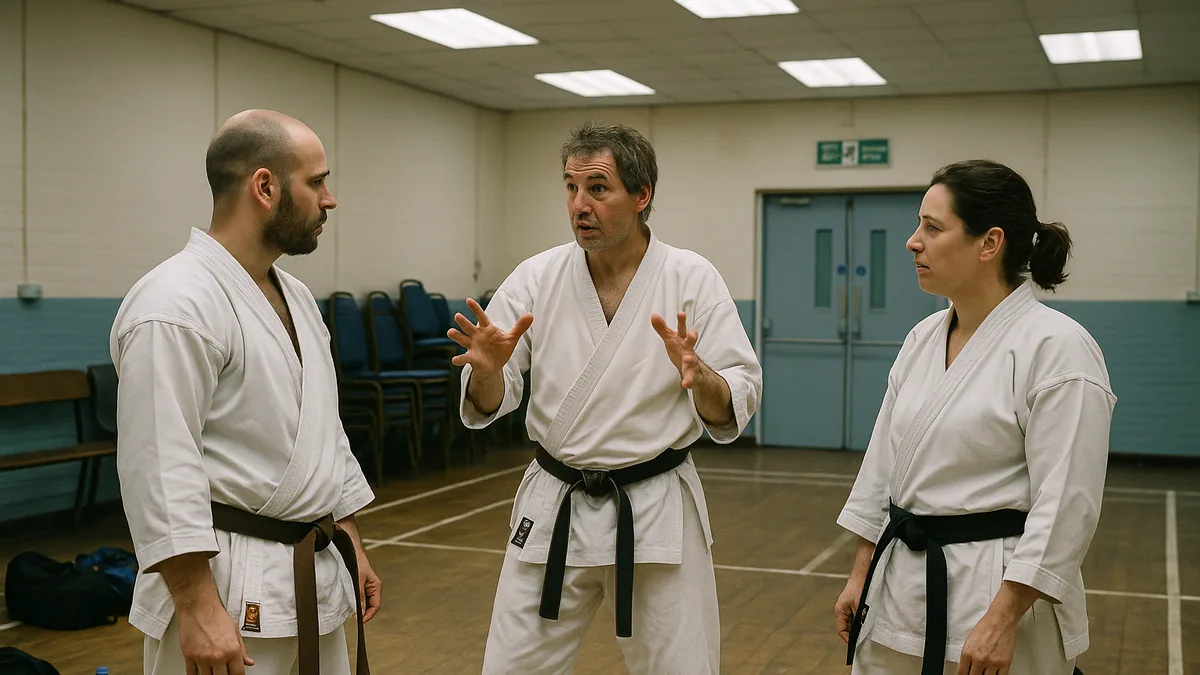
I’ve been training long enough to have been on both sides of this. For years I treated kata as the price you paid for the fun stuff - you did your Heian forms, you bowed, then you got to spar. It wasn’t until a senior instructor broke down a single sequence from Bassai Dai in a way that made me genuinely uncomfortable - because it was violent, specific, and immediately recognisable as something that had happened to me in randori - that I started paying different attention.
Why doesn’t kata feel like sparring?
Because it isn’t supposed to look like sparring. That’s the thing that trips most people up.
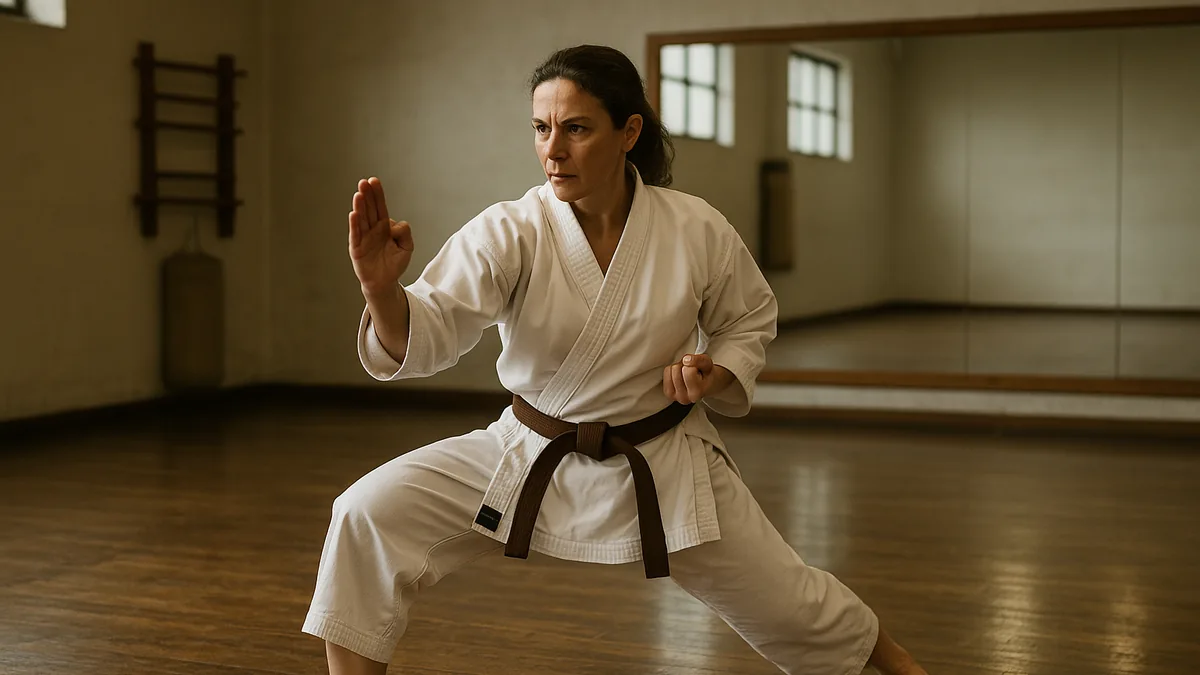
Kata is pre-structured. Sparring is reactive. The connection isn’t visual - it’s mechanical. The hip rotation you’re drilling in Gyaku-zuki isn’t teaching you to throw a reverse punch in isolation. It’s building the physical habit of driving power from the ground up, so that when you’re in jiyu-kumite and your body needs to generate force in a fraction of a second, the pathway is already grooved in.
I’ve noticed that students who rush their kata - who treat it as a sequence to get through - develop a kind of disconnected sparring style. Their hands and feet arrive separately. The students who slow down and actually feel the weight transfer, who notice what the hip is doing before the hand fires, tend to have more coherent movement under pressure. You can’t always trace it back directly, but the correlation is real.
What’s the actual link between kata bunkai and fighting?
Bunkai - the practical application of kata movements - is where the transfer happens, and most dojo practice barely scratches the surface of it. If you want to understand this more broadly, What Is Kata? A Practitioner’s Guide to Karate’s Solo Forms covers the structure and purpose of kata in more detail. And for a deeper dive on how to actually train these applications with a partner, What Is Bunkai? goes into the practical method.
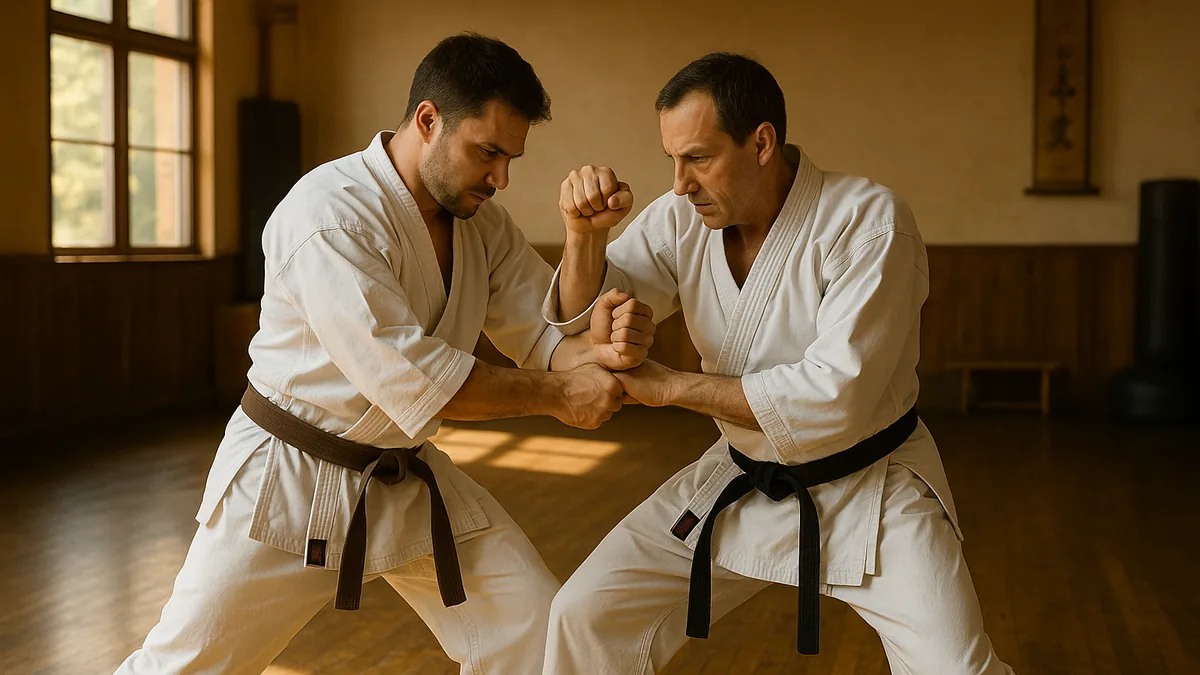
The common mistake is treating bunkai as a kind of mime exercise: “this block stops a punch, this strike hits here.” That’s surface bunkai. What I tell students is to look at the kata as a catalogue of responses to specific physical problems - grabs, clinches, failed techniques, positional disadvantages. When you train it that way, sequences that looked like simple block-punch combinations start revealing themselves as joint locks, takedowns, and entries.
My instructor used to say that every kata contains at least three layers of meaning and most people never get past the first one. I used to think that was mysticism. I don’t anymore.
Does doing more kata mean better sparring?
Not automatically, no. Volume without understanding is just repetition. I’ve seen students with hundreds of hours of kata practice who freeze in sparring because they’ve never made the conceptual bridge between the two. And I’ve seen students with a deep understanding of even one or two kata who move with a coherence that students twice their rank can’t match.
What actually works is drilling bunkai with a partner - not as a choreographed sequence, but with genuine resistance and variation. Take a three-move sequence from a kata you know well. Have your partner attack with intent. Work it until the response starts happening before you decide to do it. That’s when kata is doing something for your sparring.
Does kata help with timing and distance?
This is where I think kata gets undersold. The ma-ai built into kata - the distances implied by each technique - is precise. When you perform a technique correctly, you’ll feel whether you’re in range or not. It’s not obvious at first, but after years of training it becomes a physical sense. A punch thrown too close feels cramped through your shoulder. A kick thrown from the wrong distance feels like you’re reaching. The kata is calibrating you without you realising it.
In jiyu-kumite, this becomes your fastest counter off a failed attack - you’re already at the right distance because your body has done the movement thousands of times and knows where it needs to be.
Community Perspective
This is one of the most genuinely contested topics in karate training, and I think the disagreement is often between people talking about different things.
Sport-focused practitioners - particularly those training for WKF-style competition - often view kata as a separate discipline from kumite, and they’re not entirely wrong. Competition kata and competition kumite require different physical qualities, and the crossover at elite level is limited. If your goal is podium finishes in both, you’ll likely specialise.
Traditional practitioners, particularly those from Okinawan lineages or styles like Goju-Ryu and Uechi-Ryu, tend to view the separation as a modern problem rather than an inherent feature of the art. In those traditions, kata is the fighting system - kumite is a way of testing what kata taught you, not a separate skill set.
I sit closer to the traditional view, but I think both sides are pointing at something real. The honest position is that the relationship between kata and sparring depends almost entirely on how your dojo trains both. A dojo that treats them as connected will produce students who experience them as connected. A dojo that treats them as separate disciplines will produce students who never make the bridge.
Key Takeaways
- Kata transfers to sparring through mechanics and habit, not through visual similarity - stop looking for the connection and start feeling it
- Bunkai practice with a resisting partner is the bridge most people are missing - if you’re only doing kata solo, you’re only doing half the work
- The timing and distance calibration built into kata is real, but it takes years to become conscious of it - trust the process even when you can’t see the result yet
- Volume of kata without understanding is just exercise - one kata trained deeply is worth more than ten performed superficially
- What I tell students who are frustrated by the disconnect: go back to one sequence, find out what it’s actually doing, and drill it with a partner until it stops being a decision
The weekly digest
New karate articles, once a week
One email every week with everything new on Karate Lifestyle. No spam; unsubscribe in one click.
We'll email you to confirm. See our privacy policy.