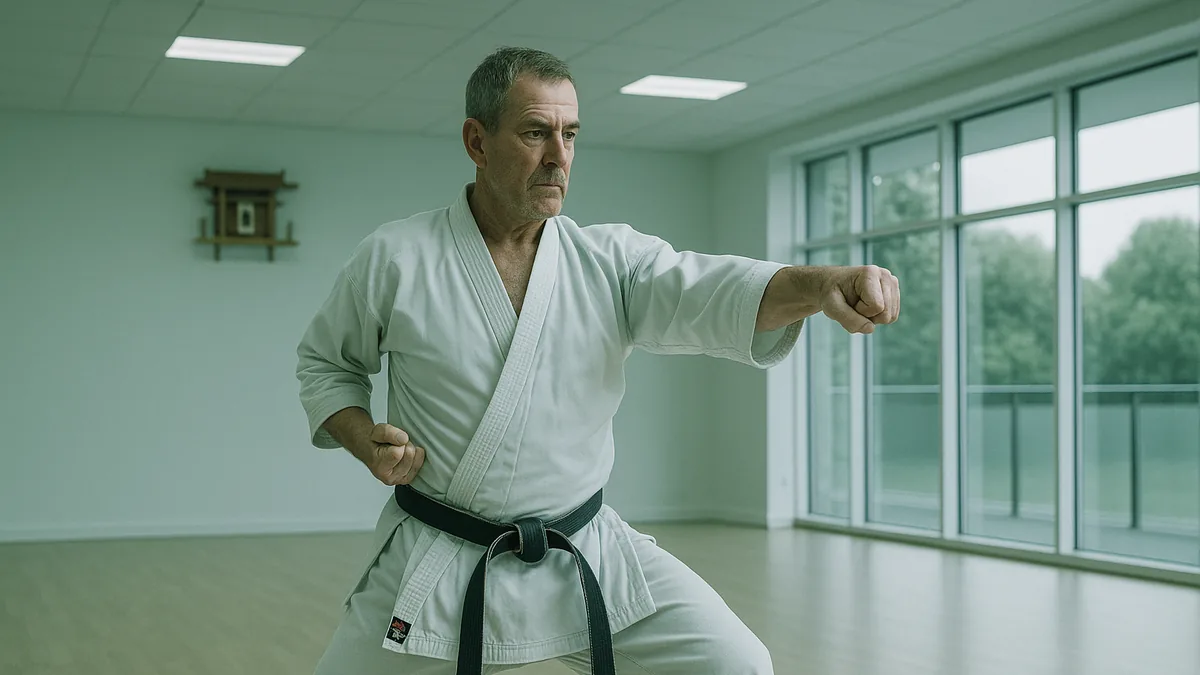
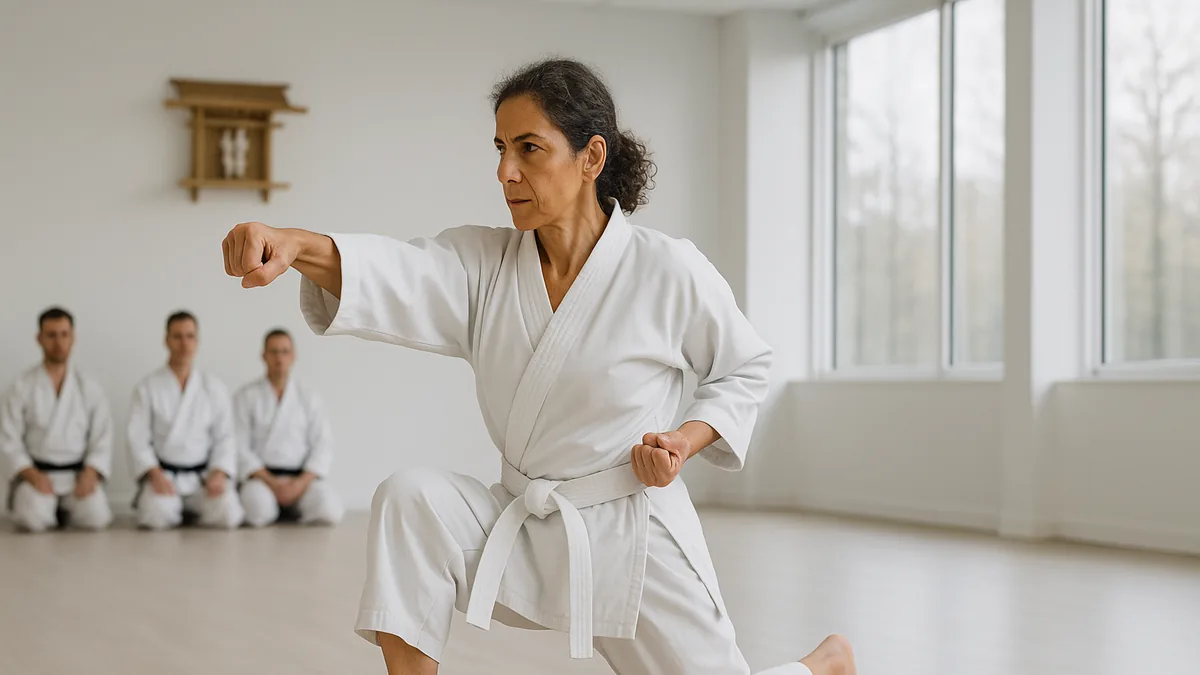
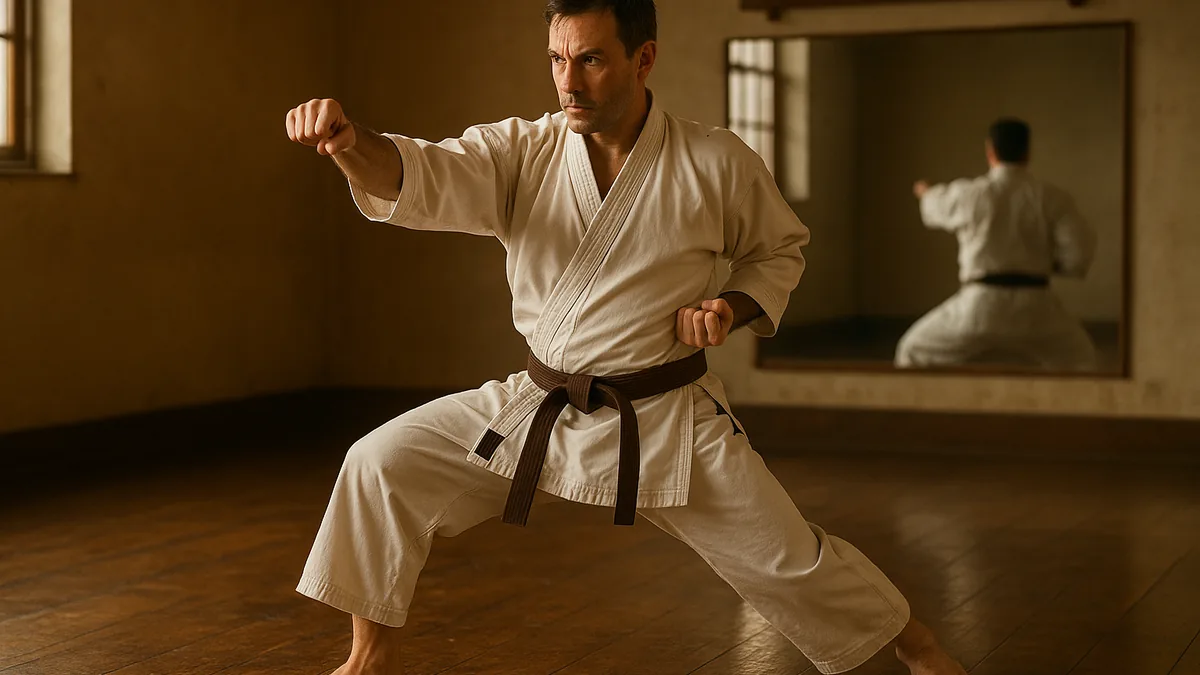
What Is Kata? A Guide to Karate's Solo Forms
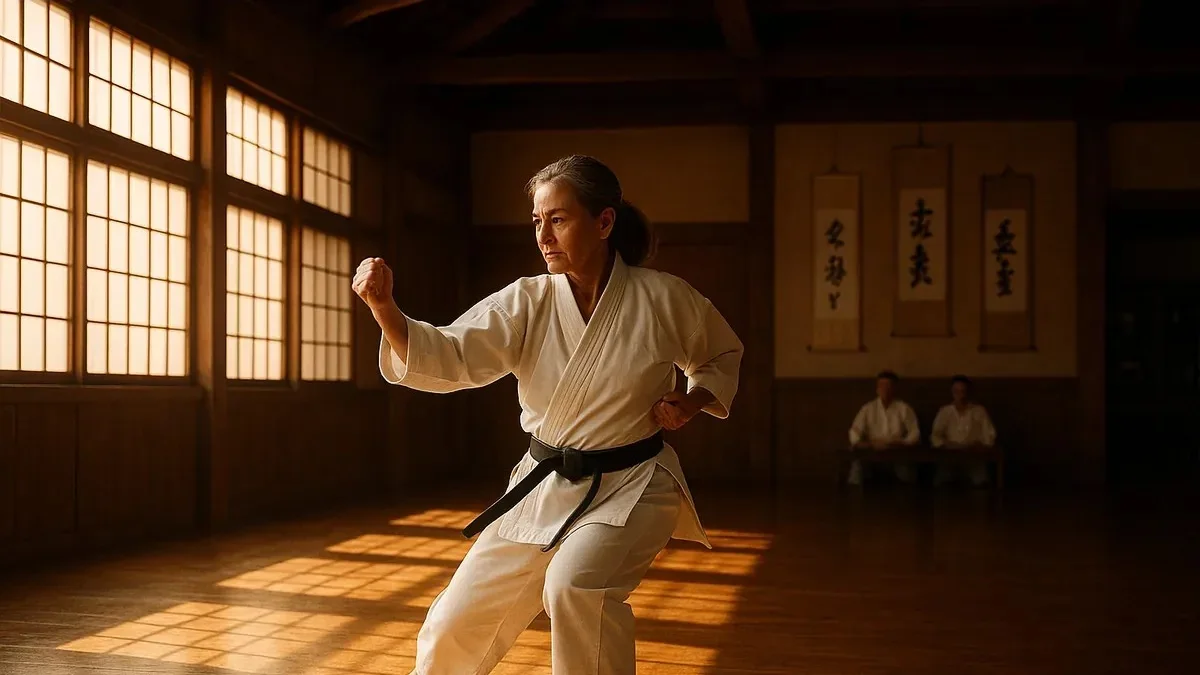
Most people who start kata training think they’re learning choreography. They count the steps, memorise the turns, and tick it off as something to get through before the grading. I spent probably two years doing exactly that - moving through Heian Shodan like I was following a map, hitting each position and thinking that was the job done. My instructor would watch, nod vaguely, and then say something like “again, but this time mean it.” I had no idea what that meant. I do now.
Kata is the part of karate training that takes the longest to understand and the shortest to dismiss. That’s a problem, because if you dismiss it early - and plenty of people do - you lose access to something that genuinely changes how you move and how you fight. What I want to do here is explain what kata actually is, not in the sense of a definition, but in the sense of what it does, what it demands, and why it confuses people at every level.
What Kata Actually Is (And What It Isn’t)
Kata is a pre-arranged sequence of techniques performed solo against imaginary opponents. That’s the surface description. The real answer is more complicated.
What kata actually is, is a training method for ingraining movement patterns at a level that bypasses conscious thought. Every technique in a kata represents a scenario - a specific attack, a specific response, a specific body position. The sequence links those scenarios together into something you can repeat thousands of times until the responses become reflexive.
The problem is that most beginners - and I was no different - treat kata as a performance. You learn the shape, you reproduce the shape, you get marked on how closely your shape matches the expected shape. That’s not wrong exactly, but it misses the point completely. The shape is the vehicle. The destination is understanding what the shape is doing and why.
I’ve noticed that the students who progress fastest through kata are the ones who ask “what is this technique actually for?” after every move. Not during the first week - they need to learn the sequence first - but once the sequence is in their body, the question has to come. If it doesn’t, they end up with very clean kata that does nothing for their actual fighting ability.
The techniques in kata are not abstract. Every block is a block against a specific attack at a specific range. Every strike has a target. Every stance has a reason - usually related to stability during a specific type of exchange. When you start training with that understanding, kata stops feeling like choreography and starts feeling like drilling.
The Bunkai Problem
Bunkai is the application of kata - the unpacking of what each movement means in a real exchange. It should be central to kata training. In a lot of dojos, it’s treated as a footnote.
I think this is the biggest structural problem in how kata gets taught at the beginner and intermediate level. You spend months learning the sequence, then a few minutes getting a surface-level explanation of what each move “represents,” and then you go back to drilling the sequence. The bunkai never gets embedded. The kata never develops meaning.
What I tell students is this: every time you practise a kata, you should be able to stop at any point and explain what you’re doing and why. Not recite a textbook answer - actually explain it as if you’re about to do it to someone. If you can’t do that, you’re drilling the shape without the content.
The thing that actually changed my understanding of bunkai was working through Bassai Dai with an instructor who had trained in Okinawa. He stopped me on the second move - the one that looks like a simple rising block - and spent twenty minutes on it. By the end I understood that it wasn’t a block at all in the conventional sense, but an entry and control movement against a grab. That one correction rewired how I saw the entire kata. Every move became a question: what is this actually solving?
If you want to go deeper on how this translates to actual sparring, Does Kata Actually Help Your Sparring? covers the practical transfer in a lot more detail.
How Kata Connects to the Rest of Your Training
Kata doesn’t exist in isolation. It’s one leg of the traditional training structure alongside kihon and kumite. The three are supposed to feed each other - kihon gives you the mechanics, kata gives you the context and the combinations, kumite tests whether any of it actually works under pressure.
The mistake I see constantly is treating them as separate subjects rather than one continuous conversation. Students who only do kihon develop technically clean techniques that fall apart under pressure because they’ve never drilled the transitions. Students who only do kumite get fast and reactive but build compensations and bad habits that limit them later. Kata is where the transitions live - the weight shifts, the chamber positions, the angles of entry that make techniques work against a resisting opponent.
What kata does specifically, that kihon doesn’t, is force you to manage direction changes, multiple opponents, and the connection between techniques in a sequence. In kihon, you do one technique at a time, usually in a straight line. Kata breaks that open. You’re moving in multiple directions, switching between offensive and defensive postures, managing your balance through turns that aren’t always comfortable. That’s much closer to what actually happens in a fight.
The physical sensation of doing this well is distinct. When you’re moving through a kata with genuine intent and correct body mechanics, there’s a kind of momentum that carries through the sequence - each technique sets up the next one. It feels connected. When you’re doing it badly, every technique feels like it starts from zero. You finish one move and then separately begin the next. That disconnection is the thing to fix.
What Beginners Get Wrong (And Why)
Rushing the sequence. This is the number one mistake at white and yellow belt level, and it comes from anxiety about forgetting the order. When you’re afraid of losing your place, you rush through each technique to get to the next one before you forget it. The result is a kata that’s technically present but physically empty - the movements are there but there’s no weight, no breath, no intent. The correction isn’t to slow down artificially. It’s to know the sequence well enough that you’re not thinking about what comes next. Until you reach that point, slow down deliberately and accept that it looks rough.
Treating stances as positions rather than transitions. I used to think zanshin - that moment of stillness at the end of a technique - was about looking good. It took me years to understand that it’s about weight settlement. When you complete a technique and your stance settles, you should feel your weight drop through your supporting leg into the floor. If you’re already thinking about the next move, that settlement never happens, and you lose the structural stability that makes the technique powerful. You’ll feel this as a kind of floating sensation - like you’re always slightly off-balance, always catching up to yourself.
Disconnecting the kiai. Most beginners either shout at random or shout self-consciously and quietly. The kiai is not decoration. It’s a moment of full-body tension that coordinates your breath, your core contraction, and your technique. When it works, you feel the technique differently - there’s a snap and a solidity that isn’t there when you’re just moving through the motion. The correction that makes the biggest difference here is asking students to kiai without doing any technique - just stand still and kiai. Once they feel what a proper kiai does to their body, they understand what it’s supposed to add to the technique.
Performing rather than training. This one persists well past beginner level. When students know they’re being watched - in a grading, in a demonstration - they shift into performance mode. Everything gets a little bigger, a little more theatrical. The problem is that performance mode and training mode use different mental processes. In training mode, you’re attending to the physical sensation of each technique. In performance mode, you’re attending to how it looks. I’ve seen brown belts fall apart in gradings not because their kata is bad but because they’ve never learned to train under observation.
How Understanding Kata Changes With Experience
As a white belt, I thought kata was about memorising and reproducing. By yellow belt, I thought it was about making each technique look sharp. By green belt, I thought it was about connecting the techniques smoothly. By brown belt, I started to understand it was about the spaces between the techniques - the transitions, the weight shifts, the moments of preparation that make the visible parts possible.
What senior practitioners have that beginners don’t isn’t a longer list of kata. It’s a different relationship with the kata they know. I’ve watched senior practitioners do Heian Shodan - a beginner’s kata - and it looks completely different from when a white belt does it. Not because the sequence is different. Because every movement carries intent, weight, and breath. The kata is the same. The practitioner inside it is not.
The shift that matters most, in my experience, is when you stop thinking about the kata as something you perform and start thinking about it as something you’re inside. That probably sounds abstract. What it means practically is that your attention moves from the external shape to the internal sensation. You stop asking “does this look right?” and start asking “does this feel right?” Those are different questions, and they produce different results.
Kata in Grading and Competition
Gradings are where kata gets tested formally, and they reveal things that regular training hides. I’ve seen students who look competent in class completely unravel at grading - not because they don’t know the kata, but because grading conditions expose the difference between knowing a kata and owning it.
What examiners are looking for varies between associations and styles, but the fundamentals are consistent: correct sequence, appropriate stances, clear technique, proper kiai placement, and - at higher levels - demonstrable understanding of what the kata means. That last one is where most people lose marks without realising it. You can perform every technique correctly and still produce a kata that communicates nothing, because there’s no intent behind it.
In competition kata, the standard is higher still. Timing, rhythm, the relationship between fast and slow sequences - these become the differentiators once everyone is hitting the technical basics. I prefer competition kata that shows genuine martial understanding over competition kata that’s been choreographed for visual effect. Some styles have drifted toward the latter, and I think it’s a problem, but that’s a debate for another day.
Community Perspective
Kata is probably the most contested topic in karate - more than belt grading systems, more than sparring rules, more than anything else. The disagreements are real and worth being honest about.
The most common split is between practitioners who see kata as the heart of karate training and those who see it as increasingly irrelevant to practical fighting ability. Both camps have experienced, serious people in them. I’ve trained with high-level fighters who barely touch kata and are devastatingly effective. I’ve also trained with kata specialists whose body mechanics are so refined that everything they do carries a quality that pure fighters rarely achieve. If this divide interests you, The Kata vs Kumite Debate goes deeper on why both sides miss the point.
My position - and I’ve shifted on this over the years - is that kata is indispensable for developing movement quality but only if it’s trained with bunkai understanding. Kata without bunkai is an elaborate warm-up. Kata with bunkai is a complete fighting system in compressed form. The problem is that genuine bunkai training is rare, which is why so many practitioners end up in the “kata doesn’t transfer” camp. They’re right about the kata they’ve been training. They’re wrong about what kata could be.
There’s also a style-specific dimension to this. Shotokan kata and Goju-ryu kata, for example, are quite different in character - Shotokan tends toward longer, more linear sequences; Goju-ryu is tighter, more circular, heavier on close-range work. Neither is better. They reflect different fighting philosophies, and the kata embodies those philosophies. If you switch styles, you’re not just learning new sequences - you’re learning to move differently.
For solo training that bridges kata and kumite, Solo Training Drills That Actually Transfer to Kumite is worth reading alongside this.
Key Takeaways
- Know your bunkai before you drill the sequence. Even a rough understanding of what each technique is for transforms kata from memorisation into drilling. Ask what every move is solving.
- The transition is the technique. What happens between the visible moments - the weight shift, the chamber, the breath - is where kata quality actually lives. Train the transitions deliberately.
- Slow down until you own the sequence, then build speed. Rushing to get through the kata is the single most common mistake at beginner level. Speed without structure is just noise.
- Kiai with your whole body, not your throat. Feel what a proper kiai does to your core and your technique. If you can’t feel the difference, you’re not doing it yet.
- Train kata the same way whether or not you’re being watched. The gap between your training kata and your grading kata should be zero. If there’s a gap, you’re performing rather than training.
- Revisit beginner kata regularly. Heian Shodan at brown belt should look and feel nothing like Heian Shodan at white belt. If it does, something isn’t developing. Senior kata isn’t better kata - it’s deeper understanding of the same material.
The weekly digest
New karate articles, once a week
One email every week with everything new on Karate Lifestyle. No spam; unsubscribe in one click.
We'll email you to confirm. See our privacy policy.