How to Learn a New Kata Fast Without Ingraining Bad Habits
Most students approach a new kata the wrong way. They watch it once, start copying the sequence from the beginning, and just… keep going. Mistake after mistake, locked in by repetition before they’ve understood what they’re doing. By the time they feel comfortable with the kata, the bad habits are already ingrained - and that’s when the real work starts. Undoing them.
I’ve been teaching long enough to know that how you learn a kata in the first two weeks determines how much remedial work you’ll be doing for the next two years. The good news is there’s a smarter way to approach it, and it doesn’t take longer - it actually saves time.
Stop Learning Kata From the Beginning
This is the single biggest mistake I see. Students always want to start from the first move and work forward. The problem is that every time you drill the opening sequence, you’re not reinforcing the whole kata - you’re reinforcing the beginning. The middle gets less practice. The end gets almost none. Then the kata becomes uneven: sharp and confident at the start, hesitant and shaky toward the finish.
What I tell students instead is to break the kata into sections before you run it as a whole. Not just “break it up a bit” - actually map it out. Sit down, watch your instructor or a reference video, and identify the natural phrases. Most kata have clear sections: a cluster of techniques that resolve into a moment of stillness or a directional change. Those are your boundaries.
For a kata like Heian Shodan, you’re looking at maybe four or five sections. For something like Bassai Dai, there are more, but they’re still there if you look for it. The embusen - the floor pattern - usually tells you where the sections are. If you haven’t thought about why the floor pattern matters, this piece on embusen is worth reading before you start learning any new kata.
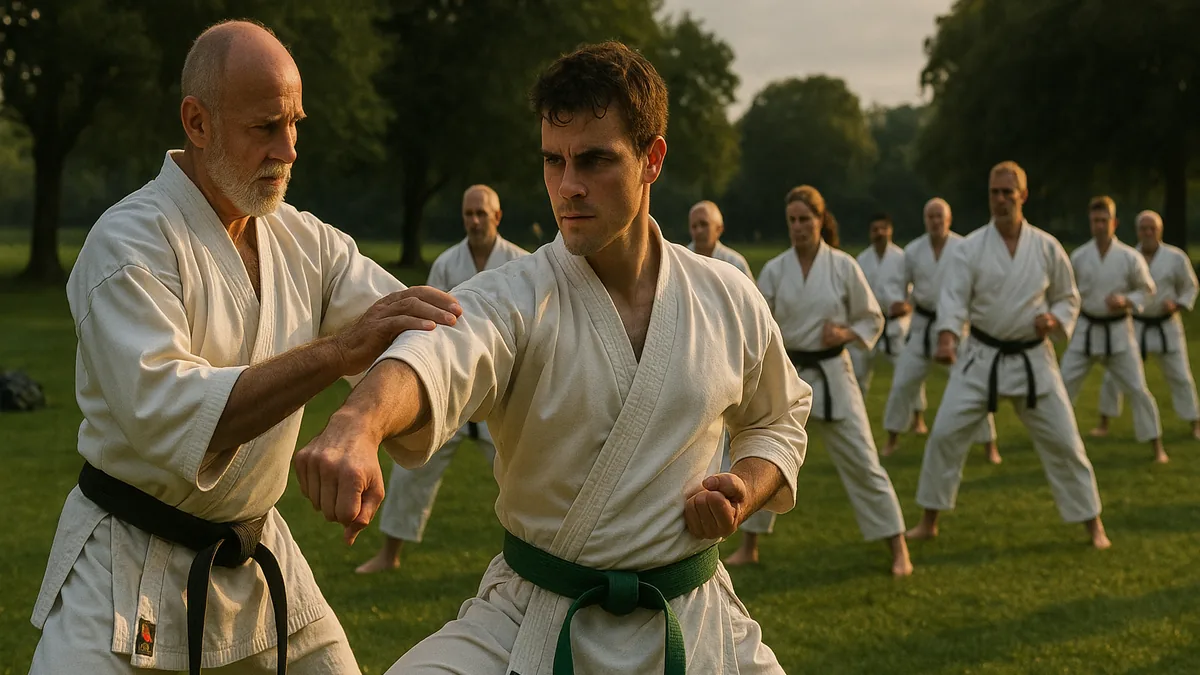
Once you’ve identified your sections, learn them in isolation. Not the whole thing - just one section, drilled until it’s clean. Then the next. Then you start connecting them. This sounds slower. It isn’t.
Section Drilling: The Core Method
Learn One Section at a Time
Why it matters: Distributed practice beats massed practice every time. If you drill section two fifty times in one session, you’ll retain it better than if you run the whole kata fifty times. You’re also catching errors earlier, before they become automatic.
Setup: Identify your sections before you start. Write them down if you need to. For each section, know the start position and the end position.
Execution:
- Watch the section slowly - either from your instructor or a reliable reference. Don’t just watch the hands. Watch the feet, the hips, the head position.
- Walk through it at maybe 20% speed. No power, no kiai. Just find the sequence.
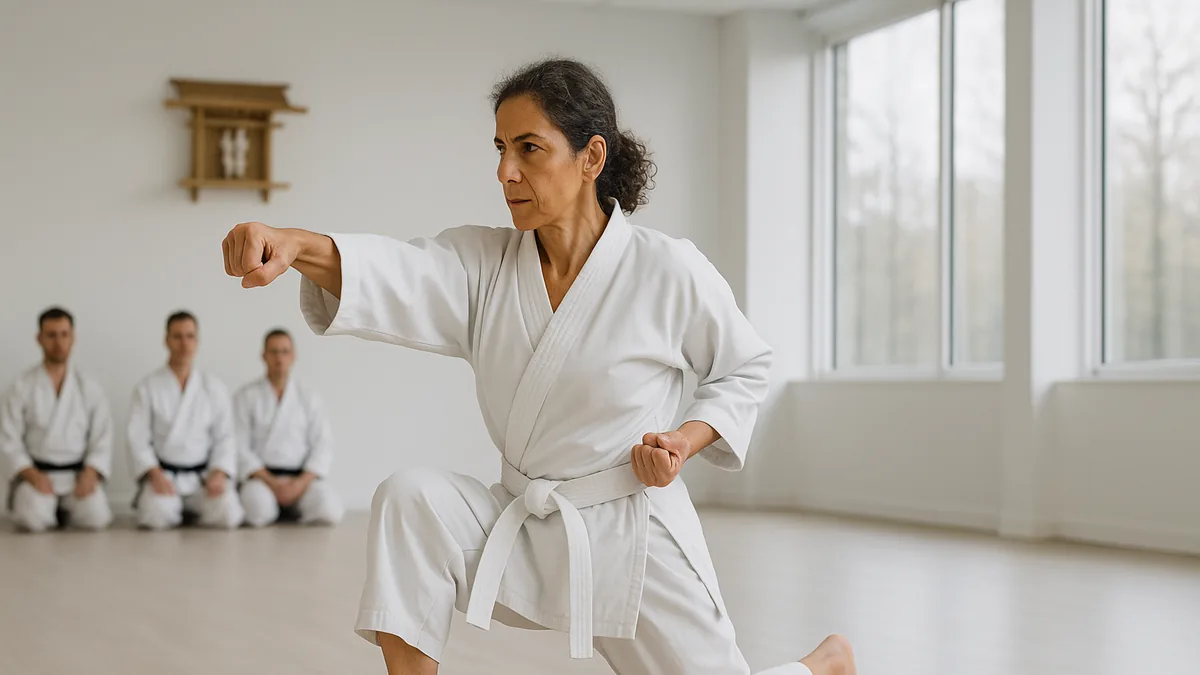
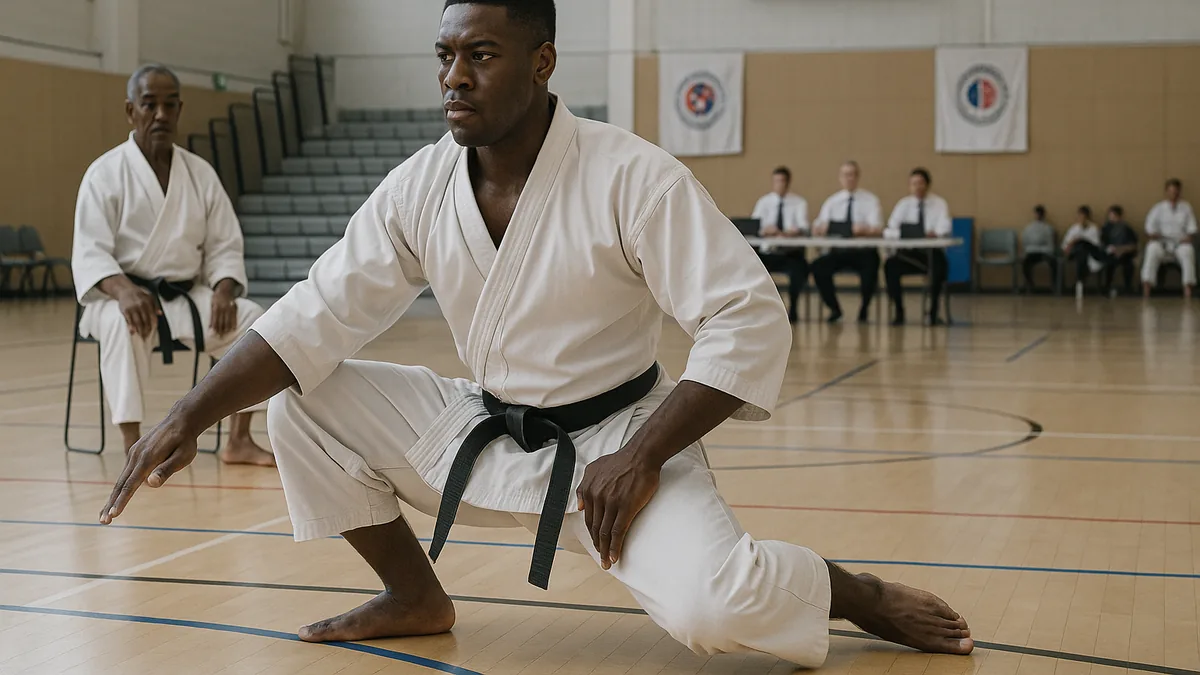
- Add the stances. This is where most people rush. Get into the stance properly before you move to the next technique.
- Run it at 50% speed with correct form. If something feels wrong, stop and fix it before you add speed.
- Drill it ten times at controlled speed before you try full speed.
What to feel for: When the transitions between techniques feel smooth rather than jerky, you’re in the right place. A common sign you’re moving too fast is that you’re compensating with upper body movement because your feet haven’t settled. You’ll feel it as a kind of wobble at the end of each technique - like you’re catching your balance rather than being in your stance.
The mistake I see most often: Students add speed too early. They get the sequence right once and immediately try to make it look like the kata is supposed to look. The problem is that speed at this stage just locks in whatever you’re doing, including the errors. Slow is smooth. Smooth is fast. That’s not a motivational poster - it’s literally how motor learning works.
Connect the Sections Deliberately
Once you have two sections clean in isolation, the next step is connecting them - and this is where a different kind of error shows up.
The transition between sections is almost always where form breaks down. I’ve seen students who have both sections looking solid fall apart the moment they try to join them. What happens is the brain is processing the end of one section and the beginning of the next simultaneously, and something gets dropped - usually the stance, usually the hip position.
Drill the connection point specifically. Take the last move of section one and the first move of section two, and run just that transition twenty times. Not the whole sections - just the join. When that feels natural, then you run both sections together.
Form First, Always
I cannot stress this enough: if you’re drilling incorrect form, you are not practising the kata. You are practising a mistake. And you’ll get very good at that mistake.
My instructor used to say something I didn’t fully appreciate until years later: “A kata performed slowly and correctly is worth ten performed fast and wrong.” I used to think he was being conservative. Now I watch students drill sloppy technique at full speed and I understand exactly what he meant. The nervous system doesn’t know the difference between a correct rep and an incorrect rep. It just stores what you give it.
The Form-Check Drill
This is the drill I use most consistently with students learning new kata, and I’d rate it as the most important one in this list.
Why it matters: It forces you to feel what you’re doing rather than just execute it.
Setup: You need a mirror, or a training partner watching you.
Execution:
- Perform one technique from the kata.
- Stop. Hold the finish position for three to five seconds.
- Check your stance - weight distribution, knee alignment, foot angle.
- Check your guard - where are your hands? Where should they be?
- Check your hip position. Are you square when you should be square? Rotated when you should be rotated?
- Then move to the next technique.
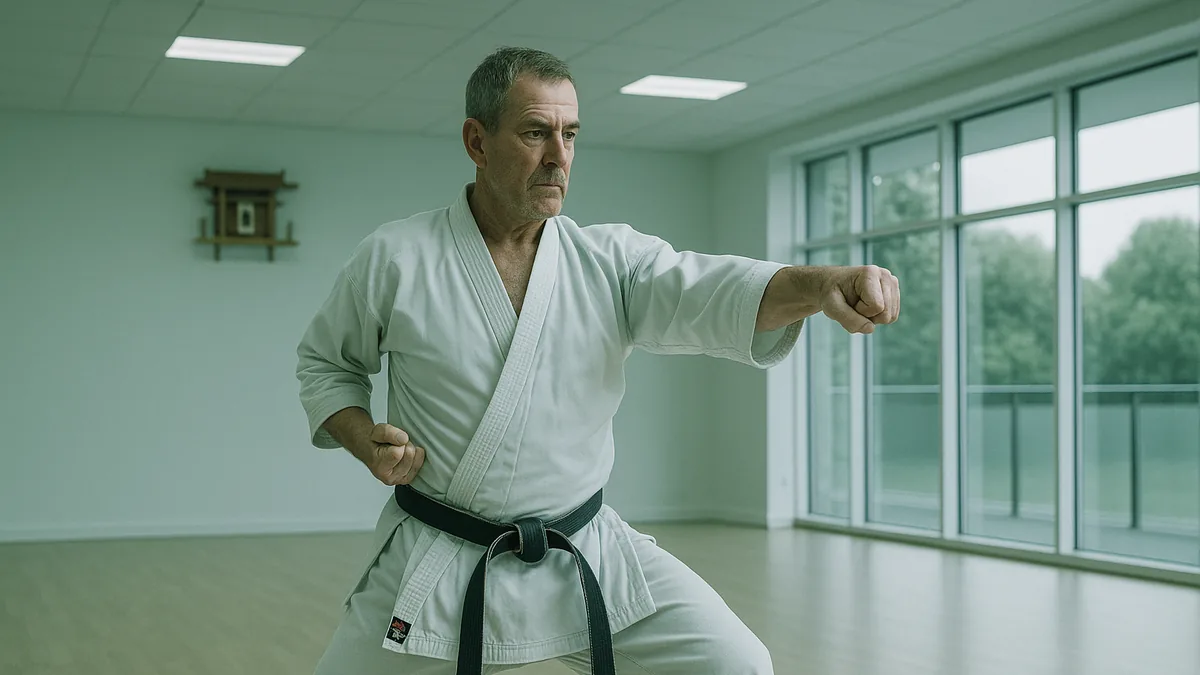
What to feel for: When your stance is right, you’ll feel stable without effort. You shouldn’t be muscling your balance. If you’re gripping the floor with your toes or subtly shifting your weight to stay upright, the stance isn’t right yet. Correct stance feels like you’re already there - not like you arrived and had to adjust.
Common mistake: Students check what they can see and ignore what they can’t. They’ll look at their front hand and miss that their back foot is turned out forty-five degrees when it should be straight. Have your training partner watch from different angles, not just the front.
Visualization: The Training Session You’re Not Using
I’d guess fewer than one in ten students use visualization consistently. That’s a mistake, because it’s one of the most effective tools for learning kata - and there’s solid reason behind it, not just tradition.
The method I use is simple. Before sleep, or during rest between physical sets, run the kata in your mind. Not vaguely - specifically. Feel the weight shift as you step into the first stance. Feel the pull of the hikite as you execute the technique. Hear the timing of your feet.
The research on motor imagery backs this up, but I don’t need research to tell me it works - I’ve seen it work in the dojo too many times. Students who visualize between sessions come back with less regression than students who don’t. The kata holds better.
One practical point: visualize correctly. If you can’t visualize the kata correctly, you don’t know it well enough yet. The visualization exercise will actually show you where your gaps are - the moments where you go blank or fuzzy are the moments you need to drill more.
What Changes With Experience
A beginner learning a new kata is focused on sequence. They’re asking “what comes next?” That’s appropriate - you have to know the sequence before you can do anything else. But senior practitioners are asking a different question: “why does this come next?”
The shift from sequence-thinking to meaning-thinking is when kata actually becomes useful. If you’re interested in how that connects to your broader training, does kata actually help your sparring? gets into that question in detail.
What I’ve noticed over years of watching students progress is that the ones who improve fastest are the ones who start asking “what is this technique doing?” earlier than their peers. You don’t have to have all the answers - but asking the question changes how you drill. You stop going through motions and start training applications, even if your applications are still rough.
Community Perspective
There’s a genuine split in how dojos approach kata learning speed, and I think it’s worth being honest about it.
Some instructors - particularly in traditional Shotokan and Wado-ryu environments - insist that students should not be taught a new kata until the previous one is genuinely solid. Months between kata, sometimes longer. The argument is that rushing kata dilutes quality and produces students who know many kata poorly rather than a few kata well.
Other instructors, particularly in competition-focused environments, move students through kata faster and rely on grading pressure and repeated correction to clean things up over time.
I’ve trained under both approaches. My honest view is that the slow approach produces better karate, but the fast approach produces students who stay engaged - and a student who quits because they’re bored isn’t learning anything. The practical compromise most good instructors land on is: learn the sequence relatively quickly, but do not move on from a kata until the form is genuinely clean. That means the kata stays in your training even after you’ve learned the next one.
Where this connects to grading is worth thinking about. Examiners aren’t just looking at whether you know the sequence - they’re looking at quality of movement, understanding of timing, and whether the kata looks like it means something. What examiners actually look for breaks that down in more detail.
Key Takeaways
- Break every new kata into sections before you run it as a whole. Map the sections deliberately, using the embusen and natural pauses as your guide.
- Learn sections in isolation, drill the connection points specifically, then combine. This is slower-feeling and faster in practice.
- Drill at the speed where your form is correct. If your form breaks down, you’ve gone too fast. Drop the speed until it’s clean, then build back up.
- Use the form-check drill - one technique, hold the finish, check everything before moving on. Do this every session when you’re learning something new.
- Visualize the kata between sessions. If you can’t visualize it clearly, that tells you where to focus your physical drilling.
- Ask “why” earlier than feels comfortable. You won’t have all the answers, but the question changes how you train.
If you want to go deeper on how to actually improve kata quality once you have the sequence - not just learn it but make it good - how to improve your kata picks up where this leaves off.
The weekly digest
New karate articles, once a week
One email every week with everything new on Karate Lifestyle. No spam; unsubscribe in one click.
We'll email you to confirm. See our privacy policy.