Kata for Grading: What Examiners Look For
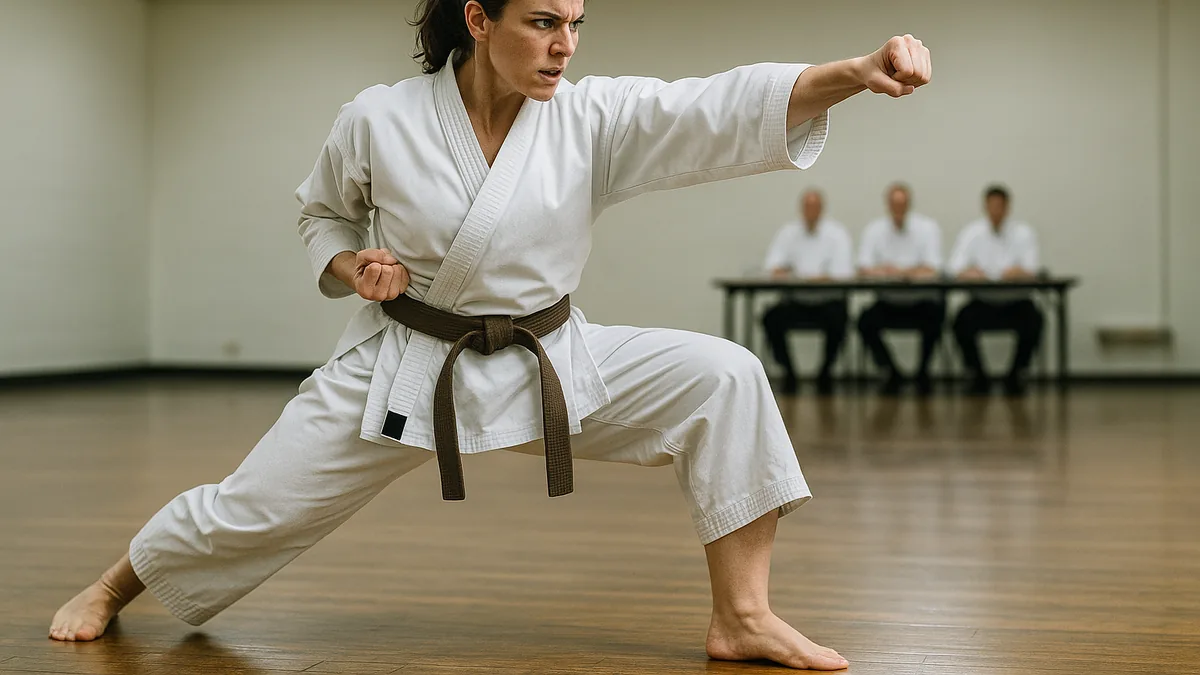
Most people walking into a grading are thinking about whether they remember the sequence. Examiners are thinking about something else entirely.
I’ve sat on enough grading panels to tell you that forgetting a move rarely fails anyone at kyu level. What fails people - consistently, predictably - is performing a kata that looks like they’re trying to remember it. The difference between a pass and a strong pass almost always comes down to things that have nothing to do with memorisation, and everything to do with how you carry yourself through the form.
Here’s what’s actually being assessed when an examiner watches you do kata.
Presence Before the First Technique
The moment you step onto the floor, the assessment has started. I’ve seen students lose marks before they’ve thrown a single technique - not because of anything they did wrong technically, but because they looked uncertain. Tentative. Like they were hoping no one would notice them.
What I tell students is this: your bow into kata should communicate that you know exactly what you’re about to do. Not arrogance. Composure. There’s a difference, and examiners feel it immediately.
The opening of any kata - the yoi position, the first movement - sets the tone for everything that follows. If you rush it because you’re nervous, you’re already chasing the kata rather than performing it. I used to think this was just psychological advice. It took me years to understand it’s also technical. When you rush your opening, your breathing is wrong, your weight isn’t settled, and your first technique is already compromised before you’ve executed it.
One of my instructors used to say “the kata starts before the kata.” I nodded along for about three years without really getting it. Then I watched a senior student perform Bassai Dai at a regional grading. The room went quiet before she moved. That’s what he meant.
What Examiners Are Actually Watching
Kime - and Whether You Actually Have It
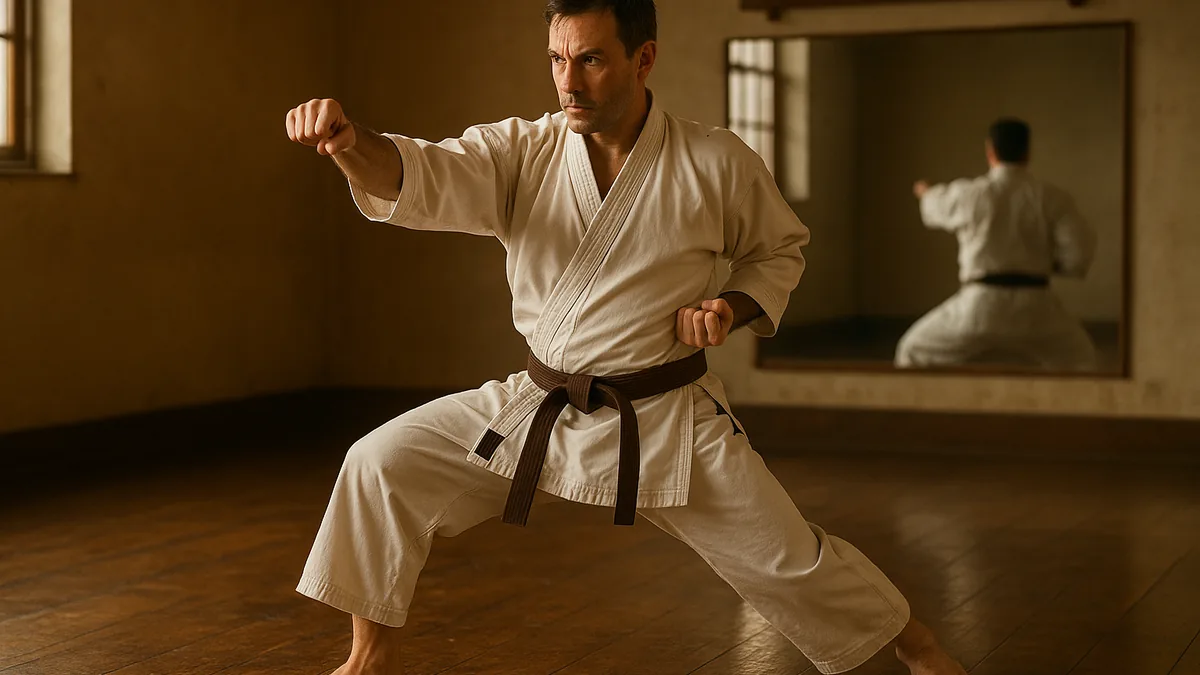
This is the one that separates competent from excellent more than anything else. Kime - the focus and snap at the point of impact - is either there or it isn’t, and you cannot fake it with speed alone.
The mistake I see constantly is students confusing fast with focused. They’ll rip through a sequence quickly and think that’s power. But kime isn’t about how fast the technique travels - it’s about what happens at the endpoint. When it connects properly, you feel it through your whole body. There’s a momentary lock, a brief full-body contraction, and then release. Without it, the technique just… stops. It doesn’t land. It arrives.
Examiners who’ve trained long enough can spot the absence of kime from across the room. It looks soft, even when it’s fast. The correction that makes the biggest difference for students who are missing it is usually not about the technique itself - it’s about breathing. Kime and kiai are connected. If your kiai sounds forced or disconnected from the technique, your kime probably isn’t there either.
Zanshin - What You Do After the Technique
Most students are mentally moving to the next move before the current one has finished. I’ve noticed this in almost every beginner I’ve graded, and it shows. The technique completes, the body immediately relaxes and starts transitioning, and that moment of sustained focus - zanshin - disappears.
Examiners look for this specifically at higher kyu grades and above. It’s the difference between a kata that reads as a sequence of techniques and one that reads as combat. After a finishing technique, there should be a moment - brief, but real - where you’re still there. Still aware. Still dangerous.
If you want to understand what this looks like, read about how senior practitioners approach their kata in How to Improve Your Kata: What Matters Beyond Memorisation. The physical sensation of correct zanshin is hard to describe - it feels like the technique isn’t quite finished even though it is. Like you’re holding the energy rather than releasing it.
Stances - Quality, Not Just Shape
I prefer to see a student in a slightly shorter, more functional stance that they can actually move from, over a textbook-deep stance that collapses on every transition. Examiners generally agree, though you’ll find variation between associations on this.
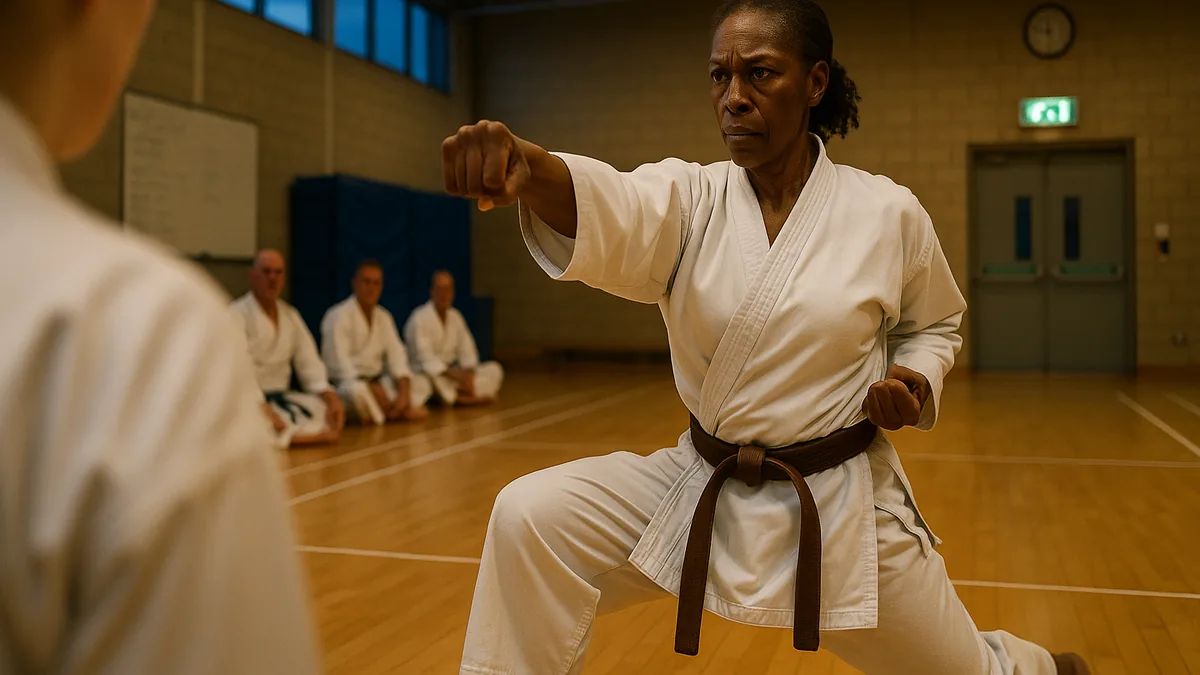
The mistake here is almost never laziness. It’s usually a misunderstanding of what stances are for. Most beginners think stances are positions. By brown belt, you realise they’re platforms - dynamic, weight-bearing structures that allow technique to generate force. A zenkutsu-dachi that’s too long doesn’t just look wrong; it prevents the hip rotation that makes the technique work.
For a detailed breakdown of which stances matter most and why, Karate Stances Explained: Which Ones Actually Matter covers this well. What I’ll add from a grading perspective: examiners notice when your stance changes quality between the beginning and end of the kata. Fatigue is real, but it also reveals whether you’ve actually built the foundations or just learned the shape.
Rhythm and Ma-ai
Kata has rhythm. Not a metronome rhythm - a combat rhythm. Clusters of fast techniques separated by deliberate, controlled transitions. What I’ve noticed in students who struggle with this is that they’ve learned the techniques but not the phrasing. Every move gets equal weight. Every transition takes the same time. The result is a kata that sounds like someone reading a sentence with identical emphasis on every word.
The phrasing comes from understanding what the kata is doing. This is where bunkai becomes genuinely useful - not as an academic exercise, but as a way of understanding why certain techniques are fast and others are slow. When you know what a movement is for, you naturally perform it with appropriate urgency or deliberateness.
The Mistakes That Actually Cost Marks
Looking at your feet during transitions. This one is almost universal in early grades. The correction isn’t “look up” - it’s “trust your feet.” The reason students look down is that they don’t yet have confidence in their stances. The fix is drilling transitions in isolation until the feet find the right place without guidance.
Performing kata at one volume. Everything at full power, full speed, all the way through. This reads as a lack of understanding rather than enthusiasm. Kata has dynamics - some techniques are explosive, some are controlling, some are redirecting. When everything is the same, the kata loses meaning.
Stopping to correct a mistake. This one genuinely costs marks more than the original error. I’ve seen students execute an entire sequence on the wrong side, realise it, and recover - and still pass because they kept going with composure. The examiner is watching how you handle adversity as much as how you perform under ideal conditions.
Kiai at the wrong moment. Or a kiai that sounds like a question. Your kiai should land with the technique, not slightly after it. And it should sound like you mean it. I know that’s uncomfortable to say, but a weak kiai tells the examiner something about your commitment to the technique.
What Changes Between Grades
As a white belt, I thought kata grading was about getting the sequence right. By the time I was preparing for brown belt, I understood it was about demonstrating that you’d internalised the form - that it had become yours rather than something you were borrowing from memory.
At lower kyu grades, examiners are primarily checking: do you know the kata, do you have basic kime, are your stances reasonable, is your direction correct. They’re generous with technical errors because you’re supposed to be learning.
At higher kyu grades and dan levels, the question shifts entirely. Now they’re asking: does this practitioner understand what they’re doing? Is there intention behind each technique? Does the kata have shape - a beginning, middle, and end that feel different from each other?
The thing that actually changed my understanding was watching a senior instructor perform a kata I’d done hundreds of times. Every technique was recognisable. But the kata was completely different. Not because the moves were different - because every single one meant something. That’s what examiners at dan level are looking for. Not perfection. Meaning.
Community Perspective
There’s genuine disagreement in the karate community about how much weight examiners should give to stylistic variation - particularly when students have trained under multiple instructors or come from a different association. I’ve seen this cause real problems at grading panels.
My view: if the fundamental principles are there - kime, zanshin, correct rhythm, functional stances - then minor stylistic differences shouldn’t fail anyone. But I’ve been on panels where examiners disagreed strongly with that position, particularly at higher grades where the expectation is that you perform the kata as your association defines it.
If you’re grading under a panel you haven’t trained under before, it’s worth asking your instructor what that panel’s expectations are. Not to perform differently, but to know where the emphasis will be.
Key Takeaways
- Your composure before the first technique is already being assessed - settle your weight, control your breathing, and commit to the opening before you move
- Kime is not the same as speed - work on the endpoint of techniques, not just how fast you can execute them; the full-body lock at impact is what examiners are looking for
- Don’t stop to correct mistakes - recover and continue with composure; how you handle errors tells the examiner more than the error itself
- Learn the phrasing, not just the sequence - fast techniques should be fast, controlled transitions should be deliberate; uniform rhythm reads as a lack of understanding
- Zanshin matters more at higher grades - hold your finishing techniques for a moment before transitioning; that sustained awareness is visible and examiners specifically look for it
- If you want to perform kata better under pressure, understand what it’s doing - training bunkai and solo drills that transfer to kumite gives your kata intention, and intention is what separates a pass from a strong pass
The weekly digest
New karate articles, once a week
One email every week with everything new on Karate Lifestyle. No spam; unsubscribe in one click.
We'll email you to confirm. See our privacy policy.