Karate Stances Explained
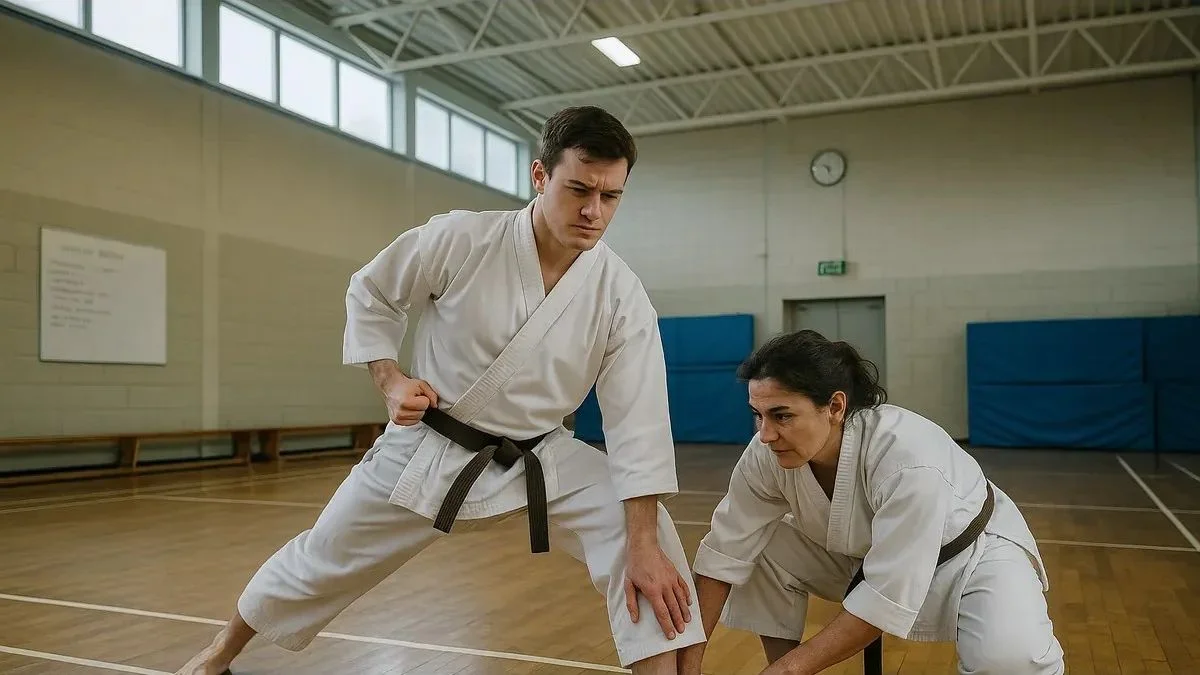
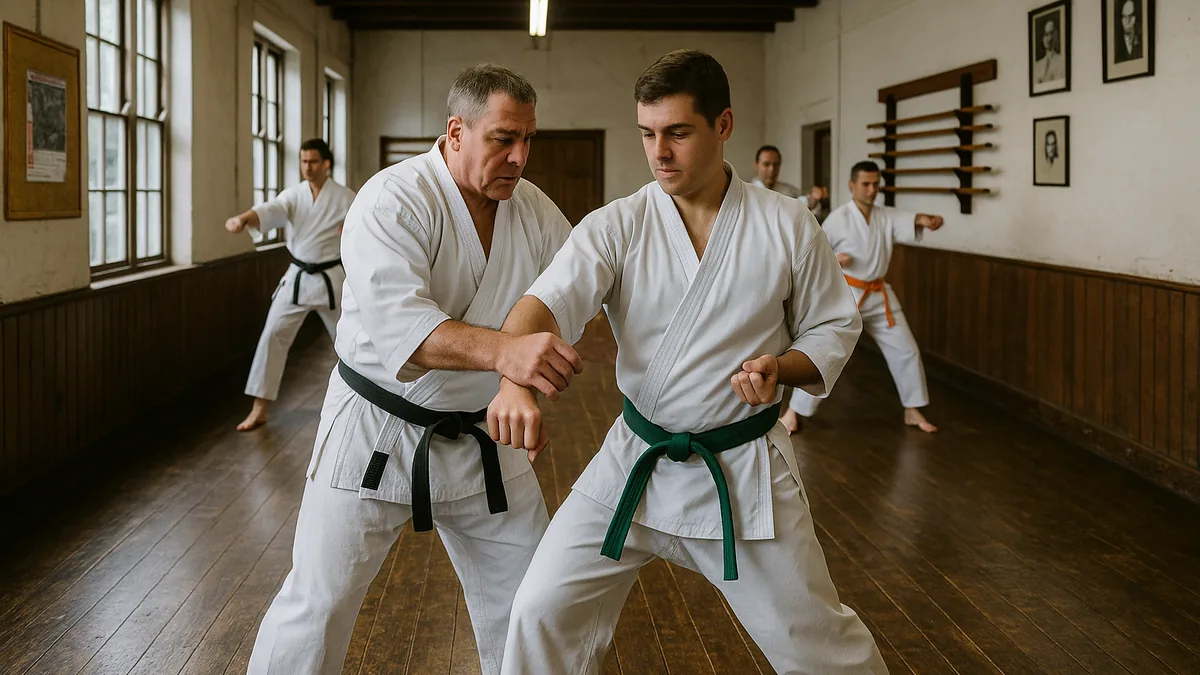
Most people spend years training in stances without really understanding what they’re for. I did. I thought good stances were about looking correct - hitting the right angles, getting the right depth, making my kata look clean for grading. It took me until about third dan before I genuinely understood that stances aren’t positions. They’re platforms for generating and receiving force. Once that clicked, I started looking at every stance differently, and I started seeing how much time most of us waste drilling shapes instead of drilling function.
That’s what this is about. Not a catalogue of every stance in the syllabus, but an honest breakdown of which ones actually build your karate, what they’re really doing, and the mistakes I’ve watched hundreds of students make over fifteen years of training and teaching.
The Stances That Actually Build Your Karate
There are dozens of named stances across different styles. Most of them matter less than the few you use constantly. I’d rather you had three stances working properly than eight stances that look decent but collapse under pressure.
Zenkutsu Dachi - The One That Teaches You Everything
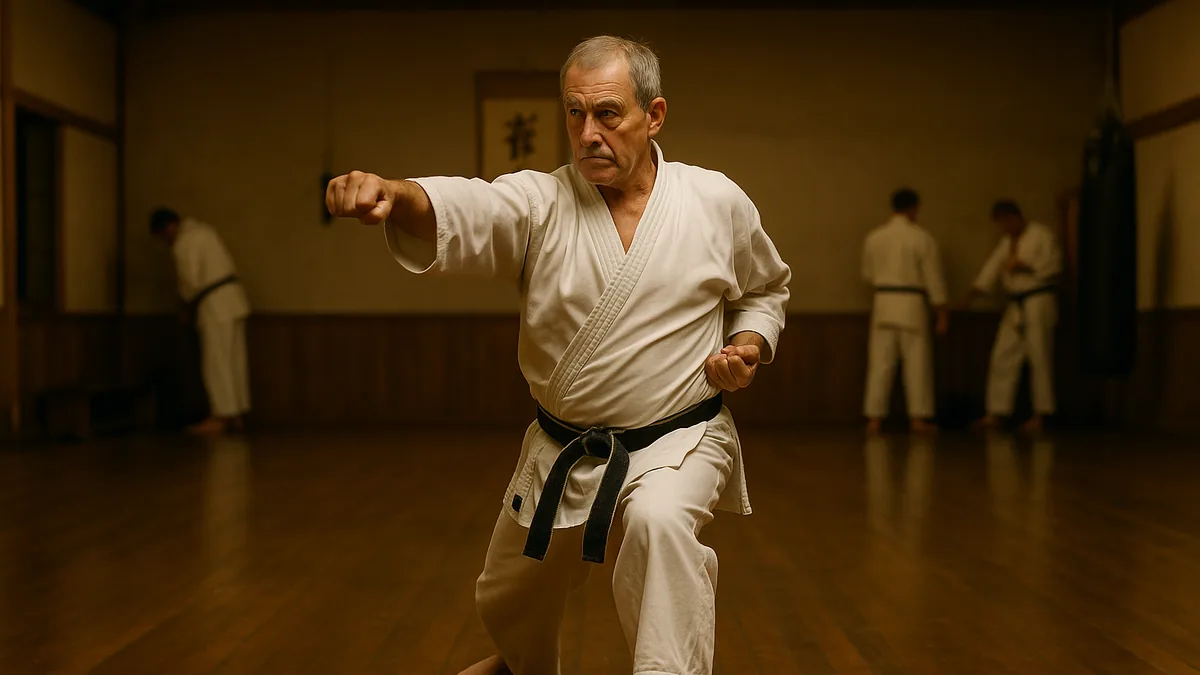
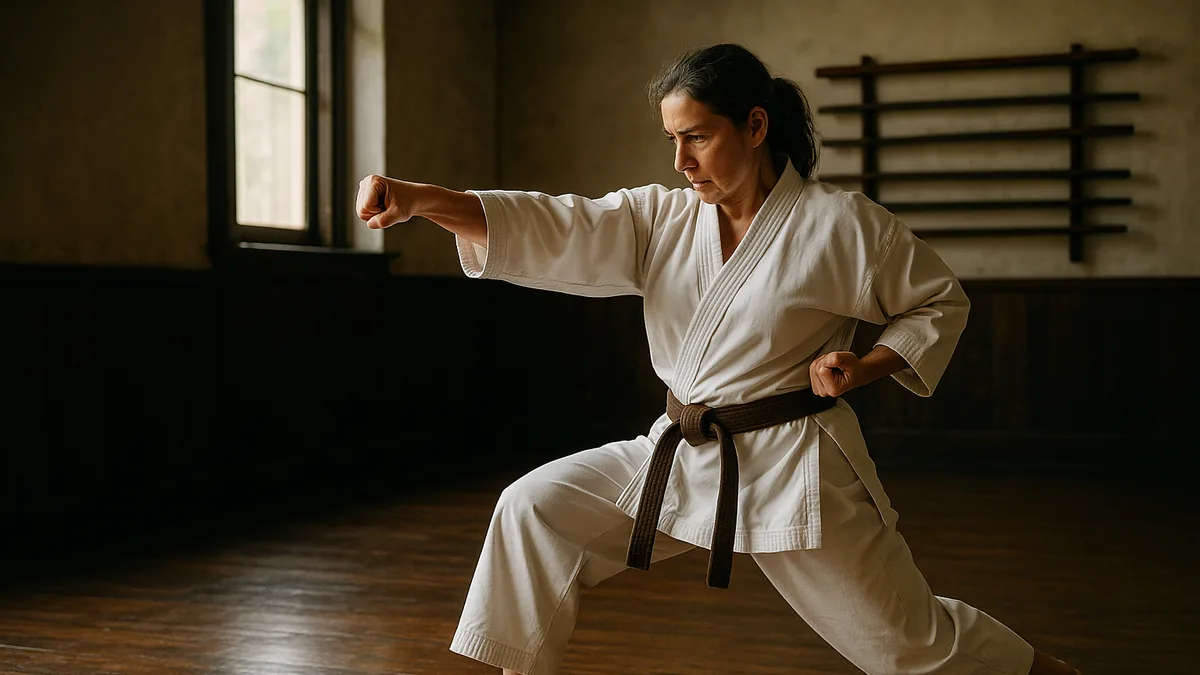
Zenkutsu dachi is where most of us spend the majority of our early training, and for good reason. Done correctly, it teaches you almost everything worth understanding about weight distribution, hip engagement, and how the lower body connects to technique. Done badly - which is how most beginners do it - it teaches you nothing except how to squat awkwardly while throwing your arm forward.
The single most common mistake I see in zenkutsu dachi is the back leg. Students bend it. They do this because bending it feels more comfortable and more stable. But the back leg in zenkutsu dachi should be straight and driving - you should feel tension through the back of the thigh and into the glute. When you get that right, you’ll feel the entire stance lock into the ground. The front knee tracks correctly, the hip sits properly, and suddenly your gyaku-zuki has somewhere to come from.
What I tell students is this: if your back leg is bent, you’re not in zenkutsu dachi. You’re in a modified squat. The straight back leg isn’t aesthetic - it’s the mechanism that transfers ground force upward through the body and into the technique.
I’ve noticed that students who fix the back leg in their first year develop far better punching mechanics than those who don’t, even if everything else about their technique is similar. The stance is doing work that most people give credit to the arm.
Kokutsu Dachi - Underused and Misunderstood
Most students treat kokutsu dachi as the defensive stance you do in heian sandan or when your instructor calls it out during kihon. That’s a waste. Kokutsu dachi is one of the most tactically useful stances in the system, and it’s genuinely misunderstood by a lot of practitioners who have been training for years.
The misunderstanding is this: people think it’s a passive, retreating stance. It isn’t. The weight sits 70% on the back leg, yes - but that loaded back leg is a spring. The whole point of kokutsu dachi is that you can launch from it. The front leg is light, which means you can lift it to check a kick, redirect an attack, or use it as a leading leg for a fast front kick without telegraphing.
In jiyu-kumite, once you understand this, kokutsu dachi becomes your fastest counter when your opponent overcommits to a chudan attack. They come in, you shift back into kokutsu, their attack falls short, and you’re already loaded to drive forward. That’s not luck - that’s the stance doing exactly what it was designed to do.
My instructor used to say “kokutsu is not retreat, it’s preparation.” I heard that for about three years before I actually understood it. The moment I understood it was during sparring with a senior student who kept catching me as I came forward. He was barely moving. He was just sitting in kokutsu and letting me run onto his counter. After the session he showed me exactly what he was doing, and it reframed the stance completely for me.
Kiba Dachi - The Honest Test of Your Commitment
Kiba dachi is the stance that tells you the truth about your training. If your kiba dachi is weak, your basics are weak. There’s nowhere to hide in kiba dachi. The knees have to drive outward, the back has to stay upright, the weight has to sit evenly - and all of this has to be maintained while you execute techniques at full speed.
I’ve seen brown belts with genuinely poor kiba dachi, and it shows in everything else they do. The outward knee drive that makes kiba dachi work is the same mechanism that creates stability in every other stance. If you never develop it in kiba dachi, it won’t appear anywhere else.
The correction that makes the biggest difference here isn’t telling someone to push their knees out - they know that. It’s telling them to grip the floor with their feet. Spread the toes, feel the outside edge of the foot pressing down. When you do that, the knee drive happens almost automatically because the foot is now anchored correctly. It feels like you’re trying to pull the floor apart beneath you. That’s the sensation you’re looking for.
The Stances People Ignore (But Shouldn’t)
Neko Ashi Dachi - The Stance That Teaches Sensitivity
Cat stance gets used in kata and then largely forgotten. That’s a mistake. Neko ashi dachi with 90% of the weight on the back leg and the front foot barely touching the floor is one of the best stances for developing sensitivity to incoming attacks. You can lift that front leg instantly. You can step in or out without shifting weight first.
I think neko ashi dachi is one of the most underdrilled stances in most dojos, and it shows. Students who work it properly develop a quality of movement that others don’t have - a lightness in the front foot that makes transitions faster and reactions quicker.
Musubi Dachi and Heisoku Dachi - They’re Not Just Ceremonial
These are the stances you stand in at the start and end of class. Most people treat them as neutral positions. But standing correctly in musubi dachi - heels together, feet at 45 degrees, weight centred, spine upright - is actually training your posture. The way you stand when you think nothing is happening tells you a lot about your default body mechanics.
I’ve noticed that students who stand sloppily in musubi dachi tend to have sloppy posture throughout their kihon. It sounds like a small thing. It isn’t.
The Mistakes I See Constantly
Stance Depth as a Performance, Not a Function
One of the most persistent problems I see - especially around grading time - is students dropping into exaggerated stance depth to look impressive. Deep isn’t necessarily correct. The correct depth for zenkutsu dachi is the depth at which you can generate force and move efficiently. If you’re so low that your knee is caving in and you can’t transition without lurching, you’re not in a good stance - you’re in a pose.
I used to do this myself. As a white belt I thought deeper meant better. By brown belt I realised that the instructors I most wanted to move like weren’t the ones with the lowest stances - they were the ones whose stances were exactly deep enough, stable enough, and alive enough to move from instantly.
Not Connecting the Stance to the Technique
This is the big one. Students practise stances and techniques as separate things. They think: get into the stance, then do the technique. But the stance and the technique are one action. The hip rotation that drives gyaku-zuki is the same movement that settles you into the stance. If you’re stopping in the stance and then punching, you’re leaving power on the table.
The way I explain it to students is this: the punch doesn’t start when your fist moves. It starts when your back foot pushes into the floor. Everything between the floor and the fist is connected. If any link in that chain is passive - including the stance - the technique loses power.
Forgetting the Stance Exists During Kumite
This is where it gets real. Everything I’ve described above falls apart for most people the moment they start sparring. The stances they’ve drilled in kihon disappear, and they end up in some vague half-crouch that isn’t any named stance at all.
This is normal, especially early on. But it’s worth understanding why it happens: in kihon, you’re thinking about the stance. In kumite, you’re thinking about your opponent. The only way to get stances into your kumite is to drill them until they’re automatic - which means drilling them far more than most people do. If you want to understand how kihon practice translates (or doesn’t) to actual sparring, Does Kata Actually Help Your Sparring? covers a lot of the same ground from a different angle.
How Your Relationship With Stances Changes
As a white belt, stances feel like positions you have to get into and hold. The instructor calls out “zenkutsu dachi” and you try to arrange your body into the right shape.
By green or blue belt, you start to understand that stances are transitions, not positions. You’re never really stopped in a stance - you’re passing through it on the way to the next movement.
By brown belt, if you’re paying attention, you realise that stances are expressions of intent. The stance you’re in tells you and your opponent what’s available to you next. A good zenkutsu dachi with a loaded back leg says: I can drive forward. A good kokutsu dachi says: I’m not where you think I am, and I can be somewhere else before you adjust.
By the time you’re a senior grade, the stances have largely disappeared as conscious objects of attention. They’re just how you move. That’s the goal - not to have perfect stances, but to have stances so well-trained that you stop thinking about them entirely.
This progression is part of what makes kihon training so important to understand properly. The basics aren’t a beginner thing. They’re the foundation that everything else is built on, and stances are the foundation of the basics.
Community Perspective
There’s genuine disagreement in the karate community about how much stance training transfers to practical application - and honestly, it’s a fair debate.
Traditional Shotokan training puts enormous emphasis on deep, formal stances held with precision. The argument is that drilling the extreme position builds the strength, flexibility, and body mechanics that produce effective movement at more natural heights. I find this convincing, and it’s broadly how I was trained.
But I’ve trained with practitioners from Wado-ryu and Shito-ryu backgrounds who use notably higher, more mobile stances, and their kumite is often excellent - sometimes better than practitioners from styles that emphasise deeper stances. Their argument is that training in positions you’ll never actually use in a real exchange is wasted time.
I think both positions have merit, and I’ve changed my view on this over the years. My current position is that deep stance training has real value for building specific qualities - hip flexibility, leg strength, postural control - but it needs to be explicitly connected to more natural movement. If your dojo only ever drills deep formal stances and never bridges the gap to how you actually move in kumite, you’re missing something. The kihon drills for beginners framework is a good place to start thinking about how to make that bridge.
The other genuine debate is about how much time to spend on stances versus other aspects of training. Some instructors drill stances extensively as a standalone exercise - long periods in kiba dachi, walking up and down the dojo in zenkutsu. Others integrate stance work entirely into technique practice and never isolate it. I’ve trained under both approaches and I think the truth is somewhere in the middle: some isolated stance work is valuable for building awareness, but it needs to be connected to technique quickly or it becomes an exercise in holding uncomfortable positions rather than building functional karate.
Key Takeaways
- Fix the back leg in zenkutsu dachi first. Everything else in that stance depends on it. A bent back leg means you’re not generating ground force - you’re just squatting.
- Treat kokutsu dachi as a loaded spring, not a retreat. The weight on the back leg is there to launch you forward, not to keep you out of trouble.
- Grip the floor with your feet in kiba dachi. Spreading the toes and pressing through the outside edge of the foot creates the knee drive automatically - far more effectively than just telling yourself to push the knees out.
- Drill the transition, not just the position. The stance and the technique are one movement. If you stop in the stance before executing, you’re breaking the chain of force.
- Your stances in kumite are only as good as your stances in kihon - and only if you’ve drilled kihon enough for it to become automatic. Conscious technique doesn’t survive contact with a real opponent.
- Depth is not the goal. The correct stance depth is the depth at which you can generate force and move efficiently. Deeper than that is a pose.
If you want to go deeper on how stance work connects to overall basics training, What Is Kihon? is worth reading alongside this. And if you’re working on your overall technique and noticing that your hikite is as neglected as your stances probably were, Why Most Karateka Never Fix Their Hikite will feel uncomfortably familiar.
The weekly digest
New karate articles, once a week
One email every week with everything new on Karate Lifestyle. No spam; unsubscribe in one click.
We'll email you to confirm. See our privacy policy.