Why Most Karateka Never Fix Their Hikite
Why Most Karateka Never Fix Their Hikite
Watch any beginner class. Then watch a senior class. The punches look different, obviously - more committed, more settled, better structure. But if you look past the punching arm and focus on what the other hand is doing, you’ll often find the gap between those two classes is smaller than it should be. Brown belts with lazy hikite. Black belts who’ve never really questioned it. Instructors who correct it in students but haven’t sorted it in themselves.
Hikite - the retracting hand - is the most corrected and least understood fundamental in kihon. I’ve been saying that for years. I’ve also been guilty of the same neglect I’m describing.
What Hikite Actually Is (And Why Most People Get It Wrong From Day One)
The translation is simple enough: “pulling hand.” That’s also exactly why most people misunderstand it. They hear “pulling” and think the job of the hikite is to pull back. So they focus on speed of retraction, on getting the fist to the hip quickly, and consider the job done.
I used to think exactly this. As a white belt, I thought hikite was about creating a visual contrast - one arm out, one arm in, clean and symmetrical. By brown belt I started to understand it was about generating power through opposition. But it wasn’t until I was training with a senior instructor who grabbed my hikite mid-punch and held it in place that I actually felt what was missing.
The punch landed like nothing. Like I’d thrown my arm at a wall and expected the wall to care.
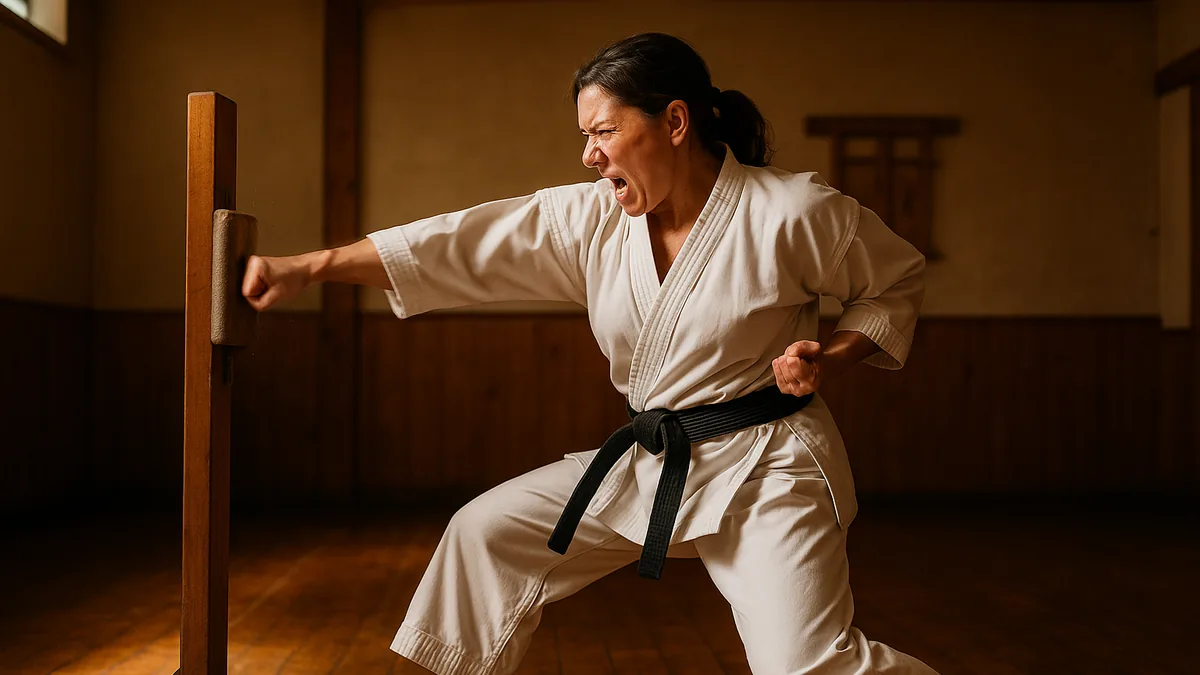
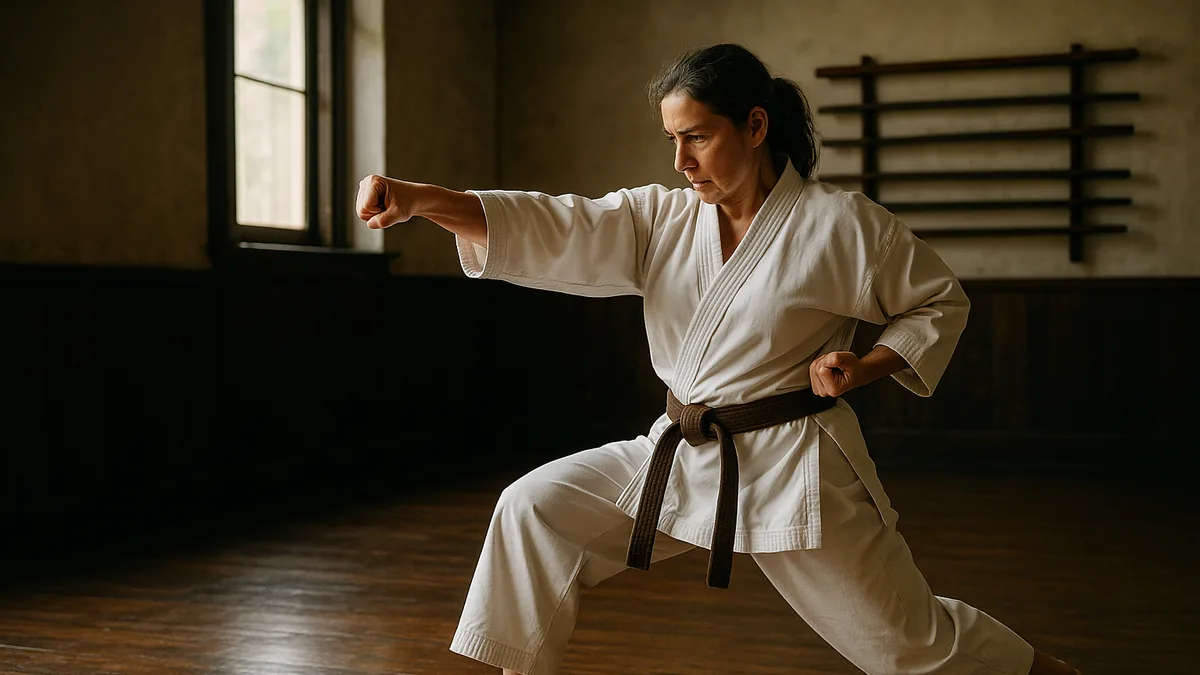
What I tell students now is this: hikite isn’t the hand that pulls back. It’s the hand that makes the punch hit harder. The retraction isn’t the point - the tension and timing of the retraction is the point. Those are completely different things, and conflating them is where the problem starts.
The Three Mistakes I See Constantly
1. The Floater
This is the most common one. The hikite drifts back toward the hip without any real muscular engagement. It moves, technically, but there’s no pull in it. The elbow goes wide, the shoulder rises slightly, and the hand arrives at the hip loosely.
What’s happening here is that the practitioner is mimicking the shape of hikite without generating the tension. It looks roughly right from the front. It does almost nothing for the punch.
The correction that makes the biggest difference here is getting the student to drive the elbow back - not pull the fist back. When I tell someone “pull your hikite,” they pull from the wrist. When I tell them “drive the elbow back and down,” something different happens. The lat engages. The shoulder drops. The opposing force through the body becomes real. You’ll feel it immediately - there’s a kind of bracing through the torso that wasn’t there before, like two ends of a rope being pulled in opposite directions.
2. The Overgrip
Some practitioners - often the more earnest ones - clench the hikite fist so hard it becomes a distraction. The tension is in the wrong place. Instead of the elbow driving back and the lats engaging, all the effort goes into squeezing the fingers.
I’ve seen this particularly in students who’ve been told to “tighten the fist on impact” and have applied that instruction to both hands simultaneously. The result is a kind of full-body clench that kills hip rotation and turns the whole technique into a static, muscled effort rather than a dynamic one.
The fix is counterintuitive: I ask them to relax the hikite hand almost completely during the movement, and only close it fully at the moment of impact on the punching side. This feels wrong at first - it feels like you’re not doing anything with the pulling hand. But the relaxation actually allows the elbow drive to happen properly, and the body starts to move more freely.
3. The Timing Problem
This one is subtler and harder to correct because it’s not a shape issue - it’s a coordination issue. The hikite and the punch are supposed to move simultaneously, with the maximum tension of both occurring at the same moment. What I see constantly, even in intermediate students, is the hikite arriving early or late.
Early hikite - the hand snaps back before the punch has fully extended - bleeds the power out before it can be transferred. Late hikite - the hand is still moving when the punch lands - means the opposing force isn’t there at the moment it’s needed.
I didn’t clock this in my own technique until a training partner filmed me during basics. I was convinced my timing was fine. It wasn’t. My hikite was arriving a fraction early, which meant I was punching into a body that had already stopped bracing. Fixing that timing - genuinely synchronising the two movements - added something to my reverse punch that I can’t fully quantify but could immediately feel. It’s a kind of solidity on impact that you don’t get when the timing is off.
Why Instructors Keep Correcting It and Students Keep Reverting
Here’s the honest answer: hikite feels unimportant when you’re focused on the punch. The attention goes to the striking hand because that’s the hand doing the hitting. The hikite is invisible in terms of outcome - if it’s wrong, the punch still lands. There’s no immediate failure that tells you the hikite was the problem.
I’ve noticed that students will correct their hikite during the specific drill where I’ve just mentioned it, and then revert within ten minutes. It’s not laziness. It’s priority. The brain is managing a lot of information - stance, hip rotation, kime, breathing - and hikite gets dropped because it doesn’t feel load-bearing.
What changes this is when a student feels the difference rather than being told about it. The exercise I use most often: have them throw a gyaku-zuki with the hikite arm held loosely at their side, not retracting at all. Then have them throw it again with full hikite engagement. The difference in feel is immediate and significant. After that, the correction tends to stick - not because I’ve explained it better, but because their body now has a reference point.
If you want to explore the broader context of how hikite fits into kihon training overall, the kihon training drills for beginners page covers some structured ways to build these habits from the ground up.
What Hikite Actually Feels Like When It’s Right
This is the part that’s hard to put into words, but I’ll try.
When hikite is working properly, you don’t feel like you’re doing two separate things - punching with one hand and pulling with the other. You feel like you’re doing one thing with your whole body, and the two arms are just the endpoints of it. The tension runs from the retracting elbow, through the lat, across the back, through the hip, and out through the punching fist. It’s connected.
The punch feels heavier than it looks. Not harder in the sense of more effort - actually less effort, but more impact. There’s a solidity to kime that you can’t fake with arm strength alone.
When it’s wrong, the punch feels like your arm is working independently of your body. You can still generate speed, but it’s arm speed, not body speed. Experienced practitioners can feel this distinction in their own technique, even if they can’t always name it. Beginners can’t feel it yet, which is why they need the drill I described above - something that makes the contrast obvious enough to register.
If you want to go deeper on how hikite connects to the full power generation chain - hip rotation, kime, stance, and timing - How to Generate Power in Karate covers exactly how these mechanics work together. And if your stance isn’t supporting your hikite properly, Karate Stances Explained is worth reading alongside this.
How This Changes in Kumite
In kihon, you have time to think about hikite. In jiyu-kumite, you don’t - which means whatever your kihon has grooved in, that’s what you get.
I’ve found that good hikite habits built in basics translate directly into more powerful counters in sparring. Specifically, in jiyu-kumite, when an opponent overcommits to a chudan attack and you slip to the outside, the gyaku-zuki counter becomes devastatingly fast when the hikite is fully engaged - because the body is already set up to generate opposing force the moment you commit to the counter. There’s no setup time. The mechanics are already loaded.
Bad hikite habits translate into counters that look fast but don’t have weight behind them. I’ve watched students land clean counters and do almost nothing with them because the punch was all arm. The opponent felt it, adjusted, and kept coming. A punch with proper hikite engagement in the same situation stops people. There’s a difference, and it’s not subtle.
Community Perspective
This is one of those topics where style and association genuinely affect what you’re taught, and I think it’s worth being honest about that.
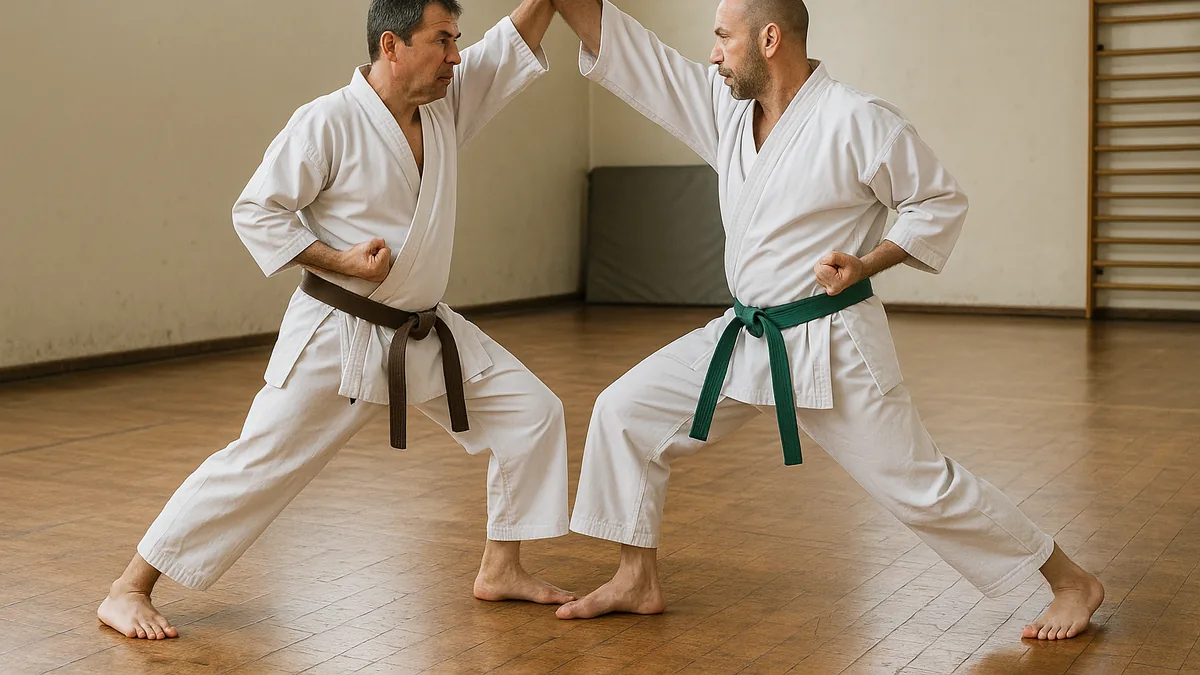
In some Shotokan dojos, hikite is taught very literally - fist to the hip, palm up, tight. The emphasis is on the end position. In other schools, particularly those with more emphasis on bunkai and practical application, hikite is increasingly taught as a grab and pull - the idea being that you’ve seized your opponent’s arm and you’re pulling them into the punch. That interpretation changes everything about how you train it, because you’re not just retracting a hand, you’re controlling a limb.
I’ve trained in both environments, and honestly, I think the grab-and-pull interpretation makes hikite click for more students, faster. When you tell someone to “pull your hikite,” it’s abstract. When you tell them to imagine they’ve grabbed a wrist and they’re dragging it to their hip while they punch, the engagement changes immediately. The elbow drives back, the lat fires, the timing improves. Whether that’s the correct interpretation historically is a different argument - but as a teaching tool, it works.
There’s also genuine disagreement about how high the hikite should sit at the hip, whether the elbow should be tight to the body or slightly out, and how tightly the fist should be clenched. I’ve heard senior instructors argue both sides of all of these. My preference is elbow tight, fist at hip height with the elbow driving the motion - but I’ve trained with excellent practitioners who do it differently and whose technique is clearly effective.
If you’re interested in how hikite sits within the broader structure of kihon fundamentals, What Is Kihon? gives a useful overview of how these basics relate to each other.
Key Takeaways
- Drive the elbow back, not the fist. The elbow leading the retraction engages the lat and creates real opposing force. Pulling from the wrist creates the shape without the substance.
- Synchronise the timing, not just the movement. Hikite arriving early or late kills the power transfer. Both hands should reach maximum tension at the same moment - drill this slowly before drilling it fast.
- Use the contrast drill. Have students punch without hikite engagement, then with full engagement. The felt difference creates a body reference that no amount of verbal correction can replicate.
- The grab-and-pull mental image works. Whether or not you teach bunkai application, imagining you’re pulling an opponent’s arm into the punch produces better hikite mechanics than “retract your hand.”
- Expect reversion. Hikite drops out under pressure because it doesn’t feel load-bearing. Build it into every drill, every repetition, until it’s automatic - not as a correction but as the default.
- If your hikite is passive, your punch is half a punch. That’s not an exaggeration. The opposing force is structural. Without it, you’re throwing your arm at a problem and hoping arm speed is enough.
The weekly digest
New karate articles, once a week
One email every week with everything new on Karate Lifestyle. No spam; unsubscribe in one click.
We'll email you to confirm. See our privacy policy.