Blocking in Karate: Why Most Blocks Fail
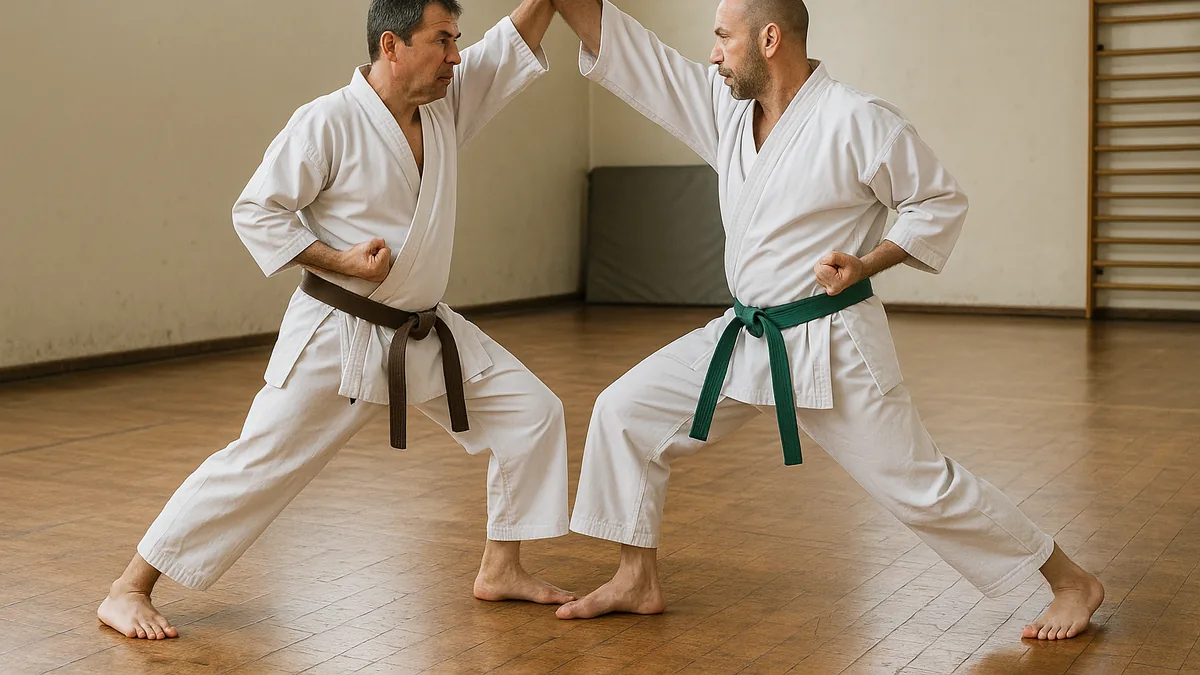
Most blocks fail before the attack even lands. Not because of bad timing, not because of poor positioning - but because the person blocking doesn’t actually believe the block is going to work. You can see it in their shoulders. The arm goes up, the body flinches back, and whatever technique they thought they were doing becomes a flinch with a name attached to it.
I’ve been watching this happen for over fifteen years. I’ve done it myself. And the frustrating part is that fixing it isn’t about drilling the block harder - it’s about understanding what a block actually is, which most of us get wrong for years.
What You Think a Block Is vs. What It Actually Is
As a white belt, I thought blocking was about stopping the attack. You put your arm in the path of the punch, the punch hits your arm, it stops. Simple enough. By the time I was a brown belt, I’d been corrected enough times to understand that this framing is almost entirely wrong - and that it explains why so many blocks feel useless in practice.
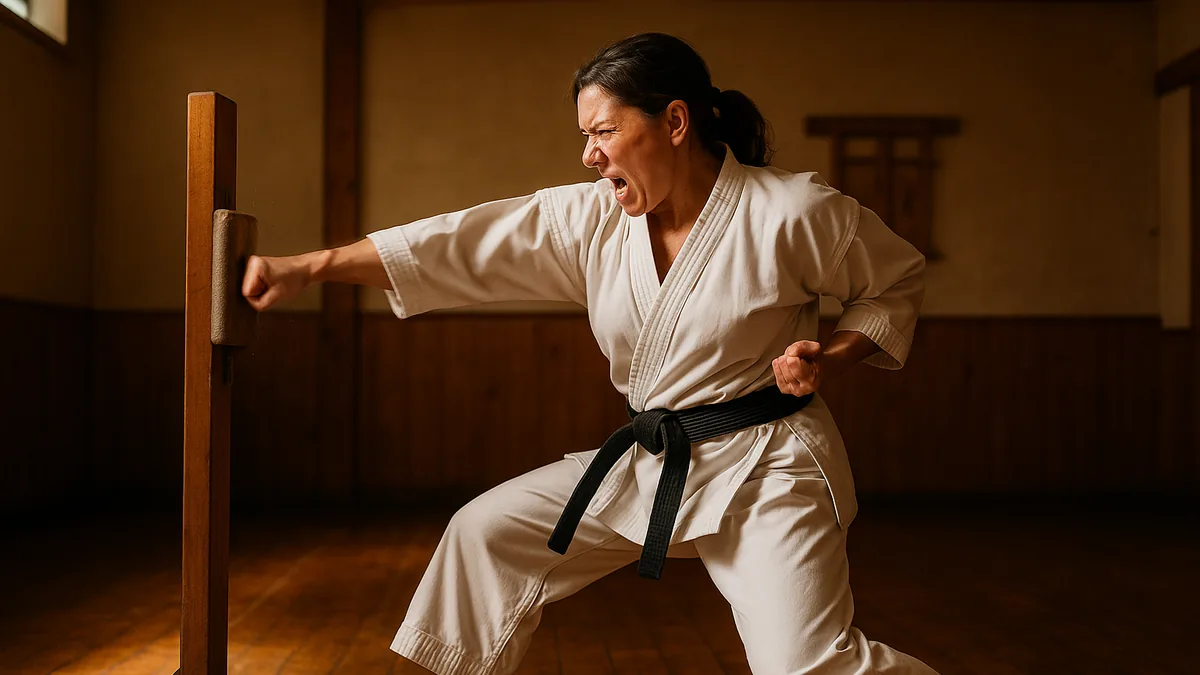
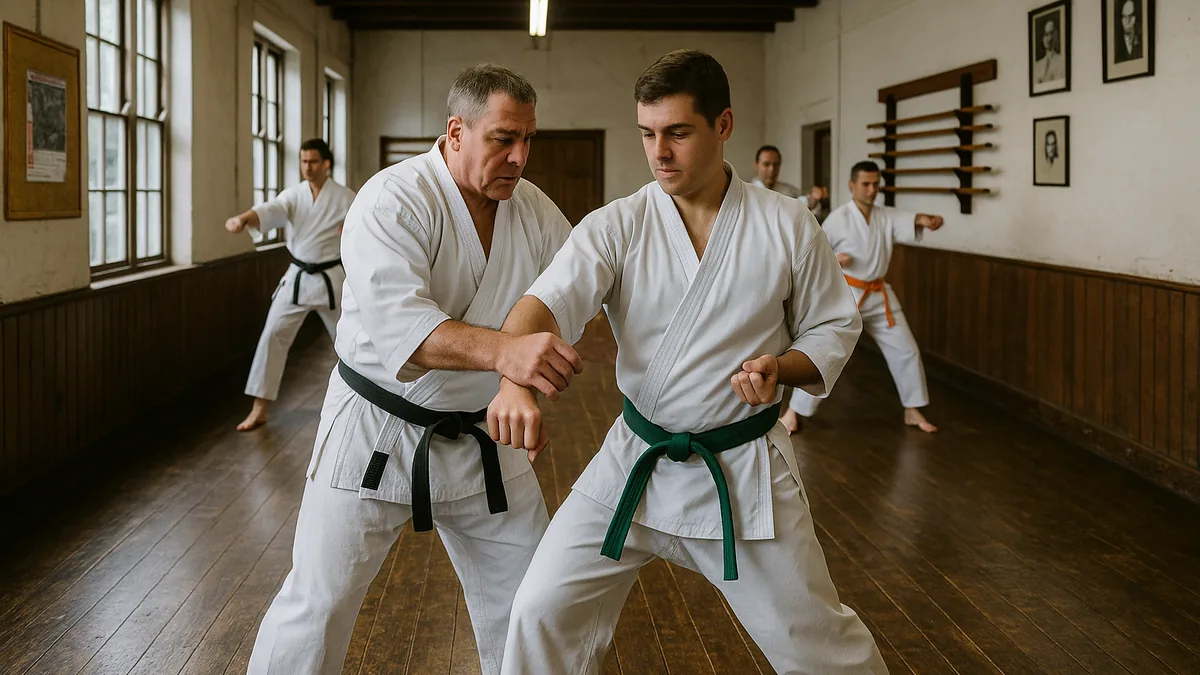
A block isn’t a wall. It’s a redirection, a disruption, or in some cases a pre-emptive strike to the attacking limb. The moment you start thinking about it that way, everything changes - the angle of your forearm, the direction of your movement, the timing relative to the attack. You’re not trying to absorb force. You’re trying to break the line of the attack.
My instructor used to say “meet it early, not late.” For years I interpreted this as just timing advice. Then during a particularly rough sparring session, I finally understood what he meant physically: if you wait until the attack is almost at your face to block, you’re trying to stop something with momentum behind it. If you intercept it earlier in its path, you can redirect it with a fraction of the effort. The same arm movement, completely different result depending on when you commit to it.
The Mechanics Most People Get Wrong
The arm is not the block
One mistake I see constantly - at every level, not just beginners - is the arm doing all the work. The elbow bends, the forearm comes up, and the rest of the body stays completely still. What you end up with is a weak lever with no structural support behind it.
When a block is working properly, you’ll feel it through your whole body. The hip drives the rotation, the shoulder follows, the forearm arrives as the end point of a connected movement. It’s the same principle as punching - the arm is just the last thing to arrive. If you want to understand why hip rotation matters so much, the same mechanics I talk about in How to Generate Power in Karate: Hip Rotation, Kime, and What Most People Miss apply directly to blocking, not just striking.
What I tell students who are arm-blocking is this: cover your forearm with your opposite hand and try to block. You can’t. Now try to rotate your hip into the block. Suddenly the movement comes from somewhere real. That’s the sensation you’re looking for - the forearm is just expressing what the body is doing.
Hikite is half the block
I’d argue that the pulling hand - hikite - is responsible for at least half the effectiveness of most blocks, and it’s almost universally undertrained. When your hikite is slow, passive, or just drifting back to your hip without purpose, you’re leaving half the mechanism of the technique switched off.
The block and the pull are one movement. The tension between them is what creates the snap, the rotation, the structure. When hikite is sharp and committed, you feel the block lock in - there’s a moment of compression through the torso that you simply don’t get when the pulling hand is lazy. I’ve written more about this specifically in Why Most Karateka Never Fix Their Hikite, because it’s one of those things that instructors repeat endlessly and students nod at without actually doing.
The chamber position is where blocks die
Most blocks have a chamber - a preparatory position before the technique executes. This is where I see the most errors, because it’s the part that happens before anything visible occurs.
If your age-uke (rising block) starts from the wrong position, it can’t travel the right path. If your soto-uke chamber is too wide or too low, you’ve already compromised the technique before your arm moves an inch. What I’ve noticed over years of grading students is that you can diagnose someone’s block entirely from their chamber position. Get that right and the rest usually follows. Get it wrong and no amount of drilling the finish position will fix the underlying problem.
The Mistakes I See Most Often
Blocking too late. This is the big one. The attack is already 80% complete and the block starts. What you end up doing is pushing the fist sideways at the last moment, which doesn’t actually redirect anything. The fix isn’t to “be faster” - it’s to commit earlier, which means reading the attack earlier, which means watching the shoulder and hip rather than the hand.
Blocking across the centre line. I used to do this constantly. Your gedan-barai ends up crossing your centre line, which means you’ve blocked the attack but pulled it directly into your opposite side. A good block deflects the attack away from your body entirely. The angle of the block matters as much as the timing.
Collapsing the elbow on impact. You’ll see this especially in age-uke. The forearm comes up, the attack hits it, and the elbow folds back toward the face. This happens because there’s no structural support behind the arm - the shoulder and lat aren’t engaged. When the structure is right, you’ll feel the impact travel through the forearm and into the shoulder joint, not fold the arm. It should feel solid, like a branch rather than a rope.
Blocking with tension throughout. There’s a difference between being relaxed through the movement and being tense at the point of contact. Most beginners are either tense throughout - which kills speed - or completely relaxed throughout - which kills structure. What you want is relaxed until the moment of contact, then a brief, sharp tightening through the forearm and shoulder. It feels wrong at first because it’s a learned skill, not a natural one. Stick with it.
Stepping back when blocking. I understand why this happens - the brain interprets an incoming attack as something to move away from. But stepping straight back usually means you’re still on the line of the attack, just further down it. What I tell students is: if you’re going to move, move off the line. Step to the outside, step to the inside, but don’t step backwards and expect the block to do the work your footwork should be doing.
How Understanding Changes with Experience
At white belt, blocking feels like a separate thing from everything else. You block, then you counter. There’s a pause between them.
By the time you’re at kyu grades, you start to understand that the block and the counter should be one continuous movement - or at least feel that way. The block creates the opening; the counter fills it. The pause is the problem.
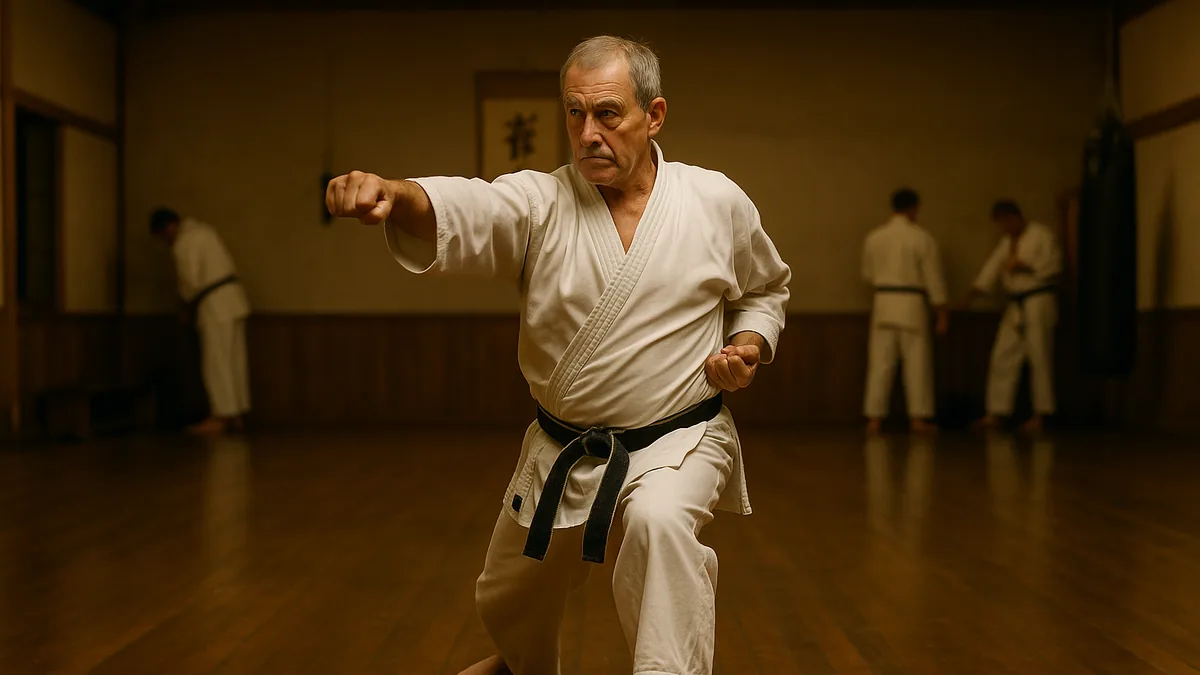
What took me much longer to understand was that the best blocks don’t look like blocks at all. Senior practitioners I’ve trained with barely seem to do anything - a small rotation, a slight shift, and somehow the attack misses or gets disrupted. What they’ve learned is economy: the minimum movement required to achieve the result. Not because they’re lazy, but because smaller movements are faster and harder to read.
That’s a long way from the big, committed, textbook blocks we drill in kihon. I think there’s real value in drilling the exaggerated version - it builds the body mechanics, the muscle memory, the understanding of where the forearm needs to be. But at some point you have to start compressing that into something functional. If your kihon training never transitions into applied work, the block stays big and slow forever.
Blocks in Sparring: What Actually Works
In jiyu-kumite, gedan-barai becomes something completely different from what you drill in kihon. I use it less as a formal block and more as a deflection-and-entry - you catch the kick or low punch just enough to redirect it, and your body is already moving forward to close distance. The big sweeping version from kihon won’t work at sparring speed. The principle of it will.
Age-uke is probably the most underused block in sparring, in my experience. People are nervous about committing to it because if it fails, your head is exposed. But when it works - when you time it right against a jodan attack and your opponent’s arm gets driven upward - the counter is right there. I’ve found it most effective against opponents who overcommit to high punches, where their momentum works against them.
Soto-uke is my preferred block for creating a counter opportunity against chudan attacks. When it’s done with good rotation and the opponent’s arm gets swept to the outside, your right side is completely open for a gyaku-zuki. The problem is that most people block and then counter - two separate movements. When the block and the hip rotation for the counter are the same movement, it becomes genuinely fast.
Your stance affects all of this. A block from a weak or unstable stance has nothing behind it. If you’re not confident about your base positions, Karate Stances Explained: Which Ones Actually Matter is worth reading alongside this - because the block and the stance are inseparable in practice.
Community Perspective
There’s a genuine disagreement in the karate community about how much emphasis to put on traditional blocks versus what some practitioners call “natural” blocking - the kind of covering, parrying, and deflecting movements you see in boxing, MMA, and other combat sports.
I’ve trained in dojos where traditional blocks were treated as sacred and any deviation was corrected immediately. I’ve also trained with instructors who openly said that the formal blocks are training tools, not fighting tools, and that what matters is the underlying principle - not the specific shape.
My honest view is that both camps are partially right and both are missing something. The people who drill only formal blocks and never question their application end up with technically impressive kihon that falls apart in pressure. The people who dismiss traditional blocks entirely often lack the structural understanding that those blocks develop - the hip connection, the forearm alignment, the body unity.
What I’ve come to believe, after a lot of training and a lot of changing my mind, is that the formal blocks teach your body something real. The work is in understanding what that something is - and then letting the application be flexible. The block you drill in kihon is a map, not the territory. But you still need to read the map.
Key Takeaways
- The arm is the last thing to arrive. If your block starts and ends in the arm, it’s structurally weak. Drive it from the hip rotation and let the forearm express that movement.
- Hikite is not optional. A passive pulling hand halves the effectiveness of your block. Drill them together as one connected movement, not as a block and an afterthought.
- Fix the chamber before you fix the finish. Most block problems originate in the preparatory position. Get your chamber right and the technique usually corrects itself.
- Move off the line, not down it. Stepping straight back keeps you on the attack path. If you move, move to the outside or inside - and make the block shorter, not longer.
- Relax through the movement, tighten on contact. Sustained tension kills speed. The snap at the point of contact is what gives the block its structure. Train that distinction deliberately.
- Compress the movement with experience. The big kihon block builds the mechanics. The goal over time is to achieve the same result with less motion - faster, harder to read, and more connected to your counter.
For anyone working through the fundamentals of how all this connects, What Is Kihon? A Practitioner’s Guide to Karate Basics gives useful context for why we drill these techniques the way we do - and what we’re actually trying to develop through repetition.
The weekly digest
New karate articles, once a week
One email every week with everything new on Karate Lifestyle. No spam; unsubscribe in one click.
We'll email you to confirm. See our privacy policy.