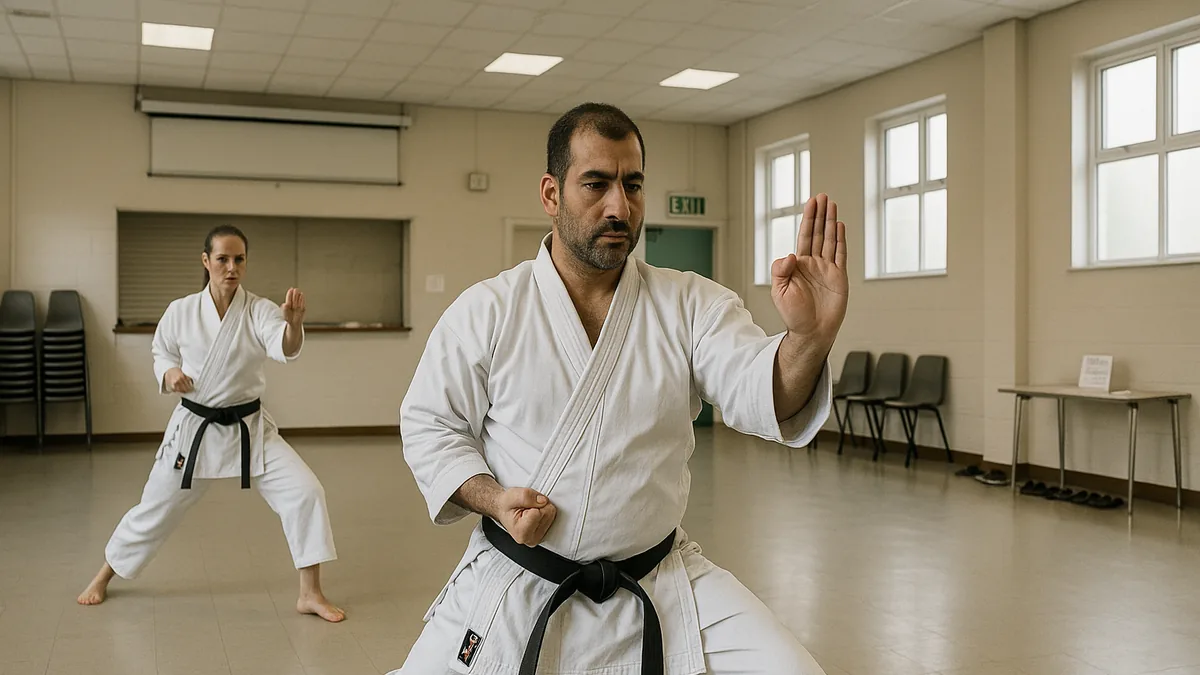
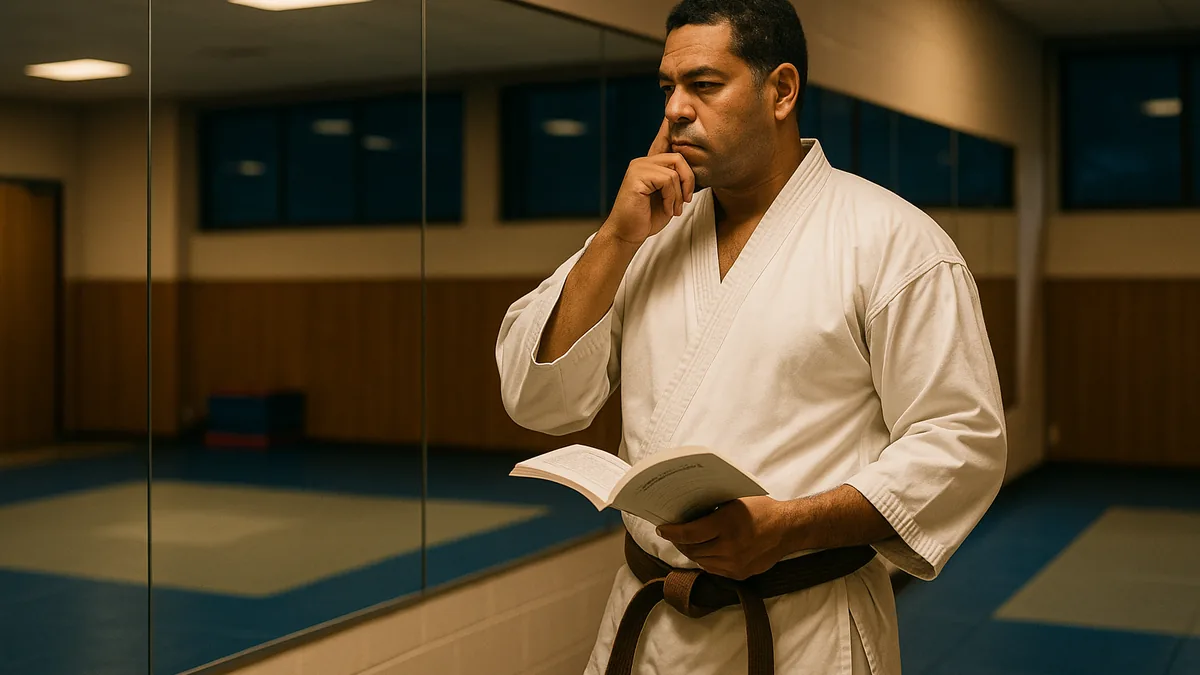
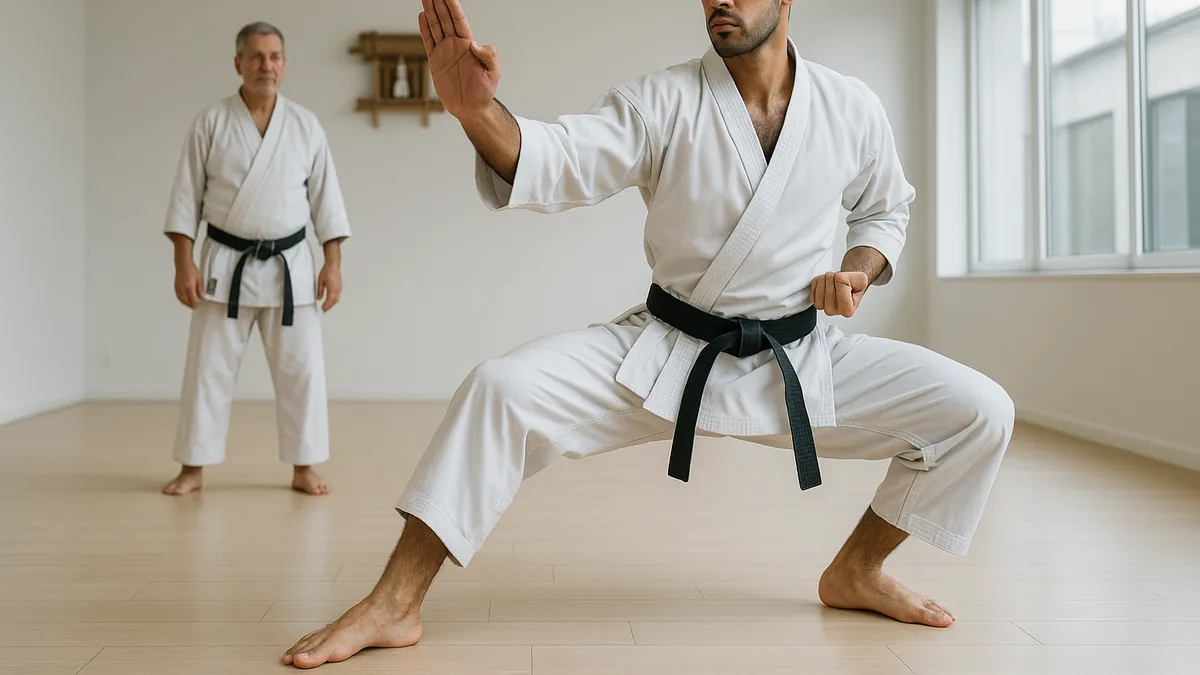
How Many Kata Should You Actually Know? The Case Against Collecting Forms
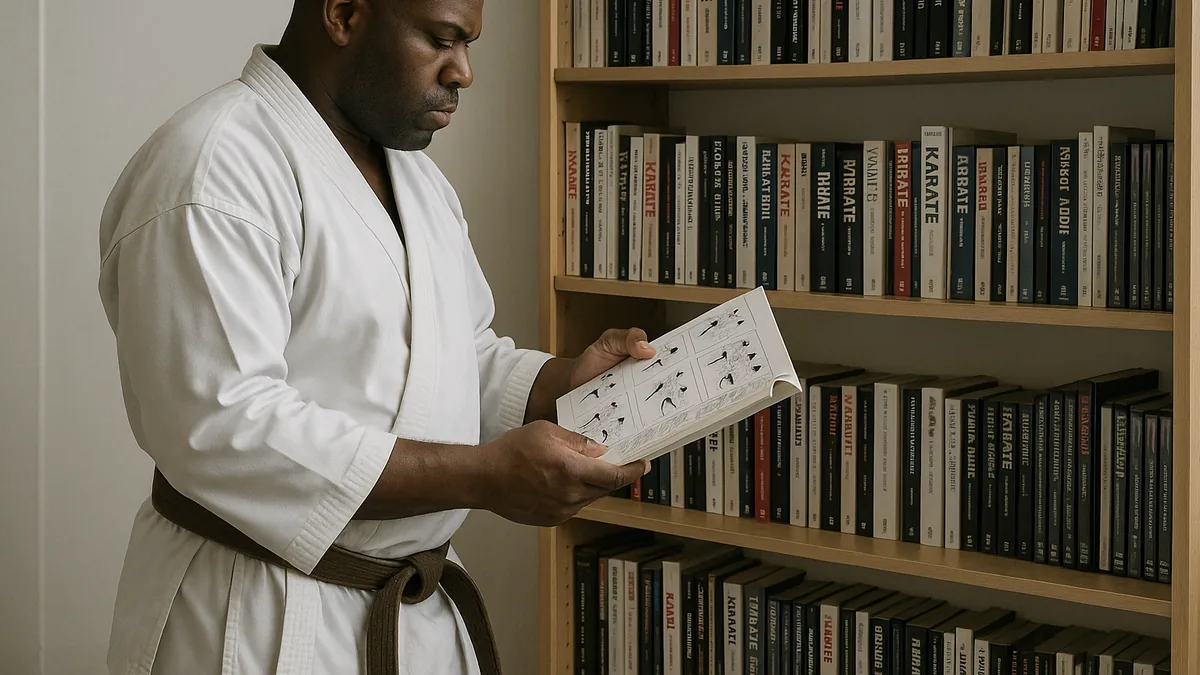
Most karate practitioners collect kata the way some people collect books they never read. The shelf looks impressive. The actual reading? Minimal.
This is not a fringe problem. Walk into almost any dojo and you will find students who can perform twelve kata but cannot tell you what a single sequence in any of them actually does. They know the shapes. They do not know the content. And the honest question worth asking is: whose fault is that, and what should be done about it?
We think the answer is uncomfortable for a lot of practitioners: you probably know too many kata, and you are almost certainly not getting enough from any of them.
The Collecting Habit and Why It Happens
The drive to learn new kata is understandable. New kata feels like progress. There is a clear before and after - you did not know Bassai Dai, and now you do. That feeling of acquisition is satisfying in a way that spending another three months deepening your understanding of Pinan Shodan simply is not.
Grading structures reinforce this. In most associations, moving up a grade requires demonstrating a new kata. The system is built around addition. Nobody gets a dan grade for knowing two kata exceptionally well. So students chase the next form because the system rewards it, and instructors often go along with it because teaching a new kata is more engaging than correcting the same technical problems in a form the student has been doing for two years.
The result is a kind of kata inflation. Practitioners accumulate forms without ever developing the depth that makes any single one genuinely useful.
What Depth Actually Means
When instructors talk about “understanding” a kata, they often mean something vague. We will be specific about what depth actually looks like in practice.
A practitioner with genuine depth in a kata can do all of the following:
- Perform it under pressure - tired, cold, or immediately after hard kumite - without the sequence degrading
- Identify at least two or three credible applications for each significant movement, not just the standard one taught at grading
- Perform it mirrored (leading with the opposite hand and foot) without losing the structure (which tells you a great deal about whether you actually know the form or just the choreography - see our piece on performing kata left-handed)
- Explain why the rhythm changes where it does, and what that timing represents
- Self-assess meaningfully - knowing what is wrong before anyone tells you
Most practitioners with a catalogue of fifteen kata cannot do any of those things with more than one or two of them. That is not depth. That is a very long to-do list.
The Mistake That Compounds Everything
A common mistake is treating kata as performance rather than investigation. The practitioner learns the sequence, polishes the visual presentation, and considers the kata learned. The correction that usually works here is not technical - it is conceptual. The kata is not the point. The kata is a container. What matters is what is inside it.
This distinction changes how you train entirely. Once you understand that each movement in a form encodes a specific response to a specific type of attack or clinch, you stop trying to make the kata look good and start trying to make it make sense. Those are not the same goal, and optimising for the wrong one produces practitioners who perform beautifully and understand very little.
Itosu Anko - the Okinawan master who created the Pinan series in the early 1900s for use in Okinawa’s schools - made exactly this point in his 1908 letter to the Japanese Ministries of Education and War. Precept 6 of that document instructs students to learn kata techniques repeatedly, understand the oral explanations passed down with them, and decide how and when to apply them. Understanding application was not a later addition to kata training; it was the original expectation.
The solo bunkai drills described here are one practical way to shift that orientation when you do not have a partner. The key point is that doing them forces you to have an opinion about what each movement means. You cannot shadow-drill a throw if you have not decided what the throw is.
Fewer Kata, Harder Questions
Here is a position worth defending: a practitioner who spends two years with five kata and interrogates every sequence will outperform - in both sparring and grading - a practitioner who spends the same two years collecting ten.
The reason is transfer. Techniques that you understand deeply, that you have drilled under fatigue, that you have felt work against resistance, are techniques that become available in jiyu-kumite. The movement stops being a kata sequence and starts being a reflex. That transfer does not happen through repetition of the shape alone. It happens through understanding why the shape exists.
The relationship between kata and sparring performance is genuinely contested, but the practitioners who report the most carryover are consistently those who have worked applications, not just forms. That is not a coincidence.
The Simpler Kata Problem
One specific consequence of the collecting habit is that simpler kata get abandoned too early. Once a practitioner grades past the Pinan series, those forms are rarely revisited with any seriousness. That is a significant waste.
The Pinan kata - or Heian, depending on your style and association (the naming history is worth understanding and we cover it in this piece on Pinan vs Heian) - were created by Itosu Anko around the turn of the twentieth century for use in Okinawa’s school system, drawn partly from older forms including Kusanku and Channan. When Gichin Funakoshi introduced karate to mainland Japan in the 1920s, he renamed the series Heian (the Japanese pronunciation of the same two characters) and reversed the numbering of the first two forms, considering the original Pinan Shodan to be technically more demanding than Pinan Nidan.1 The result is that Shotokan’s Heian Shodan is the same form that styles such as Shito-ryu and Wado-ryu call Pinan Nidan.1
These forms contain the same fundamental principles as the advanced forms. They are shorter, which means there is nowhere to hide. Every transition is visible. Every change of direction is exposed. A senior practitioner drilling Pinan Nidan with genuine attention will find more in it than a beginner finds in Bassai Dai.
We have written at length about why the shorter, simpler kata deserve more of your time than most practitioners give them. The short version: difficulty of sequence is not the same as depth of content.
What Senior Practitioners Actually Do
There is a pattern worth noting in how serious senior practitioners approach kata. They tend to narrow, not expand. A practitioner who knows twenty kata at shodan often finds, by the time they reach fourth or fifth dan, that they return repeatedly to four or five forms. Not because the others were not worth learning, but because the depth available in any single kata is genuinely inexhaustible if you keep asking harder questions.
The feeling of that depth is recognisable once you have experienced it. You will feel it when a sequence that you have performed hundreds of times suddenly reveals a mechanical logic you had not noticed - when the shift in weight before a technique stops feeling like a transition and starts feeling like a load, like coiling something that will release. That sensation does not come from knowing many kata. It comes from returning to the same kata with better questions.
Community Perspective
This is one of the more genuinely contested areas in karate training, and the disagreements are worth acknowledging honestly.
Some instructors argue that learning a wide range of kata is valuable precisely because different forms encode different principles, different ranges, and different tactical assumptions. There is something to this. Sanchin and Kanku Dai - both on the World Karate Federation’s approved competition kata list2 - are not teaching the same things. A practitioner who only knows one type of form has a narrower technical vocabulary.
The counterargument - and the one we favour - is that most practitioners do not have enough training time to develop genuine depth across a large catalogue. The choice is not between knowing many kata well and knowing few kata well. In practice, it is between knowing many kata superficially and knowing few kata well. Given that choice, fewer is better.
There is also a generational shift worth noting. Practitioners who trained in the 1970s and 1980s often report that their associations required fewer kata for dan grades than current syllabi do. Whether that produced better or worse karateka is debated, but many senior practitioners from that era are clear that the compression forced deeper work on individual forms.
Opinions on this do tend to shift with experience. At brown belt, collecting kata feels like building capability. By third or fourth dan, many practitioners look back and wish they had gone deeper earlier.
How to Self-Assess What You Actually Know
If you are unsure whether you are collecting or actually learning, there is a useful test. Pick one kata you consider solid. Film yourself performing it, then watch it back with one specific question: can you justify every transition? Not aesthetically - mechanically. Why does the weight shift there? What is the pause doing? What does the chamber position represent?
If you cannot answer those questions for a kata you have performed for three years, that kata is not in your possession yet. It is just in your repertoire. The self-assessment framework we recommend goes into detail on what to film and what to look for, including what video genuinely cannot show you.
Key Takeaways
- Audit before you add. Before learning a new kata, ask whether you have genuine depth in the ones you already know. If the honest answer is no, the new kata will not fix that.
- The correction that builds depth is not technical - it is conceptual. Stop training kata as performance. Train it as investigation. Ask what each movement does against a resisting opponent.
- Return to simpler kata with harder questions. The Pinan series and their equivalents contain more than most practitioners extract from them. Revisiting them at a higher grade is not revision - it is new work.
- Mirroring the form is a reliable depth test. If your understanding collapses when you lead with the other hand and foot, you know the choreography, not the kata.
- Depth transfers to sparring; surface knowledge does not. Techniques you understand mechanically become available under pressure. Techniques you have only performed as shapes do not.
- Narrowing is not regression. Senior practitioners who focus on fewer forms are not losing ground. They are making a considered choice about where genuine development lives.
References
Checked by the KarateLifestyle editorial team against the WKF's 2026 official competition rules, karate association primary sources, and martial arts history research with primary citations in October 2026. Historical dates for the Pinan series vary slightly across sources (1901 to 1907 are all cited); the article uses appropriately hedged language.
- Heian Shodan - Full Kata Guide. Karate Decoded; documents Funakoshi's renaming of Pinan to Heian and his reversal of Shodan/Nidan order when introducing karate to mainland Japan in the 1920s
- World Karate Federation Kata Competition Rules 2026 (Version 2026.0) including Appendix 1: Official Kata List. World Karate Federation official document, January 2026; lists all approved kata by style including Sanchin (Goju-ryu) and Kanku Dai (Shotokan)
The weekly digest
New karate articles, once a week
One email every week with everything new on Karate Lifestyle. No spam; unsubscribe in one click.
We'll email you to confirm. See our privacy policy.