Kata Transitions: How to Connect Techniques So the Joins Don't Show
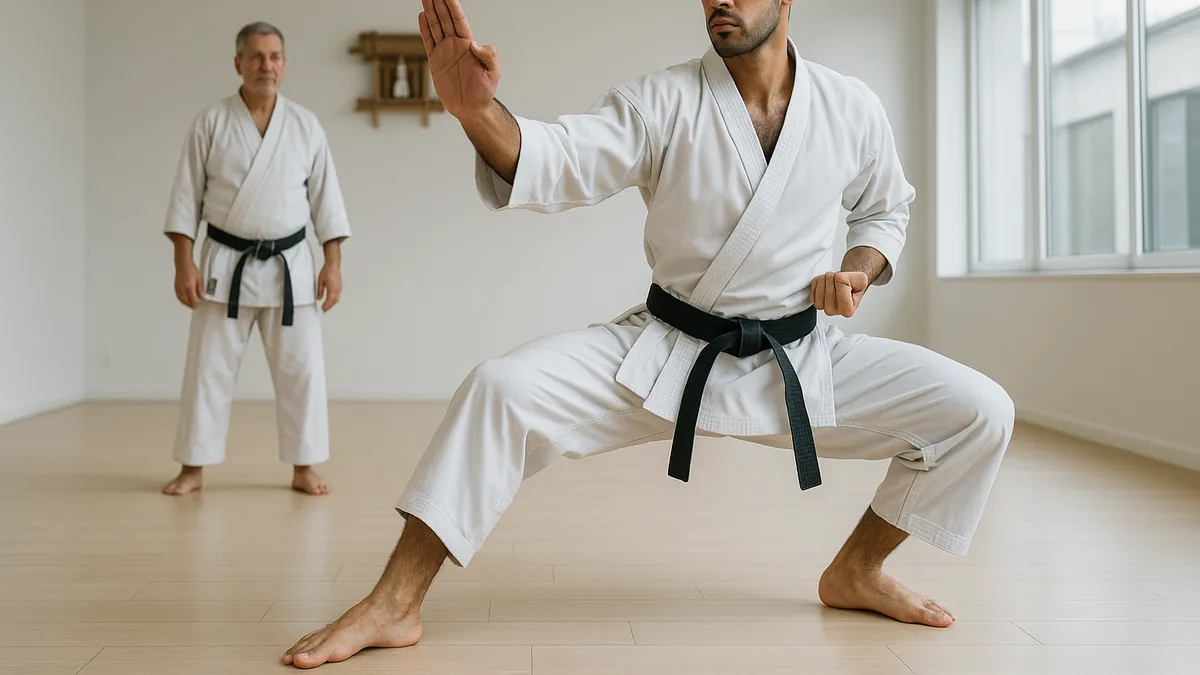
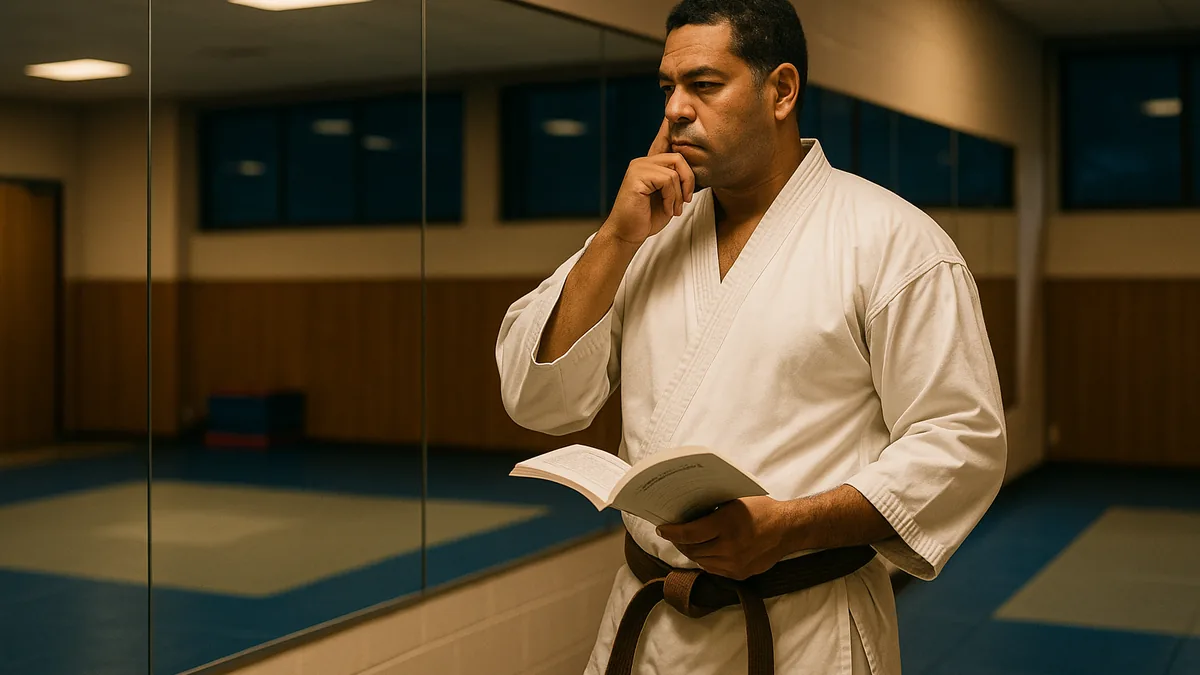
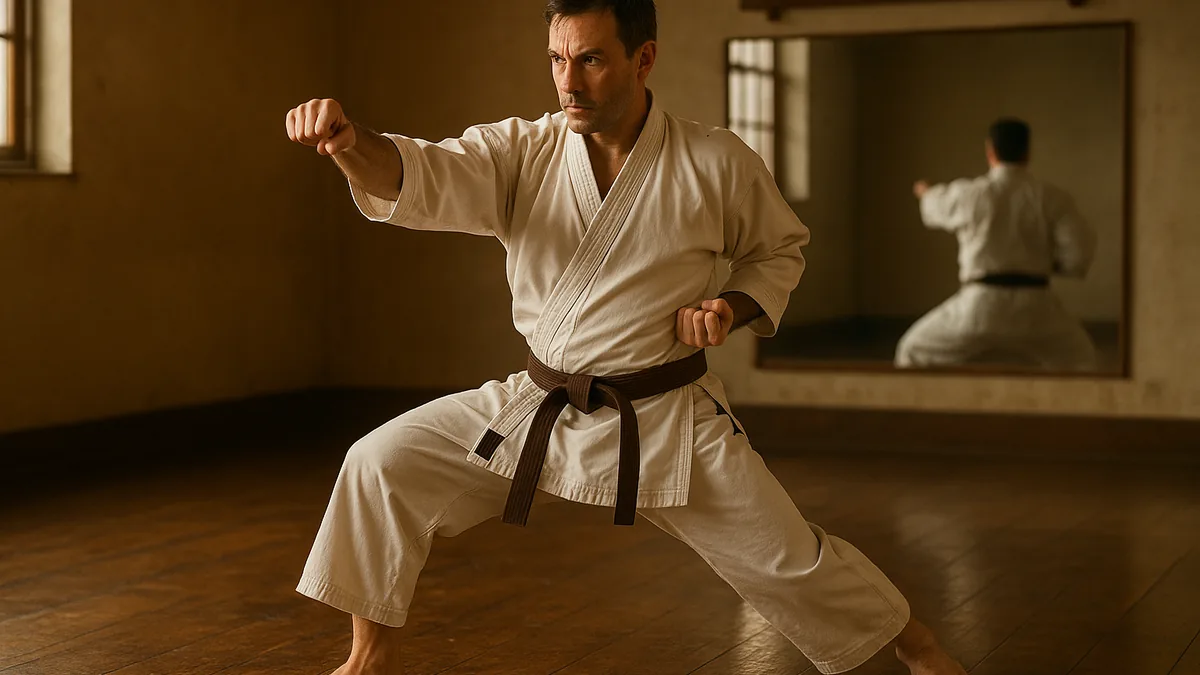
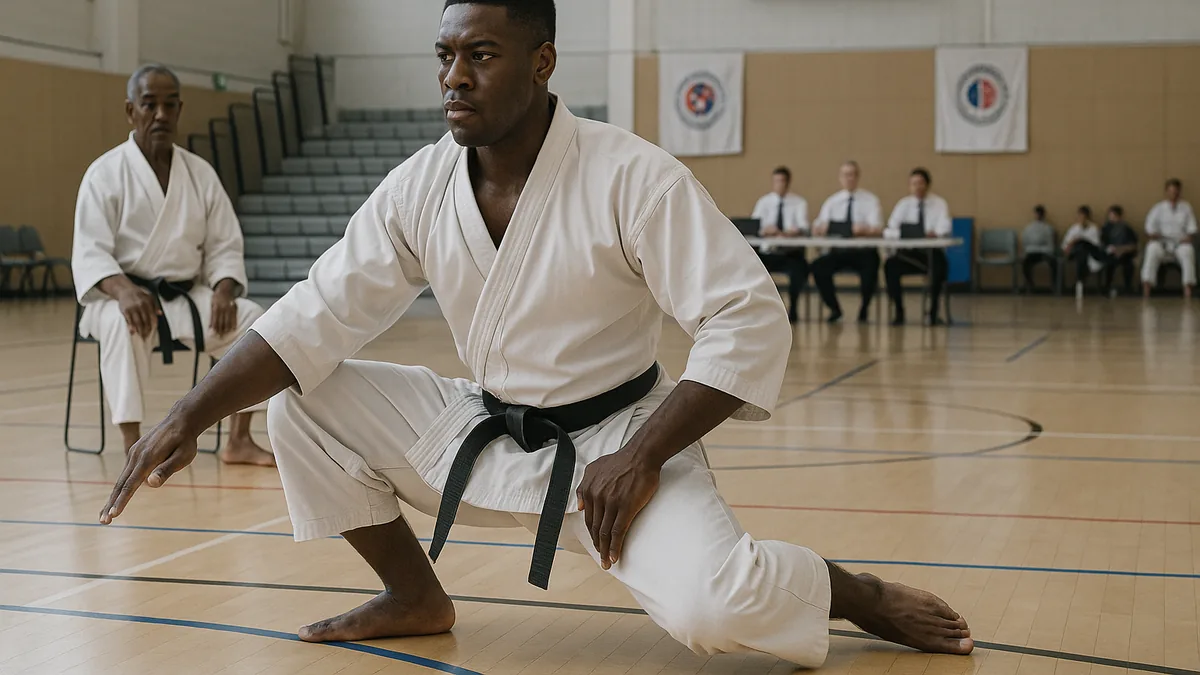
Most students think about kata as a sequence of techniques. They learn the moves, they learn the order, and then they perform them one after another like items on a list. The transitions get treated as the spaces between the real work - the pause before the next punch, the step before the next block. That’s the wrong mental model, and it produces kata that looks exactly like what it is: a collection of techniques that happen to follow each other.
The joins are where kata lives or dies. A clean gyaku-zuki means nothing if the turn before it looks like you’re checking for traffic. What I tell students who are frustrated that their kata looks mechanical is this: you’re probably executing the techniques well and the transitions badly. Fix the transitions, and the whole thing changes.
Why Transitions Break Down
The mistake I see most often is that students treat each technique as having a start and an end. They complete one thing, then they begin the next. There’s a moment of nothing in between - a reset, a breath, a tiny hesitation. In a 30-second kata, you might have 20 of those moments. Stack them up and the kata feels like it was assembled from parts.
I used to think this was a timing problem. My instructor kept telling me to “connect the techniques” and I’d nod and then go and do the same thing again, slightly faster. It wasn’t until I started doing bunkai seriously that I understood what she meant. When you apply the movements against a partner, there’s no gap. If you pause between the block and the counter, you get hit. The kata is teaching you to move continuously because the fight doesn’t stop while you reset. The transitions aren’t gaps - they’re techniques in their own right.
The second reason transitions break down is postural. Most people lose their structure during the movement between techniques. They stand up slightly in the turn. Their shoulders come forward. Their weight drifts. Then they have to rebuild before they can execute the next technique, and that rebuilding is what you’re seeing as the join. The technique looks fine. The transition looks like someone walking from one spot to another.
Understanding the embusen helps here - the floor pattern isn’t decoration, and knowing where you’re going and why affects how you move between positions. If you haven’t looked at that closely, this piece on embusen is worth your time.
The Three Drills That Actually Fix This
I’ve tried a lot of approaches over the years. These three are the ones I keep coming back to because they address the actual problem, not the symptom.
Drill 1: Isolation Transitions
This is the most important drill for fixing visible joins, and it’s the one students resist most because it feels pointless at first.
Why it matters: You can’t fix a transition by practising the whole kata. There are too many variables, and your brain is busy tracking the sequence. You need to isolate the join and train it directly.
Setup: Pick two consecutive techniques in your kata. Just two. You’re going to work only the movement between them - from the moment the first technique completes to the moment the second technique is ready to fire.
Execution:
- Execute the first technique fully. Hold the finish position.
- Begin the transition movement at roughly 20% of your normal speed. This is not slow-motion performance - it’s slow enough that you can feel every shift of weight, every adjustment of the hips, every change in your base.
- Stop halfway through the transition. Check: are your knees still bent? Is your spine upright? Are your shoulders where they should be?
- Complete the transition to the start position of the second technique. Don’t fire it yet - just arrive.
- Check again. Is your weight distributed correctly? Are you already loaded to execute?
- Now fire the second technique.
- Repeat 10 times, then gradually increase speed until it feels like one continuous movement.
What to feel for: When this is working, you’ll feel like the second technique is being generated by the transition itself. The hip rotation for the counter starts during the turn, not after it. You’re not arriving and then punching - you’re arriving as you punch. It feels like the movement is pulling the technique out of you rather than you deciding to execute it.
What most people get wrong: They practise this too fast too soon. Slow is not the enemy here. I’ve seen students do this drill at 80% speed and wonder why nothing changes. The point of going slow is to feel what you’re actually doing - not to perform a slow version of what you usually do. If you can’t feel your weight shifting through your foot, you’re going too fast.
Drill 2: Continuous Flow Sections
Once you’ve cleaned up individual transitions, you need to train them in sequence without the full cognitive load of the whole kata.
Why it matters: Transitions that work in isolation can still break down in sequence because the body starts anticipating and rushing. This drill builds the muscle memory for flowing through multiple techniques without losing structure.
Setup: Take a four to six technique section of your kata. This is your working unit. You’re going to run it on a loop.
Execution:
- Perform the section at roughly 60% speed, with full attention on the spaces between techniques rather than the techniques themselves.
- At the end of the section, flow straight back into the beginning without stopping. Don’t reset. Don’t pause. Just loop.
- Run 5 to 8 loops continuously.
- Rest, then run it again at 80%.
- On the third set, add full intent to the techniques while maintaining the connected transitions.
What to feel for: By the third or fourth loop, you should start to feel the section as a single phrase rather than individual moves. The transitions stop feeling like decisions and start feeling like inevitabilities - the body just knows what comes next and is already moving toward it.
What most people get wrong: They focus on the techniques during the loops and let the transitions become automatic in the wrong way - rushing through them to get to the “real” parts. Keep your attention on the joins. The techniques will look after themselves.
Drill 3: Visualisation Before Movement
I’d rank this third in terms of how often I use it in class, but for students who are stuck, it’s sometimes the correction that breaks the logjam when physical drilling hasn’t.
Why it matters: A lot of transition problems are cognitive before they’re physical. The student knows what comes next, so they start moving toward it before they’ve finished the current technique. The mind is already on the next move and the body follows. Visualisation trains you to experience the kata as a continuous whole, which changes how you move through it.
Setup: Sit or stand comfortably. You need to be able to close your eyes and have enough space to not be distracted.
Execution:
- Close your eyes and run the entire kata in your mind at performance speed. Don’t just list the techniques - actually feel them. Feel the weight shift, the hip rotation, the snap of the technique, the transition into the next position.
- Pay specific attention to the moments between techniques. Visualise them as part of the movement, not as pauses.
- If you lose the thread or find a section that’s blurry, stop. That blurriness is information. It means your understanding of that section isn’t clear enough to produce clean movement.
- Work that section separately - physically and mentally - then return to the full kata visualisation.
- After two or three full mental runs, perform the kata physically.
What to feel for: When the visualisation is working and you go to perform, the kata feels slightly different - less like you’re remembering what comes next and more like you’re following something that’s already in motion. The transitions feel inevitable rather than chosen.
This connects to something worth reading if you’re working on your kata more broadly - how to improve your kata covers a lot of the surrounding context for this kind of work.
What Changes With Experience
A white belt doing these drills is trying to remember what comes next while also trying to execute correctly. That’s a lot of cognitive load, and transitions suffer because there’s no bandwidth left for them. The techniques are hard enough.
By brown belt, the sequence is automatic. But I’ve noticed that a lot of brown belts are coasting on that automation - the kata flows, but it flows the way a habit flows, without presence. The transitions are smooth because they’ve been repeated, not because they’re understood. That’s better than robotic, but it’s not the same as connected.
What I see in senior practitioners - the ones whose kata makes you stop and watch - is that they seem to be generating each technique from the previous one. There’s no visible moment of decision. The turn produces the stance which produces the technique. It looks effortless because the transitions have become load-bearing structure rather than gaps between the real work.
Getting there isn’t just about repetition. It’s about the quality of attention during repetition. Learning a new kata without ingraining bad habits covers some of this from the learning side, but the same principle applies to refinement work.
Community Perspective
There’s a genuine split in how different dojos approach this. Some instructors teach kata as performance from early on - clean, connected, aesthetically unified. Others teach it as a collection of techniques first, trusting that the flow will come with time and that premature attention to transitions produces prettiness without substance.
I’ve trained with people from both camps. My honest view is that the technique-first approach makes more sense at the beginning - you need to understand what you’re connecting before you can connect it meaningfully. But I’ve seen students stay in that mode for years because no one pushed them to move beyond it. The transition work needs to become a deliberate focus at some point, not something that just gradually improves on its own.
There’s also disagreement about how much the bunkai matters for transition quality. I think it matters a lot - understanding what the transition represents physically changes how you move through it. Others argue that the kata is the kata and the application is separate. That’s a conversation worth having with your instructor, because the answer probably depends on which kata you’re working and which tradition you’re in.
Key Takeaways
- Transitions are techniques, not gaps. Train them with the same attention you give the techniques themselves.
- Isolation transition drilling is the highest-value work here. Pick two techniques, slow the join down to where you can feel every weight shift, and build from there.
- If your transitions look bad, check your posture during the movement. Most visible joins are caused by structural collapse mid-transition, not timing.
- Visualisation works - but only if you’re visualising sensation, not just sequence. A mental run that’s just listing moves won’t change how you move.
- Blurry sections in your mental kata are diagnostic. If you can’t feel a transition clearly in your mind, you won’t execute it cleanly in your body.
- Senior practitioners don’t flow because they’ve repeated the kata more times. They flow because they’ve paid attention to the right things during those repetitions. Repetition without attention just grooves the problem deeper.
If you’re working on kata for grading versus kata for understanding, there’s a useful distinction to make there too - this piece on transitioning between those two modes is worth reading alongside this work.
The weekly digest
New karate articles, once a week
One email every week with everything new on Karate Lifestyle. No spam; unsubscribe in one click.
We'll email you to confirm. See our privacy policy.