How to Practise Kata Applications Alone When You Have No Partner: Solo Bunkai Drills That Actually Build Understanding
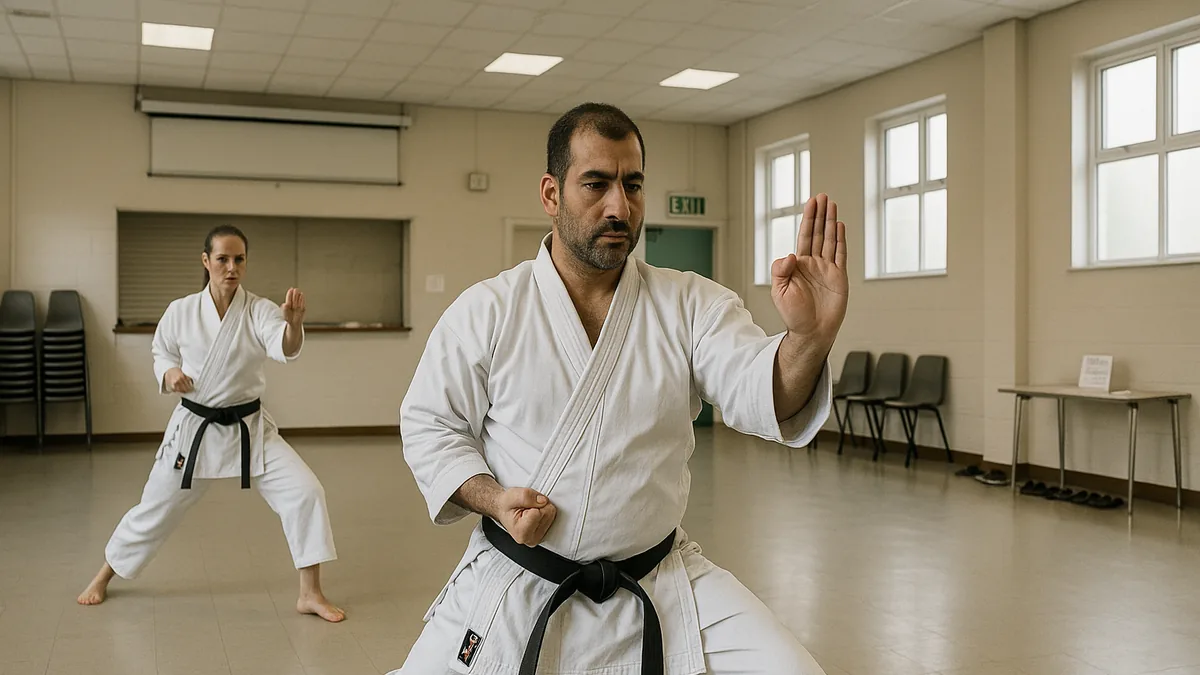
Most people who practise kata alone are just running through the movements. They hit the right positions, they count the right number of techniques, and they finish on the right spot. But they have no idea what they’re doing. I was the same way for the first few years. My kata looked clean, my instructor would nod, and I thought that meant something. It didn’t.
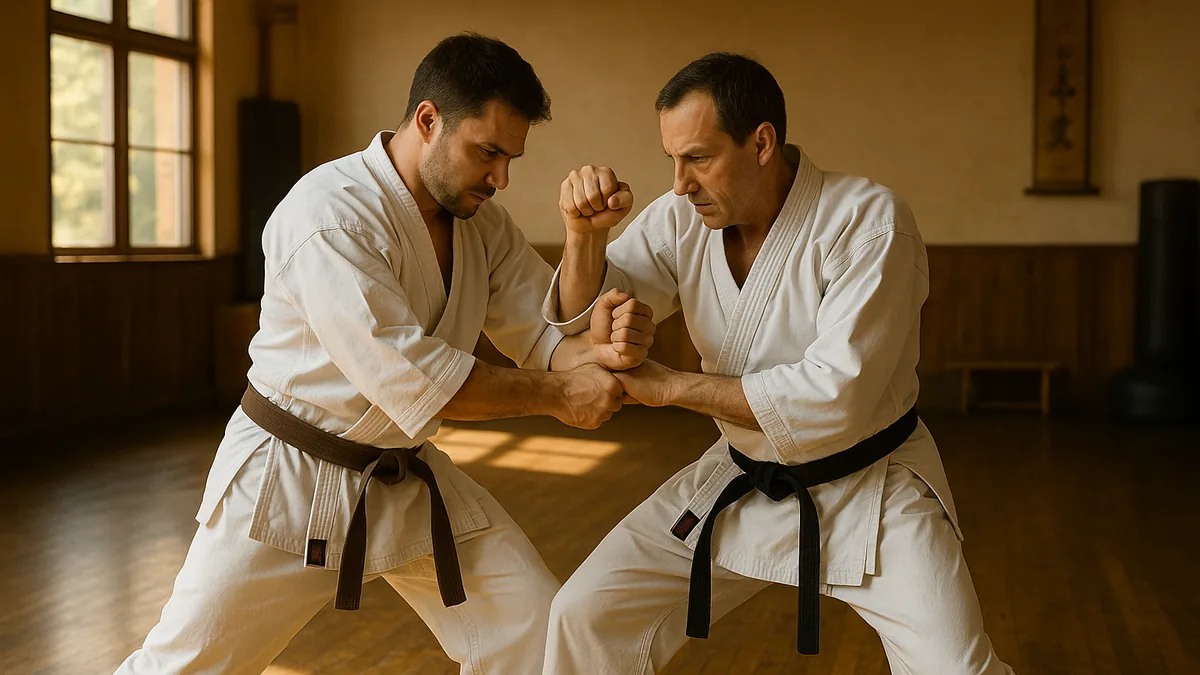
The shift happened when a senior student grabbed my wrist during a bunkai session and showed me what the third movement of Pinan Shodan was actually doing. It wasn’t a block. It was a wrist escape into a takedown entry. I went home and ran through the kata again and it felt completely different - like the form had been a locked room and someone had just handed me the key. Every movement suddenly had weight behind it.
The problem is you can’t always have that training partner available. So here’s what I’ve learned about building that understanding alone.
Why Solo Bunkai Work Is Worth Taking Seriously
Before we get into the drills, I want to be clear about something: solo bunkai practice is not a replacement for working with a partner. If you want to understand what bunkai actually is and why it matters, you need bodies involved eventually. But solo work builds something that partner work doesn’t always give you - the ability to sit with a movement, interrogate it, and develop your own interpretation before someone else tells you what it is.
What I’ve noticed over years of teaching is that students who do solo bunkai work between classes arrive to partner sessions with better questions. They’ve already felt the mechanical problem. They’re not starting from zero.
Using Video and Visual Research Without Getting Lost in It
I’ll be direct: video is one of the best tools available for solo bunkai work, and most people use it badly. They watch a clip, think “oh that’s interesting,” and then go back to doing exactly what they were doing before.
Here’s how to use it properly.
Find two or three different interpretations of the same sequence in your kata. Not just from your own style - look across styles. If you train Shotokan, watch how a Wado-Ryu practitioner handles the same movement. Watch Iain Abernethy’s interpretations. Watch older footage from Okinawan masters. The point is not to copy any of them. The point is to understand the mechanical logic that makes each one work.
What you’re looking for is the common thread. If three different instructors show three different applications for the same movement, but all three involve controlling the opponent’s arm at a specific angle, that angle is telling you something important about the kata’s structure.
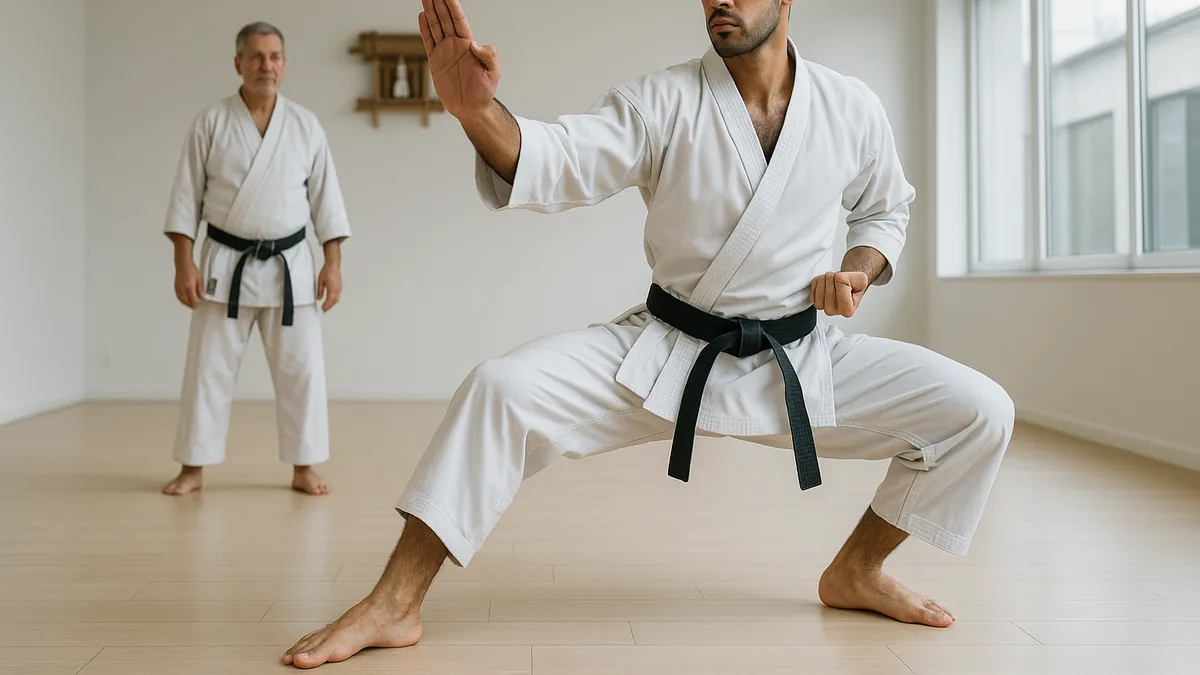
Then - and this is the part most people skip - you stand up and you try to feel what you watched. Not replicate it. Feel it. Move through the sequence slowly and ask yourself: where is the weight going? What would need to be true about my opponent’s position for this to connect?
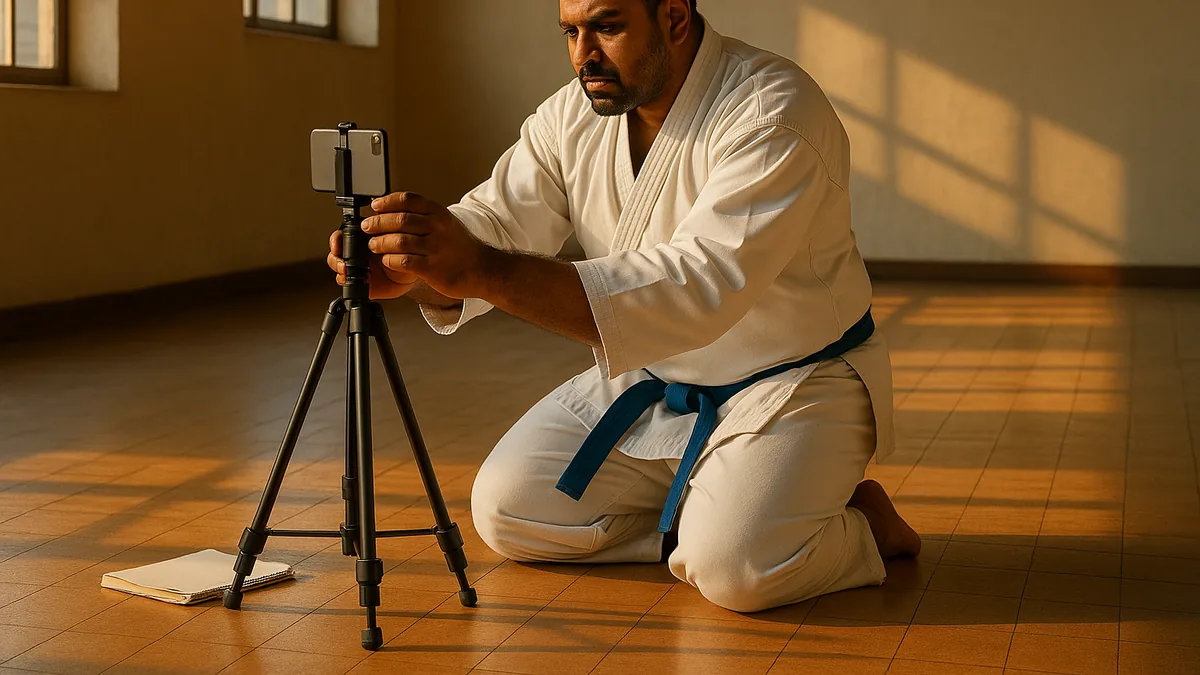
I’d also recommend reading the article on how to self-assess your kata when you have no instructor watching because filming yourself during this process is genuinely useful. What you think you’re doing and what you’re actually doing are often different things, and video closes that gap.
The Core Solo Drills
Slow Dissection - One Sequence at a Time
This is the drill I come back to more than any other. It’s not flashy, but it’s where real understanding lives.
Pick a sequence of three to five movements from your kata. Not the whole kata - three to five movements. Your only job is to make those movements make sense as a self-defence scenario.
- Stand in your ready position and perform the sequence at about ten percent speed.
- At each transition between movements, stop completely. Hold the position.
- Ask yourself: what is my body doing right now? Where is my weight? What is my lead hand doing while my other hand moves?
- Introduce an imaginary opponent. Where would they need to be for this position to make sense? What would they be doing?
- Run the sequence again, this time narrating out loud what’s happening. “I’m breaking the grip, stepping offline, controlling the head.” Saying it out loud forces you to commit to an interpretation.
The mistake I see most often here is people rushing through this drill because slow movement feels unproductive. It feels wrong at first, because we’re conditioned to associate speed with competence. But the understanding doesn’t come from speed. It comes from the pauses.
What you’re looking for physically is a sense of structural connection. When you hold a position and it feels unstable or awkward, that’s information. Either your mechanics are off, or your interpretation of the technique is wrong. A correct position should feel like it has somewhere to go - like there’s a natural next movement built into where your weight is sitting.
Shadow Bunkai - Full Scenario Improvisation
Once you’ve dissected a sequence and settled on an interpretation, this drill takes it further. You’re going to perform the kata application as a complete self-defence scenario, improvising the transitions.
This is where people get uncomfortable, because it requires you to make decisions without a partner to confirm them. That discomfort is the point.
- Choose a starting scenario. Someone grabs your lapel. Someone throws a haymaker. Someone grabs your wrist. Keep it simple and realistic.
- Begin moving. Use the kata movements as your vocabulary, but don’t feel obligated to follow the kata’s sequence exactly.
- Keep moving for thirty to sixty seconds. If you run out of kata movements, repeat them. If the scenario naturally ends, reset and start a different entry.
- After each round, ask yourself: which movements felt connected to a real outcome? Which ones felt like I was just waving my arms?
I think this drill is underrated in traditional training environments because it looks messy and it doesn’t fit neatly into a class structure. But it’s one of the things that actually builds the bridge between kata and application. If you’re curious about whether that bridge matters for your sparring, there’s a good discussion in does kata actually help your sparring?
The biggest difference between beginners and senior practitioners doing this drill is commitment. Beginners hedge. They half-commit to an interpretation because they’re worried about being wrong. Senior practitioners move with conviction even when they’re experimenting. You can’t feel whether something works if you’re doing it at half-effort.
Positional Mirroring
This one builds a specific kind of understanding that most solo practice misses: the ability to feel your kata from the other side.
Perform your kata mirrored - everything on the opposite side. If you’re interested in what this reveals mechanically, performing kata left-handed goes into real depth on this. But for bunkai purposes, the value is different.
When you mirror a kata, your dominant hand is no longer doing the dominant movements. The techniques that felt natural and powerful now feel awkward and weak. Pay attention to where the breakdown happens. That breakdown is usually telling you that you’ve been relying on strength or habit rather than structure.
- Perform your chosen kata mirrored at slow speed.
- Note every position that feels unstable or mechanically unclear.
- Go back to the standard version and examine those same positions. Are they actually structurally sound, or have you been masking the same problem with your stronger side?
You’ll feel the difference immediately when you get it right - the movement stops feeling like you’re fighting your own body and starts feeling like the structure is carrying you.
Building a Structured Solo Routine
Here’s how I’d organise a forty-five minute solo bunkai session:
Ten minutes - Run your full kata twice at performance pace, then once at half-speed. You’re warming up your body and your memory of the sequence.
Twenty minutes - Pick one sequence (three to five movements) and run the slow dissection drill. Don’t move on until you have at least one interpretation you can articulate out loud.
Ten minutes - Shadow bunkai using that interpretation. Vary the entry point. Try it from a grab, then from a strike, then from behind.
Five minutes - Mirror the same sequence. Note what breaks down.
The temptation is to cover more material. Resist it. One sequence understood deeply is worth more than ten sequences run through quickly. I’ve seen students spend months running their full kata for bunkai practice and make less progress than students who spent the same time on five movements.
Community Perspective
There’s a genuine disagreement in traditional karate communities about how much latitude practitioners should take with bunkai interpretation. Some instructors - particularly in more conservative associations - hold that the applications were fixed by the kata’s originators and deviation is a form of disrespect to the tradition. Others, particularly practitioners influenced by the Okinawan research revival of the last thirty years, argue that the kata were designed to be interrogated and that rigid single-interpretation bunkai defeats the purpose.
I’ve trained with people on both ends of this, and my honest view is that the strict single-interpretation approach tends to produce students who can demonstrate applications but can’t adapt under pressure. The kata’s embusen and floor patterns suggest a sophistication of design that rewards exploration rather than rote repetition.
That said, there’s real value in learning your style’s standard bunkai thoroughly before you start experimenting. Know the house interpretation first. Then interrogate it.
Key Takeaways
- Slow dissection of three to five movements beats running full kata for bunkai purposes every time. Depth over coverage.
- Use video to find the mechanical logic common across interpretations, not to copy a single version.
- Say your interpretation out loud during solo practice. If you can’t articulate it, you don’t understand it yet.
- The positions that feel unstable or awkward are information - either your mechanics are wrong or your interpretation is wrong. Investigate both.
- Mirror your sequences to expose what you’ve been compensating for with your dominant side.
- Commit fully during shadow bunkai. Half-effort produces no useful feedback about whether an application actually works.
The weekly digest
New karate articles, once a week
One email every week with everything new on Karate Lifestyle. No spam; unsubscribe in one click.
We'll email you to confirm. See our privacy policy.