Performing the Same Kata in Different Styles: What Changes and What Doesn't
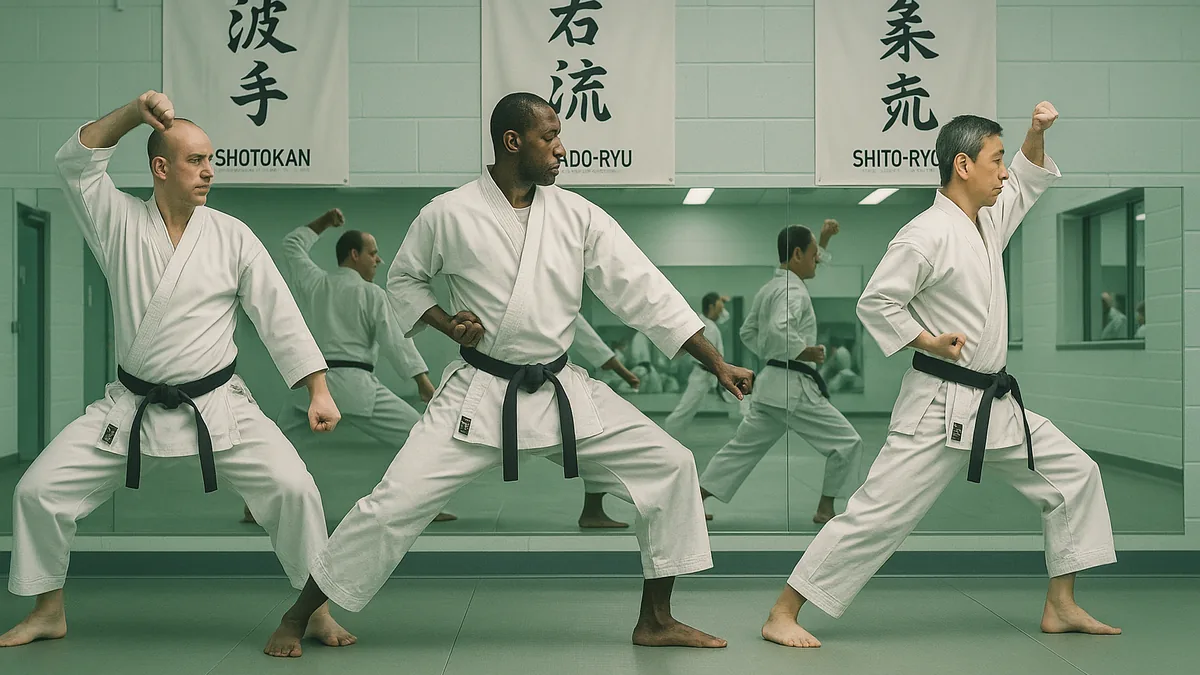
I’ve trained Bassai Dai more times than I can count. I learned it first in a Shotokan dojo, then spent a few years at a Wado-Ryu club, and more recently I’ve been cross-training with a Shito-Ryu group on weekends. Same kata, same name, same sequence of movements. And yet standing next to a senior from a different style and working through it side by side is one of the most instructive things you can do if you want to understand what kata is actually teaching you.
The differences aren’t cosmetic. They go right to the root of what each style believes about fighting, about body mechanics, about where power comes from. But here’s what I’ve come to understand after doing this long enough: the differences matter less than most people think, and the similarities matter more than most people realise.
The First Thing That Jumps Out: Stance Depth and Posture
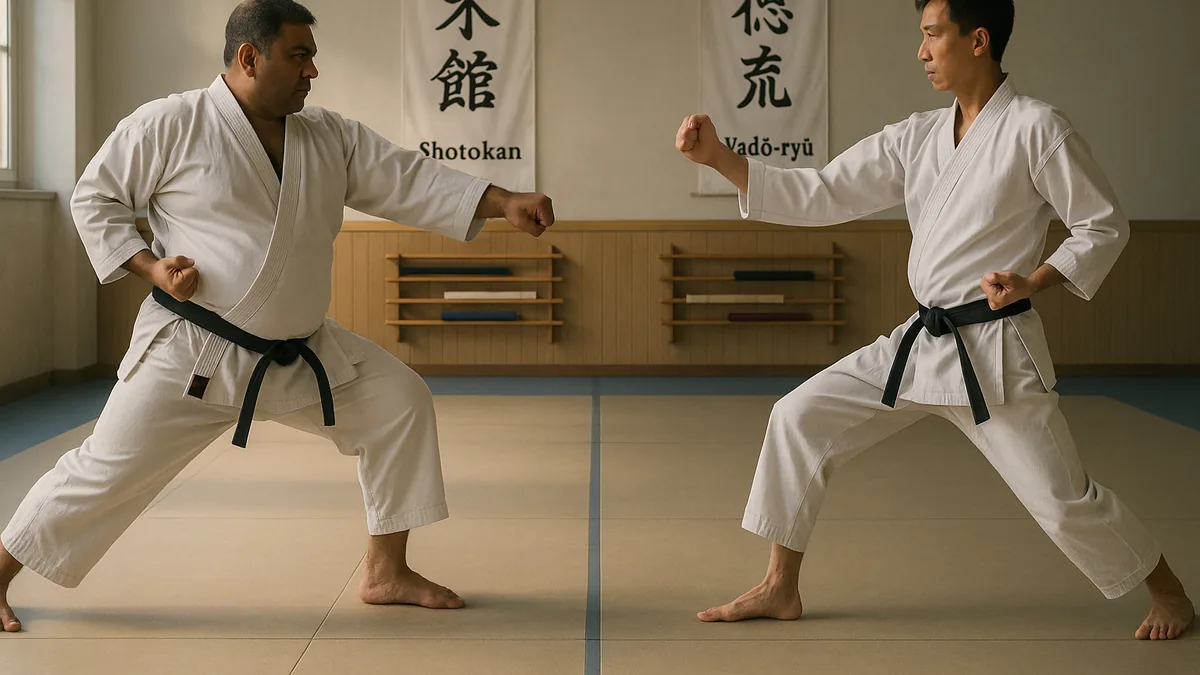
The most obvious difference when you watch the same kata across styles is stance work. Shotokan practitioners tend to sit deep - long zenkutsu-dachi, low kiba-dachi, the kind of stances that your thighs are burning in after three minutes. When I first trained Bassai Dai in Shotokan, my instructor used to say the stances were the kata. Everything else was decoration.
I didn’t fully believe him until I moved to a Wado-Ryu dojo and felt what happens when you raise the stance. Suddenly I had more mobility. I could shift weight faster, step off-line more naturally. But I also noticed I was losing something - a kind of rooted stability that I’d built without realising it. The Shotokan stances had been building leg strength and structural integrity that I’d taken for granted.
Wado-Ryu shortens the stances deliberately. It’s not sloppiness - it’s philosophy. The style prioritises evasion and body shifting over planted power. When you perform Pinan Shodan in Wado compared to Heian Shodan in Shotokan, the footwork feels lighter, more fluid. You’re not trying to drive through the opponent; you’re trying to move around them.
I’ve noticed that students who only ever train one style often interpret the other style’s approach as wrong rather than different. That’s a mistake. What the Shotokan deep stance is building and what the Wado natural stance is building are different things, and both of those things are useful.
Where the Power Comes From
This is where cross-style comparison gets genuinely interesting.
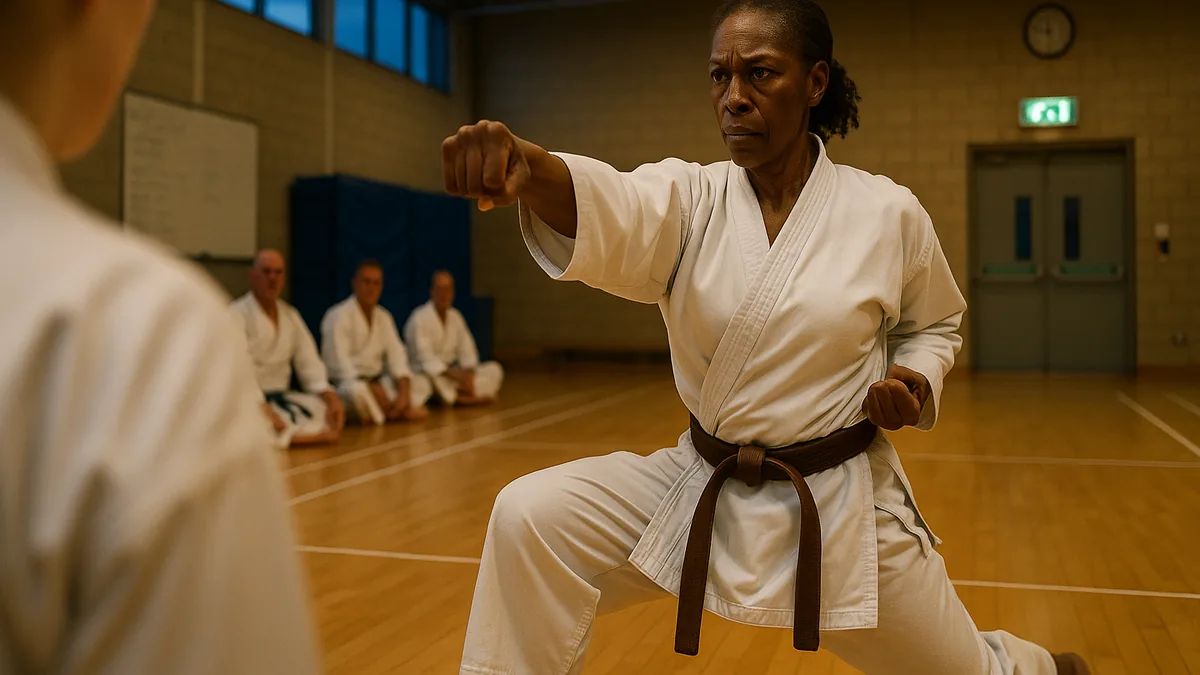
Shotokan emphasises hip rotation - full, committed, often with a visible snap at the point of impact. The kime is pronounced. You feel it through your whole torso when you do it right; there’s a momentary lock-up of the body, like everything stops at once. When I was a brown belt, I thought that feeling of kime was the goal. The more pronounced it was, the better.
Shito-Ryu changed my thinking on that. Training with the Shito-Ryu group, I started noticing that their senior practitioners weren’t locking up in the same way. Their power felt more continuous - less like a punch and more like a wave passing through the body. The hip moved, but it didn’t stop everything else. The whole sequence flowed into the next movement faster.
My Shito-Ryu training partner explained it this way: “We’re not trying to stop. We’re trying to pass through.” That landed. And when I went back to my Shotokan practice with that in mind, I started understanding kime differently - not as a full-body freeze but as a moment of maximum tension within continuing movement.
The correction that worked for me was thinking about the technique after the technique. Where does the body need to be for the next movement? If you’re locked up completely, you’re already behind. Kime should leave you ready, not stuck.
What Doesn’t Change Across Any Style
Here’s my position, and I’ll stand by it: the core principles of kata are style-neutral. The packaging changes. The principles don’t.
Every serious style I’ve trained in emphasises these things, even if they express them differently:
- Weight transfer drives technique - whether you’re stepping long or short, the power comes from committed movement, not arm strength
- The eyes lead the body - before you turn, you look; this is consistent across every version of every kata I’ve seen
- Breathing is structural - exhale on impact, not as an afterthought but as part of how the body generates and absorbs force
- Transitions are not pauses - the movement between techniques is part of the kata, not a gap you fill while you think about what comes next
I’ve seen what bunkai reveals about these principles - when you break a kata down into its applications, the underlying logic becomes obvious regardless of which style you’re working in. The application might be interpreted differently, but the structural logic is the same.
The Mistake I See Most Often in Cross-Style Training
When practitioners train a kata from a different style, the most common mistake is trying to keep their own style’s flavour while performing the other style’s sequence. You end up with a hybrid that satisfies neither standard.
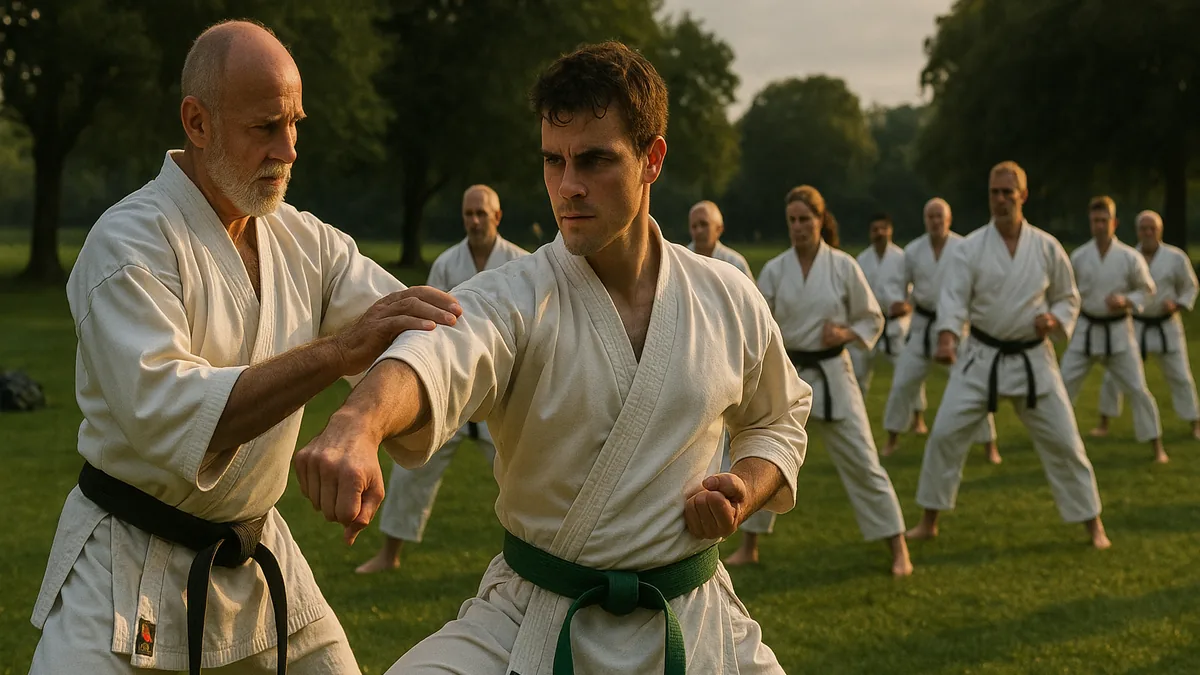
I’ve seen this constantly. A Shotokan student visits a Wado dojo, learns Kushanku, and performs it with full Shotokan kime and deep stances. A Wado student does Kanku-Dai and makes it soft and flowing when the kata calls for something more decisive. Both students think they’re adapting. They’re actually just doing their own kata with different hand movements.
The correction that actually works is committing fully to the new style’s logic, even when it feels wrong at first. And it will feel wrong. When I first tried performing kata with Wado timing after years of Shotokan, it felt like I was being lazy. Like I wasn’t working hard enough. That discomfort is the learning. You’re not just learning new movements - you’re learning a different answer to the question of what fighting looks like.
What I tell students who cross-train is this: give the new style three months of honest effort before you form an opinion. One session isn’t enough to feel what the approach is actually doing.
What Cross-Style Comparison Does for Your Understanding
Training Bassai Dai in multiple styles didn’t confuse me. It clarified things I’d stopped questioning.
When you only ever train one version of a kata, you start treating the style-specific choices as universal truths. The stance depth isn’t a choice - it’s just how stances are. The kime isn’t a specific approach to power generation - it’s just what power is. Cross-style training breaks those assumptions open.
I used to think the pauses in Shotokan kata were about control and discipline. After training with Shito-Ryu practitioners, I started seeing them as moments of intention - a deliberate choice to slow down before a committed movement. Same pause, different meaning, and the second interpretation made me better at performing the Shotokan version.
If you’re working on how to improve your kata, spending time with a different style’s approach to the same form is one of the most efficient routes I know. You’ll come back to your own style with questions you didn’t know you needed to ask.
Community Perspective
This is genuinely contested territory in most dojos. Some traditionalists - and I’ve trained under a few - argue that cross-style training dilutes your understanding and that you need to go deep into one approach before you start comparing. I have some sympathy for that view. If you’re jumping between styles every six months, you’re probably not building the depth in any of them that makes comparison useful.
But I’ve also trained with senior practitioners who spent their entire careers in one dojo, one style, and they had blind spots that cross-training would have corrected years earlier. There’s a version of style loyalty that becomes style limitation.
The question that comes up a lot - especially on forums and in seminars - is whether performing kata from another style counts as disrespectful to that style. My honest answer is: it depends entirely on your approach. If you’re trying to understand the style’s logic, it’s respectful. If you’re just borrowing movements without engaging with the underlying principles, you’re not really training the kata at all. You’re doing an impression.
The kata vs kumite debate often surfaces here too. Practitioners who prioritise kumite sometimes dismiss cross-style kata comparison as academic. I’d push back on that. The differences between how styles perform the same kata are differences in fighting theory. That’s directly applicable if you’re paying attention.
Key Takeaways
- Stance depth is a philosophical choice, not a universal standard - understand what your style’s stances are building before you judge another style’s approach
- When cross-training, commit fully to the new style’s logic - hybrids that blend styles mid-kata teach you nothing about either
- The core principles hold across all serious styles - weight transfer, eye direction, breathing, and continuous movement are not style-specific
- The discomfort of a different style is information - if Wado feels lazy or Shotokan feels stiff, that’s your assumptions surfacing, not a flaw in the other style
- Give cross-style training time before forming opinions - three months of honest work is the minimum before you can say anything useful about what a different approach is actually doing
- Use cross-style comparison to question your own defaults - the most valuable thing you’ll bring back to your own style is better questions, not borrowed techniques
The weekly digest
New karate articles, once a week
One email every week with everything new on Karate Lifestyle. No spam; unsubscribe in one click.
We'll email you to confirm. See our privacy policy.