Sanchin Kata: What It Is Actually Training and Why Most Practitioners Dismiss It Too Soon
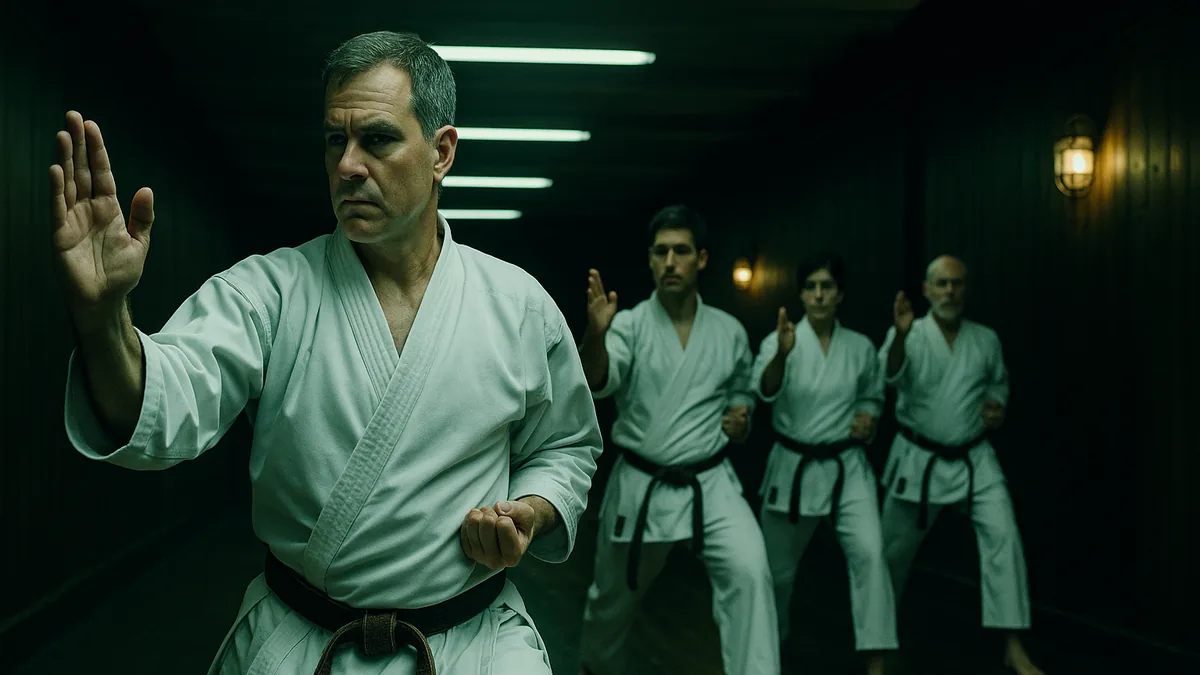
Most practitioners dismiss Sanchin within the first few months of learning it. I’ve watched it happen repeatedly. They learn the stepping pattern, get told to tense their muscles, do it a few times at the end of class, and then quietly decide it’s not for them. Too slow. Too weird. Too far removed from anything that looks like fighting. I get it. I thought the same thing for the first two years I trained it.
The thing that changed my understanding was a conversation with my instructor after a grading. I’d performed Sanchin in front of him, and he watched it without expression. Afterward he said, “You’re doing the movements. You’re not doing the kata.” I had no idea what that meant. I do now.
Sanchin isn’t performing a sequence. It’s a test of whether you can maintain structural integrity, breath control, and mental focus simultaneously, under pressure, for two minutes. That’s the whole kata. Everything else is detail.
What Sanchin Is Actually Training
The surface reading of Sanchin is muscular tension. You tense your body, you walk in hourglass stance, you do some blocks and strikes. That’s what most people see when they first encounter it, and that’s why most people underestimate it.
What’s actually being trained is the relationship between breath, structure, and intention.
The tension in Sanchin is not the point. The tension is the feedback mechanism. When your breathing is correct and your structure is solid, the muscular engagement feels coherent - like the whole body is one connected unit. When it breaks down, you’ll feel it immediately as disconnection. Your arms tighten while your core goes slack. Your breath shortens and rides up into your chest. Your stance shifts without you meaning it to. The kata exposes these failures constantly.
I’ve noticed that students who have done significant work in other disciplines - yoga, weightlifting, swimming - often pick up the structural elements faster, but they still struggle with the breath. The Sanchin breath is not relaxed diaphragmatic breathing and it’s not a sharp kiai breath. It’s sustained, pressurised, and controlled through the entire movement. What I tell students is to think of it as breathing against resistance. You’re not holding your breath and you’re not releasing freely. You’re managing pressure. If you want to understand this in more depth, the article on Kata Breathing: Where to Breathe, Where to Kiai, and Why Most Practitioners Get It Wrong covers the mechanics in detail. But for Sanchin specifically, the breath is the core curriculum. Everything else is built on top of it.
The mental training is the part nobody talks about, probably because it sounds too abstract. Two minutes of Sanchin, done correctly, requires continuous attention. You cannot autopilot it. The moment your focus drifts, your breathing changes, your tension pattern shifts, and the kata degrades. That’s by design. Sanchin was built to be a test of presence, not a performance of movement.
The Sanchin Stance and Why People Get It Wrong
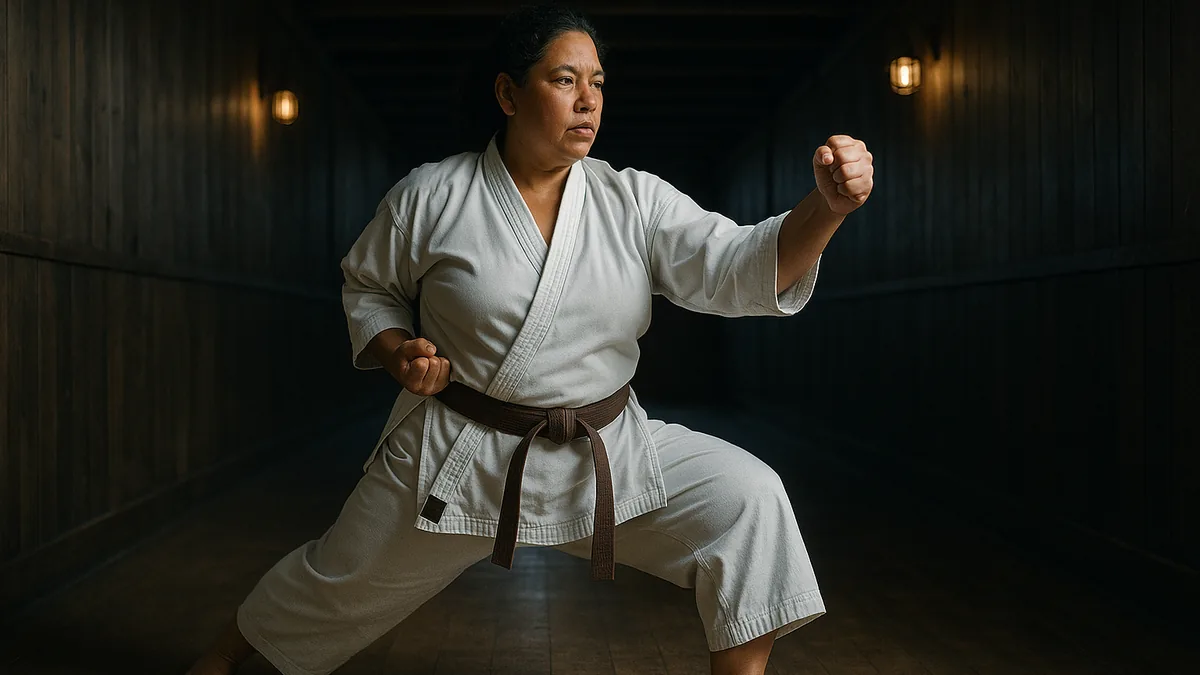
The sanchin-dachi stance feels wrong at first. Your feet are turned in, your knees are tracking inward, your weight is distributed in a way that feels unstable if you’ve spent years in natural stances. Most beginners overcorrect by exaggerating the pigeon-toe angle to the point where their knees are under strain and their hips can’t engage properly.
The correction that works every time: the inward turn is about creating tension in the hip flexors and adductors, not about pointing your feet at a specific angle. When it’s right, you’ll feel a gentle pulling sensation through the inner thigh and groin, and your lower back will feel supported rather than compressed. When it’s wrong, you feel it in your knees.
I see students do this - they lock their knees to try to create the feeling of stability they think the stance should have. That’s backwards. The stability in sanchin-dachi comes from muscular engagement, not joint locking. Locked knees in Sanchin is like gripping a steering wheel so hard your arms shake. You’ve confused tension with control.
The stepping pattern is the other common error. Sanchin uses a pulling step where the rear foot draws up before the lead foot extends. Most students rush this because the pace feels unnatural. Slow it down until you feel the weight transfer happening correctly. You should feel like you’re rooted through the whole step, not like you’re briefly floating between two positions.
The Breathing Drill That Actually Builds the Foundation
I’d put this before kata repetition for anyone who is struggling with Sanchin. The kata itself can become a crutch - you go through the motions and assume the breathing will sort itself out. It won’t.
The Standing Sanchin Breath:
- Stand in a natural stance, feet shoulder-width apart. No stance work yet.
- Inhale slowly through the nose, filling from the bottom of the lungs upward. Take four seconds.
- At the top of the inhale, don’t hold - begin the exhale immediately, but resist it. Imagine you’re breathing out through a small gap. The air should take six to eight seconds to leave.
- During the exhale, engage your core progressively. By the midpoint of the exhale, you should feel tension across your entire trunk.
- At the end of the exhale, don’t gasp. Begin the next inhale with control.
Do this ten times before every Sanchin session. What you’re looking for: the exhale should feel pressurised but not strained. If your face is going red or your shoulders are rising, you’re forcing it. If the breath sounds ragged or uneven, you’re losing control somewhere in the cycle.
Most beginners find the exhale resistance uncomfortable. That discomfort is the point. Sanchin is training you to maintain function under physical stress, and the breath drill is the entry point to that.
The Shime Test and What It Tells You
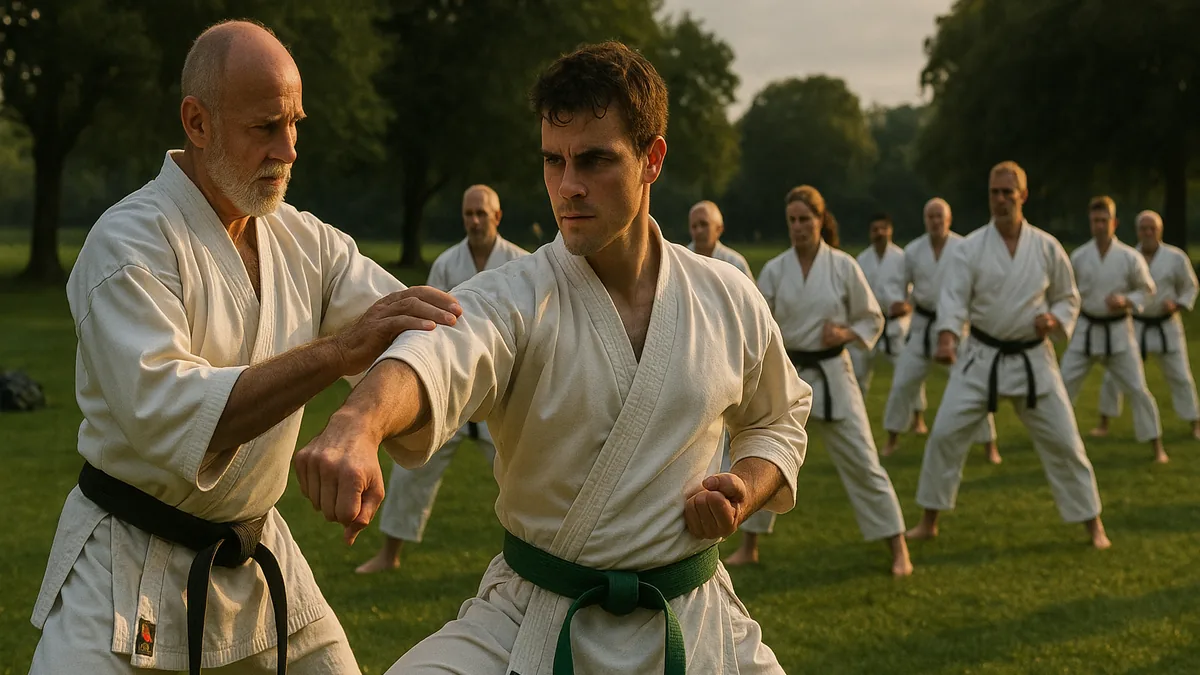
If your dojo practices shime - the physical testing of a student’s Sanchin through pushing, pulling, and striking the body while they perform - you already know how quickly the kata exposes weaknesses. If you haven’t experienced it, find someone who can do it properly.
Shime isn’t about pain tolerance. My instructor used to say that if shime hurts, you’re doing it wrong. What shime reveals is whether your structure is real or performed. A student who looks tense but has disconnected their breath from their body will collapse under light pressure at the shoulder. A student who has integrated the breath and the structure will absorb the same pressure without shifting.
I’ve seen senior practitioners take significant force through the body during shime and barely move. It’s not because they’re physically stronger than the person testing them. It’s because their structure is connected all the way through. You’ll feel the difference between absorbing force through connected structure and absorbing it through isolated muscle tension. Connected structure feels like the force goes into the ground. Isolated tension feels like the force stops at the point of contact and bounces back.
Why Patience Is Non-Negotiable With This Kata
Sanchin rewards long-term practice in a way that most kata don’t. This isn’t about complexity of movement - the movements are simple. It’s about the depth of the internal work.
I used to think I understood Sanchin at around the two-year mark. I was doing it daily, my shime results were solid, my breathing was consistent. Then I watched a recording of myself and compared it to footage of my instructor. The external difference was subtle. The internal difference, which I could now feel rather than see, was significant. His breathing drove his movement. Mine accompanied it. That gap took another three years to meaningfully close.
This is why so many practitioners dismiss Sanchin too soon. They reach a level of competence where the kata looks acceptable, and they assume they’ve extracted what it has to offer. The kata hasn’t changed. Their capacity to go deeper has just hit a ceiling they didn’t know was there.
If you’re working on improving your kata generally, Sanchin is worth treating as a long-term project separate from your other kata work. Don’t measure it by how it looks. Measure it by how it feels from the inside, and how that feeling changes over months.
Community Perspective
There’s genuine disagreement in the karate community about how much tension Sanchin should involve. Goju-Ryu practitioners tend to emphasise strong muscular contraction throughout. Some Uechi-Ryu schools take a softer approach where the tension is more internal and less visible. Practitioners who cross-train in Chinese arts sometimes bring in qi-related frameworks that don’t map cleanly onto either.
I think the tension debate is partly a semantic problem. What everyone is describing is the same phenomenon - a coherent, connected physical state - but they’re using different language and different external expressions of it. The result in shime testing tends to look similar across schools when it’s done well.
What does seem consistent across styles is that the breathing is not optional and not decorative. Every serious Sanchin practitioner I’ve trained with, regardless of lineage, treats the breath as the foundation. If you’re in a dojo where Sanchin is taught primarily as a physical conditioning exercise with the breath as an afterthought, I’d gently push back on that framing.
The other common disagreement is whether Sanchin has direct bunkai applications or whether it’s purely a conditioning and development kata. I lean toward the view that the bunkai is real but secondary. The movements contain applications, but the primary purpose of Sanchin is to develop the practitioner, not to encode techniques. Arguing about the applications before you’ve developed the internal structure is putting the cart before the horse.
Key Takeaways
- The tension in Sanchin is a feedback mechanism, not the goal. If your tension feels disconnected from your breath, the tension is wrong.
- Do the standing breath drill before kata repetition until the breath pattern is automatic. The kata will not fix your breathing on its own.
- Shime is the most honest test of whether your Sanchin is real or performed. Seek it out if your dojo practices it.
- The stepping pattern should feel rooted throughout the transfer, not like brief instability between two stable positions. Slow it down until you can feel the difference.
- Expect to be wrong about how well you understand this kata at least twice before you’re actually making progress. That’s not discouragement - that’s how the kata works.
- If Sanchin looks the same after two years as it did after six months, the problem is almost certainly the breath. Go back to basics and work it in isolation before returning to the full form.
The weekly digest
New karate articles, once a week
One email every week with everything new on Karate Lifestyle. No spam; unsubscribe in one click.
We'll email you to confirm. See our privacy policy.