Common Karate Myths Debunked
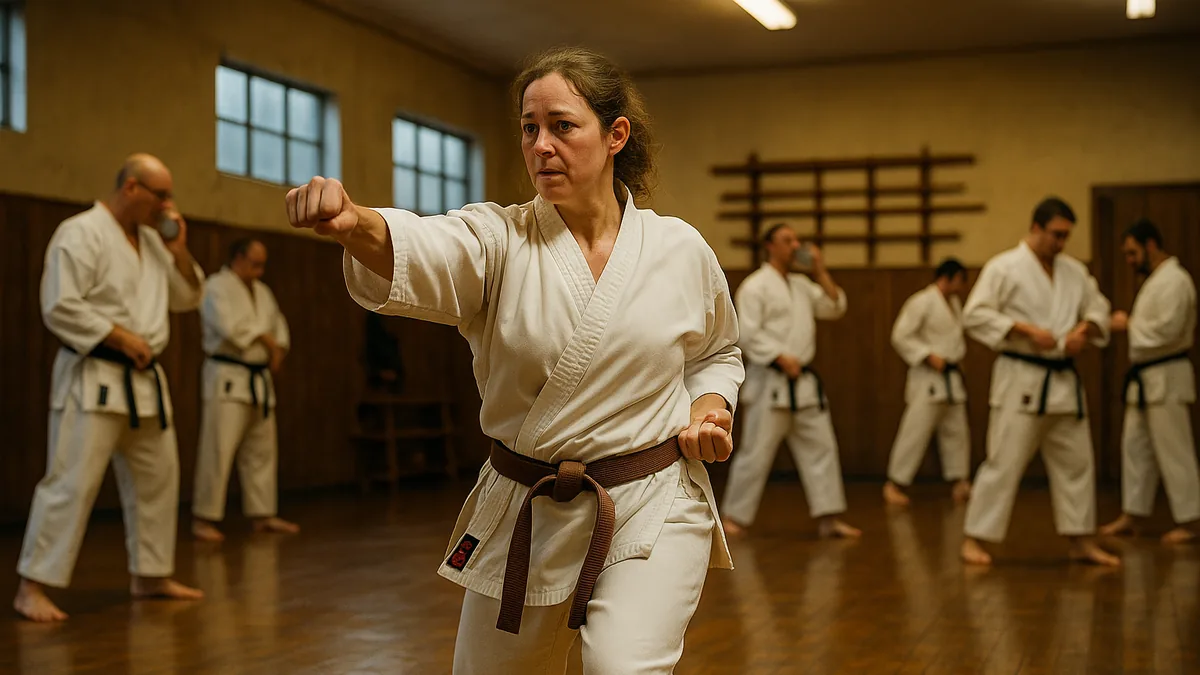
I’ve lost count of how many times I’ve had this conversation. Someone finds out I train karate, and within five minutes they’re either telling me it doesn’t work in a real fight, or asking if I can break bricks with my forehead. The myths around karate are stubborn. They survive because they contain just enough surface truth to sound credible, and because most people repeating them have never actually trained seriously.
What follows isn’t a defence of karate as a concept. I’m not interested in that. What I want to do is address the specific things I hear regularly - from beginners, from people who trained briefly and quit, from other martial artists - and give you an honest response from someone who has spent a significant chunk of their life on the dojo floor.
A Black Belt Means You’re an Expert
This one does the most damage, I think. It creates unrealistic expectations for people starting out, and it sets up a weird kind of disappointment when they finally get there.
Here’s what I tell students who are working toward their first dan: a black belt means you’ve learned the basics well enough to start learning properly. That’s it. You’ve cleared the foundation. The real training begins after that grading, not before it.
I used to think the opposite. As a kid watching my first instructor move, I was convinced that black belt was the destination. When I eventually graded, I felt… underwhelmed. Not because I hadn’t worked hard, but because I suddenly understood how much I didn’t know. My instructor at the time said something I’ve repeated many times since: “Now you’re ready to be a student.” I didn’t fully understand it until I started training with senior practitioners who had thirty years in and were still refining the same basic techniques I’d been drilling since I was a teenager.
The belt system is a rough guide to exposure, not a certificate of mastery. A first dan has been exposed to the curriculum. A fourth dan has been refining it for years. A seventh dan has probably rebuilt their understanding from scratch at least once. That’s a different thing entirely from expertise.
What I’ve noticed is that the practitioners who are genuinely dangerous to spar are rarely the ones obsessed with rank. They’re the ones who’ve trained consistently, competed, taught, and stayed curious. Some of the most technically sound people I’ve trained with were mid-level kyu grades who had been at it for a decade without rushing their grading.
Kata Is Useless for Real Training
I have a strong opinion on this one, and it’s not the opinion I held at twenty-two.
When I was coming through the ranks, kata felt like homework. You did it because you had to for grading. You did it at the start of class and then got to the “real” training. I’ve seen this attitude in almost every dojo I’ve trained in - it’s extremely common, and it’s completely understandable, because most people are taught kata as a performance rather than as a training tool.
The problem isn’t kata. The problem is how it’s usually taught.
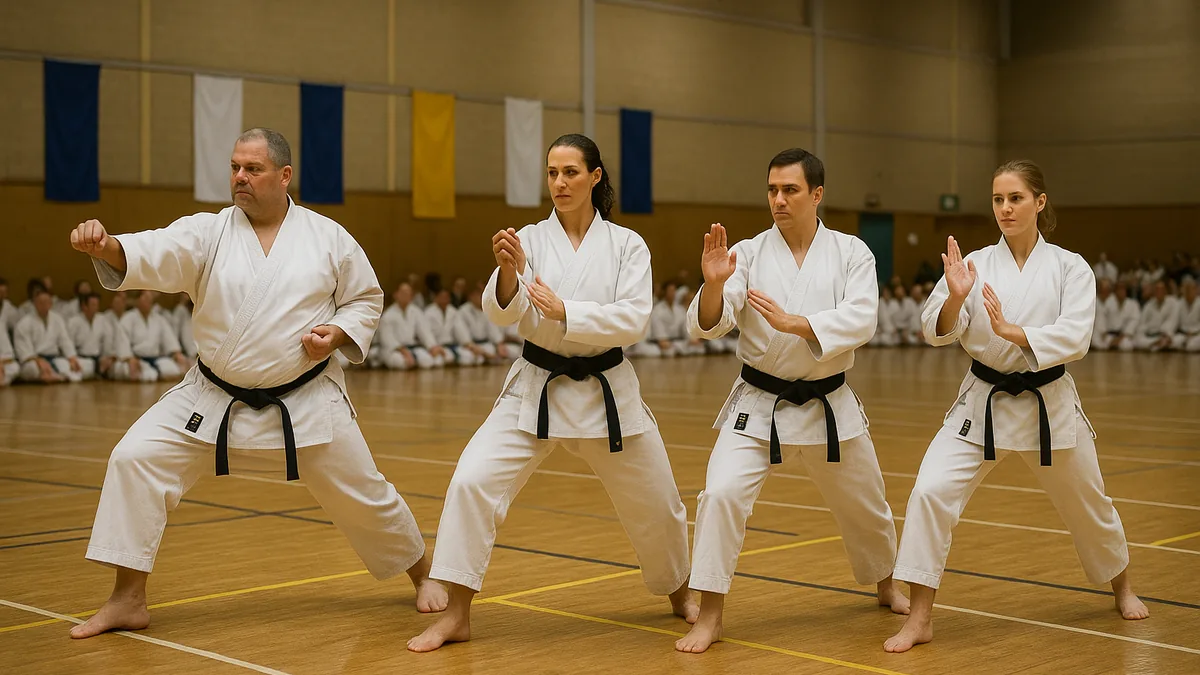
Kata contains combinations, entry angles, clinch work, and takedown setups that most people completely miss because they’ve never been shown how to look for them. If you’ve only ever practised the surface pattern, you’re going to think it’s a dance. I started understanding kata differently when an instructor broke down a sequence from Bassai Dai and showed us three different applications for a single movement. After that, the whole thing felt different - you could feel the intent behind each transition rather than just moving through positions. If you haven’t looked at it that way, the Bassai Dai Breakdown is worth your time.
There’s also a physical argument for kata that gets ignored. Performing kata correctly - with full kime, proper weight transfer, and actual tension at the right moments - is exhausting. It’s not the same as bag work, but it’s not nothing either. The biggest difference I notice between someone who trains kata seriously and someone who doesn’t is the quality of their single technique. The person who has drilled the same punch ten thousand times in kata has a different relationship with that technique than someone who only throws it in combinations.
If you want to go deeper on this, Does Kata Actually Help Your Sparring? covers the training connection in more detail, and Hidden Techniques in Kata is worth reading if you’ve ever thought the applications were too basic to be useful.
Karate Doesn’t Work in a Real Fight
This one is partially true and mostly misunderstood.
Karate as it’s often taught doesn’t translate well to real situations. Point-sparring with light contact, no clinch work, no takedowns, and a referee calling “ippon” every time someone scores - that’s not preparation for anything except point-sparring. If that’s all you’ve done, then yes, you’re going to have gaps.
But that’s a training methodology problem, not a karate problem.
I’ve trained with people whose karate I would genuinely not want to be on the receiving end of. They’ve done full-contact work, they’ve cross-trained, they’ve stress-tested their technique under pressure. Their karate works because they’ve trained it to work, not because the style has a magical property.
The correction that actually changes how people think about this: pressure-test everything. If you’ve never thrown your gyaku-zuki at someone who is actually trying to move away from it, you don’t know if you can land it when it matters. In jiyu-kumite, that reverse punch becomes your fastest counter off a failed attack - but only if you’ve drilled the timing enough that it happens without thought. The technique isn’t the issue. The training environment is.
I’d also push back on the idea that karate’s traditional techniques are inherently impractical. A well-executed low kick hurts. A tight elbow strike in close range is effective regardless of what you call it. The question is whether you’ve trained those techniques with enough resistance to know how they actually behave under pressure.
You Have to Start Young
I’ve watched adults start from scratch in their forties and reach genuinely high levels of technical skill. I’ve also seen teenagers who trained for years and never developed much beyond surface-level technique.
Starting young helps with certain physical attributes - flexibility, pattern absorption, time investment. It doesn’t determine whether you’ll be any good. What I’ve noticed consistently is that adult beginners often progress faster in the early stages because they can understand the why behind what they’re doing. They ask better questions. They make corrections more deliberately. A motivated adult who trains three times a week will outpace a disengaged teenager training the same hours within a year.
What adults do struggle with is the physical adaptation side - particularly stance depth and hip flexibility. The stances feel wrong at first because your body has been moving a specific way for decades. That resistance is real, but it’s not permanent. If you want to understand what you’re working toward structurally, Karate Stances Explained breaks down what each stance is actually doing mechanically.
Traditional Training Is Just About Tradition
Most people who say this have never trained in a dojo where traditional methods were applied with any intelligence.
Yes, there are dojos where you do things a certain way because that’s how it’s always been done, and nobody can tell you why. That’s a legitimate criticism of certain training cultures. But traditional training methods - kihon, kata, structured partner work - exist because they solve specific problems in skill development. Kihon builds the movement vocabulary. Kata sequences that vocabulary under self-directed pressure. Kumite applies it against resistance.
The problem isn’t the framework. The problem is when the framework becomes the goal rather than the tool.
My instructor used to say that tradition is the container, not the content. The content is what you develop inside it. I didn’t really understand that until I started teaching and had to explain why we do things a certain way rather than just that we do them.
Community Perspective
The kata debate is probably the most live disagreement in karate right now, and I don’t think there’s a clean resolution. There are serious practitioners on both sides. Some high-level competitors have basically abandoned kata as a training tool and train almost entirely through sparring and conditioning. Some traditional practitioners think kata contains everything you need and competition-style sparring is a distraction. Most people I respect sit somewhere in the middle, using kata as one tool among several rather than treating it as either useless or sacred.
The black belt question also generates real disagreement between styles and associations. Some organisations grade to first dan relatively quickly; others take a decade. Neither approach is obviously wrong - they’re optimising for different things. A faster grading path keeps students motivated and moving. A slower one arguably builds deeper foundations. I’ve seen excellent practitioners come out of both systems and poor ones come out of both.
What tends to change with experience is the willingness to hold strong opinions loosely. Most of the practitioners I’ve met with twenty or more years in have revised their views significantly at least once. That’s not weakness - that’s what long-term training actually looks like. If you’re new to the community and want to get a sense of the broader conversation, Welcome to KarateLifestyle is a good starting point.
Key Takeaways
- A black belt marks the beginning of serious training, not the end of it - treat it as a foundation, not a destination.
- Kata is only useless if it’s taught as a performance. Seek out the applications, and the whole thing changes.
- Karate’s effectiveness depends on how you train it, not what you call it - pressure-test your technique regularly or you won’t know what actually works.
- Adult beginners can reach high technical levels; the adaptation takes longer physically, but the cognitive side often works in their favour.
- Traditional training methods are tools - the problem is when they become rituals without understanding behind them.
- Hold your opinions about training with some flexibility. The practitioners worth learning from are the ones who’ve changed their minds at least once.
The weekly digest
New karate articles, once a week
One email every week with everything new on Karate Lifestyle. No spam; unsubscribe in one click.
We'll email you to confirm. See our privacy policy.