Karate Styles Compared: Shotokan, Goju-Ryu, Wado-Ryu, Shito-Ryu
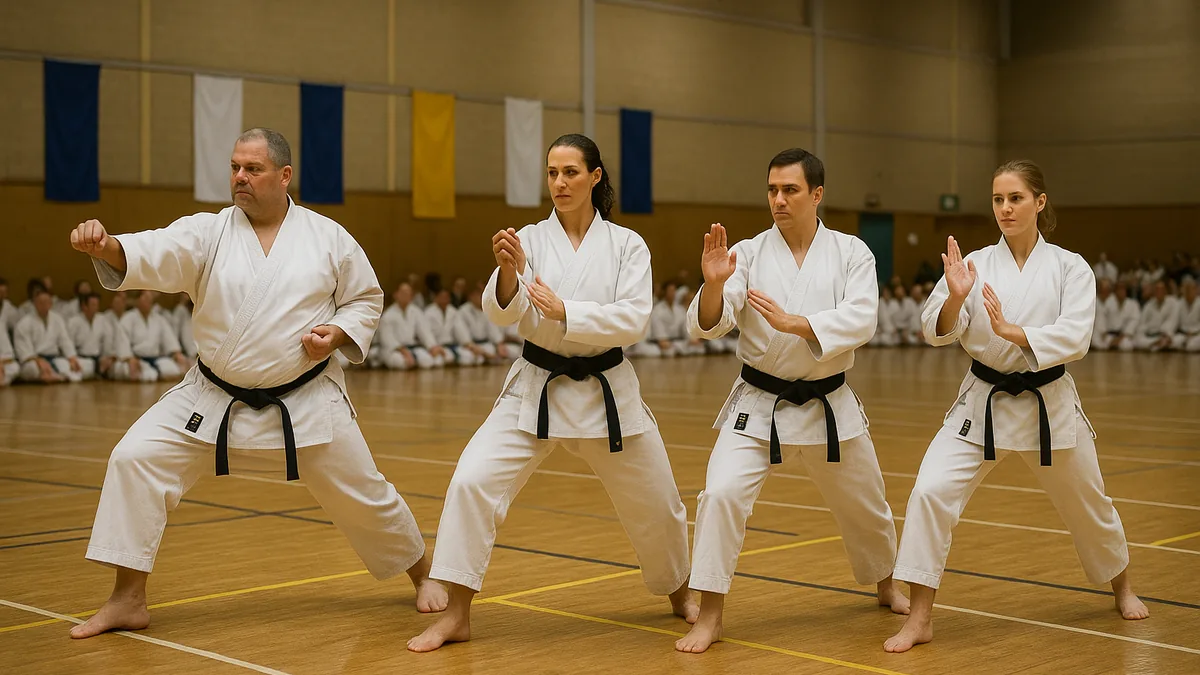
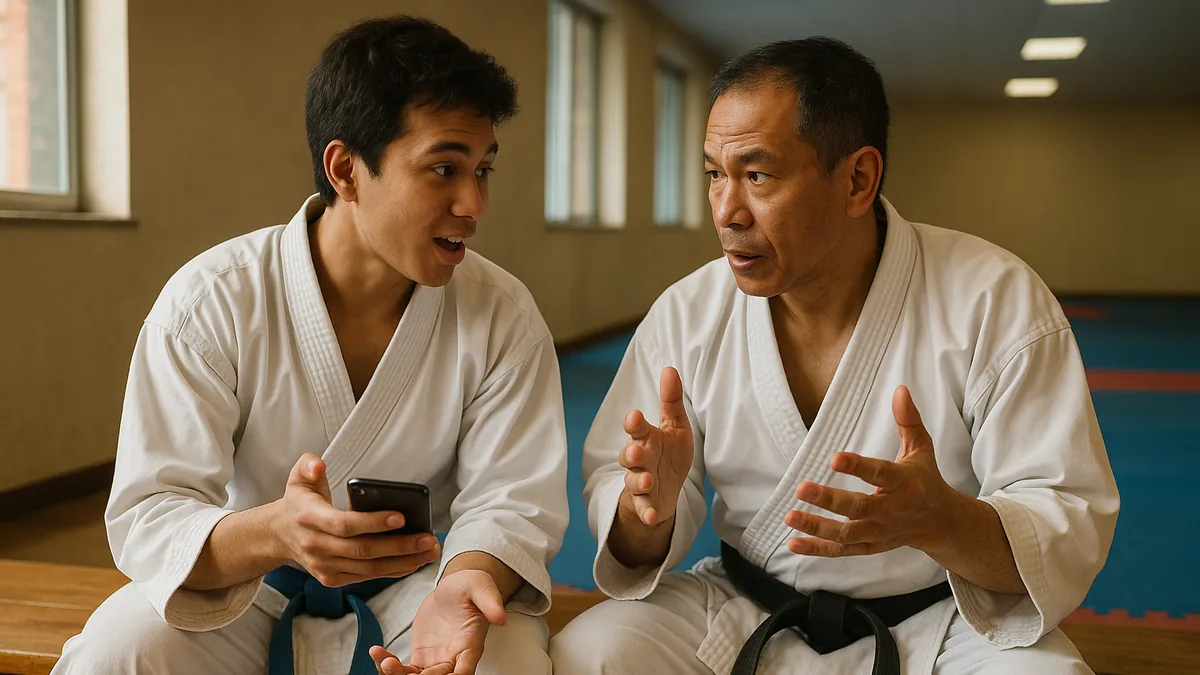
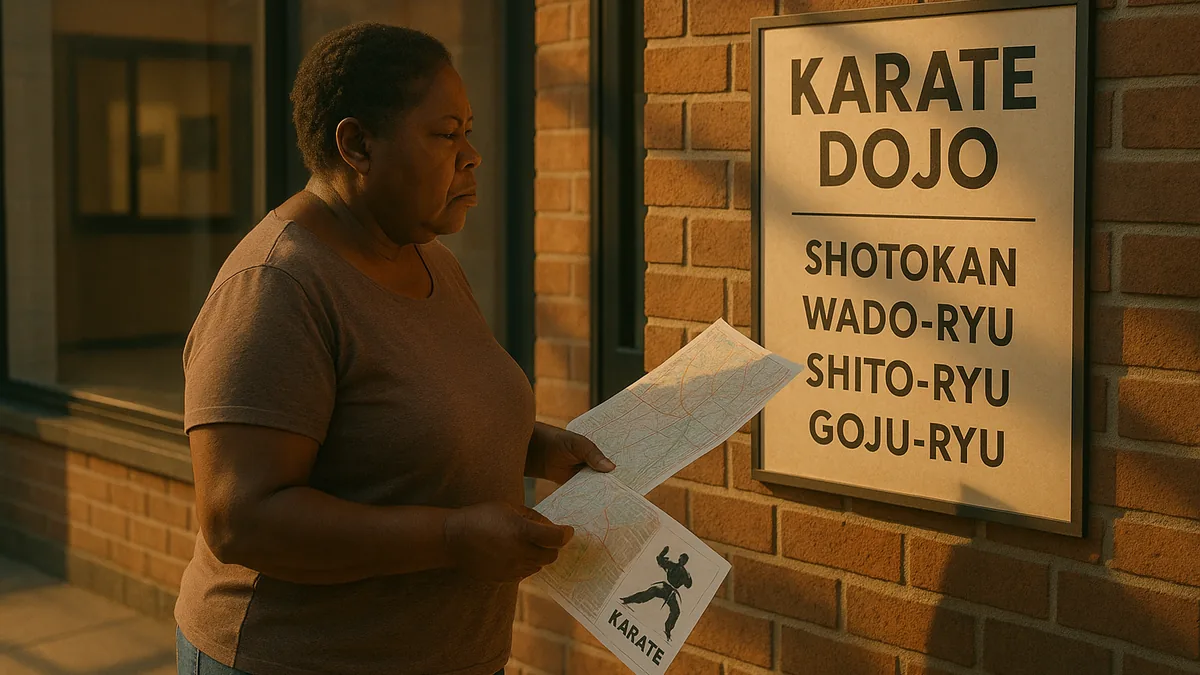
Most beginners walk into a dojo and pick a style based on what’s nearby. That’s fine - that’s how most of us started. But after a few years of training, you start asking questions. Why does my technique look different from what I see on YouTube? Why does that visiting black belt move so differently from my instructor? Why does sparring feel completely different when I train with someone from another club?
The answer is usually style. And the differences between the four main Japanese styles - Shotokan, Goju-Ryu, Wado-Ryu, and Shito-Ryu - go much deeper than most beginners realise.
I’ve trained across three of these four styles over fifteen years, cross-trained with practitioners from all four, and watched hundreds of students come through the door with no idea what they’d signed up for. What follows isn’t a Wikipedia summary. It’s what I actually think, based on what I’ve seen work, what I’ve seen fail, and what I wish someone had told me early on.
Shotokan: Power, Precision, and the Long Game
Shotokan is the style most people encounter first. It’s the most widely taught style in the UK, and there are good reasons for that - it’s systematic, it scales well to large classes, and the syllabus is clearly defined. If you’ve done karate at a school club or a leisure centre, you’ve probably done Shotokan.
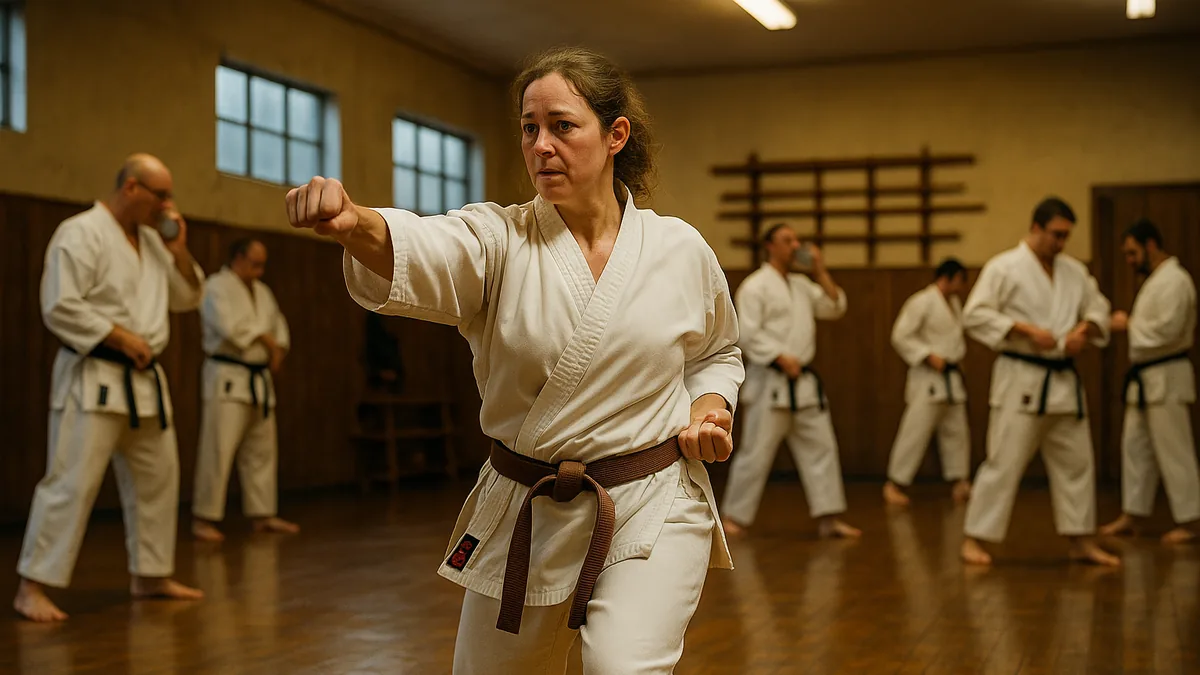
What defines Shotokan physically is the low, wide stance and the emphasis on linear power. When you’re learning gyaku-zuki in a Shotokan dojo, your instructor will spend months - maybe years - getting you to drive from the back foot, rotate through the hip, and deliver the punch as one connected movement. The hip rotation is the whole punch. Without it, you’re just throwing your arm.
I’ve noticed that beginners almost universally misunderstand this in the first six months. They see the punch land and think the arm is the point. The correction that makes the biggest difference is getting students to feel what it’s like when the hip arrives first - even slightly before the arm extends. When that connection happens for the first time, you feel it through your whole torso. It’s not just more powerful. It feels completely different. Solid, rather than flicky.
What Shotokan Does Well
The structured approach to basics is genuinely excellent for building a foundation. The kata syllabus - from Heian through to the Sentei and Tokui kata - is extensive and well-organised. If you want to understand the mechanics of karate technique in a systematic way, Shotokan gives you a clear path.
The kumite in Shotokan is also worth understanding. At lower grades, you’re doing a lot of gohon and sanbon kumite - pre-arranged sequences. Some practitioners from other styles dismiss this as unrealistic, and I used to agree with them. I changed my mind. Those sequences teach you to commit to a technique, to move at a realistic speed, and to deal with an attack that’s actually coming at you rather than a slow, cooperative drill.
Where Shotokan Can Go Wrong
The low stances are a source of ongoing debate. I’ve trained with senior Shotokan practitioners who move beautifully - the stances are low but dynamic, always transitioning. I’ve also trained with people who look like they’re posing for a photograph. The stance is a training tool, not a fighting position. If your instructor doesn’t make that distinction clear, you’ll spend years building habits that need to be unlearned.
Shotokan can also produce practitioners who are excellent at basics and kata but uncomfortable in free sparring. That’s not a Shotokan problem, it’s a dojo culture problem - but it happens more often in Shotokan clubs than I’d like to admit.
Goju-Ryu: Where Tension Meets Release
If Shotokan is linear, Goju-Ryu is circular. If Shotokan emphasises distance and power, Goju-Ryu works in close. The name itself tells you something - “go” means hard, “ju” means soft, and the style is built around the interplay between the two.
I spent two years cross-training with a Goju-Ryu club, and it genuinely changed how I understood karate. My instructor there used to say that in Shotokan, you learn to hit hard. In Goju-Ryu, you learn what to do when hitting hard isn’t an option. I didn’t fully understand that until I was in sparring with a senior Goju practitioner who just absorbed everything I threw, redirected it, and got inside my guard before I’d finished the technique.
The close-range work in Goju-Ryu is its defining characteristic. Techniques like Sanchin kata train you to generate power from a short distance - not by winding up, but by engaging the whole body simultaneously. When you do Sanchin correctly, every muscle is working. It feels like bracing against something that isn’t there. That’s the point. You’re building structural integrity, not just muscle.
The Kata Are the Curriculum
In Goju-Ryu, the kata aren’t just a grading requirement - they’re the entire technical library. Kata like Seipai, Kururunfa, and Suparinpei contain the bunkai (applications) that explain the style’s approach to close-range fighting. I’ve noticed that Goju practitioners who invest heavily in bunkai study tend to be much more effective in sparring than those who treat kata as a performance exercise.
One mistake I see constantly in beginners coming to Goju from other styles: they try to apply Shotokan timing to Goju techniques. The distances are different. The entry is different. You’re not waiting for the opponent to come to you - you’re closing the distance and working from the inside. If you try to do that with Shotokan timing, you get hit on the way in. Every time.
Who Goju-Ryu Suits
If you’re a smaller practitioner, or someone who’s thought seriously about what karate looks like when you can’t rely on reach and power, Goju-Ryu is worth exploring. The close-range work levels the playing field in ways that a purely linear style doesn’t. I’d also recommend it to anyone who’s trained Shotokan for several years and wants to understand what’s happening in the kata they’ve already learned - the Goju approach to bunkai is illuminating.
Wado-Ryu: Karate Meets Jujutsu
Wado-Ryu is the style I think gets the least credit, and I’ve seen it dismissed unfairly by practitioners from other styles who don’t understand what they’re looking at. The founder, Hironori Otsuka, was a senior jujutsu practitioner before he studied karate, and that background is visible throughout the style.
The defining principle in Wado-Ryu is tai sabaki - body evasion. Where Shotokan tends to meet force with force, Wado-Ryu sidesteps, redirects, and uses the opponent’s momentum. In jiyu-kumite, this becomes your fastest counter when your opponent overcommits to a chudan attack - you’re not blocking and then countering, you’re moving offline and countering in the same motion. When it works, it feels effortless. When it doesn’t, it’s because you moved too late and tried to make it work after the attack had already landed.
The Timing Problem
Wado-Ryu is harder to learn than it looks. The tai sabaki requires you to read the attack early - earlier than most beginners are capable of. I’ve seen students spend months learning the mechanics of a Wado-Ryu evasion and still get hit in practice because they’re initiating the movement a fraction too late. The technique is correct. The timing is off.
What I tell students is this: the movement has to start before you’re certain the attack is coming. That feels wrong at first. It feels like you’re guessing. But that’s the point - you’re reading the intention, not reacting to the technique. It took me years to understand why my instructor kept saying “move earlier” when I felt like I was already moving as soon as I saw the attack.
Wado-Ryu Kumite
The kumite syllabus in Wado-Ryu is genuinely excellent. Ohyo kumite, kihon kumite, and tanto dori (knife defence) give you a structured approach to application that goes beyond most styles’ pre-arranged sparring. If you’re interested in how karate techniques apply in realistic scenarios, Wado-Ryu’s kumite curriculum is one of the most thoughtful I’ve encountered.
I think Wado-Ryu suits practitioners who are patient, who like to understand the “why” behind techniques, and who are willing to spend time developing timing and sensitivity rather than just building power. If you want to hit things hard immediately, Wado-Ryu will frustrate you. If you want to understand how karate works, it’s one of the most rewarding paths I’ve come across.
Shito-Ryu: The Broadest Syllabus
Shito-Ryu is the style with the largest kata syllabus of the four - somewhere around forty to fifty kata depending on the association. That breadth reflects its origins: the founder, Kenwa Mabuni, studied under masters of both Shuri-te and Naha-te, the two main Okinawan lineages, and Shito-Ryu synthesises both.
In practice, this means Shito-Ryu contains techniques and principles you’ll recognise from both Shotokan (which comes from Shuri-te) and Goju-Ryu (which comes from Naha-te). There are linear, powerful techniques and circular, close-range techniques. There’s both long-range and short-range work.
The Depth vs Breadth Question
Here’s my honest opinion: the breadth of the Shito-Ryu syllabus is both its greatest strength and its biggest practical challenge. Forty-plus kata is an enormous amount of material. I’ve trained with Shito-Ryu practitioners who have a genuinely comprehensive understanding of karate technique because of that breadth. I’ve also trained with Shito-Ryu practitioners who know a lot of kata and don’t know any of them deeply.
Which outcome you get depends almost entirely on the instructor. A good Shito-Ryu instructor will use the breadth of the syllabus to show you connections - how a principle that appears in one kata shows up differently in another, how the Naha-te and Shuri-te elements complement each other. A less thoughtful instructor will just teach you more kata.
If you’re considering Shito-Ryu, visit the dojo and watch a class before you commit. Watch how the instructor teaches kata. Are they explaining bunkai? Are they connecting principles across different kata? Or are they just running through sequences? That will tell you more about what you’re getting into than the style name alone.
Shito-Ryu in Competition
Shito-Ryu has a strong competition tradition, particularly in kata. If that’s your goal - competing at regional or national level in kata - Shito-Ryu clubs often have strong competition programmes and experienced coaches in that area. I’ve seen some exceptional kata performances from Shito-Ryu practitioners that demonstrate a level of technical precision that’s genuinely impressive.
Community Perspective
This is where practitioners genuinely disagree, and I want to be honest about that rather than pretend there’s a clean answer.
The “which style is best” debate is a fixture of every forum, every Reddit thread, and every post-training conversation in the changing room. You’ll find strong opinions everywhere. If you want to see how heated it gets online, the article What r/karate Gets Wrong About Traditional Karate covers some of the more common misconceptions that fuel those debates.
My actual position: the style matters less than the instructor and the dojo culture. I’ve trained with Shotokan black belts who moved beautifully and Shotokan black belts who were technically competent but couldn’t apply anything under pressure. Same style, completely different outcomes. The dojo you train in, the instructor you learn from, and the training partners you work with will shape you more than the syllabus.
That said, I do think there are genuine differences in emphasis that suit different people:
- If you want a clear, systematic path with a well-defined grading structure, Shotokan is the easiest to navigate as a beginner.
- If you’re interested in close-range application and want to understand kata deeply, Goju-Ryu rewards that investment.
- If you’re drawn to timing, evasion, and the jujutsu elements of karate, Wado-Ryu is worth the patience it requires.
- If you want the broadest technical foundation and have access to a genuinely knowledgeable instructor, Shito-Ryu offers something the others don’t.
One thing I’ve noticed is that practitioners who’ve trained seriously in one style for ten or more years tend to become much less dismissive of the others. You start to see the same principles expressed differently, rather than seeing fundamentally different approaches. The disagreements that feel enormous at brown belt level look much smaller from the other side.
If you’re newer to all of this, the Welcome to KarateLifestyle page is worth a read for context on how to approach training as a beginner, and the Common Karate Myths Debunked article addresses some of the style-related myths that circulate constantly.
Common Mistakes I See Across All Four Styles
Choosing a style based on aesthetics rather than fit. Shotokan looks powerful and clean on video. Goju-Ryu looks intense. Wado-Ryu looks almost effortless. None of that tells you which will suit how you learn, how you’re built, or what you actually want from training.
Assuming your style’s approach is the only valid one. I used to think Shotokan’s linear power was simply correct and that circular techniques were somehow less effective. Training with serious Goju and Wado practitioners fixed that misunderstanding. The principle is the same - generate power, apply it effectively - the expression is different.
Treating style comparison as a debate to win rather than a question to explore. If you find yourself arguing online about which style is best, you’re probably not spending enough time in the dojo. The practitioners I respect most have usually trained seriously in more than one style, or at least trained regularly with practitioners from other styles.
Neglecting the fundamentals because the advanced stuff looks more interesting. This one cuts across all four styles. I’ve graded students who knew their kata beautifully and couldn’t perform a clean gyaku-zuki under pressure. The basics are where the real work happens. They’re also where the biggest differences between styles are visible - so if you want to understand what makes your style distinctive, spend more time on your basics, not less.
Key Takeaways
- Visit multiple dojos before you commit. Watch a class, not just the instructor’s credentials. How the students move after two years of training tells you more than any brochure.
- The instructor matters more than the style. A great Shito-Ryu instructor will develop you further than a mediocre Shotokan instructor, regardless of which syllabus suits you better on paper.
- Cross-train when you can. Even a few sessions with a practitioner from a different style will show you things about your own technique that years of in-style training might not reveal.
- Don’t dismiss kata as performance. Across all four styles, the kata contain the technical library of the style. If you’re not exploring bunkai, you’re missing half the curriculum.
- If your basics feel solid, they probably aren’t. The correction that separates competent technique from excellent technique is almost always in the details of the basics - the hip connection, the weight transfer, the timing of the kime. Go back to basics regularly, regardless of your grade.
- Give it time before you decide a style isn’t for you. Most of what makes each style distinctive only becomes visible after two or three years of consistent training. Judging a style at white belt is like judging a book by the first paragraph.
If you’re just starting out and thinking about equipment, the Best Karate Gi for Beginners guide is worth reading before you buy - different styles have different norms around gi weight and cut, and getting that wrong early is an unnecessary frustration.
The weekly digest
New karate articles, once a week
One email every week with everything new on Karate Lifestyle. No spam; unsubscribe in one click.
We'll email you to confirm. See our privacy policy.