How to Prepare for a Karate Grading
Nobody tells you this, but grading preparation doesn’t start two weeks before the date. It starts the moment you walk out of your last grading. Everything between those two points is preparation - you just don’t always recognise it as such until the envelope arrives and suddenly the date feels very real.
I’ve watched this cycle play out hundreds of times. Students train normally for months, then hear a grading is coming and immediately switch into a different mode. They drill harder, stay behind after class, start practising at home. That’s fine - that energy is useful. But the students who consistently perform well in gradings are the ones who trained at that level the whole time. Their “grading preparation” looks almost identical to their regular training, because their regular training was already at the right standard.
That said, there are specific things you can do in the weeks leading up to a grading that will make a genuine difference. Not shortcuts - practical adjustments that help you perform at your best under pressure.
How Far in Advance Should You Start?
The honest answer is that your preparation timeline depends on your current grade and how consistently you’ve been training.
For kyu grades up to about green belt, four to six weeks of focused preparation is usually enough - assuming you’ve been attending class regularly. You know the syllabus. You’ve been drilling the techniques. What you need in those final weeks is refinement, not learning.
For brown belt and above, eight to twelve weeks is more realistic. The technical demands are higher, the kata are longer and more complex, and the kumite expectations shift significantly. You’re not just being assessed on whether you can do the techniques - you’re being assessed on whether you understand them. That takes longer to prepare for because understanding can’t be crammed.
For dan gradings, preparation is measured in months, not weeks. Most people training toward shodan should be in a sustained preparation phase for at least six months, with the final twelve weeks being the intensive period. If you’re only starting to prepare a month before a dan grading, you’re probably not ready.
What I tell students is this: if the grading date makes you panic, that’s information. Either you haven’t been training consistently enough, or you’re not ready for this grade yet. Both are fine - but trying to compress months of preparation into weeks doesn’t work and usually leads to a bad experience on the day.
What to Actually Practise
This is where most students get it wrong. They practise everything. They run through their entire syllabus every session, trying to cover every possible thing the examiner might ask for. That approach feels productive but it’s actually shallow - you’re touching everything without really improving anything.
Here’s what I’d recommend instead:
Identify your three weakest areas and make them your priority. You know what they are. Your instructor has probably told you multiple times. Maybe your back stance is inconsistent. Maybe your kiai sounds forced. Maybe your kata timing falls apart in the second half. Whatever it is, that’s where your preparation time should go.
The techniques you’re already good at don’t need intensive drilling. They need maintenance. A few repetitions at the start of each session to keep them sharp is enough. Your improvement time - the time that actually shifts your grading performance - should be spent on the things that feel uncomfortable.
Kihon deserves more time than you think. I’ve seen students spend ninety percent of their preparation time on kata because it feels like the hardest part. It isn’t. Kihon is where most people lose marks because it’s where sloppiness shows most clearly. There’s nowhere to hide in a line of stepping punches. Every stance transition, every hip rotation, every hikite is visible. If you want to understand what quality looks like in basics, What Is Kihon? A Guide to Karate Basics breaks this down properly.
Kata should be practised in sections, not just as complete performances. Running through the whole kata start to finish is necessary, but it shouldn’t be all you do. Break it into sequences. Drill the transitions between sections. Practise the technically demanding moments in isolation. Then put it back together. The Kata for Grading article covers what examiners specifically look for in kata performance.
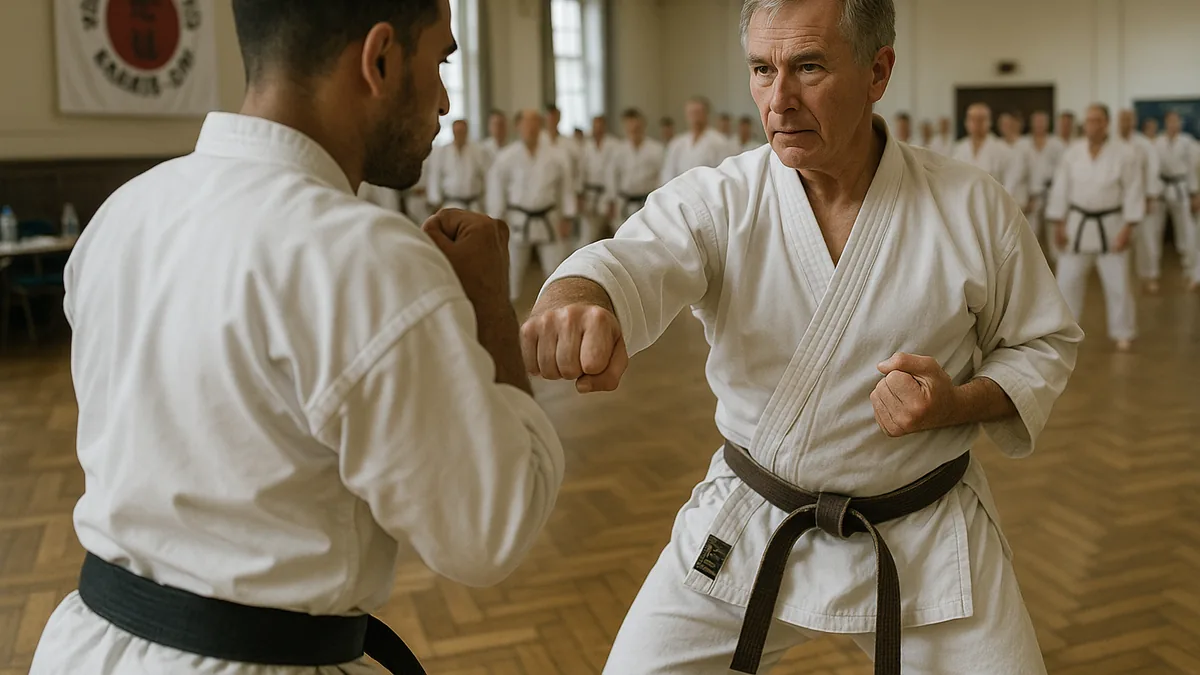
Kumite preparation should focus on composure, not on winning. At kyu grades, examiners aren’t looking for you to dominate your partner. They’re looking for whether you can apply technique under pressure while maintaining control. Practise staying relaxed. Practise breathing. Practise executing clean technique against a moving target rather than throwing everything you have.
The Mental Side
I’m going to be direct about this: most grading failures I’ve witnessed weren’t technical failures. The student knew the material. They could perform it in class. What happened on the day was a mental collapse - tension, rushing, blank moments, and a version of themselves that looked nothing like how they normally trained.
The adrenaline problem. Your body doesn’t distinguish between a grading and a genuine threat. The stress response is the same - elevated heart rate, shallow breathing, tunnel vision, muscular tension. All of these degrade technique. Your stances get shorter because your legs are tight. Your breathing is wrong because your chest is constricted. Your kiai sounds strangled because your throat has closed up.
The single most useful thing you can do is practise performing under simulated pressure before the actual day. Ask your instructor if you can perform your kata in front of the class. Do your kihon while senior grades watch. Put yourself in situations where you feel observed and assessed. The discomfort lessens with repetition, and your body learns to function despite the stress response.
The blank moment. Everyone fears forgetting their kata. Here’s what I’ve learned from both sides of the grading panel: if you blank, pause. Don’t panic-improvise. Take a breath, reset to the last position you’re certain of, and continue. Examiners have seen this hundreds of times. What they’re looking at is how you handle it, not whether it happened.
What makes blanking worse is speed. Students who rush through kata at maximum pace have no recovery time when something goes wrong. Train your kata at a controlled tempo where each technique has space around it. That space becomes your safety net.
What Examiners Actually Assess
This varies between associations, but the underlying principles are remarkably consistent.
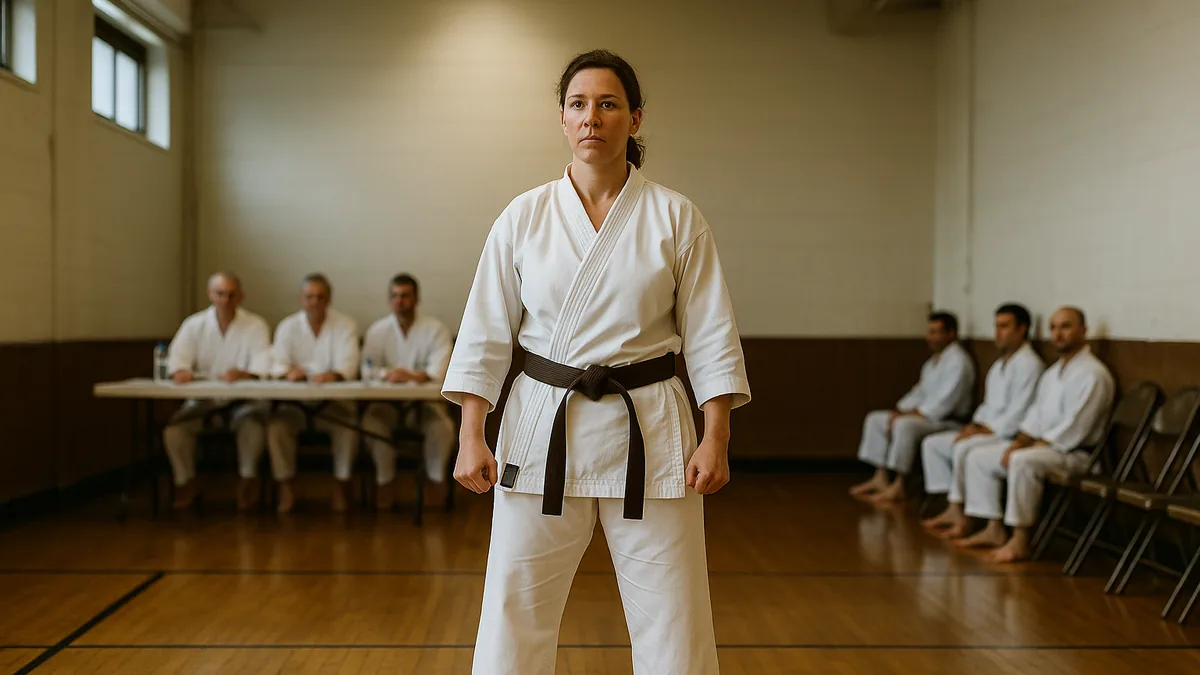
Attitude and presence. This is assessed from the moment you enter the room. How you stand. How you bow. How you respond to instructions. Whether you look focused or distracted. None of this is about personality - it’s about demonstrating that you understand what the environment requires of you.
Technical accuracy. Not perfection - accuracy. Can you execute the techniques you’ve been taught with the correct form, at the appropriate speed, with genuine kime? A single well-executed technique tells an examiner more than ten rushed ones.
Consistency. Can you maintain quality through the entire grading, or do you start strong and fade? This is where fitness becomes relevant - not because the grading is a fitness test, but because fatigue destroys form. If your stances collapse after twenty repetitions, you’re not conditioned enough for the grade you’re attempting.
Understanding. Particularly at higher grades. Do you know why you’re doing what you’re doing? Does your kata have intent? Does your kumite show tactical awareness? Can you explain the application of a technique if asked? This is why preparation at brown belt and above takes longer - you’re not just refining execution, you’re developing comprehension.
Spirit. This is hard to define but easy to recognise. It’s the difference between someone going through motions and someone who is fully present in what they’re doing. Your kiai should come from genuine commitment, not performance. Your technique should have purpose behind it, not just shape.
The Week Before
This is where discipline matters more than effort.
Don’t try to learn anything new. If you don’t know it by now, you’re not going to learn it in seven days. What you can do is polish what you already have. Focus on the small refinements - the position of your fist at the end of a punch, the timing of your hip rotation, the depth of your final stance in kata.
Reduce volume, maintain intensity. Training six hours in the final week doesn’t help. It makes you tired, sore, and potentially injured. Train normally but focus each session on quality rather than quantity. Two or three clean repetitions of your kata are worth more than fifteen sloppy ones.
Rest properly. Sleep. Eat normally. Don’t do anything unusual. I’ve watched students destroy their own preparation by training to exhaustion the day before a grading and arriving depleted.
Visualise. This sounds soft but it works. Run through your grading mentally - walking in, the commands, performing each section. Your brain doesn’t fully distinguish between vivid mental rehearsal and physical practice. Use that.
On the Day
Arrive early. Warm up before you’re told to. Don’t stand around chatting and then try to switch on when the grading starts - your body needs time to activate.
Breathe deliberately. Before each section, take one controlled breath. In through the nose, out through the mouth. It won’t eliminate the stress response but it will reduce it enough for you to think clearly.
Perform for yourself, not the panel. The moment you start thinking about what the examiners are seeing, you’ve lost your focus. Direct your attention to what you’re doing - the feeling of the technique, the position of your body, the intent behind each movement. The examiners will see the quality that comes from that internal focus.
If something goes wrong, continue. A stumble in kata, a missed timing in kumite, a moment of uncertainty in kihon. These happen. They happen to everyone. What matters is your response. Reset, refocus, and continue at the same standard. Do not let one mistake poison the rest of your performance.
What If You Fail?
Let me be honest: failing a grading happens, and it’s not the disaster most people imagine.
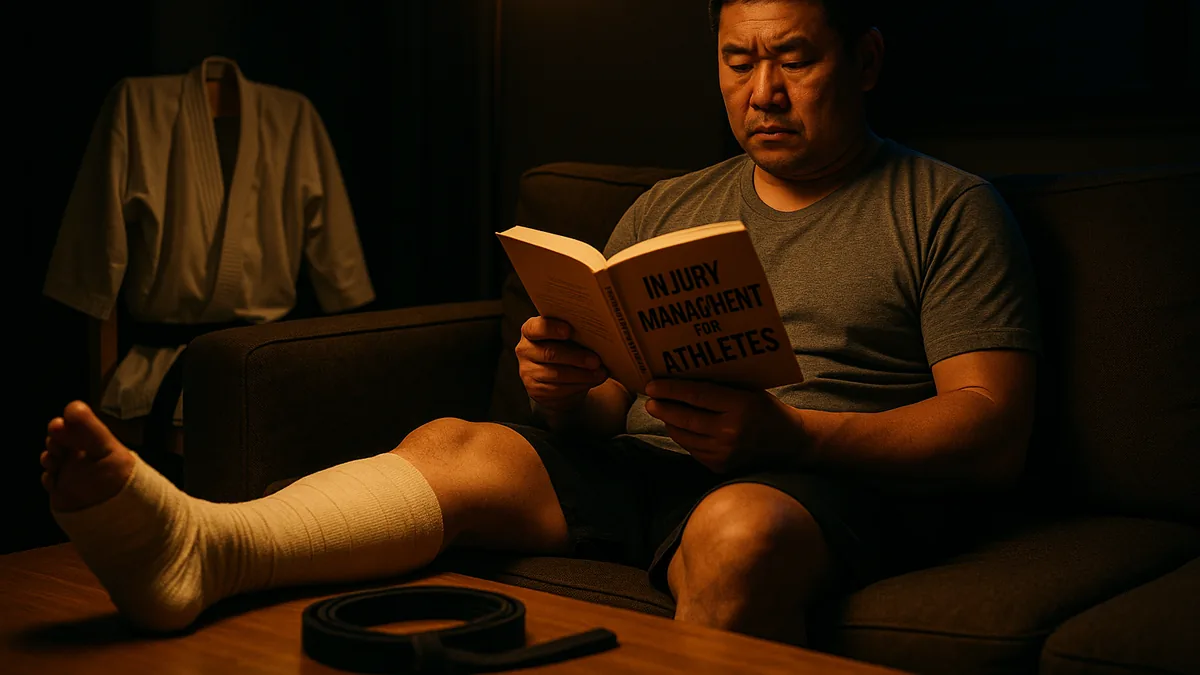
I’ve failed a grading. It was genuinely useful. Not immediately - immediately it felt terrible. But afterwards, when the emotion subsided, I could see clearly what wasn’t ready. That clarity accelerated my development in a way that passing might not have.
A failed grading tells you where you are, which is exactly what a grading is supposed to do. If you weren’t ready, the grade would have been meaningless anyway. Better to be told honestly than to carry a belt you haven’t earned.
What I tell students who fail: go back to class the following week. Don’t take a break, don’t avoid training, don’t hide from it. Show up, train, and let the work close the gap that the grading revealed.
Community Perspective
There’s a real disagreement in the karate community about grading frequency and preparation culture.
Some instructors believe in regular, structured gradings every three to four months for kyu grades. The argument is that regular goals keep students motivated and create clear milestones for progression. I’ve seen this work well in clubs with high standards where the grading frequency doesn’t mean automatic advancement.
Others prefer less structured timing - grading students only when the instructor decides they’re ready, regardless of how long that takes. This approach arguably produces better quality per grade but can lose students who need visible progress markers to stay engaged.
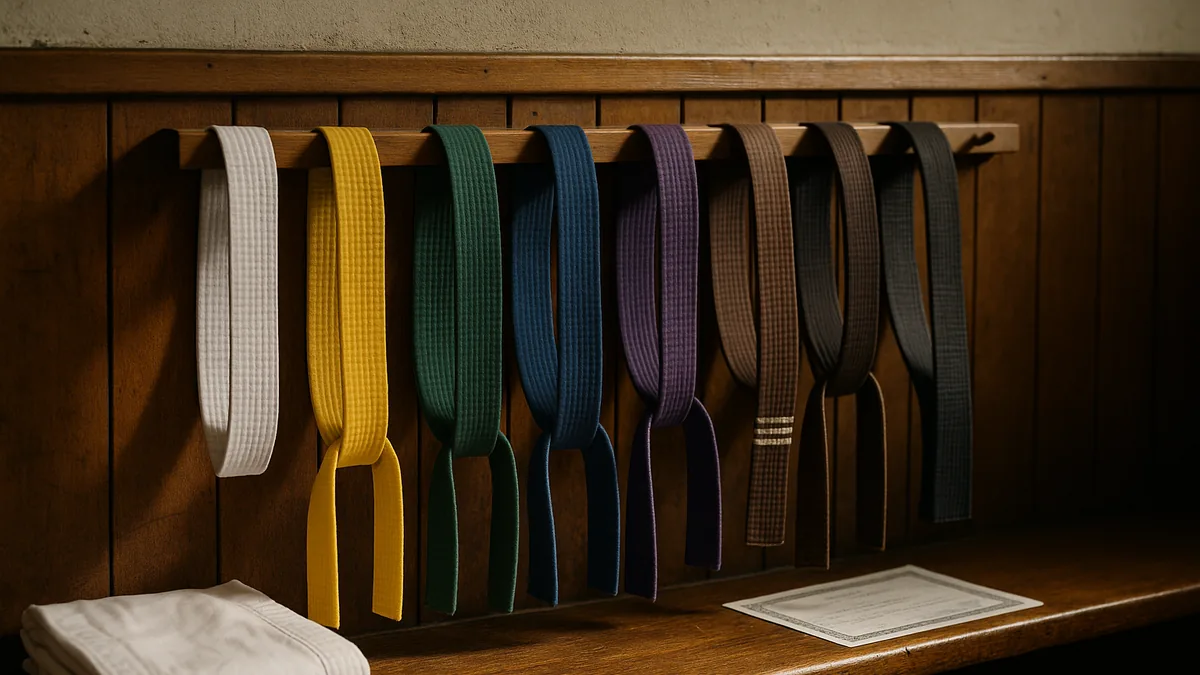
My own view sits somewhere between: students should know roughly when the next grading opportunity is, but attendance shouldn’t be automatic. If you’re not ready, waiting another cycle is not a failure - it’s an investment in doing it properly. The Karate Belt System Explained article discusses how your relationship with grades changes as you progress, which is worth reading if you’re feeling pressure about timing.
Key Takeaways
- Preparation starts months before the grading date, not weeks - your regular training IS your preparation
- Focus your intensive practice on your three weakest areas rather than trying to polish everything equally
- The mental challenge is usually harder than the technical one - simulate pressure by performing in front of others before the day
- Reduce training volume in the final week but maintain quality - arrive rested, not depleted
- If you blank during kata, pause and reset rather than panic-improvising - examiners assess your recovery, not your perfection
- A failed grading reveals exactly where to focus next - it’s information, not a verdict on your ability
If you’re preparing for a grading and want to structure your home practice effectively, How to Practise Karate at Home has practical guidance on making solo training count rather than just repeating habits.
The weekly digest
New karate articles, once a week
One email every week with everything new on Karate Lifestyle. No spam; unsubscribe in one click.
We'll email you to confirm. See our privacy policy.