Training With Injuries: When to Push, When to Rest
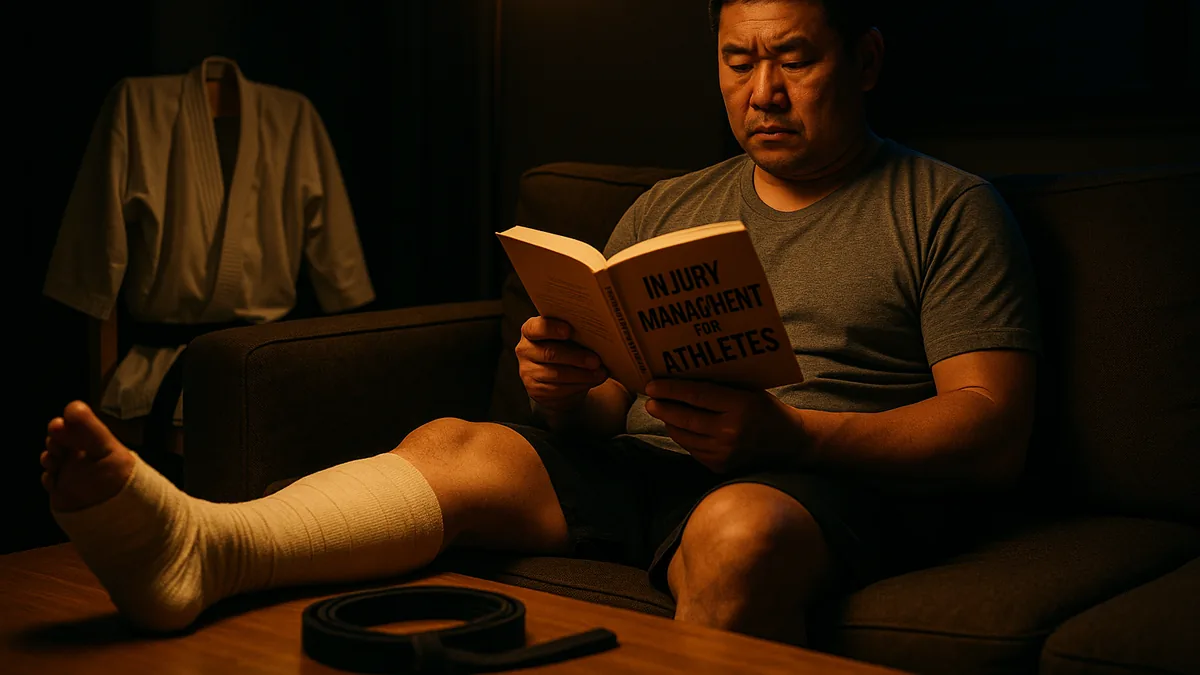
Every karateka faces this decision eventually. Something hurts. Not the normal training soreness - something specific, something that didn’t feel right during last session, something that’s still there three days later. And now you’re standing at the dojo door wondering whether walking in is dedication or stupidity.
I’ve been on both sides of this. I’ve trained through things I shouldn’t have and paid for it with longer recovery times. I’ve also rested unnecessarily when modified training would have been perfectly fine. Both mistakes cost time. The difference between a smart practitioner and a stubborn one isn’t pain tolerance - it’s the ability to accurately assess what’s happening in their own body and respond appropriately.
This isn’t medical advice. I’m not a physiotherapist and this article doesn’t replace one. What this is: a practical framework built from years of personal experience and conversations with instructors who’ve navigated the same decisions across decades of training.
The Assessment Framework
Before deciding whether to train, you need an honest assessment of what you’re dealing with. Not what you hope it is. Not what’s convenient for it to be. What it actually is.
Acute injury - something that happened during a specific moment. You blocked a kick and your forearm swelled. You landed awkwardly from a jump and your ankle rolled. You felt something pull in your hamstring during a mawashi-geri. These have a clear start point and typically involve inflammation, swelling, or sharp pain on specific movements.
Chronic issue - something that’s been building gradually. Your shoulder aches after every session. Your knee is stiff in the mornings. Your lower back tightens up during kata. These don’t have a single incident behind them - they’re the accumulation of repetitive stress, poor mechanics, or inadequate recovery.
Training soreness - delayed onset muscle soreness (DOMS) from working hard. This feels general rather than specific, affects whole muscle groups rather than specific points, and resolves within 48-72 hours. This is normal and doesn’t require modification.
The honest assessment matters because the response to each is fundamentally different.
When Complete Rest Is Non-Negotiable
Some situations have no grey area. If any of the following apply, you don’t train:
- Joint instability - the joint moves in ways it shouldn’t, gives way, or locks
- Suspected fracture - point tenderness on bone, inability to bear weight, visible deformity
- Concussion symptoms - headache, dizziness, confusion, visual disturbance, nausea after a head impact
- Acute swelling - significant swelling that appeared quickly after an incident
- Numbness or tingling - any nerve symptoms require immediate rest and medical assessment
- Pain that increases with movement - if movement makes it progressively worse rather than better after warming up, stop
These aren’t suggestions. Training through any of these risks converting a weeks-long recovery into a months-long one, or creating permanent damage. The ego cost of missing a few sessions is nothing compared to the cost of a chronic problem that never fully resolves.
I know someone who trained through a hairline fracture in his foot for six weeks because “it was just a bit sore.” The fracture displaced. He was in a boot for four months and his foot was never quite the same. Six weeks of modified training would have cost him almost nothing. Six months of rehabilitation cost him a year of progression.
The Modification Principle
For everything that isn’t in the non-negotiable rest category, the question isn’t “should I train?” - it’s “what can I train?”
The modification principle is simple: work everything that isn’t affected while protecting what is. A damaged right wrist doesn’t prevent you from kicking, training stances, practising kata footwork, doing pad work with your left hand, working on hip rotation, or drilling entries and angles. Your training session looks different - but you’re still training.
This requires a mental shift. Most of us identify our training by what we do - punching, kicking, sparring. When we can’t do those specific things, we feel like we’re not training. But training is broader than any single set of techniques. Some of the most technically productive sessions I’ve had were during injuries, because the constraint forced me to focus on aspects I’d been neglecting.
Upper body injury: Focus on stances, footwork, hip mechanics, kicks (if weight-bearing is fine), entries, angles, distance work. You can practise reading timing, work on breathing coordination, drill defensive footwork patterns.
Lower body injury: Focus on hand techniques from a static position, work on upper body mechanics, practise blocks and combinations from a seated or standing position without dynamic movement. Work on breathing and kime with stationary techniques.
Back injury: This one requires more caution because almost everything involves the back to some degree. Focus on what doesn’t aggravate it - often gentle movement is better than complete stillness, but the threshold is specific to the injury. Low stances are usually out. Rotation may or may not be fine depending on what’s affected.
Rib injury: Breathing-intensive work and twisting movements will be painful. Focus on techniques that don’t require deep rotation. Linear techniques are usually more manageable than circular ones.
Talking to Your Instructor
Good instructors want to know about your injuries. They’re not going to think less of you. What frustrates most instructors is the student who says nothing, trains through obvious pain, performs everything badly because they’re compensating, and then disappears for three weeks.
Before class: tell your instructor what’s affected and what you can’t do. Most experienced instructors will immediately suggest modifications for that session. They’ve seen hundreds of injuries over their teaching career and they know what works around what.
If your instructor dismisses your injury, tells you to “train through it,” or makes you feel weak for modifying - that’s a red flag about the instructor, not about you. Competent teaching includes knowing when to push and when to protect. An instructor who can’t distinguish between “this student is avoiding discomfort” and “this student has a legitimate injury” is a liability.
The Gradual Return
Coming back from an injury follows a predictable pattern, and trying to skip stages is how re-injury happens.
Stage 1: Pain-free daily movement. Before you return to training, the affected area should be pain-free during normal daily activities. If it hurts to walk normally, it will hurt to train.
Stage 2: Modified training - reduced intensity. Return to the dojo but operate at 50-60% intensity on the affected area. No full power, no speed work, no pressure testing. You’re verifying that the movement patterns are possible without pain.
Stage 3: Progressive loading. Gradually increase intensity over sessions - 60%, then 70%, then 80%. Each session is a test. If the area responds well (no increased pain or swelling afterward), increase slightly next time. If it flares up, drop back a stage.
Stage 4: Full training minus impact. Full speed and power on technique, but no contact on the affected area. This tests whether the pattern holds under your own force production without external impact.
Stage 5: Full return. Contact resumed, full intensity, full participation. But remain attentive for several weeks - newly healed tissue is initially weaker than original tissue and re-injury risk is elevated.
Rushing through these stages is the single most common mistake I see. Someone feels 80% recovered, decides they’re fine, goes back to full sparring, and ends up worse than when they started. The last 20% of recovery is where patience matters most.
Common Karate Injuries and Practical Responses
Bruised forearm/shin - The classic. These are almost never worth missing training for, but they do affect technique. Don’t repeatedly block hard impacts on a fresh bruise - you’ll just extend the healing time. Wear light padding if your club allows it, or modify to avoid direct contact on that area.
Sprained ankle - Grade 1 (mild stretching): 1-2 weeks modified, then gradual return with taping or brace. Grade 2 (partial tear): 4-6 weeks with proper rehabilitation. Grade 3 (complete tear): medical management, potentially months. Don’t underestimate ankle sprains - the most common re-injury in karate is a previously sprained ankle going again because the person returned too early.
Jammed fingers - Tape them to the adjacent finger and carry on, unless there’s significant swelling or deformity. Jammed fingers are unavoidable in kumite and the response is management, not rest. That said, a fracture presents similarly - if it’s not improving after a week, get it imaged.
Pulled hamstring/groin - These are deceptive because they feel minor initially but respond very badly to re-aggravation. Rest from kicking for longer than you think necessary. Gentle flexibility work during recovery, but nothing near end-range. Return kicking starts low and slow.
Knee pain - The most concerning common injury because knees don’t recover from certain damage. If it’s muscular or tendon-related (runner’s knee, IT band), modification and graduated loading usually resolves it. If it’s internal (clicking, locking, giving way, swelling without external cause), get it assessed before training further. Deep stances may need permanent modification for some knee conditions.
Lower back pain - Usually muscular/postural rather than structural, but the consequences of getting this wrong are severe. If it’s muscular: gentle movement, avoid deep stances and heavy rotation for 1-2 weeks, focus on core stability during recovery. If there are nerve symptoms (shooting pain down the leg, numbness, tingling): stop immediately and seek assessment.
The Long-Term Perspective
Here’s what twenty-year practitioners understand that three-year practitioners don’t: your training career is measured in decades, not sessions. Missing one week, two weeks, even a month is genuinely insignificant across a thirty-year training life. What isn’t insignificant is the chronic problem that never resolves because you never gave it adequate recovery time.
The practitioners who are still training well in their fifties and sixties are not the ones who were toughest in their twenties. They’re the ones who were smartest. They respected their body’s signals, modified when necessary, returned gradually, and accumulated decades of consistent training rather than years of intense training interrupted by months of forced recovery.
Warming up properly prevents a significant proportion of training injuries. So does adequate recovery between sessions. The best injury management is prevention - but when prevention fails, intelligent management is the difference between a minor interruption and a career-altering setback.
Key Takeaways
- Distinguish between acute injuries (specific incident), chronic issues (gradual build-up), and normal training soreness - each requires a different response
- Complete rest is non-negotiable for joint instability, suspected fractures, concussion symptoms, nerve symptoms, or pain that worsens with movement
- For everything else, the question isn’t whether to train but what to train - modify around the injury rather than stopping entirely
- Communicate with your instructor before class - good teachers will help you modify effectively
- Follow a staged return: pain-free daily movement → modified training → progressive loading → full intensity minus impact → full return
- Think in decades, not sessions - missing two weeks protects a thirty-year training career
- If you want to get ahead of injuries rather than react to them, the guide on preventing common karate injuries covers prehab work that genuinely reduces your risk
The weekly digest
New karate articles, once a week
One email every week with everything new on Karate Lifestyle. No spam; unsubscribe in one click.
We'll email you to confirm. See our privacy policy.