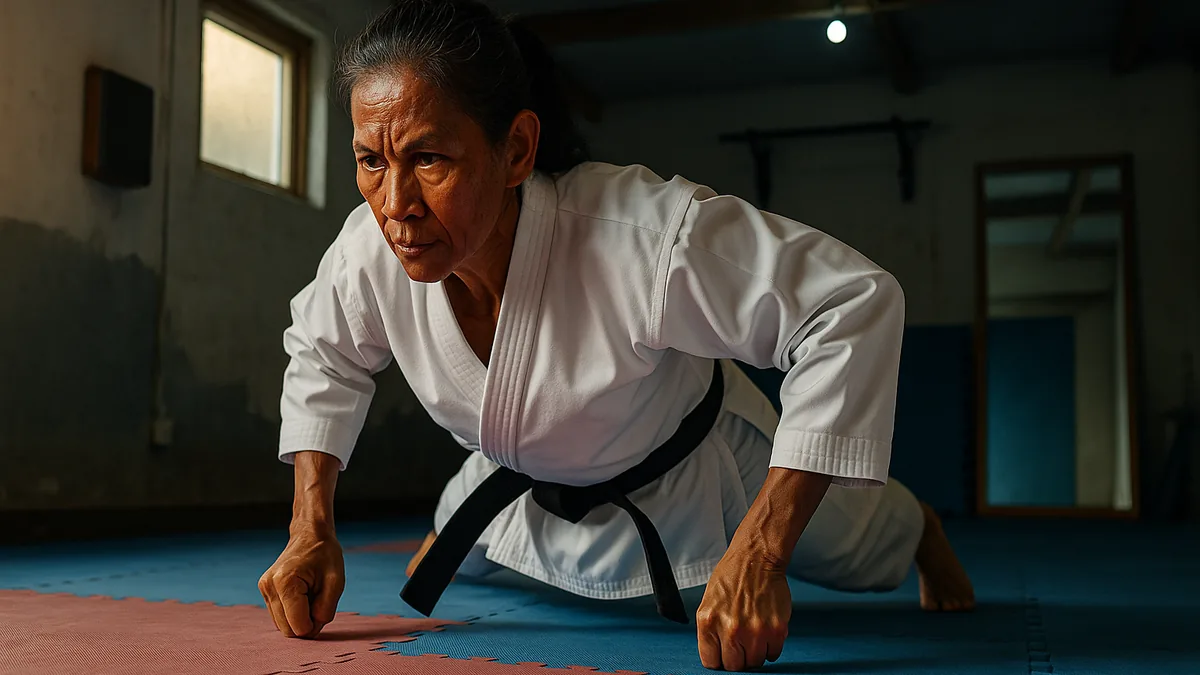
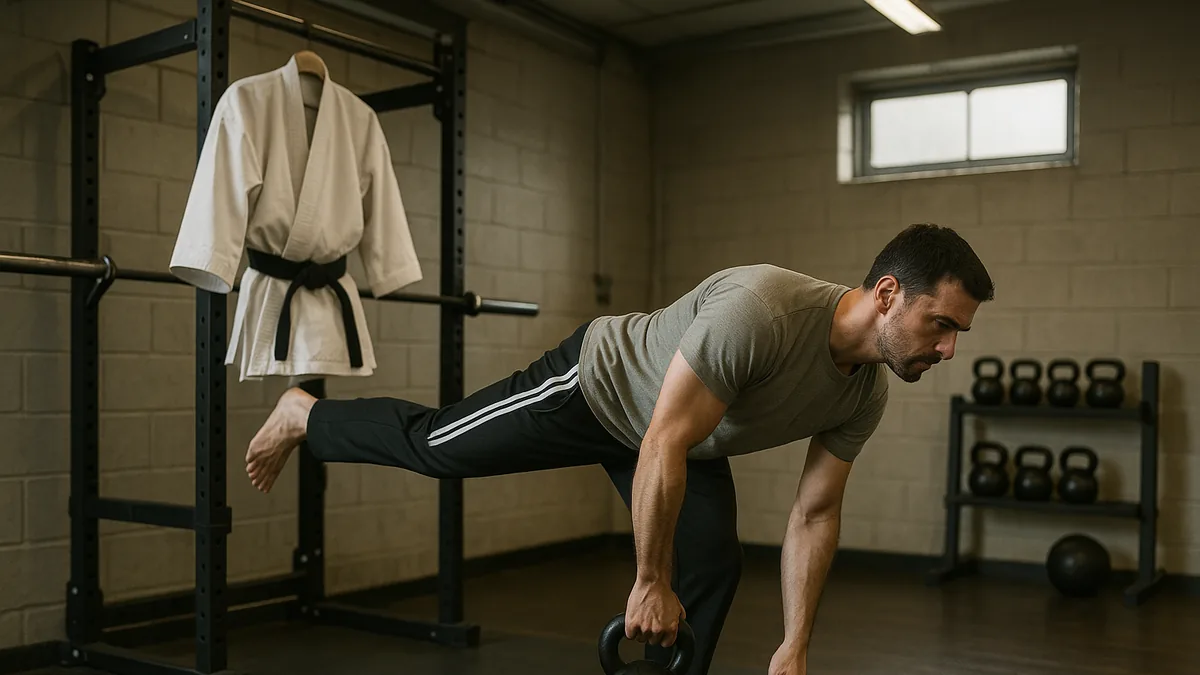
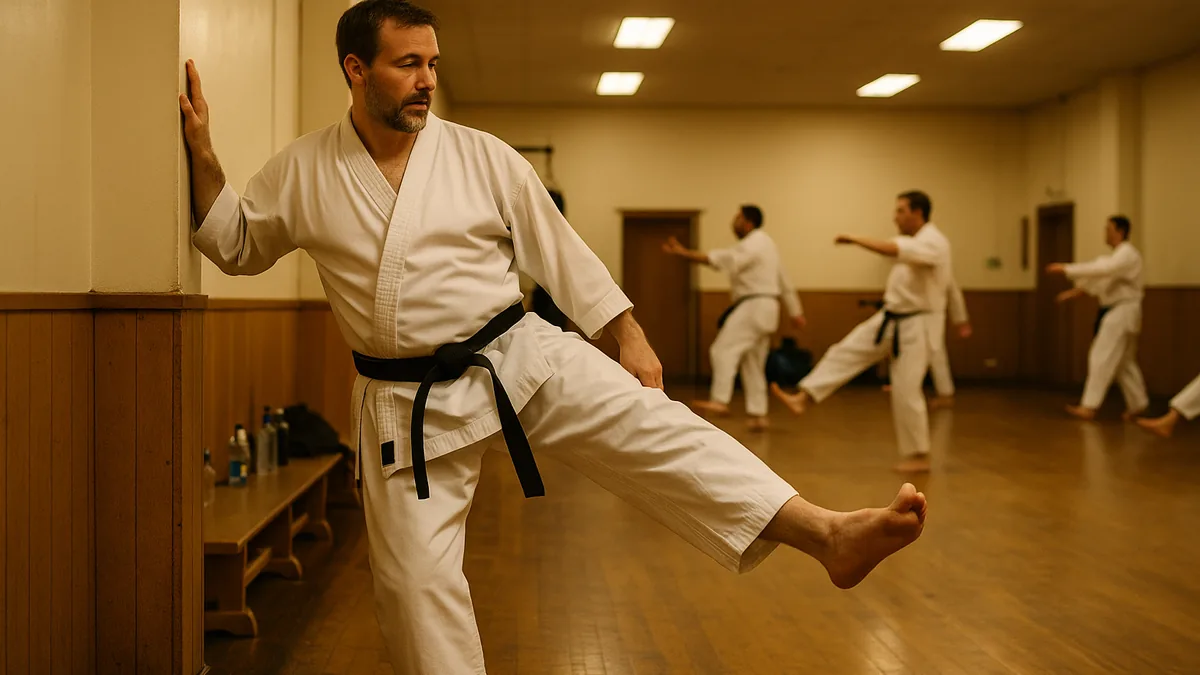
Flexibility for Karate: What Actually Matters
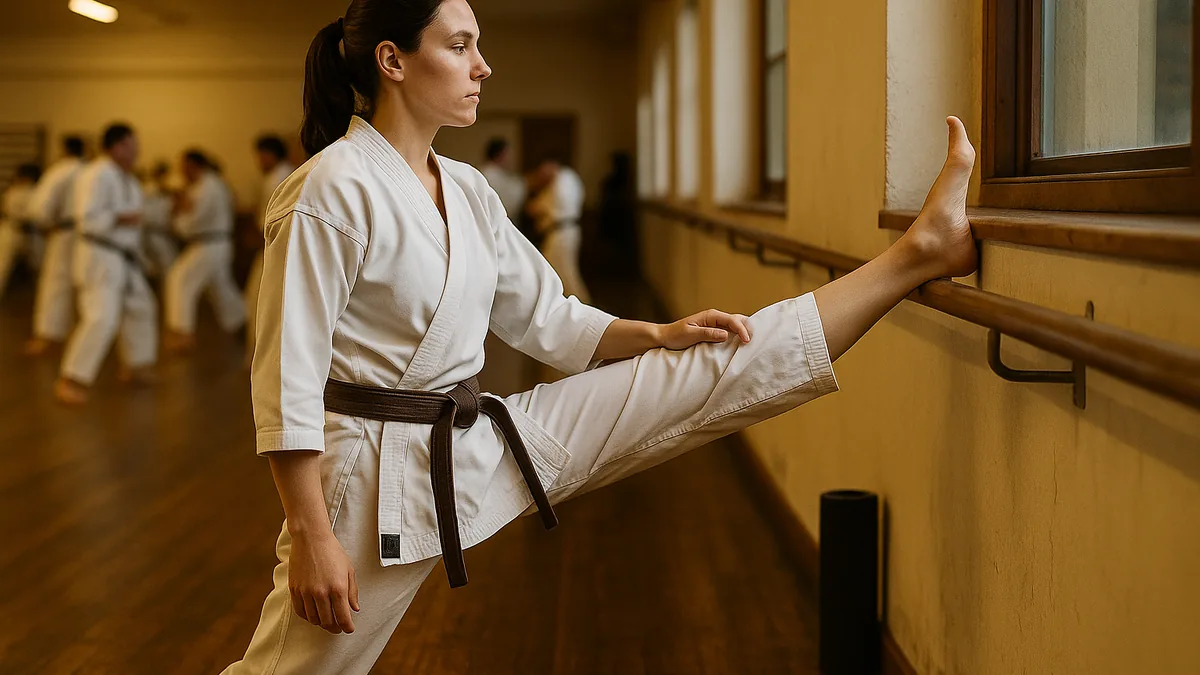
Most People Are Flexible in the Wrong Places
Walk into any dojo and you’ll find at least one student who can do a full split on the floor but can’t generate a decent mawashi-geri above the waist. And you’ll find another who looks stiff as a board in warm-up but throws clean, fast kicks all night. I’ve seen this pattern repeat across multiple dojos and it took me longer than I’d like to admit to understand what was actually going on.
The split looks impressive. It photographs well. But it tells you almost nothing about whether someone can kick effectively in karate. What matters is functional flexibility - the kind that shows up when you’re moving at speed, under pressure, with someone in front of you. That’s a different thing entirely, and training for it requires a different approach.
This is where most people waste years of stretching time.
What Flexibility Actually Means for Karate
The goal isn’t to become a gymnast. The goal is to move without restriction when technique demands it - and to recover quickly when you get pushed out of position.
I’ve noticed that beginners tend to think about flexibility as a threshold: either you can do the kick or you can’t. What I tell students is that flexibility in karate is about range under load. Your hamstrings might let you touch your toes in a slow forward fold, but do they allow a fast, snapping yoko-geri without your hip locking up halfway through? Those are genuinely different demands.
The three areas that matter most in karate are:
- Hip flexors and hip rotators - everything from gedan barai to jodan mawashi-geri depends on this
- Hamstrings - not for splits, but for kicking height and clean ashi-barai without losing your base
- Shoulders and thoracic spine - more relevant than most people realise, especially for blocking, gyaku-zuki, and any kind of close-range work
Everything else is secondary. You can have tight calves, limited ankle dorsiflexion, and mediocre wrist mobility and still be an excellent karateka. But if your hips don’t move freely, you’re fighting yourself on every technique.
Hips: The One Thing Worth Obsessing Over
My instructor used to say “the hips are the engine.” I thought that was about power generation - rotating the hip to drive the punch. And it is, partly. But I didn’t fully understand it until I was a brown belt and started working with a senior who had genuinely exceptional hip mobility. Watching him move was like watching a different sport. His transitions between stances were frictionless. His kicks didn’t look like kicks - they looked like extensions of his walking.
The hip restriction I see most often isn’t in hip flexion (bending forward) - it’s in hip rotation and abduction. Students can kick forward reasonably well but struggle with any technique that requires the leg to travel sideways or the hip to open outward. Mawashi-geri, yoko-geri, ura-mawashi - all of these require the hip to rotate externally and the groin to lengthen. If that range isn’t there, the kick either stays low or the student compensates by leaning the upper body, which kills both power and balance.
The correction that makes the biggest difference here is not more stretching - it’s where you stretch. Most people stretch the hamstrings and call it hip work. What they actually need is work on the hip rotators (the muscles deep in the glute) and the hip adductors (inner thigh). Pigeon pose variations, lateral lunge holds, and figure-four stretches address this much more directly than any forward fold.
What Good Hip Mobility Feels Like
When your hips are genuinely mobile, a mawashi-geri above chudan doesn’t feel like an effort. The leg comes up and the hip follows it without you consciously driving the rotation. You’ll feel the glute and inner thigh working, but there’s no sensation of pulling or fighting against anything. When it’s restricted, you feel a hard stop - usually in the groin or deep in the hip - and the leg just won’t go further without the whole body compensating.
If you’re leaning back significantly to get your kick up, your hips are telling you something.
Hamstrings: What You Actually Need
Here’s my honest opinion on hamstring flexibility for karate: you need enough to kick cleanly at the height you’re actually kicking at, and then a bit more in reserve. You do not need to be able to kick jodan unless your syllabus or competition demands it - and even then, there are people who compete successfully at high levels with kicks that top out around chudan.
What I see constantly is students forcing hamstring stretching in ways that create tension rather than release it. They sit in a forward fold, round their lower back completely, and hold it for two minutes. This stretches the lower back more than the hamstrings, creates a passive lengthening that doesn’t translate to dynamic movement, and often leaves them feeling tighter the next day.
The hamstring work that actually transfers to kicking is dynamic. Leg swings - controlled, not thrown - front to back and side to side. Walking lunges with a hamstring bias. Slow, controlled kicks to the limit of your range, pausing at the top. These train the hamstring to lengthen under load and at speed, which is exactly what happens in a kick. A static stretch held on the floor doesn’t prepare the muscle for that demand.
I prefer dynamic hamstring work before training and static work after - or on recovery days. The reason is simple: static stretching before training temporarily reduces muscle force output. You’ll feel looser but your kicks will have less snap. Dynamic work warms the tissue, improves range, and keeps the muscle ready to fire.
Shoulders: The Overlooked One
Ask most karateka what flexibility they need and they’ll say hips and hamstrings. Nobody says shoulders. But I’ve noticed that shoulder and thoracic restriction shows up constantly in technique problems that look like they’re about something else entirely.
Tight shoulders limit the reach and extension of gyaku-zuki - the punch never fully extends because the shoulder can’t rotate forward properly. They restrict the mechanics of age-uke and soto-uke, making blocks look mechanical and stiff. In close-range work and any grappling transitions, limited shoulder mobility becomes a real liability. And if you do kata seriously, restricted thoracic rotation will flatten out techniques that should have depth and dimension. I’d point you toward Does Kata Actually Help Your Sparring? if you want to think more about how those movement patterns transfer.
The correction I give most often is this: stop stretching the shoulder in isolation and start working the thoracic spine. Most shoulder restriction in karate isn’t actually in the shoulder joint - it’s in the mid-back, which has become stiff from years of sitting, and that stiffness forces the shoulder to compensate. Thread-the-needle stretches, open book rotations, and thoracic extension over a foam roller will do more for your punching technique than any amount of arm circles.
Dynamic vs Static: Have a Position on This
I’ve trained in dojos that did nothing but static stretching at the start of class and dojos that never held a stretch for more than five seconds in warm-up. My view, after trying both over a long time, is this: static stretching before training is mostly a habit, not a performance tool. It persists because it’s what instructors were taught and it gives beginners something to do while the class settles.
Dynamic stretching before training, static stretching after. That’s what I do and what I recommend.
The nuance is that this doesn’t mean static stretching is useless - it’s actually valuable for building flexibility over time, just not immediately before training. If you want to genuinely improve your range of motion, dedicated flexibility sessions using static and passive holds are effective. But those sessions should be separate from your karate training, not the five minutes before you start throwing techniques.
There’s a good argument that flexibility work belongs in recovery for karate practitioners rather than in the warm-up at all - treating it as its own training goal rather than a box to tick before the real work starts.
Common Mistakes I See Regularly
Stretching the symptom, not the cause. Tight hamstrings are often a downstream effect of tight hip flexors pulling the pelvis forward. Stretching only the hamstrings treats the symptom. You’ll make faster progress adding hip flexor work to the same session.
Forcing range in warm-up. I’ve watched students throw their leg up into a high kick in the first five minutes of class, before the tissue is warm, because they want to show they can do it. This is how you get a hamstring strain that keeps you off the mat for three weeks. The kick you can do at the end of class is the kick you have. Work from there.
Confusing passive flexibility with active flexibility. Someone who can be pushed into a deep stretch by a partner doesn’t necessarily have the active control to use that range. In karate, what matters is what you can do under your own power, at speed. If your kicks only reach jodan when you’re warmed up, relaxed, and moving slowly, that range isn’t available to you in jiyu-kumite. Building active flexibility - through slow controlled kicks, holds at the top of range, and strength work through full range - is what closes that gap.
Neglecting strength alongside flexibility. A mobile joint with no strength around it is an unstable joint. I’d rather have a student with moderate hip flexibility and strong hip stabilisers than one with extreme passive range and no control. In sparring, you’ll be pushed, pulled, and forced off balance. If your hip can go somewhere but has no strength to support it there, that range becomes a liability. Kihon done with attention to hip stability is genuinely useful flexibility training - the repeated loading of stances and transitions builds exactly this kind of functional range.
Community Perspective
There’s a genuine split in how different dojos approach flexibility training, and I don’t think either side is entirely wrong.
Traditional instructors often maintain that the warm-up and kihon practice itself is sufficient flexibility work - that if you train correctly and consistently, the range you need will develop naturally. I’ve seen senior practitioners in their 50s and 60s with excellent functional flexibility who have never done a dedicated stretching session in their lives. There’s something to this.
The counterargument, which I lean toward, is that most people’s lives outside the dojo - desk jobs, cars, phones - create restrictions that traditional training alone doesn’t fully address. The senior practitioner who developed flexibility through decades of daily training started from a different baseline than someone who sits for eight hours a day and trains twice a week.
Where I’ve genuinely changed my mind over the years is on the value of yoga and mobility work from outside the martial arts tradition. As a younger practitioner I was dismissive of it - it seemed soft, unrelated. Now I think it’s one of the most useful supplementary tools available, particularly for hip rotators and thoracic mobility. The goal is karate. The tools don’t have to come exclusively from karate.
Key Takeaways
- Focus hip flexibility work on rotation and abduction, not just forward flexion - the rotators and adductors are what limit your kicks, not your hamstrings alone
- Do dynamic stretching before training, static stretching after - they serve different purposes and using them the wrong way around costs you performance
- Shoulder and thoracic restriction shows up as technique problems in punching and blocking - address the mid-back, not just the shoulder joint
- Build active flexibility, not just passive range - if you can only reach that height slowly and with help, it won’t be there when you need it in sparring
- Treat dedicated flexibility work as its own training goal, not a warm-up ritual - it deserves focused sessions, not five distracted minutes before class
- Pair flexibility work with strength through range - mobile joints need stability, and strength training through full range of motion is what makes flexibility functional
The weekly digest
New karate articles, once a week
One email every week with everything new on Karate Lifestyle. No spam; unsubscribe in one click.
We'll email you to confirm. See our privacy policy.