Preventing Common Karate Injuries
Most injuries I’ve seen in the dojo weren’t accidents. They were the result of doing the same thing wrong, repeatedly, for months - sometimes years - before the body finally said enough. That’s the honest truth about karate injuries. They’re usually slow-burn problems dressed up as sudden ones.
I’ve graded students who’ve limped through their dan grading on shin splints they’d been ignoring since their third month of training. I’ve watched brown belts develop knee problems that could have been avoided entirely if someone had pulled them aside eighteen months earlier and explained what their back stance was actually doing to their joint. And wrists - don’t get me started on wrists. The number of times I’ve had to tell someone that their push-up form is quietly destroying their ability to block properly is too high to count.
This isn’t a list of stretches. It’s what I’ve learned from watching the same injuries happen to different people, figuring out why, and working out what actually prevents them.
Shin Splints: The White Belt Tax Nobody Warns You About
Shin splints are almost a rite of passage in the first six months of training. I don’t say that to normalise them - I say it because if you understand why they happen at that stage, you can sidestep most of the damage.
The mistake I see constantly is new students training through them because they think it’s just muscle soreness. It isn’t. Shin splints are stress to the bone and surrounding tissue, and if you keep hammering away at them with full kihon sessions on hard dojo floors, you’re not toughening up - you’re accumulating damage.
What’s actually happening is this: your lower legs aren’t conditioned for the specific demands of karate movement. The constant stepping, the pivoting, the impact from basics drilled on wooden or concrete floors - your tibialis anterior and the surrounding tissue haven’t adapted yet. It’s not weakness, it’s just newness. The body needs time to remodel the bone density and strengthen the connective tissue.
What Actually Prevents Shin Splints
The correction that makes the biggest difference isn’t rest - it’s load management combined with targeted strengthening. What I tell students is to treat the first three months like a long-term investment rather than a sprint.
Prehab work that genuinely helps:
- Calf raises (both straight-leg and bent-knee) - the bent-knee version targets the soleus, which most people neglect entirely
- Tibialis anterior raises - sit on a chair, heels on the floor, and lift your toes repeatedly. Feels almost embarrassingly easy. Do it anyway.
- Single-leg balance work - this builds the stabiliser muscles around the ankle that reduce impact forces further up the chain
- Eccentric heel drops off a step - slow, controlled lowering. Not glamorous. Works.
I’d also say look at your footwear outside the dojo. Most karate students train barefoot, which is fine, but if you’re walking around in flat unsupportive shoes all day and then doing an hour of basics on a hard floor, you’re compounding the problem. Your feet and lower legs need recovery time between sessions, especially early on.
The floor matters too. I’ve trained in dojos with sprung floors and dojos with what felt like concrete covered in a thin mat. The difference in shin soreness after a heavy basics session is significant. If your dojo has a hard floor and you’re already struggling, that’s context worth having.
Knee Problems: Usually a Hip Problem in Disguise
This took me years to understand properly. I used to think knee pain in karate was about the knee - about how you land, how deep you go in stances, whether your joint was just taking too much load. It’s rarely that simple.
The thing that actually changed my understanding was watching a senior student get corrected by our instructor during zenkutsu dachi. The student’s knee was collapsing inward slightly - not dramatically, just a few degrees. Our instructor said “your hip is lazy.” The student straightened the knee, which helped temporarily, but the real fix came when he started working on hip abductor strength and learned to drive the knee outward from the hip, not just the knee itself.
That’s the pattern I see now with almost every knee complaint in the dojo. The knee is where the pain is, but the cause is usually above it.
The Stance Problem Nobody Talks About Enough
One mistake I see constantly - especially with students who’ve been training for a year or two and think they’ve got the basics sorted - is that their stances look correct from the front but are mechanically wrong under load. The knee tracks inward when they step forward into a technique. It might be subtle, but compound that over hundreds of repetitions in a single class and you’re grinding the joint in a direction it wasn’t designed for.
The correction that works is not telling them to fix their knee. It’s telling them to push the floor away with the outside edge of their foot and drive the knee in the direction of their little toe. When that connects, you’ll feel the whole stance stabilise - there’s a firmness through the hip and thigh that wasn’t there before. It feels like the stance is suddenly rooted rather than just positioned.
Prehab for the knee:
- Clamshells and lateral band walks - boring, essential, non-negotiable for anyone with a history of knee issues
- Single-leg squats (pistol progressions) - not because you need to do full pistol squats, but because the single-leg loading exposes any tracking issues immediately
- Hip flexor stretching - tight hip flexors pull the pelvis forward, which changes knee loading in every stance you do
- Terminal knee extensions with a band - this strengthens the VMO (the teardrop-shaped muscle above the inner knee) which is often underactive in people with tracking problems
I’d also recommend reading the flexibility guide if you haven’t - hip mobility specifically has a direct impact on how your knees behave in low stances, and most people underestimate how much tightness in the hips is contributing to their knee discomfort.
Wrist Issues: The Injury That Sneaks Up on You
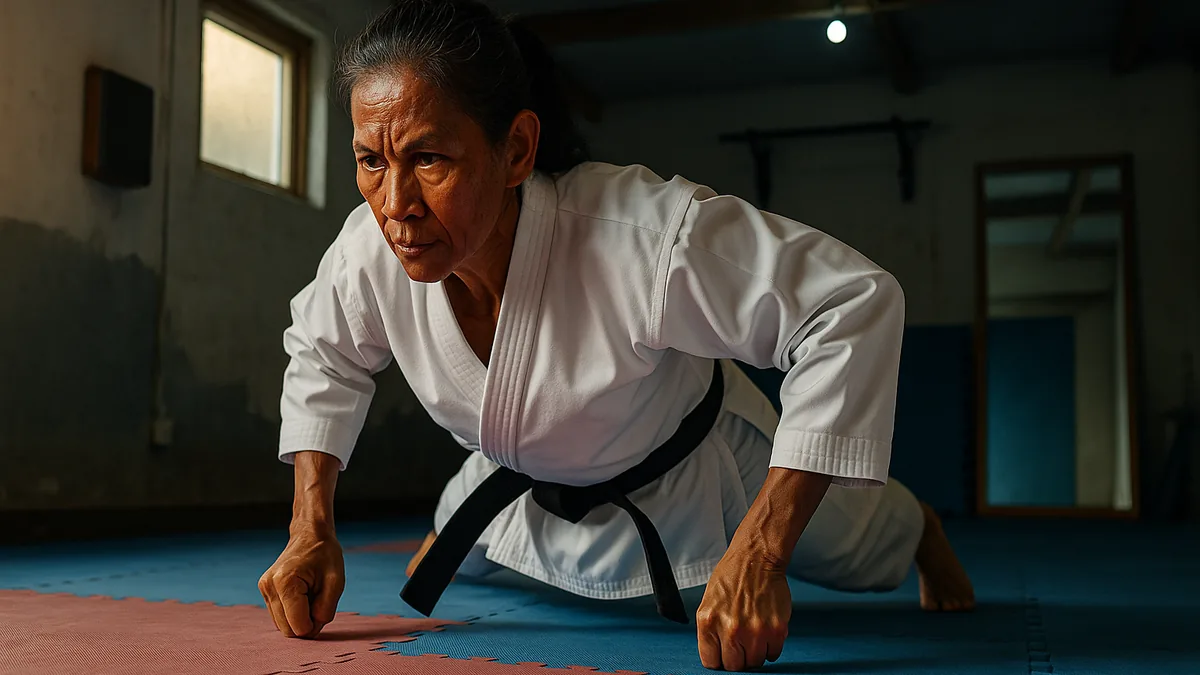
Wrists are interesting because the injury usually comes from somewhere unexpected. Most people assume it’s from blocking - taking hard impacts on the forearm and wrist. That’s a factor, but in my experience the more common culprit is poor push-up and floor work habits combined with a weak grip that forces the wrist to compensate under load.
I’ve noticed that students who come from no prior training background often have wrists that simply aren’t accustomed to load-bearing. The first time they do a set of push-ups in a warm-up, their wrists are already at an angle that’s stressing the joint. Do that twice a week for a year and something will eventually flare up.
The other pattern I see is students who grip the gi during partner work with their wrist in a compromised position - usually bent back - and then apply force. You don’t need much force to cause a wrist strain if the joint is already in a weak position.
Building Wrist Resilience
What I tell students is to think of wrist prehab in two categories: mobility and strength. You need both, and they’re not the same thing.
For mobility:
- Wrist circles, both directions, through a full range - do these before every session, not just occasionally
- Prayer position stretches and reverse prayer - hold each for 30-45 seconds
- Loaded stretching through push-up position - start with weight through the hands and gently rock forward to increase the stretch
For strength:
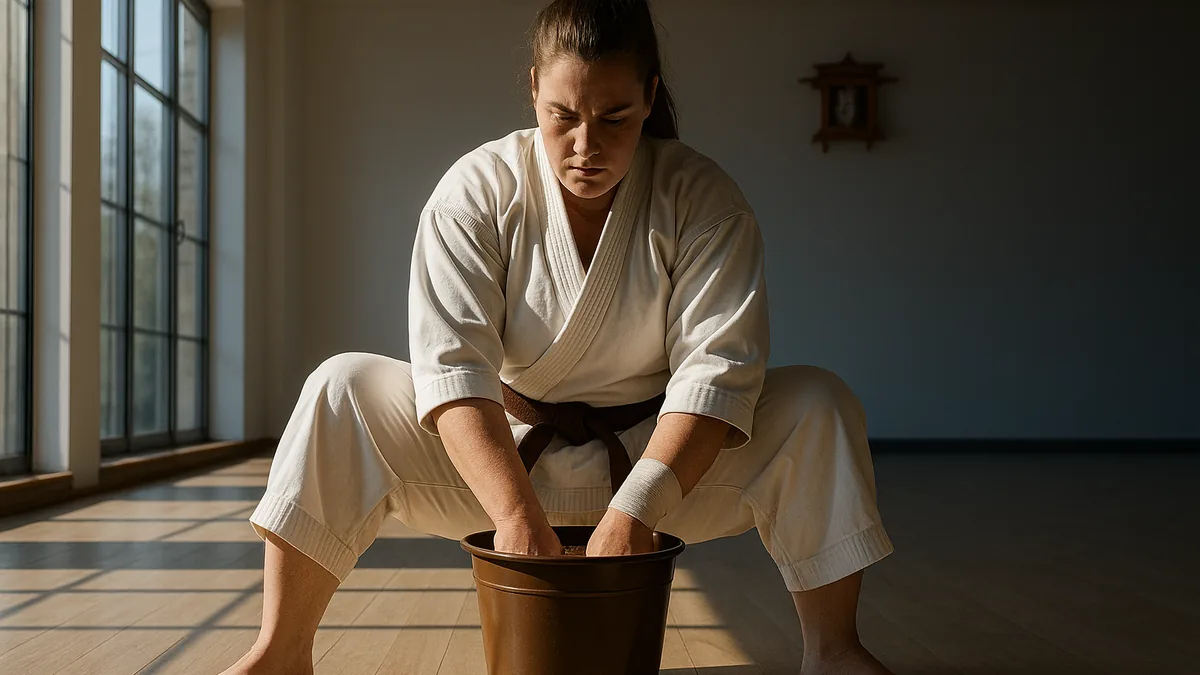
- Rice bucket training - if you haven’t come across this, get a bucket of dry rice and do various hand movements through resistance. Sounds old-fashioned. I’ve recommended it to students with chronic wrist issues and it’s made a genuine difference.
- Wrist roller - basic, effective, builds forearm and wrist strength through a full range
- Farmer’s carries with a focus on grip - the isometric demand on the wrist stabilisers is underrated
One thing I’d add: if you’re doing push-ups in training and your wrists are painful, try fist push-ups. This keeps the wrist in a neutral position and takes the hyperextension out of the equation. Most of my students with wrist problems find this immediately more comfortable, and it also reinforces the correct fist position for punching.
The Warm-Up Is Not Optional
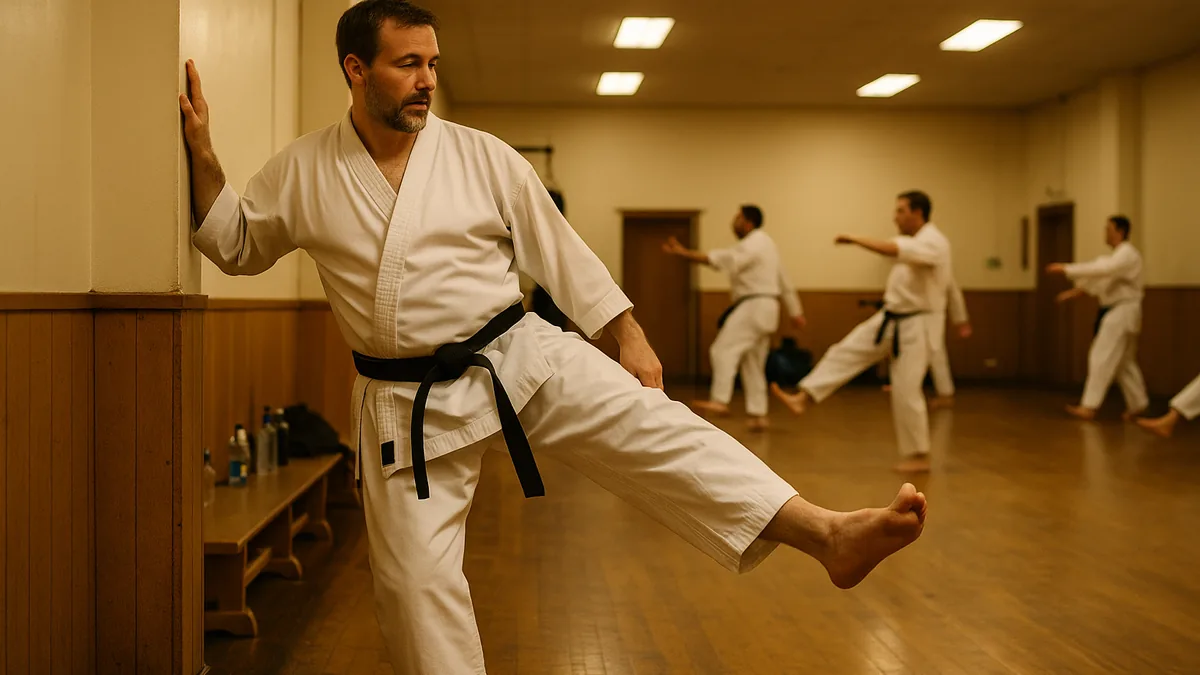
I know this sounds obvious. But I’ve seen more injuries happen in the first ten minutes of a session than at any other point - and almost always because someone came in cold, rushed through the warm-up, or skipped it entirely.
The warm-up routines guide covers this in more detail, but from an injury prevention standpoint, the key thing I’ve noticed is that the warm-up needs to be specific to what you’re about to do. A generic five-minute jog and some arm circles before an hour of heavy kihon and partner work is not adequate preparation. Your joints need to move through the ranges they’re about to be loaded in, under low demand, before you add speed and power.
Community Perspective
There’s a genuine split in how dojos approach injury prevention, and it’s worth being honest about it.
Traditional dojo culture - and I’ve trained in some places that held this firmly - treats pain as part of the process. Push through it. Toughen up. The body adapts. And there’s something to that, to a point. Karate is physically demanding and some discomfort is normal and appropriate.
But I’ve changed my view on this over the years. The students I’ve seen push through early warning signs have, more often than not, ended up with longer-term problems that cost them months of training rather than the week or two they would have lost by backing off early. Shin splints ignored become stress fractures. Knee niggles ignored become structural problems.
The counterargument - and I take it seriously - is that modern training culture can be overly cautious, and that some practitioners use injury prevention as an excuse to avoid hard training. That’s real too. I’ve seen it.
My position is this: distinguish between the discomfort of adaptation and the pain of damage. They feel different if you pay attention. Muscle soreness, fatigue, the burn of a hard session - that’s adaptation. Sharp pain, joint pain, pain that changes your movement pattern - that’s a signal worth listening to.
What Ties It Together
Injury prevention in karate isn’t really a separate topic from good training. It’s a product of training intelligently - understanding your body, building the supporting structures, and not treating prehab work as something that gets done only after something goes wrong.
The strength training guide and the core training article are worth reading alongside this, because a lot of what prevents injuries is simply having the physical foundation to support the demands of the art. Weak hips create knee problems. Weak wrists create wrist problems. Undertrained calves create shin problems. It’s usually that direct.
And recovery matters as much as training - if you’re not sleeping, not eating enough, and training five days a week, you’re not giving your body the resources it needs to adapt. Nutrition and recovery practices are part of this picture, not extras.
Key Takeaways
- Shin splints in early training are almost always about load management, not weakness - reduce volume before it becomes a stress injury, and add tibialis anterior strengthening from day one
- Knee pain in stances is usually a hip problem - look at hip abductor strength and whether the knee is tracking correctly from the hip, not just at the knee itself
- Wrist issues often come from poor push-up mechanics and weak grip, not just from blocking - fist push-ups and rice bucket work are underrated fixes
- The warm-up is part of injury prevention, not a formality - it needs to be specific to what you’re training that session
- Distinguish between adaptation discomfort and damage pain - one is part of training, the other is a signal to back off and address the cause
- Prehab is not something you do after an injury - if you wait until something breaks down, you’ve already lost weeks of training you didn’t need to lose
The weekly digest
New karate articles, once a week
One email every week with everything new on Karate Lifestyle. No spam; unsubscribe in one click.
We'll email you to confirm. See our privacy policy.