How to Run a Karate Grading: A Guide for Junior Instructors
Running a Grading Is a Test of You, Not Just Your Students
The first time I ran a grading on my own, I thought I was ready. I had the syllabus printed, the mats swept, the senior students lined up to assist. What I hadn’t done was think carefully enough about what I was actually trying to measure - or whether my students knew what I was looking for. Three candidates failed that day who probably shouldn’t have. Not because they weren’t ready, but because I hadn’t prepared them properly for what was expected.
That’s on the instructor, not the student. It took me a while to accept that.
If you’re a junior instructor stepping into the role of running or assisting with gradings for the first time, the most useful thing I can tell you is this: a grading is not a surprise exam. It’s a structured confirmation of what students already know. Your job starts weeks before anyone steps on that mat.
Build Your Criteria Before You Build Your Syllabus
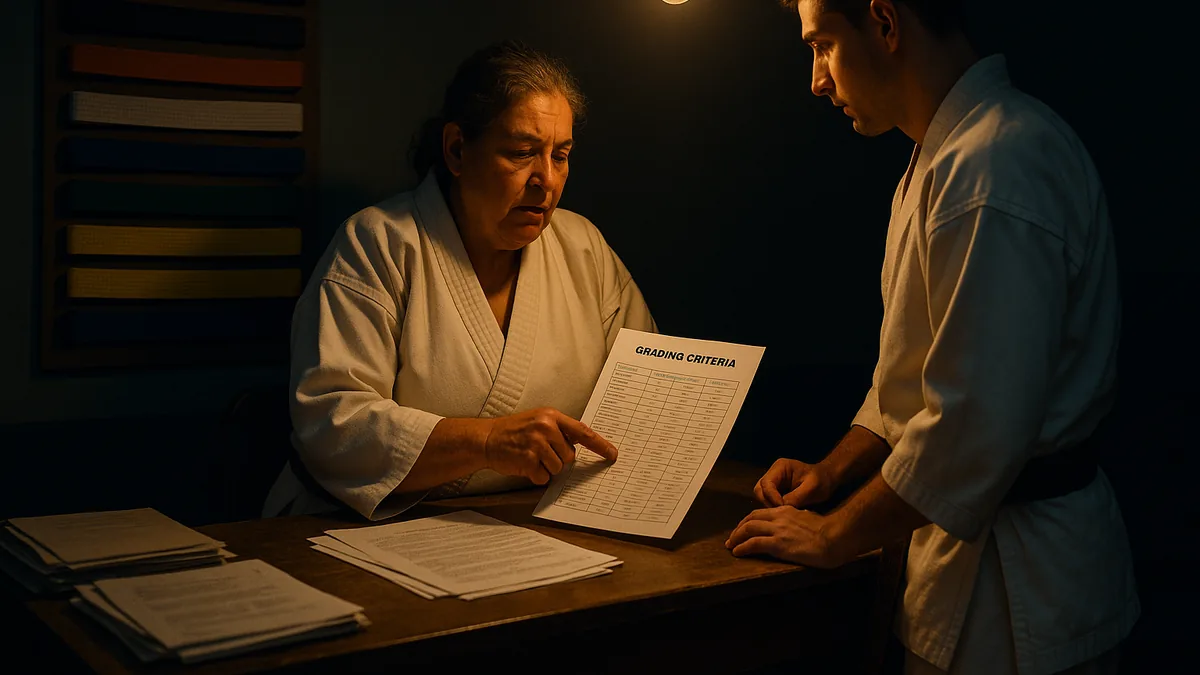
The single biggest mistake I see junior instructors make is confusing a syllabus with a grading standard. A syllabus tells students what to practise. A grading standard tells you - and them - what “ready to pass” actually looks like.
These are not the same thing.
I’ve seen students train the correct techniques for months and still fail a grading because nobody told them that stances needed to be a certain depth, or that kiai needed to be delivered with intent, not just noise. They practised the right things but didn’t know the bar they were being measured against.
Before you run a grading, write down - physically write it down - what a pass looks like for each grade. Not a list of techniques. A description of the standard. For kyu grades, I break it into three areas:
- Technical accuracy - Are the mechanics correct? Stances, guard, hip rotation, chamber positions.
- Execution quality - Is there intent behind the technique? Does it look like something that could work, or just a shape being made?
- Composure under pressure - Can the student perform when they’re nervous and being watched?
That third one matters more than most junior instructors realise. I’ve passed students who had slightly rough technique but held themselves together under pressure, and I’ve failed students with technically cleaner movement who fell apart the moment they felt eyes on them. Composure is a skill. It’s worth grading.
For more on what makes a grading system worth running, the article on what makes a good karate grading system is worth reading before you finalise your criteria.
Prepare Students With Mock Tests - and Make Them Real
This is where I changed my mind over time. Early in my teaching, I thought mock tests were a bit soft - like giving someone the exam answers in advance. I was wrong about that.
A mock test isn’t about lowering the bar. It’s about removing the unknown so students can focus on performing, not on wondering what’s coming. The nerves in a real grading come from two sources: not knowing what to expect, and not trusting your own preparation. You can address both of those before grading day.
What I tell students now is that the mock test should feel harder than the real thing. Run it in the same format. Use the same commands. Have them bow in properly, stand in line, wait to be called. If you’re grading in a formal setting with a panel, replicate that as closely as you can. The first time a student stands in front of examiners shouldn’t be the actual grading.
The correction that makes the biggest difference in mock tests isn’t technical - it’s about where students look. Under pressure, almost every beginner drops their eyes to the floor. It feels like concentration, but it reads as uncertainty. I pick this up in every mock test I run. The fix is simple: pick a point on the wall at eye level and hold it. When you feel it click - when your head stays up and your gaze is steady - you’ll feel the difference through your whole posture. Your shoulders settle, your chest opens, your stance feels more grounded. It’s a physical change, not just an aesthetic one.
Run at least two mock tests before grading. The first one shows students where the gaps are. The second one shows them they can close those gaps. That second session is where confidence actually builds.
Create an Environment Where Nerves Don’t Become Failure
I’ve seen genuinely capable students fail gradings because the atmosphere in the room made them freeze. That’s a failure of environment, not ability.
This doesn’t mean making gradings easy or removing the pressure entirely. Pressure is part of the point - you want to see how students perform when it matters. But there’s a difference between productive pressure and an atmosphere that punishes nervousness. One tests character. The other just tests who can suppress anxiety, which is a different skill entirely and not what we’re grading.
A few things that actually work:
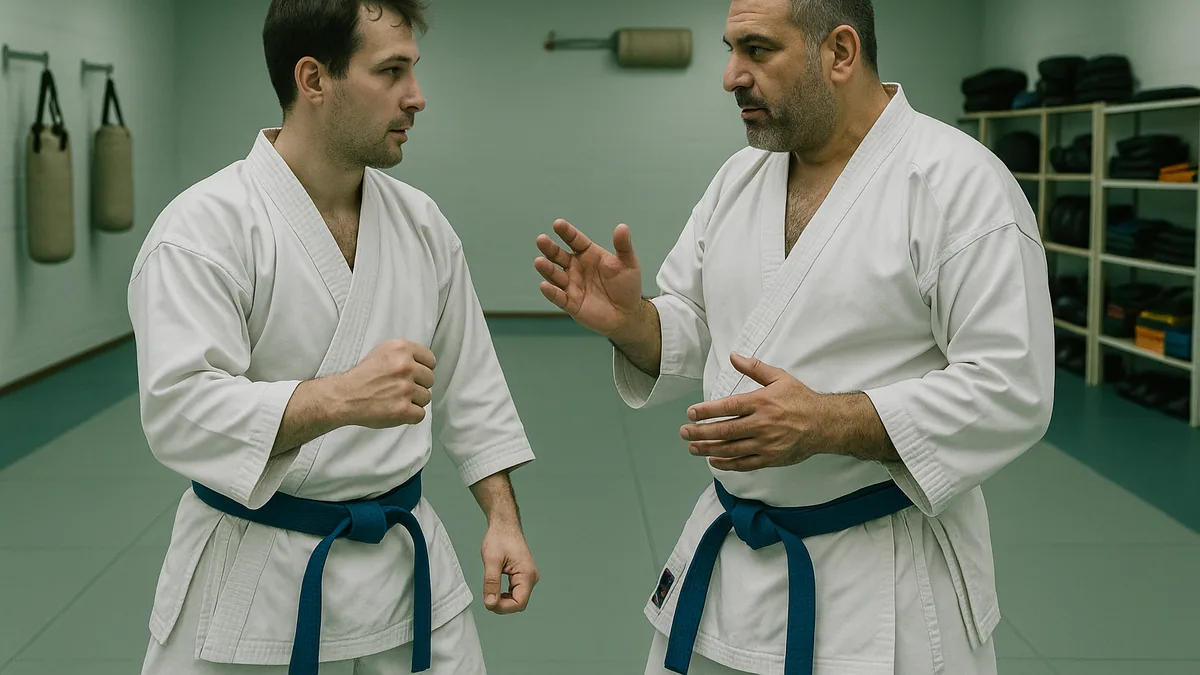
Acknowledge the nerves openly. Before the grading starts, I tell students directly: “You’re going to feel nervous. That’s normal. It means you care about this. Use it.” This isn’t motivational speech padding - it does something real. Students who know their nerves are expected stop fighting them and start working with them.
Sequence the grading thoughtfully. Start with something every candidate can do well. Basic kihon, a technique they’ve drilled hundreds of times. Let them get one clean success under their belt before you move into the harder material. The way a student carries themselves through the rest of the grading changes when they’ve already felt something go right.
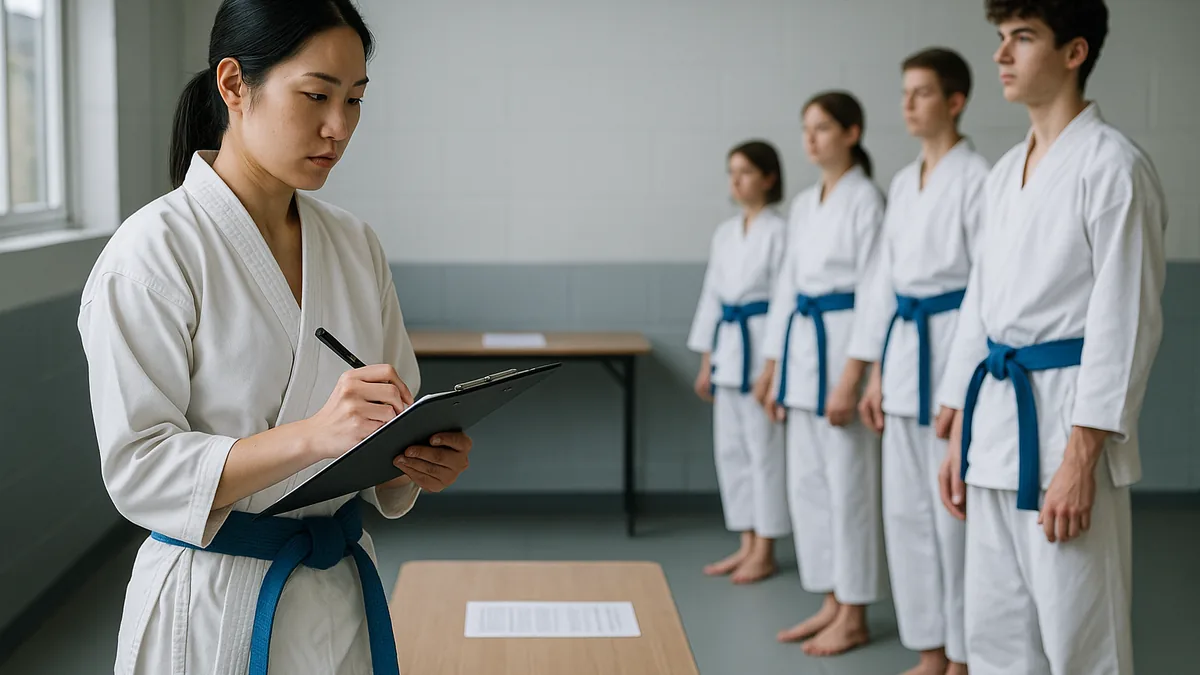
Watch your own body language as an examiner. I’ve noticed that junior instructors often don’t realise how much students are reading them during a grading. A frown while watching a kata, a sharp exhale, a glance at your clipboard - students interpret all of it. Stay neutral. Save your feedback for after.
The relationship between students and their training environment matters here too. If you’ve built a dojo culture where people support each other’s development, that carries into the grading room. The article on training partners touches on this - the quality of training relationships shapes how students perform under pressure.
Common Mistakes I See Junior Instructors Make
Grading students before they’re ready because the schedule demands it.
I’ve done this. The association calendar says grading is in six weeks, so you push students through whether they’re ready or not. The problem is that passing a student who isn’t ready doesn’t help them - it puts them in the next grade with a foundation that won’t hold. I’d rather have a difficult conversation before the grading than fail someone on the day.
Giving feedback during the grading instead of after.
I used to correct students mid-grading when I saw something wrong. I thought I was being helpful. What I was actually doing was disrupting their flow and signalling to everyone watching that something had gone wrong. Save corrections for the feedback session at the end. The grading is for performance, not for teaching.
Treating every grade the same way.
A white-to-yellow grading and a brown-to-black grading are not the same event. The emotional weight is different, the stakes are different, the standard of scrutiny should be different. I’ve seen junior instructors apply the same casual approach to a first dan grading that they’d use for a junior kyu grade, and it shows. Senior gradings need more preparation, more formality, and more care with the feedback you give afterwards.
Not explaining the decision when someone fails.
This is the one that causes the most damage. If a student fails and you don’t give them a clear, specific explanation of why - and what they need to do before the next attempt - you’ve left them with nothing to work with. Failing a grading can be genuinely useful if the feedback is honest and actionable. “Not quite ready yet” is not feedback. “Your stances are inconsistent under pressure and your kiai lacks commitment - focus on these for the next six weeks” is feedback.
Community Perspective
There’s a genuine split in how different dojos approach grading frequency, and it’s worth being honest about it.
Some associations grade every three months. Others stretch it to six or more. I’ve trained in both environments and I think the longer cycle produces better karateka, but I understand the argument for more frequent grading - it gives students regular targets and keeps engagement up, especially for younger students and beginners.
Where I think the frequent-grading model goes wrong is when it becomes commercially driven. If students are grading every few months regardless of readiness, the grade stops meaning anything - and students feel that, even if they can’t articulate it. The common karate myths piece covers some of this territory around what belt grades actually represent.
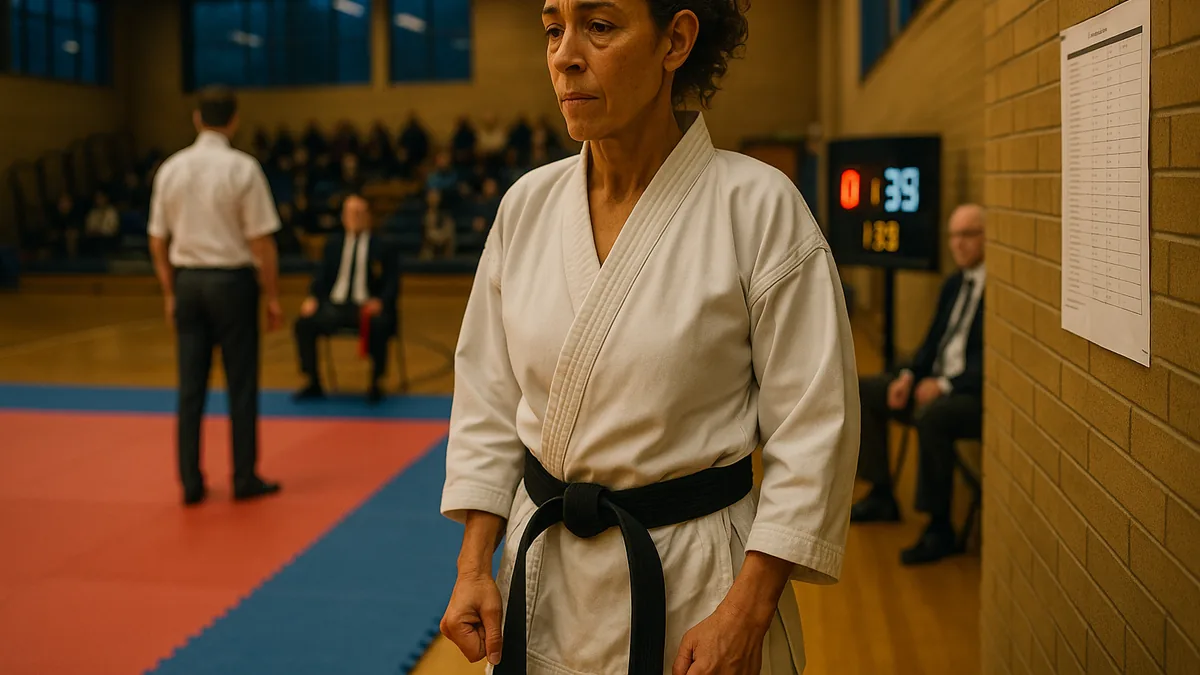
The other debate is around whether gradings should be closed or open events. Some instructors prefer closed gradings - just the examiner, the student, and maybe one or two seniors. Others run open gradings where the whole class watches. I prefer open gradings for the performance pressure they create, but I’ve seen them go badly when the audience isn’t managed properly. If you’re running an open grading, brief the observers beforehand. No commentary, no visible reactions, no coaching from the sidelines.
Key Takeaways
- Write down what a pass looks like before you design the grading format - criteria first, syllabus second.
- Run at least two mock tests, and make them feel harder than the real grading. The second session is where confidence builds.
- Watch your own body language during a grading. Students are reading you constantly.
- Sequence the grading so students get an early success - it changes how they carry themselves through the rest.
- If a student fails, give specific and actionable feedback. A failed grading with good feedback is more valuable than a passed grading with none.
- Don’t grade students before they’re ready because the calendar demands it. That conversation before the grading is easier than the one after.
The weekly digest
New karate articles, once a week
One email every week with everything new on Karate Lifestyle. No spam; unsubscribe in one click.
We'll email you to confirm. See our privacy policy.