Competing in Karate for the First Time: What Nobody Tells You
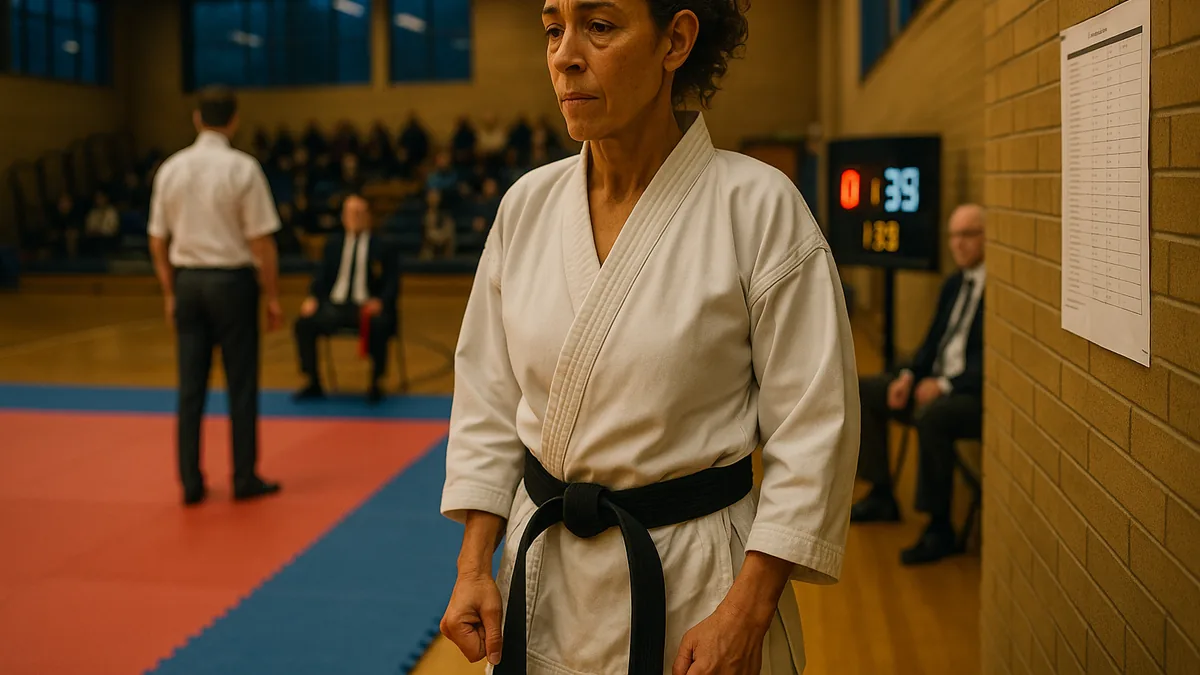
The first competition I ever entered, I spent the entire morning convincing myself I was ready. I had the techniques. I had the combinations. I’d done hundreds of rounds of kumite in the dojo. What I hadn’t done was stand in a ring with a referee, a table of judges, and a crowd of people watching, while someone my own size tried to score on me under a clock. Nothing in training had prepared me for what that actually felt like. Not because the training was bad - because competition is a completely different animal, and nobody had told me that clearly enough.
If you’re heading into your first tournament, this is what I wish someone had said to me before I walked through those doors.
The Pressure Is Real, and It’s Not What You Expect
I’ve noticed that most beginners expect to feel nervous before their fight. What they don’t expect is how that nervousness changes the moment they step onto the competition floor. It’s not butterflies. It’s more like your brain suddenly forgets how to access anything you’ve trained. Your hands feel wrong. Your timing disappears. Your combinations - the ones you’ve drilled a thousand times - feel like you’re doing them for the first time.
This isn’t weakness. It’s physiology. Your sympathetic nervous system is running the show, and it doesn’t care how many hours you’ve put in at the dojo. What I tell students is this: your training doesn’t disappear, it just gets harder to access under pressure. The job of competition experience is to gradually teach your body to access it anyway.
The mistake I see constantly is beginners trying to fight their nerves. They tense up against them, try to think their way out, remind themselves they’re “ready.” That makes it worse. The correction that actually works is to let the nerves be there and focus on something small and physical - your guard position, your breathing, your stance. Give your brain something concrete to do instead of spiralling.
My instructor used to say “breathe first, think second, move third.” I thought that was just a motivational phrase. The first time I stood at the edge of the competition area with my legs shaking, I finally understood it. Breathing isn’t a warmup ritual. It’s a reset mechanism. Use it.
Visualise the Process, Not the Outcome
I’d also encourage you to change what you visualise before you compete. Most first-timers picture winning - the final point, the raised hand. What actually helps is visualising the process: stepping onto the floor, bowing correctly, setting your guard, moving. Imagining the specific physical actions you’re about to perform. That’s what your nervous system needs to rehearse, not the trophy moment.
Rules and Etiquette Are Not Optional - They’re Part of How You Compete
I’ve seen competitors lose points - and entire matches - not because they were outfought, but because they didn’t understand the rules. Stepping out of bounds at the wrong moment. Not stopping when the referee called “yame.” Reacting to a score call in a way that looked disrespectful. These aren’t minor administrative details. In competition karate, the rules are part of the contest.
What I tell students before their first tournament is: read the ruleset for your association before you go. Sounds obvious. Almost nobody does it. The WKF rules differ from KUGB rules, which differ from whatever your regional association runs. The scoring criteria, the prohibited techniques, what counts as a controlled technique versus an uncontrolled one - these vary. If you don’t know what scores in the system you’re competing under, you’re fighting blind.
Etiquette matters for a different reason. It signals to the judges and referee that you’re a serious competitor, not someone who needs managing. I’ve watched referees give the benefit of the doubt on close calls to competitors who carried themselves with composure, and I’ve watched the opposite happen too. That’s not cynicism - it’s just how humans work. Respect the process and it tends to respect you back.
The practical stuff: bow when you enter and exit the competition area. Bow to your opponent before and after. When the referee calls “yame,” stop immediately - don’t finish the technique. When a point is awarded, acknowledge it and reset. Don’t argue with calls. If you genuinely believe there was an error, your coach can raise a formal objection. That’s what the process is for.
If you’re still finding your feet with the wider culture of the sport, What to Expect at Your First Karate Class covers some of the foundational etiquette that applies in both training and competition settings.
What Competition Day Actually Feels Like
The morning of your first tournament is strange. You’ll probably wake up too early. You’ll feel either oddly calm or like you want to cancel the whole thing. Both are normal. What I’ve noticed is that the anxiety tends to peak during the waiting - the registration queue, the warm-up area, the time between your division being called and your first match. The actual fighting is almost always less terrifying than the build-up.
Expect the day to be longer than you think. Tournament schedules slip. You might be sitting in a sports hall for two hours before your division is called. Bring food. Bring water. Bring something to occupy your mind. I used to watch other divisions to learn - pay attention to how senior competitors move, what they score with, how they manage distance. You’ll pick up more from watching a few hours of competition than from most discussions about it.
The mix of emotions on the day is genuinely hard to describe. There’s excitement, there’s dread, there’s a strange kind of focus that kicks in once you’re actually in it. It feels like time compresses. Matches that last two minutes feel like thirty seconds. You’ll come off the floor and barely remember what happened. That’s normal for your first few competitions. The mental clarity comes with experience - with having been in that environment enough times that your brain stops treating it as a crisis.
One thing that helped me: I stopped thinking of my first competition as a performance and started thinking of it as information gathering. What does competition pressure feel like for me? Where does my technique break down? What do I actually do when someone counters me? You can’t answer those questions in the dojo. Competition is the only place you find out.
Common Mistakes I See First-Timers Make
Fighting like it’s sparring practice. Dojo kumite and competition kumite are related but not the same. In the dojo, you often have ongoing exchanges, you can reset and try again, the stakes are low. In competition, every exchange matters. I’ve seen students who were excellent in dojo sparring freeze up in competition because they were waiting for the kind of back-and-forth rhythm they were used to. Competition is more explosive, more decisive, and faster-paced than most dojo kumite.
Not knowing their own best technique. Under pressure, you default to what’s most ingrained. Most beginners haven’t identified what that technique is. What I tell students is: before you compete, know your two or three highest-percentage techniques - the ones you land most consistently in sparring. Those are your competition tools. Don’t try to do everything. Do your best things.
Ignoring the referee. The referee controls everything in that ring. Where you stand, when you fight, when you stop. I’ve seen competitors so locked into their opponent that they completely miss a “yame” call and keep fighting. That’s a penalty. Keep one ear on the referee at all times, even when you’re in the middle of an exchange.
Treating a loss like a verdict. Losing your first competition match is not evidence that your training isn’t working. It’s evidence that you haven’t competed before. Those are different things. The Common Karate Myths Debunked article covers some of the unhelpful narratives that circulate about what competition results mean - worth reading if you’re prone to taking a single result too seriously.
Community Perspective
There’s a genuine split in traditional karate communities about whether competition is valuable at all. I’ve trained in dojos where competition was actively discouraged - where the view was that adapting your technique to score points under WKF rules compromises the martial integrity of what you’re doing. I’ve trained in other dojos where the competitive pathway was central to everything.
My honest view: competition is one of the most valuable training tools available to you, but it’s not the only measure of what you’re developing. The pressure it creates is real and useful. The feedback is immediate and unambiguous. But it tests a specific subset of what karate is, under a specific ruleset, and you should know that going in.
What I’ve seen change in practitioners who compete regularly is their ability to perform under stress. That transfers back to everything else - grading, self-defence thinking, even kata. The students who compete tend to have a composure that’s hard to develop any other way. That’s why I’d encourage it, even if the competitive side of things isn’t your long-term focus.
If you’re interested in how different styles approach competition, Karate Styles Compared: Shotokan, Goju-Ryu, Wado-Ryu, Shito-Ryu gives a useful overview of how different traditions relate to the competitive format.
Key Takeaways
- Your training doesn’t disappear under competition pressure - it becomes harder to access. Train your focus on small physical anchors (breath, guard, stance) rather than trying to think your way calm.
- Know the specific ruleset you’re competing under before you arrive. Not the general idea of competition rules - the actual ruleset for your association and division.
- Treat your first competition as information gathering, not a performance. You’re there to find out what competition feels like for you. That data is genuinely useful.
- Identify your two or three highest-percentage techniques before you compete. Under pressure, you’ll default to what’s most ingrained - make sure you know what that is.
- Keep one ear on the referee at all times. Missing a “yame” call is a penalty that has nothing to do with your ability.
- A first-competition loss is not a verdict on your training. It means you haven’t competed before. Go again.
The weekly digest
New karate articles, once a week
One email every week with everything new on Karate Lifestyle. No spam; unsubscribe in one click.
We'll email you to confirm. See our privacy policy.