Interclub Training Days: How to Organise One, What to Expect, and Why More Clubs Should Do It
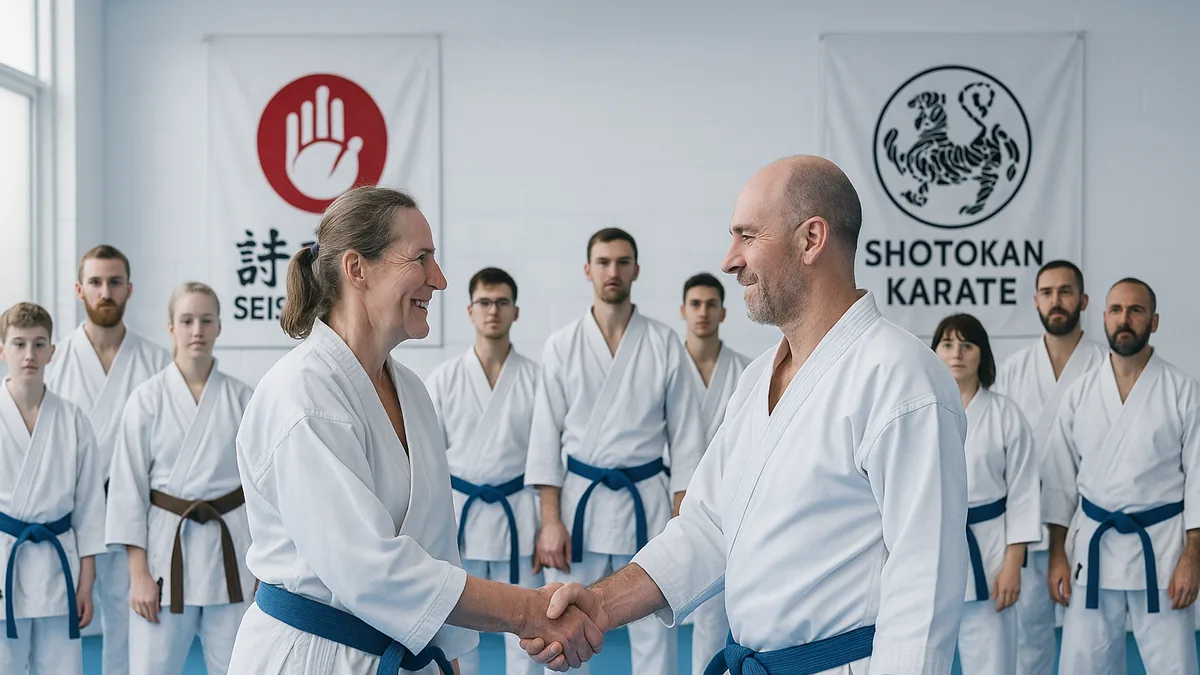
Most clubs train in the same four walls, with the same people, drilling the same patterns week after week. That’s not a criticism - consistency is how you build good karate. But there’s a ceiling to what you can learn when everyone in the room already knows your habits, your timing, and your favourite combinations. Interclub training days crack that ceiling open.
I’ve run a handful of these over the years, attended more as a guest, and watched the dynamic play out from both sides. They’re one of the most underused tools in club development, and I think the reason most clubs don’t do them more often comes down to two things: the awkwardness of reaching out to another instructor, and not knowing how to structure the day so it’s actually useful rather than just a glorified open mat.
Here’s what I’ve learned about making them work.
Why They Work - When They’re Done Right
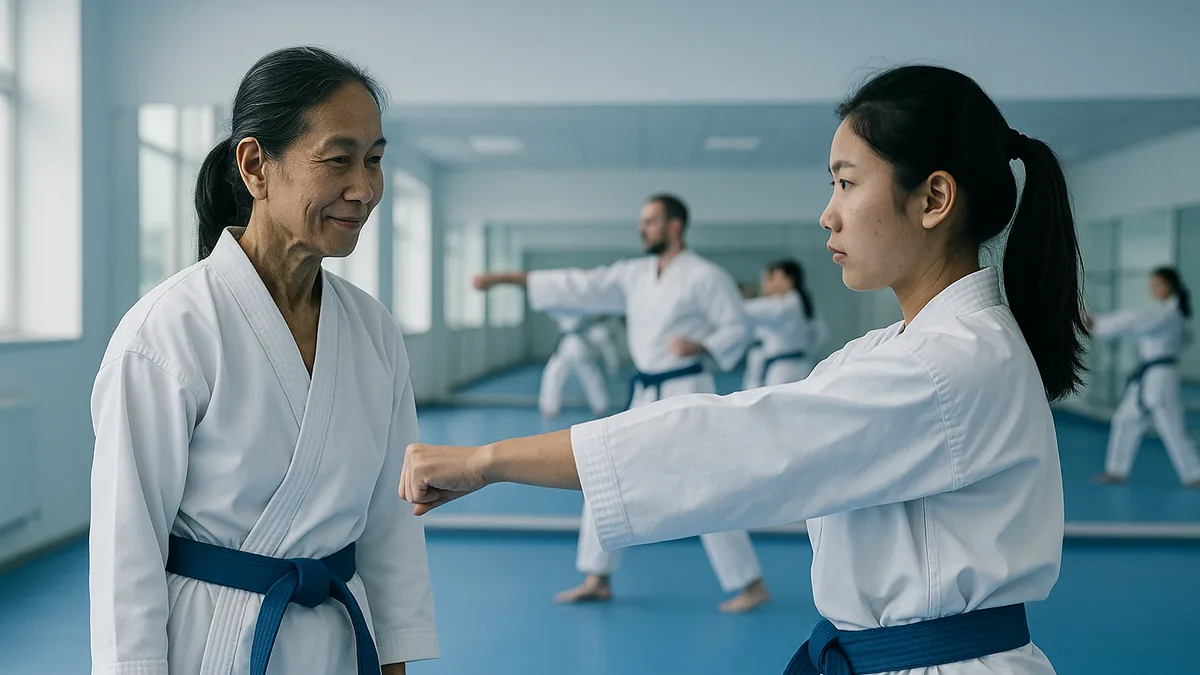
The first time I trained with a club from a different association, I was a mid-level brown belt and I was quietly confident going in. Within twenty minutes of partner drills, I was getting countered in ways I’d never experienced. Not because the other students were better - they weren’t, and some were lower grade than me - but because their timing was different. Their ma-ai was different. They read attacks the way their system had trained them to read attacks, and my usual tells weren’t triggering the responses I expected.
That discomfort is the whole point.
When you only ever spar with people from your own dojo, you get very good at reading each other. That’s partly a good thing - it means you’ve all developed a shared technical language. But it also means you’re optimising for a very narrow range of opponents. Interclub days break that pattern fast.
I’ve noticed that the students who benefit most aren’t always the senior grades. It’s often the mid-ranks - the green and purple belts who’ve just started to feel comfortable in their own dojo, then suddenly have to recalibrate everything. That recalibration is genuinely valuable. It shows them that their technique needs to work on strangers, not just training partners they’ve known for two years.
There’s also something that happens socially that you can’t manufacture any other way. Karate people relax around each other in a way that doesn’t happen with outsiders. By the end of a shared training session, there’s a kind of easy familiarity - the shared language of the dojo floor. If you care about building a community rather than just a club, that matters. It’s the same principle I’d point to in karate club socials and off-mat culture - the connections that form outside formal training structure are part of what keeps people training long-term.
How to Organise One Without It Becoming a Headache
Start with the relationship, not the logistics
The biggest mistake I see when clubs try to set up interclub days is going straight to scheduling before establishing trust. You can’t email a stranger instructor with “want to do a joint session in March?” and expect enthusiasm. You need to have trained with them first, or at minimum have a mutual contact who can vouch for both clubs.
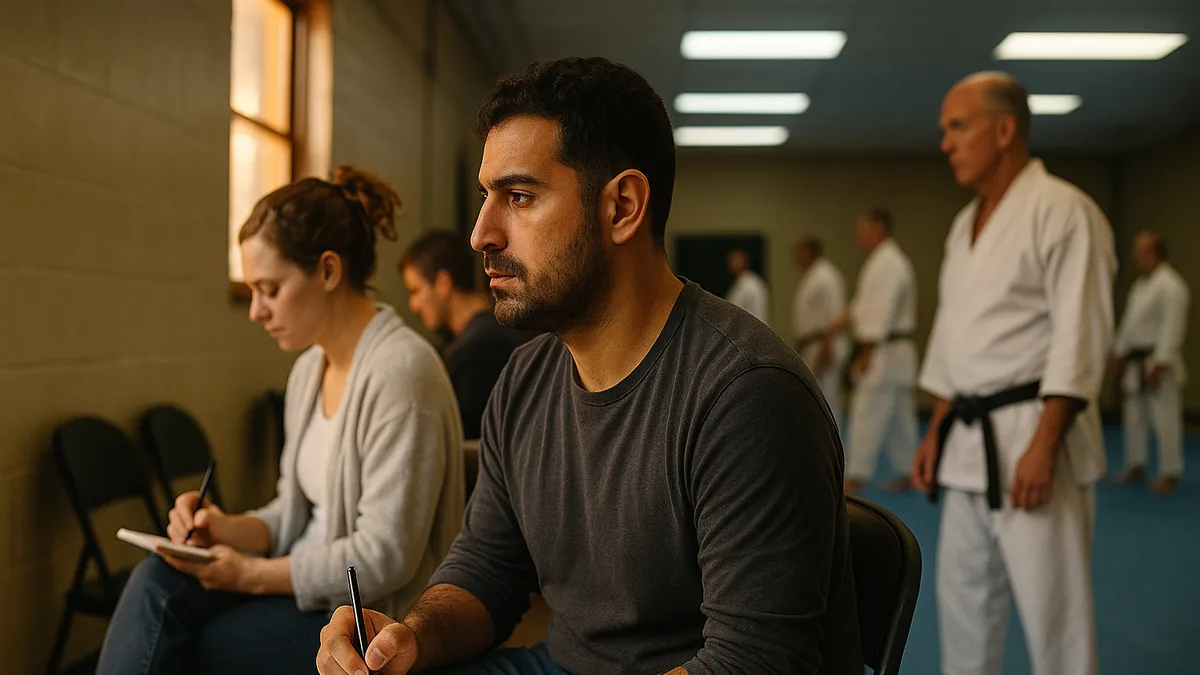
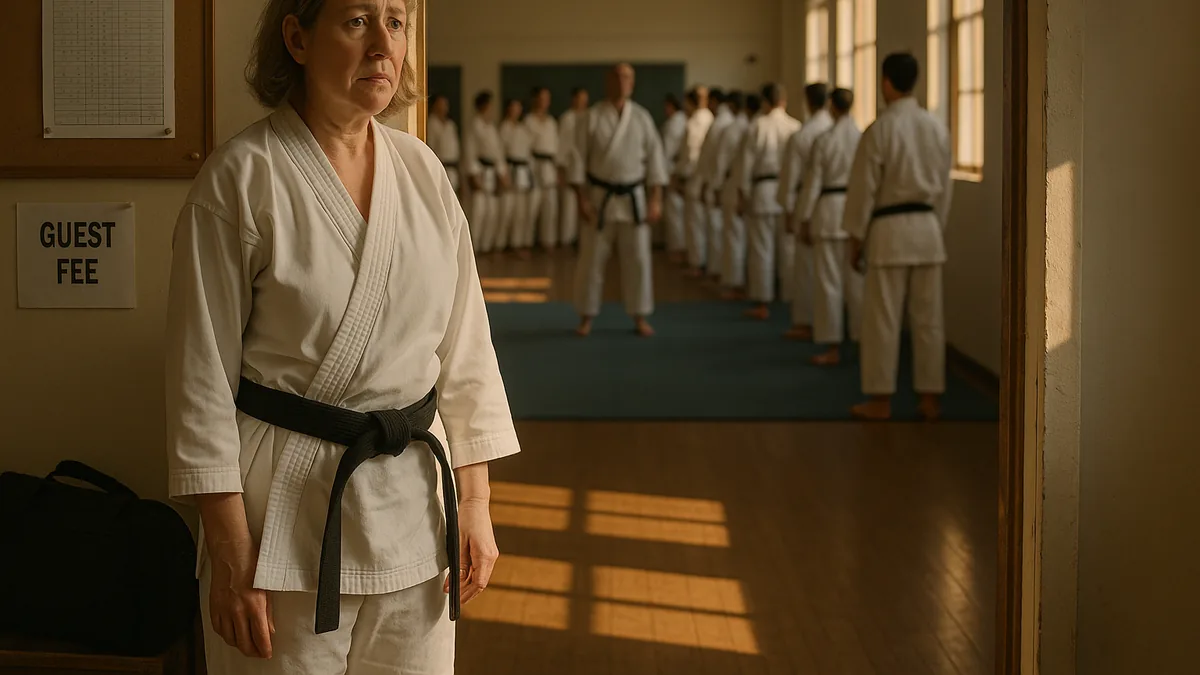
If you haven’t trained at another club before, do that first. Go as a guest, train hard, be respectful, follow their etiquette. If you’re unsure how that works in practice, there’s a useful breakdown in training at another club as a guest that covers the unspoken rules most people get wrong the first time.
Once you’ve built that relationship - even just a few conversations and one visit - the interclub conversation happens naturally.
The planning conversation that actually matters
When you do sit down to plan, the most important thing to agree on early is: who is leading what, and what’s the technical focus?
I’ve been to interclub days where both instructors showed up expecting the other to run the session, and the first thirty minutes were an awkward negotiation in front of two groups of students. Don’t do that. Agree in advance on a rough structure: who runs the warm-up, who leads the kihon section, whether you’re splitting into style-specific groups or mixing everyone together, and how you’re handling kumite if grades are mismatched.
My preference is to mix the groups as early as possible. Some instructors want to keep their students together for the technical sections and only mix for kumite. I understand that instinct, but I think it misses the point. The value is in doing basics with someone who does them differently - feeling where their stance is deeper, noticing that their gyaku-zuki generates power through a slightly different hip path. That’s where the learning lives.
A few things to nail down before the day:
- Venue, parking, changing facilities - sort this early and communicate it clearly to both clubs
- Start time and rough timetable - 90 minutes to 2 hours is usually the sweet spot
- Grade range - if one club has mostly colour belts and the other is predominantly dan grades, plan accordingly
- Contact rules for kumite - agree this between instructors, not on the day
- What happens afterwards - a coffee, a pub lunch, something informal matters more than most instructors admit
On the day itself
Get your own students briefed beforehand. Tell them what to expect, how to behave with the other instructor, and - critically - that they’re there to learn, not to prove anything. I’ve seen students turn up to interclub days with a point-to-prove mentality, and it poisons the atmosphere. You want curiosity, not competition.
When it comes to kumite, match grades sensibly but don’t be rigid about it. A confident green belt can train with a new brown belt if the contact level is right and both students are mature about it. What you’re watching for is ego, not grade - the student who can’t accept a clean hit and starts pushing the intensity up is the one to pull aside early.
What to Expect - Honestly
The first twenty minutes are always a bit stiff
Both groups will cluster with their own people. There’ll be polite nods, some side-eye at how the other club stands in yoi, and a general low-level awkwardness. This is normal. Push through it. The fastest way to break it is good partner work that requires actual cooperation - something like basic ippon kumite where you have to commit to both attack and defence with a stranger. The physical contact and the shared task dissolves the social tension faster than any icebreaker.
You will see things that challenge your assumptions
This is the part that’s worth paying attention to. When you see another club’s senior grade doing something differently from how you’ve been taught, the instinct is to assume they’re wrong. I’ve had that instinct myself. It took me years to understand that the correct response is curiosity, not judgment.
I remember watching an instructor from a Wado-Ryu background demonstrate a body evasion on a straight punch that looked almost lazy to my Shotokan-trained eye. I thought he was cutting corners. Then he did it at speed against a hard attack and I watched the punch slide past him by about three centimetres while he was already on the counter. I’d been moving too far because I’d been taught to move far. His system had trained him to move just enough. Different problem, different solution.
That kind of moment is only available when you’re in the room with people who trained differently.
Your students will come back different
Not dramatically, not immediately - but you’ll notice it over the following weeks. Students who’ve done interclub training tend to be slightly less predictable in kumite. They’ve been exposed to different timing and they’ve had to adapt. That adaptation leaves a mark.
Common Mistakes I’ve Seen Clubs Make
Treating it as a showcase rather than a training day. Some instructors use interclub days to demonstrate how good their club is. The students can feel it, the visiting club can feel it, and the whole thing becomes performative rather than productive. Leave the ego outside.
Not briefing lower grades on etiquette. A new student who doesn’t know how to address a visiting instructor, or who wanders off the mat mid-session without permission, creates unnecessary friction. Five minutes of briefing beforehand prevents most of this.
Skipping the social element. If everyone packs up and leaves the moment the session ends, you’ve left most of the value on the table. The conversations that happen over tea or at the pub afterwards are where the real exchange happens - instructors comparing notes, students swapping contact details, the beginnings of ongoing relationships between clubs. This connects to something broader about off-mat culture that I think the traditional karate world consistently undervalues.
Only doing it once. A single interclub day is a nice experience. Two or three over a year starts to build something. The students start to recognise each other, the instructors develop a working relationship, and the technical exchange deepens because there’s context for it.
Community Perspective
There’s a genuine split in the karate community about how much cross-club, cross-style training is a good thing. Some instructors - particularly those in more traditional associations - are cautious about it. The concern is that exposing students to different methods before they’ve fully internalised their own style creates confusion. I’ve heard this argument made seriously by people I respect.
I think it’s wrong, but I understand where it comes from. There is a real risk of a student who’s two months into training picking up contradictory habits from a visiting instructor. The correction for that isn’t to avoid interclub training - it’s to be thoughtful about when you introduce it and how you frame it. Colour belts can do interclub days. You just need to be clear with them that they’re observing and experiencing, not adopting.
The instructors who are most resistant to interclub training are often, in my experience, the ones who are most invested in a particular hierarchy or association structure. That’s a dojo politics issue more than a technical one, and it’s worth being honest about that.
The clubs I’ve seen grow fastest - in numbers, in quality, and in culture - are almost always the ones that train with other clubs regularly. That’s not a coincidence.
Key Takeaways
- Build the relationship before you plan the logistics - visit their club first, establish trust, then propose the joint session
- Agree the structure between instructors well in advance: who leads what, contact rules for kumite, and how you’re mixing the groups
- Brief your students beforehand on etiquette and mindset - curiosity, not competition
- Mix the groups early in the session; the value is in doing basics with someone who was trained differently, not just sparring with them at the end
- Don’t skip the social element afterwards - the informal time is where lasting connections between clubs actually form
- Do it more than once; a single session is an experience, a regular exchange is a training resource
The weekly digest
New karate articles, once a week
One email every week with everything new on Karate Lifestyle. No spam; unsubscribe in one click.
We'll email you to confirm. See our privacy policy.