Do You Need a Mouthguard for Karate?
I’ve seen students turn up to their first sparring session with brand new gloves, a shiny new belt, and absolutely nothing protecting their teeth. When I ask if they have a mouthguard, the usual answer is some version of “I didn’t think I’d need one yet.” That’s the moment I know they’ve never taken a roundhouse to the face.
Here’s where I stand: a mouthguard is not optional once you start any contact work. It doesn’t matter if you’re a white belt doing your first light sparring drill. Get one before your first session, not after your first incident.
When Do You Actually Need One?
The honest answer is earlier than most beginners expect. A lot of new students assume mouthguards are for competition fighters or higher grades doing heavy contact. I’ve noticed that this assumption comes from watching senior students train - the seniors look controlled, the contact looks light, and beginners think “I won’t be doing anything like that for months.”
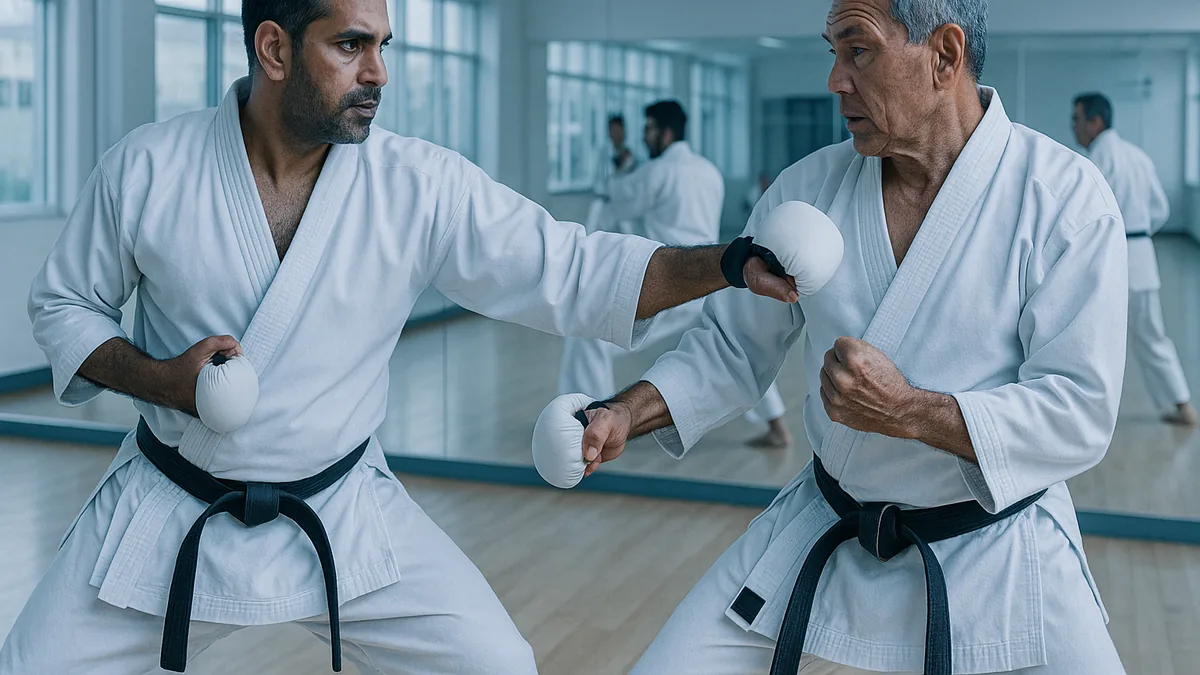
What they miss is that light contact kumite still produces accidents. An ill-timed step forward, a technique that lands slightly off-target, a partner who misjudges distance - these things happen in every dojo, at every level. I’ve seen a student chip a tooth during a controlled partner drill in their third week. No malicious intent, no heavy contact. Just two people learning and one awkward moment.
Most clubs will require a mouthguard for any kumite work, whether that’s controlled partner drills, semi-free sparring, or competition. Some instructors are strict about this from day one. Others are more relaxed during basic drills and only enforce it when free sparring starts. If you’re unsure about your club’s specific rules, ask your instructor directly before your first sparring session - don’t assume.
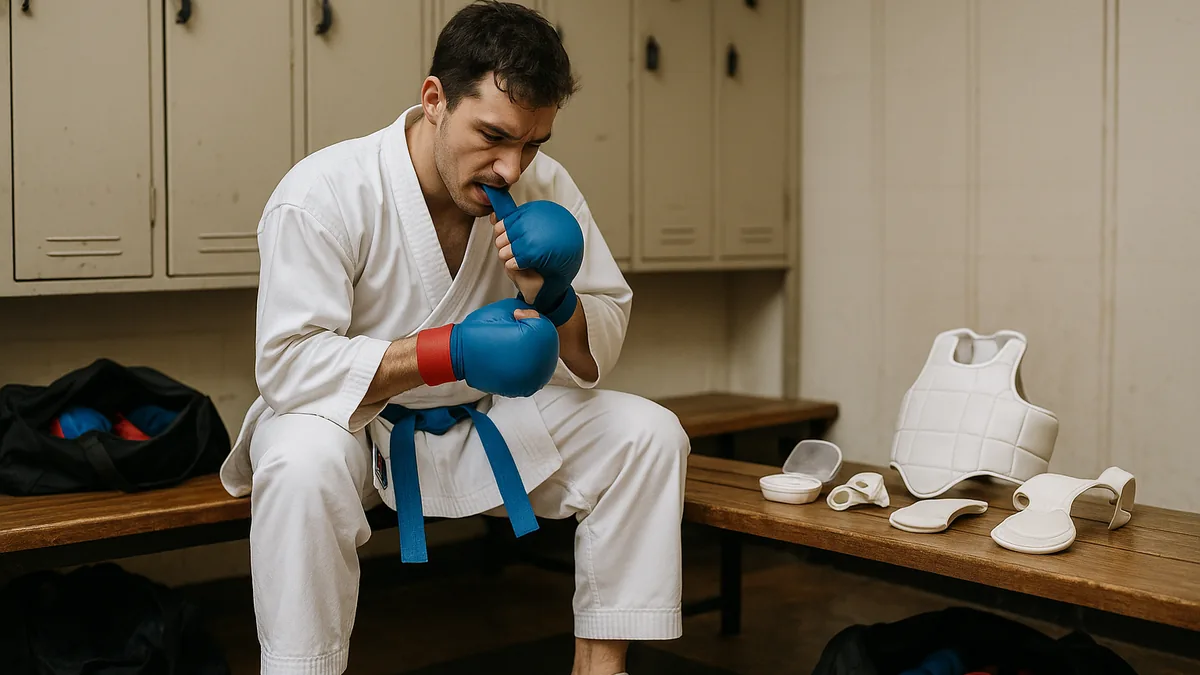
For competition under WKF (World Karate Federation) rules, a mouthguard is mandatory. No exceptions. You won’t be allowed on the mat without one, and no instructor worth training under will let you enter a competition without having trained with one regularly beforehand. The last thing you want is to wear a mouthguard for the first time on competition day - it feels strange in your mouth, affects your breathing slightly, and takes getting used to.
Boil-and-Bite vs Custom: What I Actually Recommend
I’ll give you my honest take here rather than sitting on the fence.
Boil-and-bite mouthguards are the standard starting point for most karate practitioners. You heat them in boiling water, bite down to mould them to your teeth, and you’re done. They cost anywhere from a few pounds to around £20-30 for a decent sports model. They work. I’ve trained with them for years and so have most people I know.
Custom mouthguards are made by a dentist from impressions of your teeth. They fit better, feel more comfortable, and offer superior protection. They also cost £80-200 depending on where you go.
My position: start with a good boil-and-bite. Once you know you’re going to stick with karate and you’re training regularly, consider upgrading to a custom fit - especially if you’re competing. The comfort difference is noticeable. A well-fitted custom guard feels like almost nothing in your mouth. A poorly fitted boil-and-bite feels like you’re holding a chunk of rubber between your teeth.
The correction that makes the biggest difference with boil-and-bite guards is in the fitting process itself. Most beginners rush it. They don’t heat the guard long enough, they don’t bite down firmly enough, or they bite unevenly. What you want is a guard that holds itself in place without you clenching - it should stay put when your jaw is relaxed. If you have to clench to keep it in, it’s fitted wrong. Redo it.
One practical note: double-layer boil-and-bite guards offer better protection than single-layer versions. For karate, where contact is generally lighter than boxing, a single-layer guard is adequate for most training. For competition or heavier sparring, go double-layer or custom.
What Your Club and WKF Actually Require
Club rules vary more than people expect. I’ve trained at dojos where mouthguards were required from the very first kumite class, and others where instructors were more relaxed about it for light drills. What I’d say is this: even if your club doesn’t enforce it strictly at white belt level, wear one anyway. The habit is worth building early.
For anyone training under a WKF-affiliated association - which covers most competitive karate in the UK - the equipment rules are clear. In WKF competition, the required protective equipment includes:
- Mouthguard (mandatory)
- WKF-approved hand mitts
- WKF-approved foot protectors
- Groin guard for males
- Breast protector for females (optional but recommended)
- Shin guards (in some categories)
If you’re heading toward competition, check the Karate Sparring Gear Guide for the full breakdown of what you’ll need and what gets approved at different levels. Mouthguard rules are the easy part - WKF-approved hand mitts and foot protectors have more specific requirements that catch people out.
For grading, most associations don’t require a mouthguard if there’s no kumite component in the grading. But if your grading includes any sparring element, treat it like a competition - full protective gear, no shortcuts.
Mistakes I See Constantly
Buying the cheapest option without fitting it properly. I’ve seen students turn up with a £2 mouthguard that’s basically a flat piece of plastic. It provides almost no protection and falls out the moment they open their mouth. Spend at least £10-15 on a recognised sports brand and take the time to fit it correctly.
Not wearing it during training because “it’s just drills.” I used to think the same way as a junior grade. The logic feels reasonable - it’s controlled work, nothing’s going to land hard. The thing that changed my understanding was watching a senior student catch an accidental elbow during a basic partner drill. He was fine, but it was a reminder that accidents don’t announce themselves. You’ll feel it through your whole jaw when a technique connects unexpectedly, and you’ll be glad you had protection.
Storing it badly. A mouthguard left loose in a bag picks up bacteria, gets crushed, and degrades faster. Use a ventilated case. Rinse it after every session. It’s the same principle as looking after your gi - small habits that matter over time. If you’re new to gear maintenance, the same mindset applies to everything in your kit bag.
Trying to talk through it constantly. This sounds trivial but it’s a real issue for beginners. A mouthguard changes how you breathe and speak slightly. New students spend the first few sessions constantly removing it to ask questions or respond to the instructor. The fix is simple: leave it in, nod, and take it out only when you genuinely need to communicate at length. You’ll adapt faster than you think.
Community Perspective
There’s a genuine split in traditional karate circles about mouthguards - specifically around kata training and non-contact drilling. Some traditional instructors don’t require them outside of kumite at all, and there’s a reasonable argument for that. If there’s no contact, there’s no risk to your teeth.
Where it gets more interesting is in semi-contact and light sparring. I’ve trained with practitioners from Shotokan, Wado-Ryu, and Goju-Ryu backgrounds, and the attitude toward protective gear varies noticeably. Some traditional clubs view heavy protective equipment as something that encourages recklessness - the thinking being that less protection makes you more careful. I understand that argument, but I don’t fully agree with it when it comes to mouthguards specifically. A broken tooth is permanent. The risk-reward calculation is different from, say, shin guards.
The other debate is around custom vs boil-and-bite at club level. Some experienced practitioners swear by custom guards and think anything else is a compromise. Others - myself included - think a well-fitted boil-and-bite is perfectly adequate for regular club training and that the money is better spent elsewhere when you’re starting out.
Key Takeaways
- Get a mouthguard before your first kumite session, not after. The habit needs to be established early, not retrofitted after an incident.
- A boil-and-bite from a recognised sports brand, fitted correctly, is the right starting point. Upgrade to custom when you’re training consistently and especially if you’re competing.
- WKF competition rules make a mouthguard mandatory - no exceptions. If your club competes, you need to be comfortable training with one long before you step on a competition mat.
- Take the fitting process seriously. A poorly fitted mouthguard is barely better than nothing. It should stay in place without clenching.
- Wear it for all contact work, including controlled drills. Accidents don’t wait for free sparring.
- Store it in a ventilated case, rinse it after every session, and replace it when it starts to degrade. Treat it like any other piece of kit you depend on.
The weekly digest
New karate articles, once a week
One email every week with everything new on Karate Lifestyle. No spam; unsubscribe in one click.
We'll email you to confirm. See our privacy policy.